

 Tiếng Việt
Piston Pumps: Definition, Classification, Applications, and Pricing
If vane pumps or hydraulic gear pumps are selected for low-pressure systems, the hydraulic piston pump line is designed for high-pressure machinery requiring large pressure. This is also the type of pump widely used in current hydraulic systems.
Today, let’s explore the characteristics, operating principles, and popular hydraulic piston pump lines to better understand this device!
Learning about hydraulic piston pumps
What is a hydraulic piston pump?
Piston pumps are hydraulic pumps that operate thanks to the rotational force of the motor through the shaft and connecting rod, in order to supply liquid to the system.
Hydraulic piston pumps have 1 or more reciprocating pistons to change the volume within the pump. Thanks to this, they can suck and push hydraulic fluid.
The function of this type of hydraulic pump is to suck oil and hydraulic fluid from the reservoir and push them through the system with the required pressure and flow rate to reach actuators such as hydraulic cylinders, hydraulic motors…
Hydraulic piston pumps are currently very popular, you can easily find them on the market with many different capacities. If you need high-pressure pumps, continuous operation, stable flow, and variable flow, then hydraulic piston pumps are the most perfect choice. A hydraulic piston pump can achieve flow rates from 50 gpm to 700 gpm, horsepower from 1 to 500 hp, and pressures from 50 psi to 5000 psi.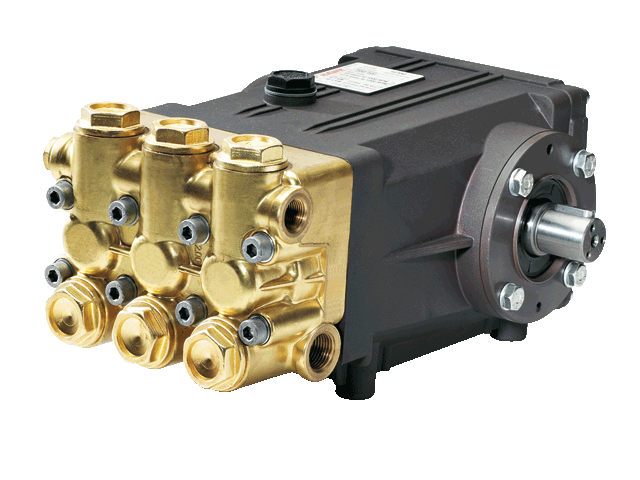
Operating principle of hydraulic piston pumps
Piston pumps are exactly the line of hydraulic pumps that generate high pressure, built to perform heavy-duty tasks. Therefore, the price of hydraulic piston pumps is higher than other hydraulic pump lines on the market today.
Like most other hydraulic pumps, piston pumps operate by using the force of the pumping mechanism to expand and contract a moving volume in the fluid. Generally, the suction and discharge of fluid by the hydraulic piston pump is based on the basic principle of: The change in internal volume of the pump. In which, the piston plays the most important role; it will reciprocate back and forth.
During operation, the pump shaft is connected to an electric motor. The pistons are arranged in the pump chamber. Usually, a piston pump will have an average of 6 pistons, and the piston heads are pressed against a swashplate. In the first half of the rotation, these pistons will change distance to create a vacuum inside the pump. This reduces pressure and draws oil and hydraulic fluid in.
👉 Reference: Oil coolers for hydraulic systems
In the remaining half of the rotation, the piston will move to decrease the volume in the pump. At this time, the oil and pumped fluids are forced out at a certain pressure. And because it is connected to a motor, when the motor rotates several thousand revolutions per minute, the amount of oil sucked and pushed out continuously is very large.

Popular types of hydraulic piston pumps
Currently, the hydraulic piston pump line is divided into 2 main types: radial piston pumps and axial piston pumps.
Axial piston pumps
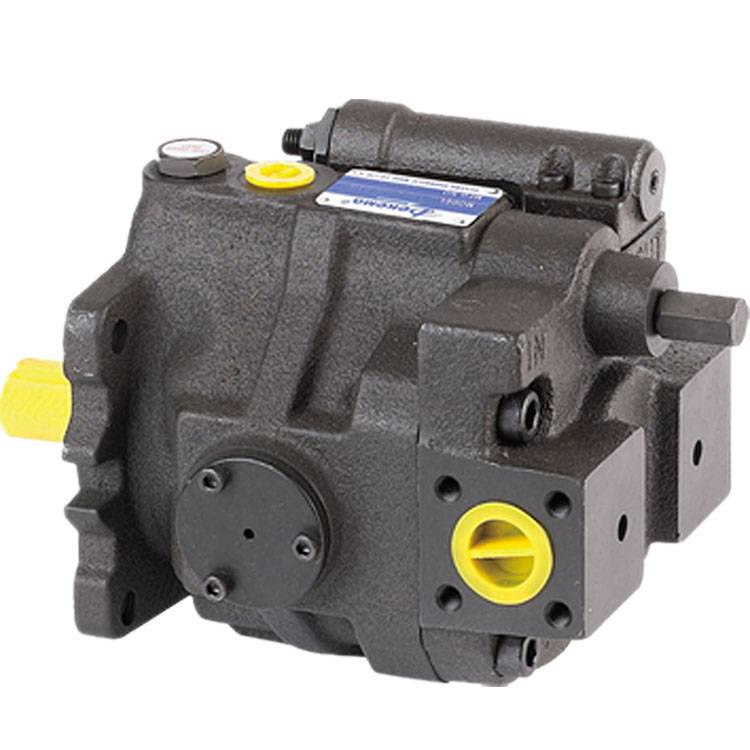
Axial hydraulic piston pumps are pumps with pistons placed parallel to the pump’s axis of rotation and driven by a joint or swashplate. The piston is always pressed closely to the face of the plate, so the piston both translates and rotates with the rotor. Axial piston pumps have many outstanding advantages such as: high working safety, compact size, which is about 2 times smaller compared to radial pumps.
This hydraulic piston pump line has separate discharge and suction chambers, so it does not increase the pump size. To achieve a larger water flow, you can also increase the pump’s rotational speed.
Radial piston pumps
The difference of radial hydraulic piston pumps compared to axial pumps is that the pistons of this pump move radially to the rotor axis. The number of pistons will determine the pump’s flow rate. If there are many pistons, the pump flow is large and vice versa.
In addition, compared to axial pumps, radial piston pumps are larger in size and more complex to manufacture. 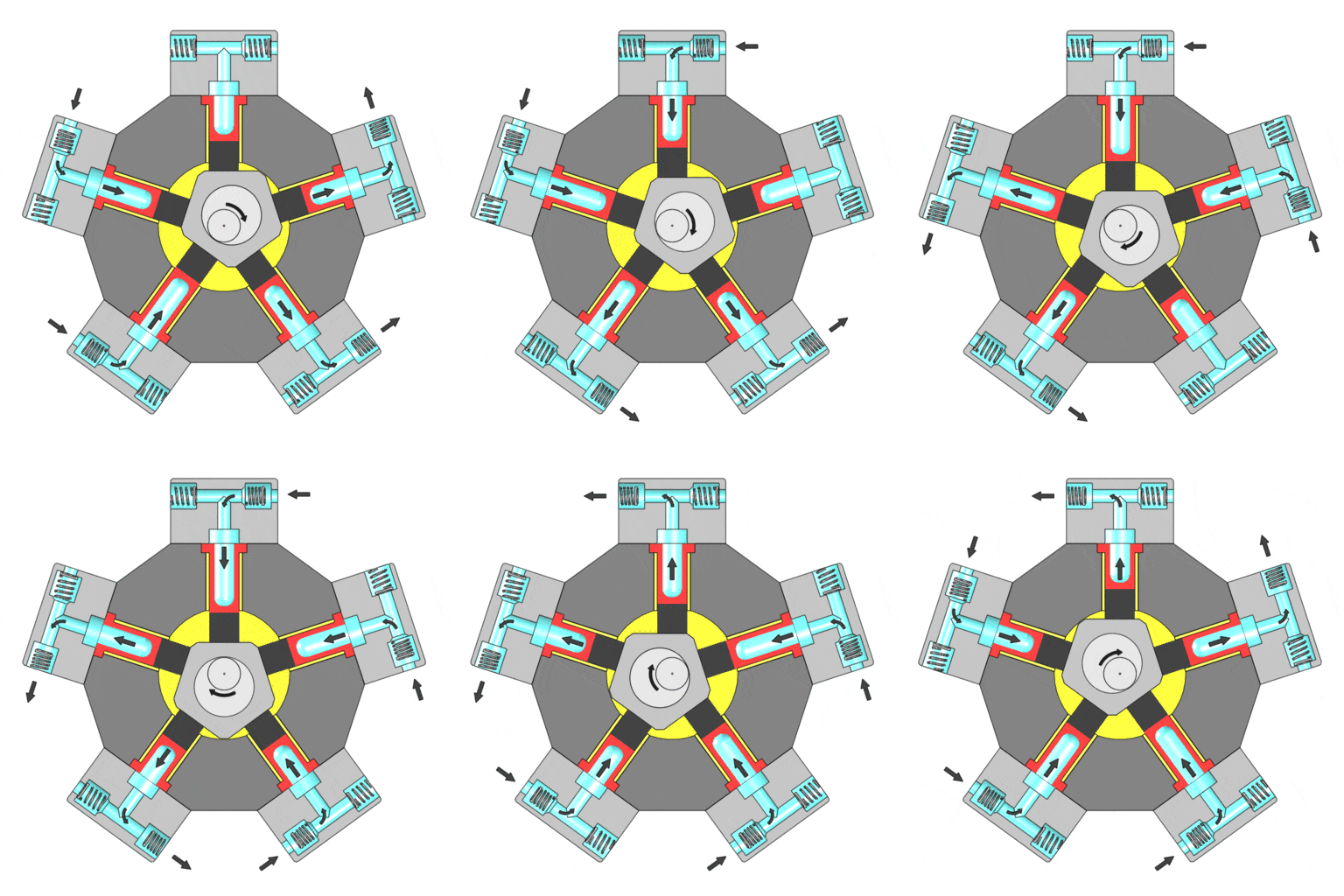
Applications of hydraulic piston pumps
Hydraulic piston pumps play a central role in the hydraulic systems of excavators, bulldozers, diggers, presses, crushers, injection machines, stamping machines, bending machines… with heavy-duty, harsh working conditions and high-frequency requirements. Piston pumps are suitable for sucking and pushing fluid lines such as: chemicals, oil, water, lubricants…
Therefore, hydraulic piston pumps are widely used in factories producing corrugated iron, building materials, waste treatment, automobile and motorized vehicle production and assembly, mechanical engineering, metallurgy… Besides, in chemical industries, oil production, mining, or on road and bridge construction sites, high-pressure hydraulic piston pumps are also put into use.
The device is also widely used in industrial lifting products serving the logistics industry such as Hydraulic Dock Levelers, hydraulic lift tables, hydraulic cargo lifts, hydraulic hand pallet trucks…
In the construction industry, hydraulic piston pumps are used in equipment such as tilting lift tables, feeding lift tables…
How to choose a hydraulic piston pump
- Piston water pumps or hydraulic piston push pumps are always the number one choice of factory technicians or customers when the working pressure is over 100 bar.
- Every piston pump has its own displacement. This is the allowed flow rate the pump operates at in 1 revolution. From the displacement and pressure, customers can calculate the pump’s capacity. Based on the motor’s rpm, we can know the pump’s flow rate.
- There is one thing Naltako always reminds customers: piston pumps can adjust their flow rate. This helps customers eliminate worries about power consumption.
- If the pump flow is too high compared to the flow of the actuator cylinder or system, customers only need to adjust the angle of the swashplate. This will reduce the volume of liquid in the pump leading to a difference between average flow and displacement.
- When buying, customers should look for piston pumps with max specifications for flow, pressure, and volume to help the pump operate well.
- If you need to buy an old hydraulic piston pump for repair or new replacement, you just need to determine the operating parameters related to the pump as well as the motor, which are: min pressure, max pressure, pump flow rate, pump volume, motor power, working mode…
- Some reputable, quality pump suppliers with many years of experience will ensure using piston pumps for a long time, more stably, more durably and more reliably.
Naltako – A supplier of cheap, high-quality hydraulic piston pumps
When choosing a hydraulic piston pump, what customers care about most is finding a reputable address, specializing in providing quality pump lines with cheap hydraulic piston pump prices and many attractive incentives and promotions.
With many years of experience, Naltako Industrial Joint Stock Company is an enterprise specializing in designing, importing, and distributing genuine, high-quality hydraulic equipment. Coming to Naltako, the company’s team of experienced staff and engineers will consult with customers to find the hydraulic piston pump that fits their requirements and saves costs the most.
Reasonable pricing policies, many incentives combined with customer care programs, Naltako will surely make customers feel satisfied when choosing products. Besides hydraulic piston pumps, we also provide other hydraulic accessories such as Hydraulic power units, Pneumatic filters
For quotes, consulting support, and information about the hottest hydraulic piston pumps today, please contact Naltako via hotline: 0981 977 898.
Conclusion
Thus, the above sharing has surely helped you better understand the characteristics, structure, and operating principles of the hydraulic piston pump line. Hopefully, with this information, you can better understand piston pumps and find a reputable place to buy, ensuring the best product quality.
CONTACT INFORMATION: Naltako Industrial Joint Stock Company
Workshop address: Dong De, Phu Yen, Chuong My, Hanoi
Hotline: 0981.977.898
Mail: nhat.mtk53@gmail.com
Nội dung có liên quan:
-
 What is a Piston? Structure and Operating Principle
If you work in the repair and installation of industrial equipment, you have surely heard terms such as: steam engines, internal combustion engines, etc. A...
What is a Piston? Structure and Operating Principle
If you work in the repair and installation of industrial equipment, you have surely heard terms such as: steam engines, internal combustion engines, etc. A...
-
 Hydraulic Oil Radiators – Oil Coolers for Hydraulic Systems
What solution will support you in the process of cooling and cleaning hydraulic oil? That is using a hydraulic oil cooler immediately. However, each system...
Hydraulic Oil Radiators – Oil Coolers for Hydraulic Systems
What solution will support you in the process of cooling and cleaning hydraulic oil? That is using a hydraulic oil cooler immediately. However, each system...
-
 Compressed Air Filters: Construction, Working Principle, and Classification
Compressed air filters are a common and essential device, designed to effectively remove impurities and dirt that may exist in compressed air, helping you ...
Compressed Air Filters: Construction, Working Principle, and Classification
Compressed air filters are a common and essential device, designed to effectively remove impurities and dirt that may exist in compressed air, helping you ...
-
 What is a Gear Hydraulic Pump? Structure and Classification
With a simple structure, convenient assembly and operation, and the ability to withstand heavy loads for a specific duration, gear hydraulic pumps are wide...
What is a Gear Hydraulic Pump? Structure and Classification
With a simple structure, convenient assembly and operation, and the ability to withstand heavy loads for a specific duration, gear hydraulic pumps are wide...
-
 Hydraulic Pumps
In today's industries, from high-rise buildings to manufacturing plants, hydraulic pumps play a crucial role. This component helps devices such as yard ram...
Hydraulic Pumps
In today's industries, from high-rise buildings to manufacturing plants, hydraulic pumps play a crucial role. This component helps devices such as yard ram...
-
 Hydraulic Seals: Classification, Installation & Replacement
Hydraulic seals are vital components in a hydraulic system, yet not everyone fully understands them. If you are looking for information on seal types, inst...
Hydraulic Seals: Classification, Installation & Replacement
Hydraulic seals are vital components in a hydraulic system, yet not everyone fully understands them. If you are looking for information on seal types, inst...
-
 Grating Flooring (Galvanized Steel Grating): Features, Applications, and Quotes
What is Grating Flooring?
Grating flooring (also known as galvanized steel grating or grating panels) is a type of floor formed from load-bearing steel ba...
Grating Flooring (Galvanized Steel Grating): Features, Applications, and Quotes
What is Grating Flooring?
Grating flooring (also known as galvanized steel grating or grating panels) is a type of floor formed from load-bearing steel ba...
-
 What is a 500kg Hydraulic Jack? Structure and Operating Principle
Nowadays, the 500kg hydraulic lift table, lifting 280 - 900 mm is a popular lifting device in many fields. With the ability to lift heavy objects easily an...
What is a 500kg Hydraulic Jack? Structure and Operating Principle
Nowadays, the 500kg hydraulic lift table, lifting 280 - 900 mm is a popular lifting device in many fields. With the ability to lift heavy objects easily an...