

 Tiếng Việt
Hydraulic Pumps
In today’s industries, from high-rise buildings to manufacturing plants, hydraulic pumps play a crucial role. This component helps devices such as yard ramps, dock levelers, and hydraulic lift tables generate the force needed to lift heavy loads.
There are many types of hydraulic oil pumps, and each business will find a specific type that suits them. Let’s explore more with Naltako in this article.
What is a Hydraulic Pump?
Hydraulic Pumps are hydraulic devices used to convert mechanical energy into hydraulic energy using suction or pressure to provide a working power source for the entire system, hydraulic machines, hydraulic valves, and various cylinders.
This is an essential and indispensable device for the entire hydraulic system because the hydraulic pump supplies the primary energy for the whole system.
Hydraulic pump heads come in all types and sizes; each type will consist of different structural components including the pump, motor, power supply, discharge head, piston, cylinder, valves, and attached accessories.
Hydraulic oil pumps operate with various high-pressure levels up to 700 bar or 10,000 Psi and are used in many systems and equipment at manufacturing enterprises, fabrication workshops, mechanical plants, etc.
The component has many designs, each used in different types of systems. Piston pumps are provided and sold by Naltako in the Vietnamese market with the best promotional prices, reputable service, genuine products, and a 12-month warranty.
If you have a need, please contact the hotline at 0981 977 898 for the most detailed advice.
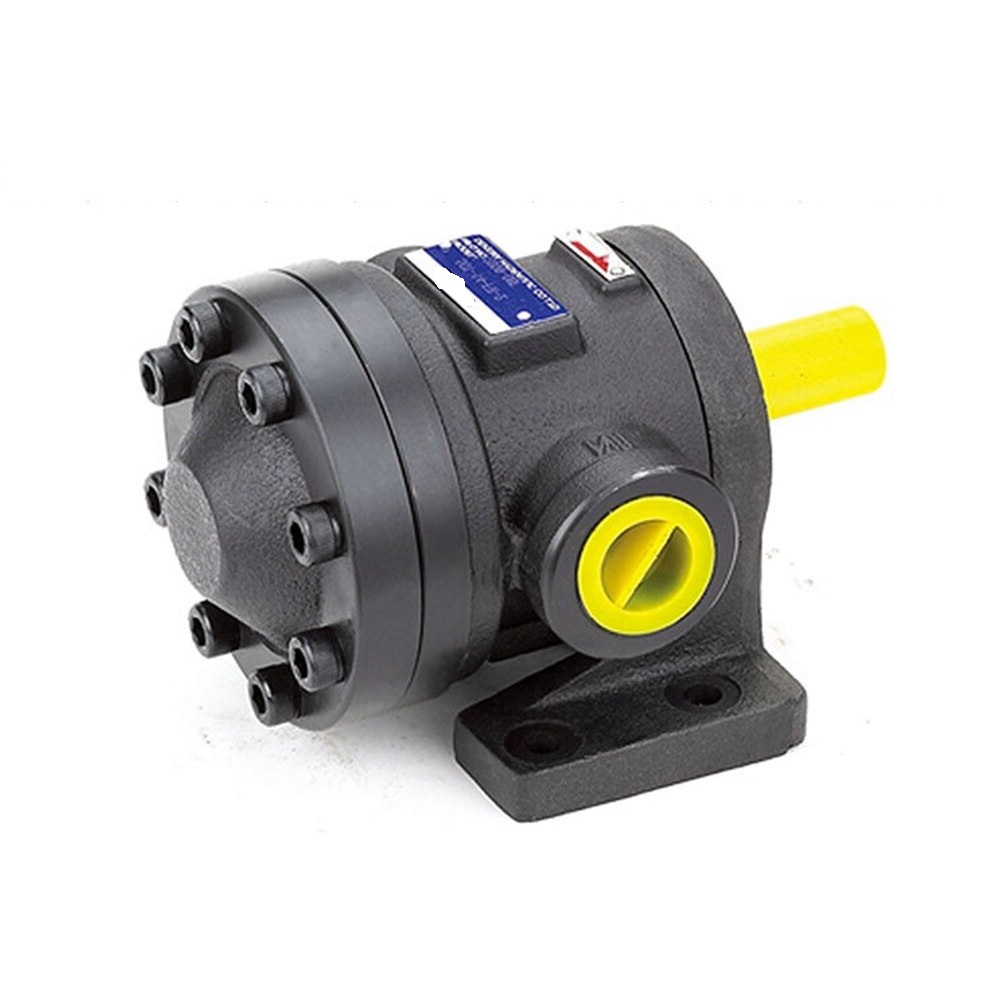
Hydraulic Oil Pump Specifications
- Type: Gear, piston, vane, screw, mini, etc.
- Max Pressure: 250 kg/cm2
- Rated Pressure: 210 kg/cm2
- Pressure: 700 bar or 10,000 Psi
- Pump Stages: 1 to 3
- Speed: 500 to 3,000
- Pump RPM: 3,000 rpm
- Working Environment: Oil, fluids
- Origin: China, Taiwan, Korea, Japan, Europe
- Warranty: 12 months.
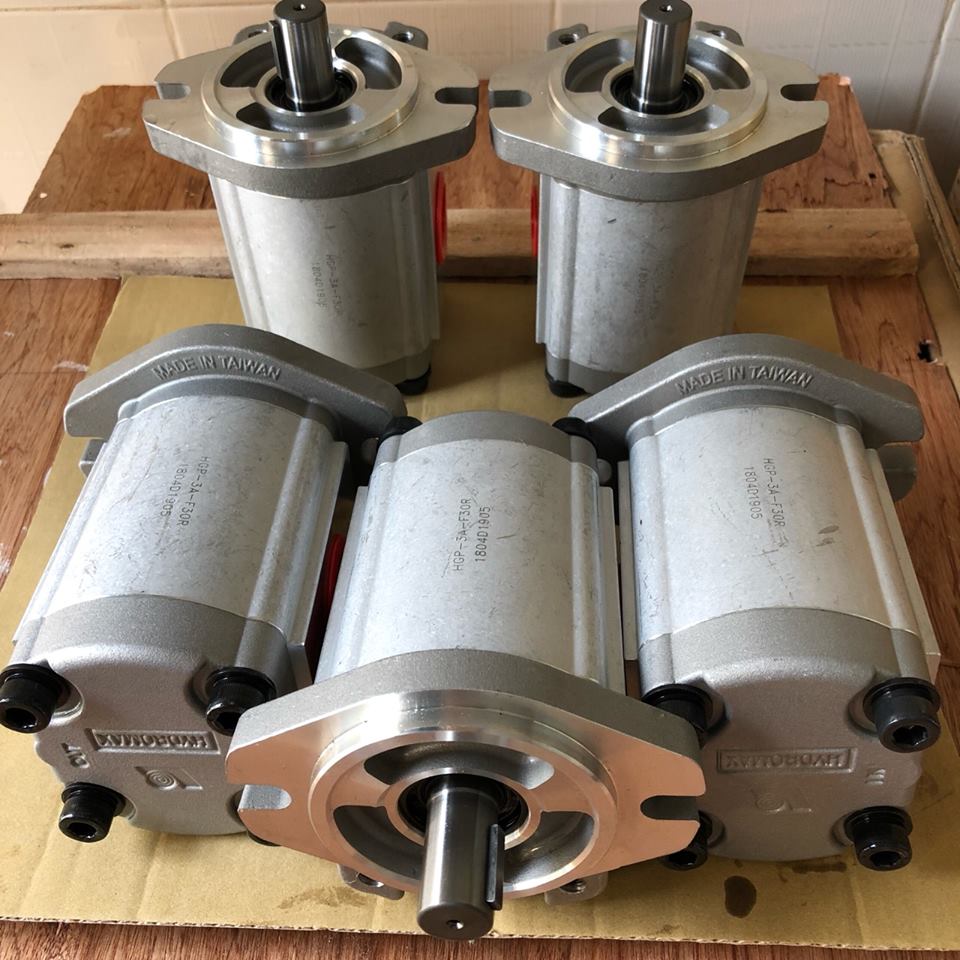
Structure of Oil Pumps for Hydraulic Systems
Pump Body
The pump body is the main part of the hydraulic pump system. This component is not just an outer frame but also where all other parts are assembled and combined. The pump body has holes and openings forming inlet and outlet ports to direct the fluid. This helps the fluid to be drawn in and pushed out of the pump efficiently.
Shaft
The shaft is the central component of the pump, connecting the motor and the pump rotor. When the motor operates, energy is transmitted from the motor through the shaft to move the rotor. The shaft is designed to be durable and sturdy to withstand the pressure and rotational force during pump operation.
Rotor
The rotor is a rotating component inside the pump body. When energy from the shaft is transmitted to the rotor, the rotor creates fluid movement. Typically, the rotor has vanes or blades specially designed to create pressure and push the fluid out of the pump.
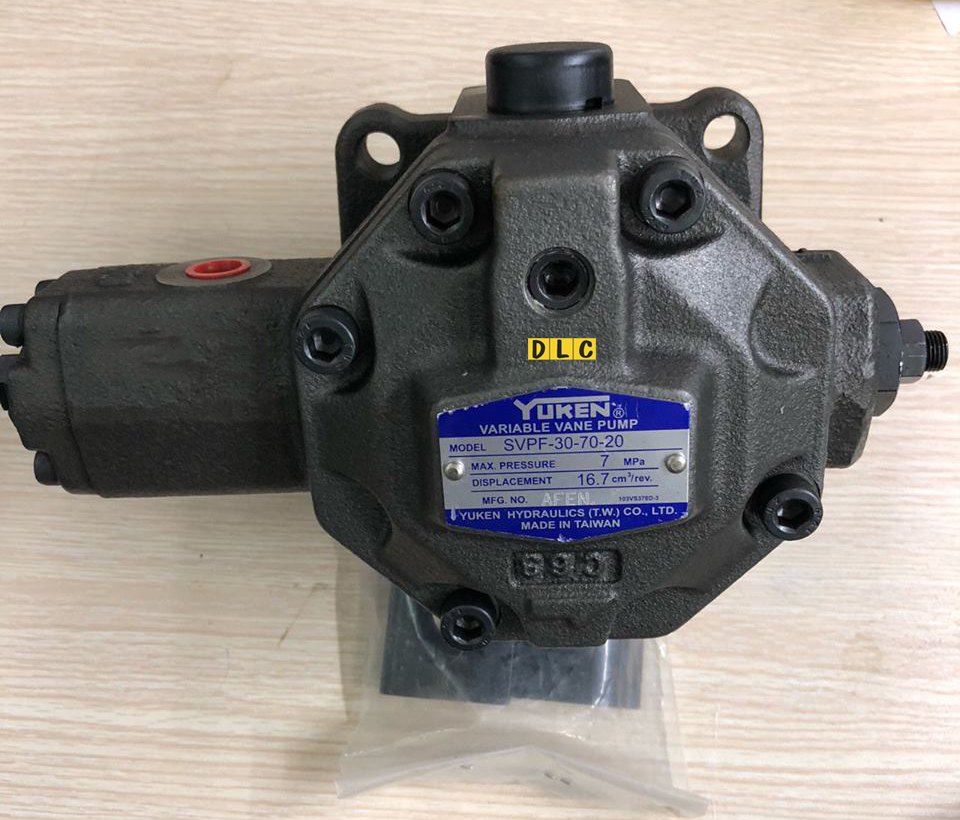
Inlet Valve
The inlet valve is located at the pump entrance. Its task is to control the flow of fluid into the pump. When the inlet valve opens, fluid can flow into the pump to start the pumping process. Once closed, it prevents fluid from returning through the inlet.
Outlet Valve
Contrary to the inlet valve, the outlet valve is located at the pump exit. This component helps control the flow of fluid out of the pump. When the outlet valve opens, fluid is pumped out at high pressure. Once closed, fluid cannot return to the pump through the outlet.
In addition to these critical parts, hydraulic pumps also need auxiliary devices installed including flow controls, filters, sensors, etc., to ensure working performance and pump lifespan.
Applications of rubber damping pads in industry
Operating Principle of Hydraulic Oil Pumps
The operating principle is based on the movement of fluid through pipes. When the pump is started, the rotating rotor creates fluid movement. Impellers mounted on the rotor generate pressure on part of the conduit, pushing the fluid inside the hydraulic pump toward the outlet.
As the impeller rotates, it creates a low-pressure zone in part of the pump’s passage under the effect of centrifugal pressure, creating suction to pull fluid back into the pump through the inlet valve.
When the rotor stops turning, the impeller pushes the fluid out of the suction chamber and out of the pump through the outlet valve, creating a high-pressure zone. During operation, hydraulic pumps generate a large amount of heat, so they require the support of a Hydraulic oil cooler system.
As the fluid is pushed out of the pump, pressure in the lift pipe returns; therefore, a low-pressure zone appears on the other part of the pipe around the inlet valve, pulling the fluid below back into the pump. This process repeats frequently as the pump operates, creating a continuous flow of fluid.
The movement of the rotor is driven through the shaft gears by an electric motor or another power source. Other devices, including inlet and outlet valves, are used to adjust fluid flow and pressure.
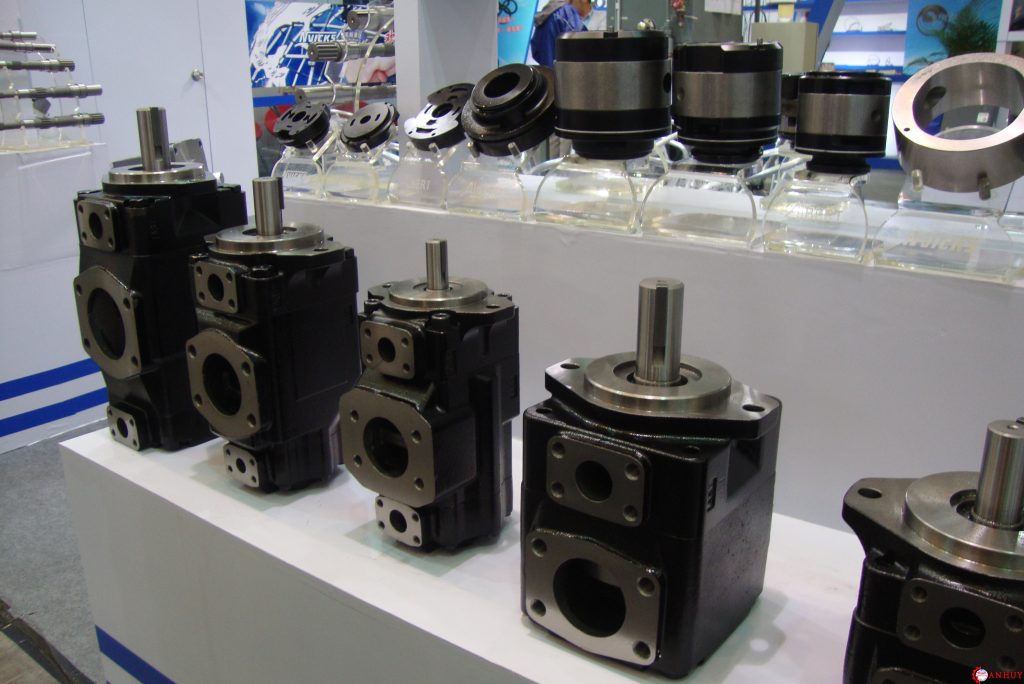
11+ Best Value Hydraulic Pumps Most Used Today
In today’s market, there are many types of hydraulic oil pumps, each with its own structure, operation, and specific applications, suitable for different industries and purposes. Below, let’s explore with Naltako the types of hydraulic systems currently most in use:
Piston Hydraulic Pumps (Axial, Radial)
Piston pumps can be divided into two main types: axial and radial, depending on the direction of fluid movement in the pump.
Axial Piston Hydraulic Pump
This is one of the most common and important types in the industrial sector. This type of pump works by using pistons that move in an axial direction, creating pressure and fluid movement.
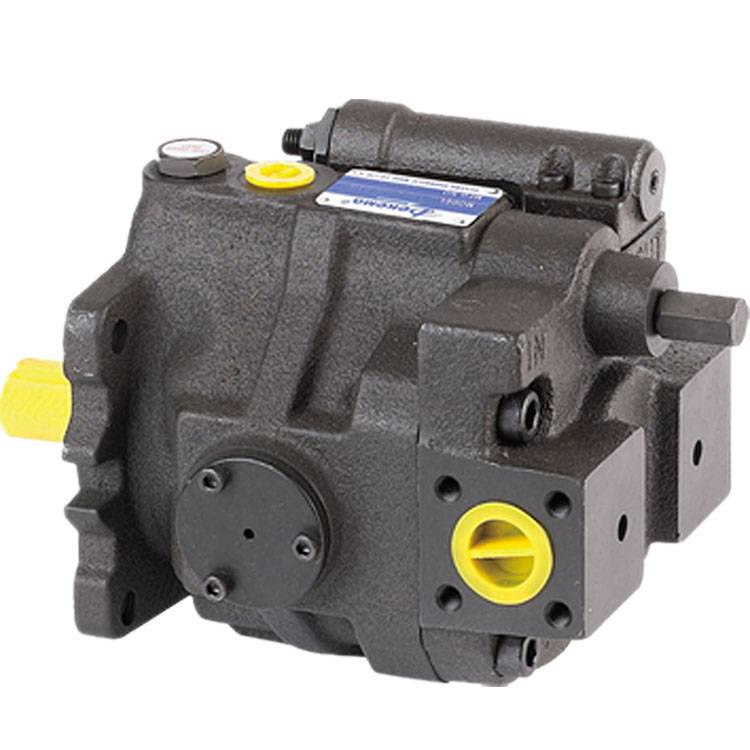
With the piston moving up and down within a cylinder along the rotational axis. As the piston moves, the pump draws fluid into the cylinder through an intake valve and pushes it out through a discharge valve. Axial piston pumps are mainly used by heavy industries and machines with high requirements for speed and pressure.
Advantages:
- Axial piston pumps create high and stable pressure.
- Used in processes requiring control and operation with other high-pressure equipment.
- They usually have high efficiency, capable of effectively converting electrical or mechanical energy into hydraulic energy, reducing energy consumption and operating costs.
- The pump is safe to use and has a long lifespan.
- Designed to withstand pressure and operate in harsh environments, it can run continuously for long periods without frequent maintenance.
- Used in various fields such as manufacturing, agriculture, construction, oil and gas, and many other applications.
Radial Piston Hydraulic Pump
This type has a special structure to create pressure and fluid movement through the radial movement of pistons. During operation, the motor generates energy to move the piston radially, creating pressure and moving fluid from the inlet to the outlet through intake and discharge valves. This process repeats to supply the desired pressure and fluid flow for hydraulic applications.
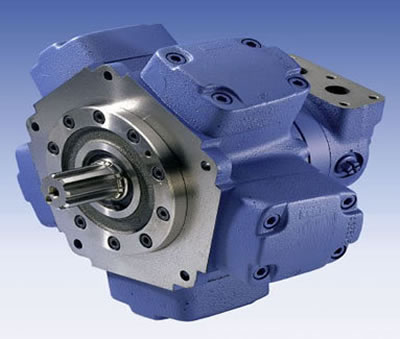
The operating principle of radial hydraulic oil pumps is quite simple. This type of piston pump uses a rotating component to move the piston in and out of the cylinder. As the piston moves, the pump draws fluid into the cylinder through a suction valve and pushes it out through a discharge valve. Radial piston pumps are primarily used in fields requiring high flow and pressure, such as the cement, metallurgy, and pulp processing industries.
Advantages:
- Operates with high efficiency, optimizing the conversion of energy into pressure and fluid flow.
- Generates high to very high pressure, suitable for applications requiring strong and stable pressure.
- Capable of controlling pressure without changing flow rate, meeting specific requirements in modern industrial applications.
- No initial priming required, saving time and effort during startup.
- RPM is limited to ensure stability during operation, preventing fluid inertia from causing unwanted oscillations.
- Adjustable flow by changing piston stroke, allowing flexibility in regulating fluid volume.
- Pumps viscous fluids and can handle highly thick substances, including sludge.
Gear Hydraulic Pump
Gear pumps apply the operating principle of rotating gears. Gear pumps are widely used in industries, particularly in compressors, steam/gas compression equipment, and modern agricultural applications.
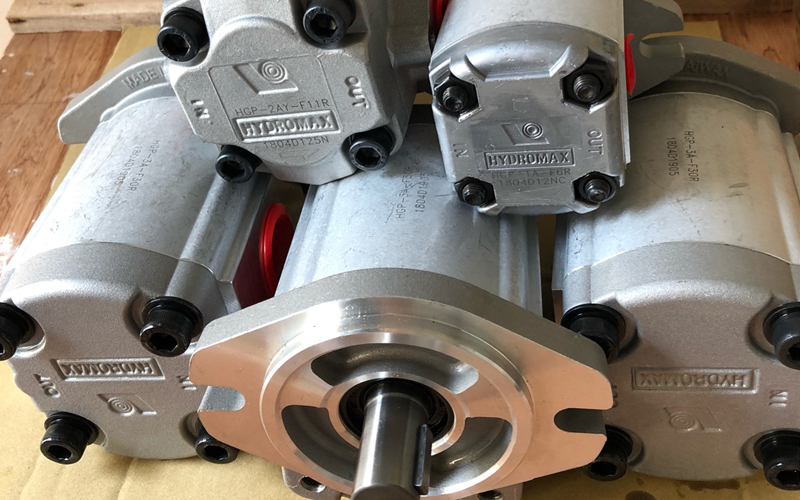
Structure and Operating Principle
Hydraulic gear pumps use two helical gears to create pressure and move fluid. Below is a detailed description of the gear pump’s structure:
- Gears: The pump has two main gears, one on the motor shaft and one on the pump shaft. These two gears are identical in shape and made from high-quality materials to ensure durability and pressure resistance.
- Pump Frame: The gears are installed inside a pump frame. This frame is a fixed housing containing the gears and lubricating oil.
- Motor Shaft: Connected to the motor to rotate the gear on the motor shaft.
- Pump Shaft: Holds the gears inside the pump frame. When the motor shaft rotates, it drives the gear on the pump shaft, creating force to rotate the gears.
- Vanes/Teeth: Teeth on the gears are designed to create space for fluid to be sucked and pushed through. As the gears rotate, they generate pressure and fluid flow from the intake to the discharge port.
Operating Principle: The gears mesh tightly to create a triangular void on one side and a void containing the solution or fluid on the other. As the gears rotate, the void moves toward the suction or discharge side. Thus, the fluid enters and is expelled. When the internal gears turn, fluid is drawn into the grooves between gears, creating low pressure. Then, fluid is pushed out of the grooves, creating high pressure. This process happens continuously, providing pressure and fluid flow for the system.
Advantages:
- Hydraulic gear pumps have a compact design and lightweight, making them easy to integrate into space-constrained applications.
- High reliability, operating continuously for long periods without much maintenance.
- Gear pumps perform well at low pressure and temperature, suitable for applications requiring these conditions.
- Lower cost compared to many other types, making them an economical choice.
Disadvantages:
- Gear pumps are not suitable for applications requiring high pressure and speed, as they can cause pressure loss and efficiency degradation.
- Input pressure is not fixed during operation, affecting performance in some situations.
Vane Hydraulic Pump
Vane hydraulic pumps operate based on the principle of using rotating vanes to suck and push fluid through gaps in the pump frame. They are popular and commonly used in light industrial applications where pressure and flow are not very high, such as in agricultural equipment, construction machinery, and oil pumps.
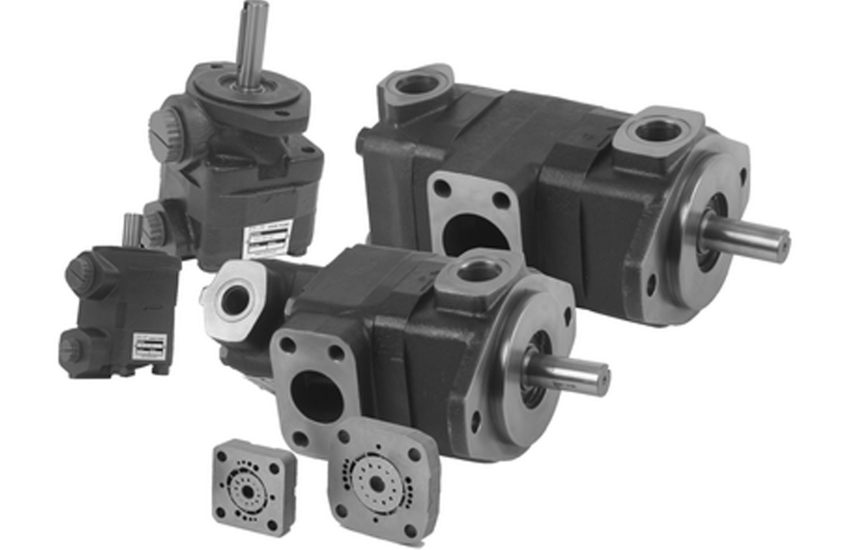
Structure and Operating Principle
- T-Shaped Frame: The pump frame often has a “T” shape, with the “T” being a fixed frame. Within this frame, the main pump components are sealed.
- Rotor: The rotating part of the pump, usually a long shaft with vanes firmly attached. This rotor sits within the “T” frame.
- Vanes: Vanes are sharp blades attached to the rotor. The number and shape of vanes can vary depending on the specific pump model.
Operating Principle: As the rotor turns, the vanes press against the pump frame wall, creating gaps between them. When the rotor turns toward the suction side, fluid is drawn into these gaps. When the rotor turns to the discharge side, fluid is pushed out through the gaps. This creates a continuous flow of fluid from inlet to outlet, allowing the vane pump to provide fluid flow and pressure for various systems and applications.
Advantages:
- Vane pumps have a simple structure with fewer moving parts, increasing durability and lifespan.
- This type typically has lower purchase and installation costs compared to many others.
- Suitable for applications requiring medium pressure and flow.
- However, during operation, the output pressure of vane pumps is unstable, especially at varying speeds. Therefore, this pump line is not suitable for applications requiring precise pressure.
Screw Hydraulic Pump
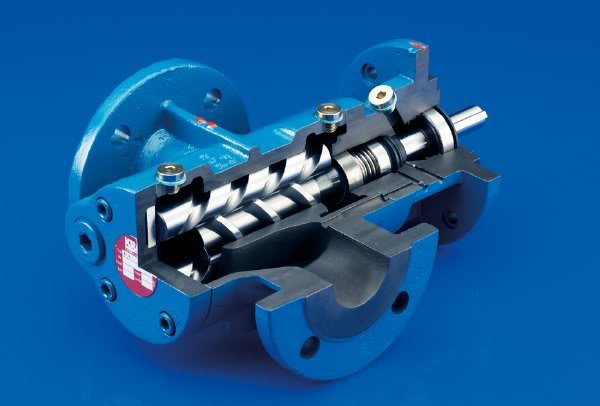
Screw hydraulic pumps apply the working principle of two screws running parallel to each other to suck and push fluid. This type is widely used in industries, particularly in fisheries, water supply, and wastewater treatment.
Structure and Operating Principle
A hydraulic screw pump is a device used in industrial applications to pump fluid, usually oil. The structure includes two symmetrical helical screws: a large one called the pump rotor and a smaller one called the motor shaft.
- Rotor Pump: The large screw, usually at the center of the pump block. This shaft is helical and attached with a fixed number of vanes or threads on its outer surface.
- Motor Shaft: The small screw connected to the motor. This shaft transfers motion from the motor to the pump shaft to rotate it.
- Inlet Port: Where water or fluid is drawn into the pump block. It is usually at one end of the pump.
- Outlet Port: Where fluid is pushed out of the pump to its destination. It is usually at the other end.
Operating Principle: When the motor starts rotating, the motor shaft moves the pump shaft. Due to the helical shape of the pump shaft and vanes on the pump surface, fluid at the intake port begins to fill the pump cavity. As the shaft turns, the vanes create a “U” shaped curve inside the cavity. From there, the fluid moves from inlet to outlet along the pump’s length. As fluid moves through the cavity, pressure increases and the fluid is pushed out. This process continues as the motor shaft keeps turning, creating a continuous flow.
Advantages of Screw Hydraulic Pumps:
- Simple structure with fewer moving parts, increasing durability and lifespan.
- Provides large fluid flow, meeting the needs of industrial and construction applications.
- Good at handling high-viscosity fluids and can process fluids containing small solid particles that other pumps might struggle with.
- Can generate high flow and pressure, meeting the needs of lifting equipment requiring massive force like hydraulic tilting lift tables.
Hydraulic screw pumps are an effective solution for applications requiring high pressure, large flow, and the ability to handle special fluids. However, users should consider costs and maintenance when choosing this type.
Mini Hydraulic Pump
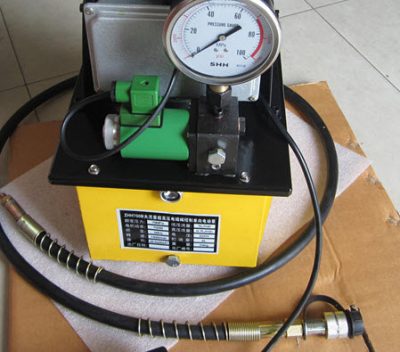
Mini hydraulic pumps are compact and portable, often used in applications requiring low to medium pressure. They are used for tasks like pumping fluid from one place to another in schools, construction sites, or in industry and agriculture.
Structure and Operating Principle:
- Motor: Mini pumps usually use an electric or gasoline motor to operate.
- Impeller: The rotating part inside the pump to move fluid. The impeller creates pressure and flow by rotating and compressing fluid.
- Pump Housing: Contains the impeller and other pump parts. Protects internal components and directs fluid from inlet to outlet.
- Inlet Port: Where fluid is sucked into the pump from the environment.
- Outlet Port: Where fluid is pushed out to the necessary system or application.
Operating Principle: Fluid is sucked into the pump and then moves to the impeller. As the impeller rotates, it creates a spiral motion in the fluid, compressing it and creating pressure. Compressed fluid is pushed out through the outlet port. High pressure at the outlet pushes fluid to the system. This process repeats as the motor continues to operate.
Advantages:
- Small size, easy to carry and use.
- Made from lightweight materials like aluminum or stainless steel to reduce weight, suitable for compact lifting devices like hydraulic hand pallet trucks.
- Easy to use and maintain.
- Pressure and flow suitable for many small and medium applications.
Electric Hydraulic Pump
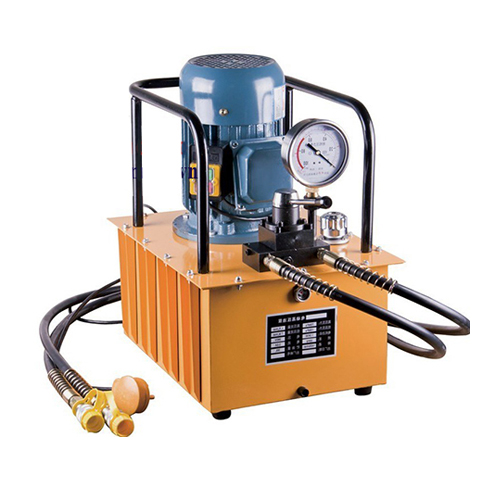
Electric hydraulic pumps are oil pumps that create high pressure in a hydraulic system using an electric motor to power the pump, pushing oil through lines and other devices in the system.
Structure of Electric Hydraulic Pumps
- Electric Motor: Drives the pump. Can use three-phase or single-phase electricity depending on needs.
- Frame and Pump Housing: Contains main components including motor and impeller. Made of steel or aluminum for protection and insulation.
- Impeller: Rotating part mounted directly on the motor shaft. When turning, it creates pressure by compressing fluid and pushing it out.
- Inlet Port: Where fluid is drawn from the environment.
- Outlet Port: Where fluid enters the hydraulic system.
- Valves and Controls: Used to adjust pressure and flow.
- Motor Drive: Some have electronic devices to control motor operation and fluid pressure.
Advantages of Electric Hydraulic Pumps
- High flexibility, meeting various working requirements.
- Stable long-term operation without much maintenance.
- High and accurate hydraulic performance.
- More fuel-efficient than conventional pumps as they don’t use diesel motors or pneumatic pumps.
- Easy to use and control during work.
- Long lifespan.
- Primarily used in heavy industries including packaging machines, electric pallet trucks, and electrical equipment.
Air-Hydraulic Pump
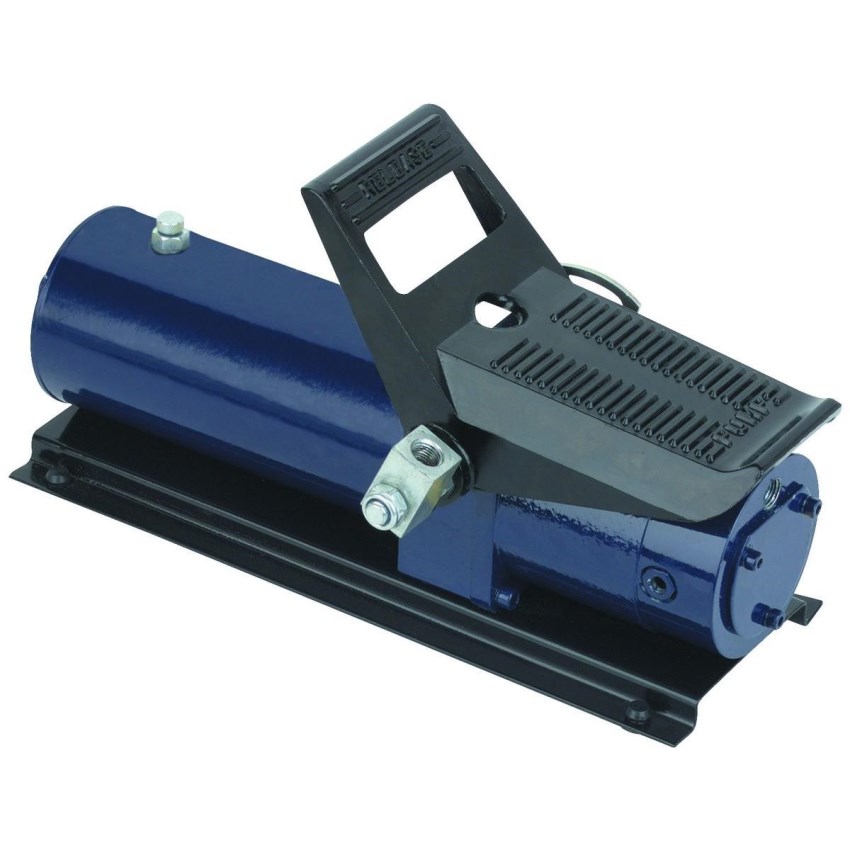
Pneumatic hydraulic pumps (air-driven pumps) are devices used to generate high hydraulic pressure using compressed air. They are mainly used to supply pressure to hydraulic systems in industries including trucks, equipment, construction machinery, cars, and ships.
Structure of Air-Hydraulic Pumps
- Cylinder: Often uses one or more cylinders.
- Piston: Each cylinder has an internal piston that moves to create pressure by compressing fluid.
- Valve: Used to control fluid flow and pressure. Main types are inlet and outlet valves.
- Compressed Air: Uses air fed into the cylinder to move the piston. Air pressure is regulated to control the compression process.
Air-driven oil pumps work by using compressed air to adjust pressure in the connecting lines. This pushes hydraulic oil through the system to provide necessary pressure. They are used in complex industries requiring high power, reliability, and precision.
See more: Quality air filters
Advantages:
- Solid structure, stable operation.
- Quiet, smooth motor, no noise concerns.
- Designed specifically for pumping high-viscosity and ultra-thick fluids.
- Automatic direction change and adaptable to almost all flow directions as required.
- Applicable for pumping many different fluid types.
- Long life, few breakdowns.
Hydraulic Hand Pump
Hydraulic hand pumps use oil as a fluid source to operate equipment. They work based on suction and discharge of oil under mechanical force applied by human hands. Due to simplicity, they are widely used in industry and manufacturing. They are usually designed to be compact and simple.

Structure of Hydraulic Hand Pumps
- Piston Rod: The handle that the user presses down or pulls up to create pumping pressure.
- Piston: Moves inside the pump. When pressed, it moves in the chamber to create pressure.
- Reservoir: Where the fluid to be pumped is stored. As pressure increases, fluid is pushed out through the discharge valve.
- Crank: Some hand pumps use a crank instead of a rod.
- Check Valve (Discharge): Allows fluid out when pressure is reached.
- Check Valve (Suction): Prevents fluid from returning to the reservoir after discharge.
Advantages of Hydraulic Hand Pumps
- Cylindrical structure, simple design, RPM can reach 3,000 – 15,000.
- Lightweight, easy to move, install, use, replace, and maintain.
- No vibration, average noise, minimal heat generation compared to standard pumps.
- Low maintenance saves costs.
Dump Pumps (Dual Pumps)
Among all types, dump pumps are the easiest to distinguish. They are mainly used in automatic dumping applications from trailers to parallel-axle dump trucks. They are developed for one specific application—dump trucks—and are not suitable for regular trailer applications like tilt or lift trailers.
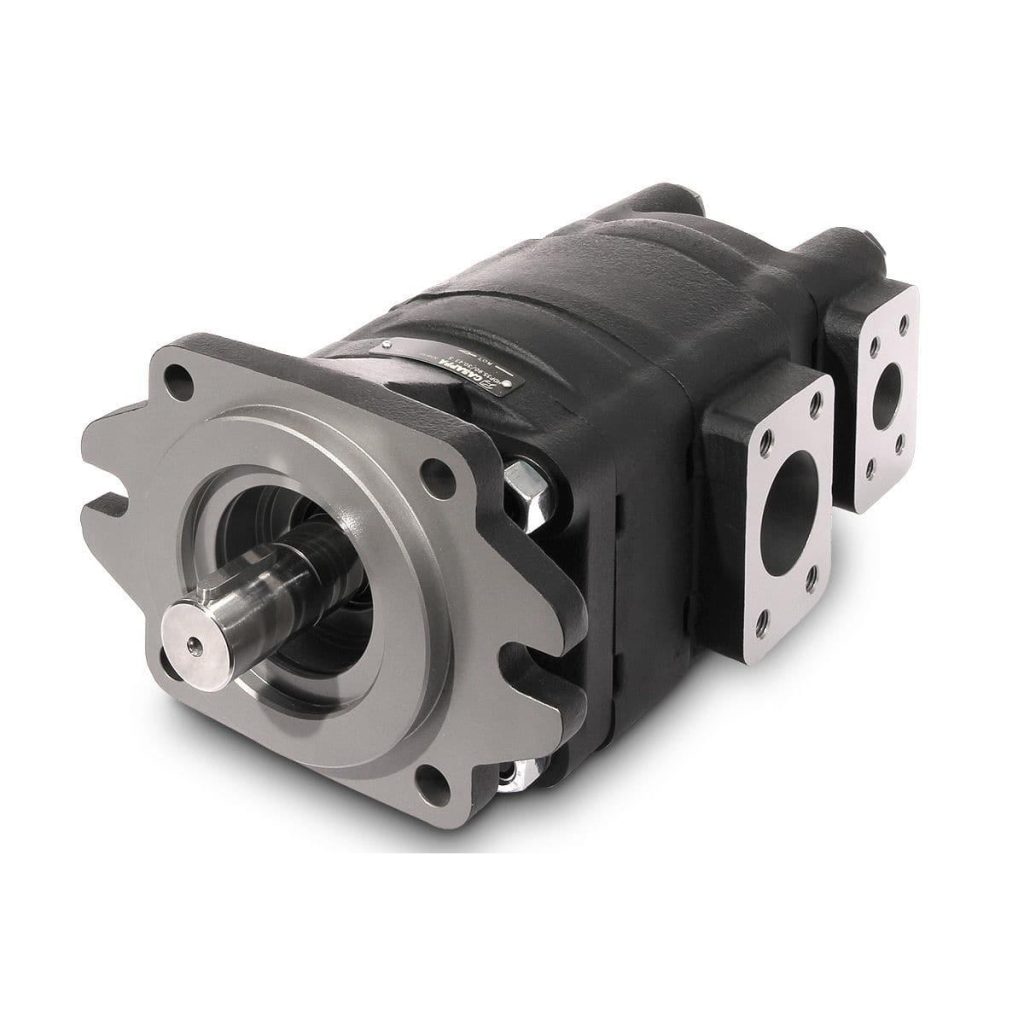
The difference between dump pumps and regular gear pumps is the dual pressure relief and an integrated three-position, three-way directional control valve. They are not suitable for frequent operation due to internal passage heating risks.
Advantages of Dump Pumps
- Capable of generating high pressure and high fluid flow. Used in cutting, bending, and shaping materials.
- Designed for long continuous operation without failure.
- Versatile across industrial machinery, construction, and transport equipment.
- Energy efficient compared to some other types.
- Long lifespan.
Used Japanese Hydraulic Pumps (Bãi Nhật)
Many companies choose to buy used Japanese pumps to install in their systems to reduce investment costs. These are used pumps that still have features similar to new ones. Companies liquidate them because they want newer models. Many businesses trust them because they are much cheaper than new products.
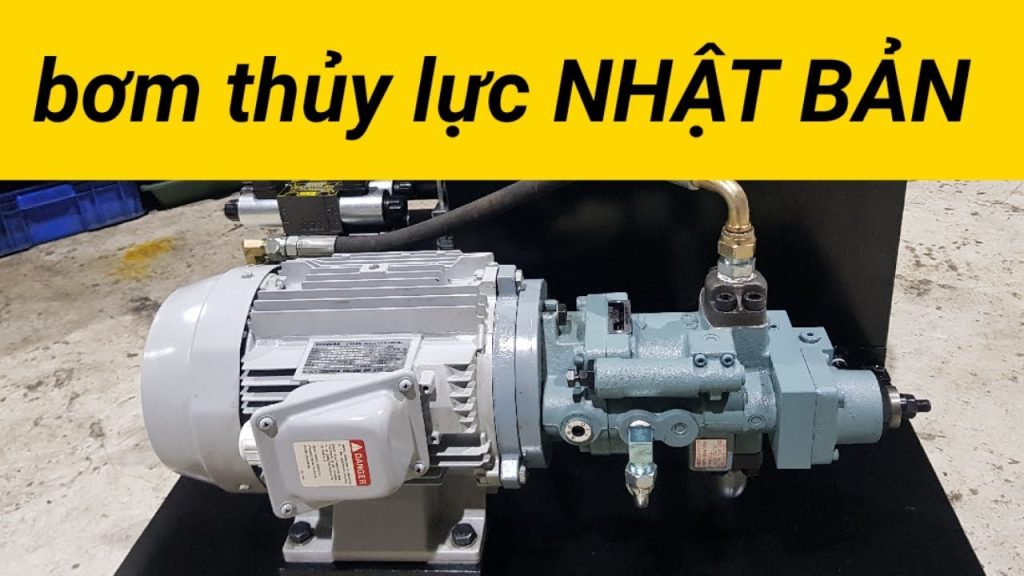
Advantages:
- Relatively modern models, lower cost.
- Meets utility features and conditions for being sold in Vietnam.
- Smart investment for small businesses.
Industrial Applications of Hydraulic Pumps
- Industrial Machinery: Used to provide pressure for presses, benders, metal cutters, and processing machines.
- Construction: Used in equipment like 150-ton feeding lift tables, excavators, concrete mixers, and stone cutters.
- Mining: Used for fluid transport, including hydraulic cargo lifts and mineral transport.
- Industrial Automation: Used in automated systems to control production processes.
- Machine Manufacturing: Plays a vital role in providing pressure for manufacturing equipment.
- Manufacturing Sector: Used in material handling equipment like hydraulic dock levelers.
- Marine: Used for crane control, shaft hydraulics, and steering systems.
- Transportation: Using yard ramps as bridges between floors and trucks, speeding up transport and saving labor.
- Repair Services: Using hydraulic car lifts and motorcycle lifts in garages.
Guide on Calculation for Choosing the Right Hydraulic Pump
Calculation Methods
Technical specs include flow, pressure, and power, calculated based on system requirements.
Flow Rate:
Flow rate (Q) can be calculated as Q = V/t, where V is volume per cycle and t is time.
Or Q = n * v, where n is RPM and v is volume per revolution.
Pressure:
Pressure depends on the system’s needs. Calculated as P = F/A, where F is force and A is area.
Power:
Power (P) is calculated as P = Q x p, where Q is flow and p is pressure.
How to Choose High-Quality, Durable Hydraulic Pumps
- Flow requirement: Ensure it matches system needs to avoid inefficiency or damage.
- Pressure requirement: Must match to ensure safe operation.
- Pump type: Choose based on precision and rotation speed needs.
- Reliability and safety: Choose durable brands to limit breakdowns.
- Cost and efficiency: Balance investment against long-term performance.
- Ease of maintenance: Reduces downtime.
- Environment: Consider heat, humidity, and corrosion.
Trusted brands include:
- Yuken: From Japan, reasonable price and good quality.
- Nachi: Famous for durable piston pumps.
- Rexroth: High-end quality for major industrial zones.
Guide to Using Hydraulic Pumps Effectively
- Select based on technical data (flow, voltage, etc.).
- Perform proper maintenance per manufacturer guidelines.
- Use appropriate filters to exclude dust.
- Use high-performance oil and change regularly.
- Ensure correct installation and follow safety rules.
Reputable Address for Quality Hydraulic Pumps at Good Prices
Hydraulic systems are indispensable today. They provide the compression force needed for fluid movement and power industrial machinery.
However, choosing the right supplier is vital for peace of mind. NALTAKO INDUSTRIAL JOINT STOCK COMPANY is a leading provider in Vietnam, partnering with major construction firms.
Products are directly imported from world-leading heavy industries. Naltako commits to:
- 1 to 2-year warranty.
- Free returns for products meeting warranty conditions.
- Expert sales team to answer all questions.
- Competitive direct-import prices.
- Nationwide delivery within 2-3 days.
If you need a quality hydraulic pump, please contact hotline: 0981977898 for a detailed quote:
CONTACT INFORMATION: Naltako Industrial Joint Stock Company
Workshop Address: Dong De, Phu Yen, Chuong My, Hanoi
Hotline: 0981.977.898
Email: nhat.mtk53@gmail.com
Nội dung có liên quan:
-
 What is a Gear Hydraulic Pump? Structure and Classification
With a simple structure, convenient assembly and operation, and the ability to withstand heavy loads for a specific duration, gear hydraulic pumps are wide...
What is a Gear Hydraulic Pump? Structure and Classification
With a simple structure, convenient assembly and operation, and the ability to withstand heavy loads for a specific duration, gear hydraulic pumps are wide...
-
 Hydraulic Seals: Classification, Installation & Replacement
Hydraulic seals are vital components in a hydraulic system, yet not everyone fully understands them. If you are looking for information on seal types, inst...
Hydraulic Seals: Classification, Installation & Replacement
Hydraulic seals are vital components in a hydraulic system, yet not everyone fully understands them. If you are looking for information on seal types, inst...
-
 Grating Flooring (Galvanized Steel Grating): Features, Applications, and Quotes
What is Grating Flooring?
Grating flooring (also known as galvanized steel grating or grating panels) is a type of floor formed from load-bearing steel ba...
Grating Flooring (Galvanized Steel Grating): Features, Applications, and Quotes
What is Grating Flooring?
Grating flooring (also known as galvanized steel grating or grating panels) is a type of floor formed from load-bearing steel ba...
-
 What is a 500kg Hydraulic Jack? Structure and Operating Principle
Nowadays, the 500kg hydraulic lift table, lifting 280 - 900 mm is a popular lifting device in many fields. With the ability to lift heavy objects easily an...
What is a 500kg Hydraulic Jack? Structure and Operating Principle
Nowadays, the 500kg hydraulic lift table, lifting 280 - 900 mm is a popular lifting device in many fields. With the ability to lift heavy objects easily an...
-
 Forklift Batteries: Classification, Usage, Maintenance, and Replacement Instructions
Are you having a headache because your electric forklift is operating inconsistently? Is the forklift battery running out quickly, failing to charge fully,...
Forklift Batteries: Classification, Usage, Maintenance, and Replacement Instructions
Are you having a headache because your electric forklift is operating inconsistently? Is the forklift battery running out quickly, failing to charge fully,...
-
 Top 5 Reputable Addresses for Affordable, High-Quality Electric Forklift Wheels
Are you struggling to find a place to buy electric forklift wheels that are affordable yet still guarantee quality? Choosing the wrong supplier not only wa...
Top 5 Reputable Addresses for Affordable, High-Quality Electric Forklift Wheels
Are you struggling to find a place to buy electric forklift wheels that are affordable yet still guarantee quality? Choosing the wrong supplier not only wa...
-
 Types of Crane Hooks & Detailed Price Quotes
Are you having a headache finding the right crane hook for your needs and budget? Naltako will help you understand the popular types of crane hooks on the ...
Types of Crane Hooks & Detailed Price Quotes
Are you having a headache finding the right crane hook for your needs and budget? Naltako will help you understand the popular types of crane hooks on the ...
-
 Hydraulic Throttle Valves: Structure, Operating Principle, and Applications
Are you struggling with products like hydraulic dock levelers operating inefficiently, consuming too much energy, and being difficult to control? Don't wor...
Hydraulic Throttle Valves: Structure, Operating Principle, and Applications
Are you struggling with products like hydraulic dock levelers operating inefficiently, consuming too much energy, and being difficult to control? Don't wor...