

 Tiếng Việt
What is a Piston? Structure and Operating Principle
If you work in the repair and installation of industrial equipment, you have surely heard terms such as: steam engines, internal combustion engines, etc. A piston is a vital component in an internal combustion engine.
The operating principle of a piston combined with a cylinder and a connecting rod creates a combustion chamber. From there, it provides the force for the vehicle’s engine to operate. So, what is a piston? What is its structure, operating principle, and application? Let’s explore everything with Naltako in the article below.
What is a Piston?
What is a Piston? A piston is also known as a pít tông. This is a very familiar term for those working in the machinery and industrial lifting industry, such as with dock levelers or hydraulic lifting tables. As mentioned above, a piston is a component of engines, pumps, air compressors, or steam cylinders. For internal combustion engines, the piston’s duty is to work with the cylinder and cylinder head to form the combustion chamber. Pistons are usually cylindrical or box-shaped, made of metal, and located in engines, air compressors, pumps, hydraulic cylinders, and pneumatic cylinders.
- For pumps: Force is transmitted from the crankshaft to the piston to compress fluid within the cylinder.
- For engines: The piston is responsible for transmitting force from the expanding gas in the cylinder to the crankshaft via the connecting rod.
Additionally, in some engines, the piston acts by opening and closing ports in the cylinder. To continuously convert thermal energy and complete the cycle in various ways, the piston follows a periodic process as follows:
- Transferring heat to the gas inside the cylinder; the gas expands, increasing the volume in the cylinder and producing motion.
- Removing heat from the cylinder; the gas pressure drops, allowing the piston to be compressed more easily.
- Inputting work into the piston; the piston compresses back to its original state, ready to perform a new cycle.
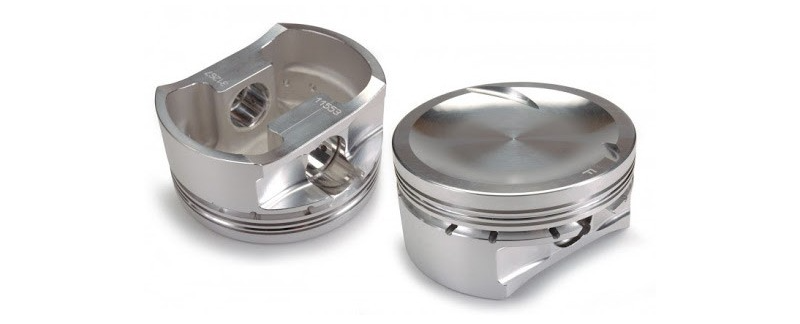
Structure of a Piston in an Internal Combustion Engine
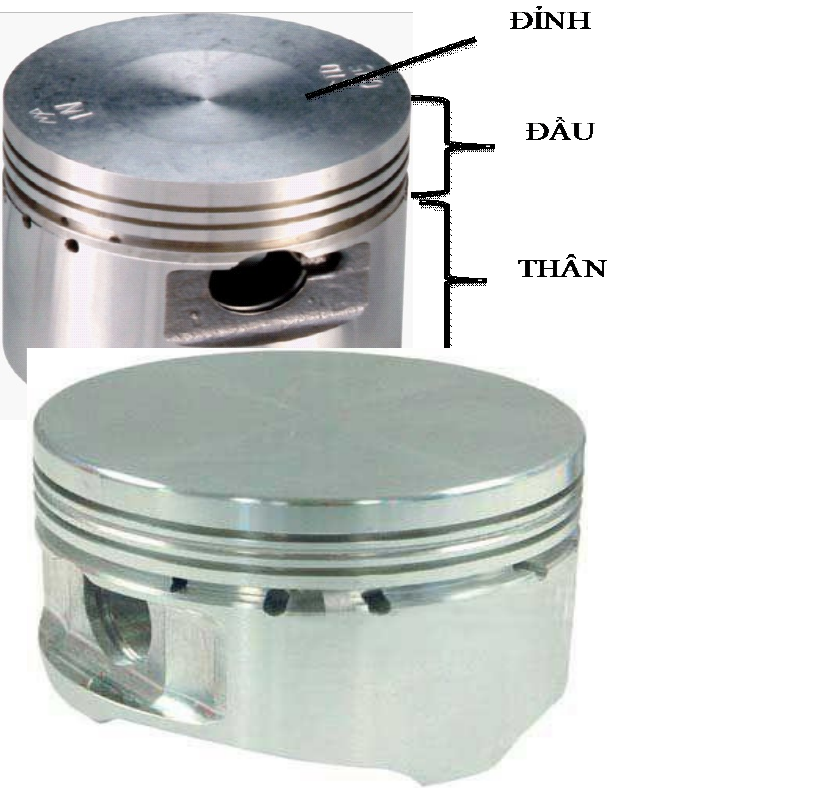
A piston is usually cylindrical and consists of 3 parts: the crown (top), the head, and the skirt (body). Here is the detailed structure of a modern piston:
Piston Crown
There are 3 types of piston crowns: flat, convex (domed), and concave (dished), depending on the device used and the structure of the combustion chamber. In internal combustion engines, piston crowns are designed differently based on the engine’s requirements and operating conditions.
Flat Crown: A flat piston crown is suitable for gasoline engines because the combustion chamber structure is located on the cylinder head, resulting in a small heat-resistant area. This is a simple and common structure in gasoline engines.
Convex (Domed) Crown: This type of piston has a spherical convex top, which helps increase strength and rigidity. Convex crowns are often lighter and have a larger heat-resistant area compared to flat crowns. Therefore, these pistons are used in applications requiring high durability and heavy loads.
Concave (Dished) Crown: A concave piston crown has an area to receive compressed air or fuel during operation. This is a common piston style in both gasoline and diesel engines and has a larger heat-resistant area than a flat crown. This helps improve combustion efficiency and enhance fuel economy.
👉 See more: Compressed air filters: Structure, operating principle, classification
Piston Head
The piston head has grooves designed for installing piston rings. These rings help block and scrape lubricating oil from the combustion chamber while creating a seal between the piston and the cylinder wall. This is crucial for ensuring engine performance and longevity.
Additionally, it prevents lubricating oil from entering the combustion chamber and harming the combustion process. The piston head is limited from the bottom of the crown down to the last oil ring groove on the piston pin boss.
The piston head must seal the combustion chamber in the cylinder to create high-quality compression space for the combustion process. When the piston moves up, the space between the piston crown and the cylinder head must be perfectly sealed to prevent the fuel-air mixture from leaking out before combustion.
For engines operating at high temperatures, the piston head plays a role in heat dissipation. The piston head makes contact with the ambient air and the temperature of the lubricating oil, thereby helping to reduce the piston’s temperature during operation.
Piston Skirt (Body)
The piston skirt performs the task of guiding and supporting the movement of the piston within the engine’s cylinder. This part plays an important role in transmitting force from the combustion process in the combustion chamber to the connecting rod, and from there, further transmitting the force to rotate the crankshaft and produce the engine’s rotational motion.
Operating Principle of a Piston
The operating principle of a piston is an essential part of the functioning of internal combustion engines, including both gasoline and diesel engines. Below is the operating principle of a piston in modern gasoline engines:
[Image of the four-stroke engine cycle: intake, compression, power, exhaust]Intake of Fuel-Air Mixture: In a gasoline engine, the fuel-air mixture is drawn into the combustion chamber through the intake valve as the piston moves down from the top position of the cylinder. In a diesel engine, only air is drawn in during the intake stage.
Compression of Fuel-Air Mixture: Once the piston reaches the bottom of the cylinder, it begins to move upward. During this process, the intake valve closes, and the piston compresses the fuel-air mixture in the combustion chamber. The pressure and temperature of the fuel-air mixture gradually increase due to compression.
Combustion Phase: When the compressed mixture reaches its peak pressure and temperature, combustion occurs. In gasoline engines, combustion is triggered by creating an electrical spark through the spark plug electrode. In diesel engines, combustion occurs because high compression pressure causes the air temperature to reach a point sufficient for self-ignition when fuel is injected into the chamber.
Specifically for pistons used in hydraulic systems, the operation process can cause this device to overheat. At this point, you need to use a Oil cooler for hydraulic systems so that the piston’s workflow remains stable and the device’s lifespan is extended.
Opening the Exhaust Valve: After the combustion process, the piston moves down from the top position of the cylinder to push the combustion products out of the chamber through the exhaust valve.
Force Transmission and Cycle: During the up and down movement of the piston, energy from the combustion stroke is converted into mechanical energy through the crankshaft and the engine’s drive system. This process repeats continuously, creating the engine’s cyclic operation, providing power and torque for devices or vehicles using internal combustion engines.
Common Applications of Pistons Today
Using Pistons in Internal Combustion Engines for Cars and Motorcycles
In gasoline and diesel engines, the intake, compression, combustion, and exhaust processes take place above the piston, pushing the piston up and down in the cylinder. As the piston moves, it rotates the crankshaft, which transmits force to the vehicle’s drivetrain, helping the vehicle move. A motorcycle piston has two main duties. First, it sucks fuel into the combustion chamber. Second, during the explosion, the piston transmits force to the crankshaft, performing the intake, compression, and exhaust processes in the internal combustion engine.
Application of Pistons in Hydraulics
Hydraulic pistons are widely used in hydraulic applications, especially in heavy machinery. Here are some key applications:
- Hydraulic Pump: Hydraulic pistons are used as the primary component in hydraulic pumps. The piston creates thrust based on the principle of incompressible fluids to generate pressure and push liquid (usually hydraulic oil) through the piping system to other devices such as cylinders, motors, or other equipment requiring strong thrust.
- Hydraulic Ram/Jack: The hydraulic piston is a core component in hydraulic rams. When hydraulic fluid is pushed against the pistons, it creates a powerful thrust to move cranes, excavators, or other machine parts in the required direction. In cranes and excavators, hydraulic pistons are used in: Material unloading tables, hydraulic lifts, hydraulic dock levelers, and hydraulic presses. These are machine lines widely used in industry today.
- Control and Motion Systems: Hydraulic pistons are also used in control and motion systems for many types of industrial machinery. They can be used to control valves, gates, motion mechanisms, and many other applications.
- Machine Tools and Processing Machines: In machine tools and processing machinery, hydraulic pistons are often used to create cutting force, cut, or bend materials and work surfaces.
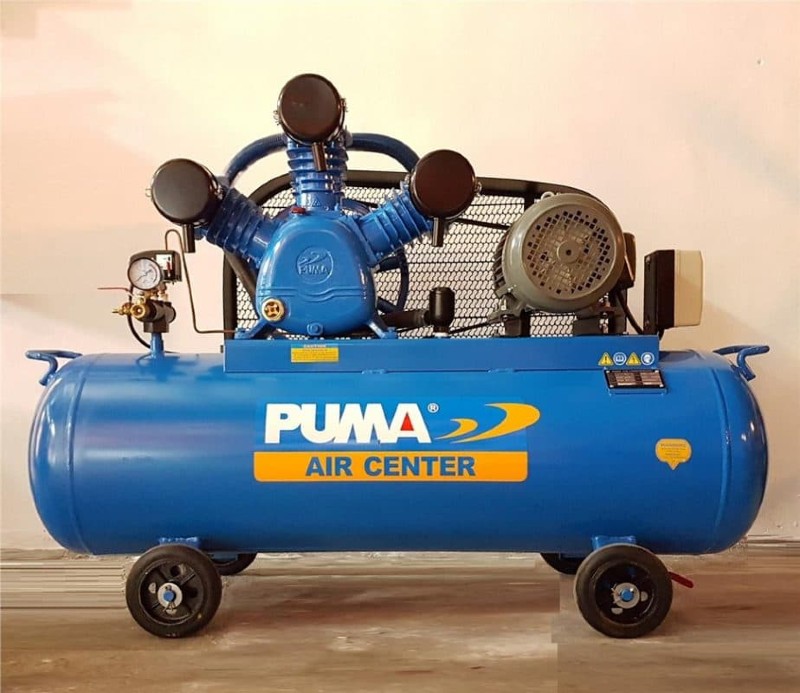
Application of Pistons in Air Compression
Air compression pistons are widely applied in many fields:
Using mini air compressors for toilet unclogging: When a clog occurs in a toilet or other drainage systems, mini air compressors can be used to create pressure and blow air into the pipes, helping to resolve the clog quickly and effectively.
Use in smart doors: In automation applications and cold storage doors, air compression pistons can be used to control opening and closing mechanisms. When air pressure is active, the piston will retract or push the door mechanism to open or close bus doors, supermarket doors, smart apartment doors, and other automatic doors.
Use in car wash sprayers: In pressure washing equipment, the air compression piston plays the role of creating high pressure to push water out of the spray nozzle with great force. This helps clean dirt, grime, and deposits on car surfaces quickly and efficiently. Outside of these applications, air compression pistons can also be used in various industries such as manufacturing, energy, construction, material handling, cleaning, inspection and testing, and air compression in machine systems…
Materials for Piston Production
Due to working under high pressure and temperature, and enduring friction for long, continuous periods, piston manufacturing materials must meet the following requirements:
- Low specific gravity
- High durability
- Low friction coefficient
- High wear and corrosion resistance
- Low thermal expansion coefficient
- Easy to machine (casting, cutting)
- Easy to source
In piston production, aluminum alloys and cast iron (or steel) are used for different purposes due to the unique characteristics and advantages of each material. However, manufacturers still prioritize aluminum alloys for making pistons. Some advantages of pistons made from aluminum alloy include:
- Low specific gravity: Aluminum has a lower density compared to cast iron or steel, which helps reduce the overall weight of the piston and improves engine performance.
- Good heat transfer: Aluminum has a better ability to transfer heat, allowing the temperature on the piston’s surface to be distributed evenly and quickly.
- Low friction coefficient: Aluminum surfaces have better sliding properties, reducing friction between the piston and the cylinder liner, helping to increase efficiency and reduce energy consumption.
- Ease of machining: Aluminum is ductile and easier to machine, saving time and costs in the piston production process.
However, aluminum alloy pistons also have the disadvantage of a higher thermal expansion coefficient compared to cast iron or steel. This can create looseness or gaps during high-temperature operation. Additionally, aluminum has lower wear resistance than cast iron or steel.
For products requiring high durability and strength, such as hydraulic lifting tables, pistons made from cast iron or steel are often preferred. In some special cases, cast iron or steel pistons are used to meet high requirements for speed and heavy load-bearing capacity of the engine. Each type of piston has its own pros and cons. Choosing the right piston depends on the specific requirements of each application and engine.
Causes and Signs of Piston Damage
The piston skirt’s duty is to guide the piston’s movement in the cylinder and link with the connecting rod to transmit force to rotate the crankshaft. This is a critical detail, and engines and machinery operate continuously. If strange phenomena occur such as: loud engine noises, excessive exhaust smoke, etc., users should conduct an inspection as soon as possible. Here are the causes of piston damage:
- Poor cooling and lubrication: When the engine lacks oil or uses low-quality oil, it leads to insufficient lubrication, causing the piston to suffer high friction and excessive heat, resulting in damage and wear.
- Incorrect installation: When pistons and rings are not installed correctly, these parts can easily collide, causing damage or uneven wear.
- Hydrolocked engine: If the engine is flooded, water can come into direct contact with the piston during operation, causing wear, corrosion, and negatively affecting piston performance.
- Overheating, overloading: When the engine frequently operates in an overheated or overloaded state, the piston can deform, crack, or fail due to high pressure and temperature.
- Faulty shock absorption system: When the shock absorption system doesn’t work correctly, unwanted impacts and vibrations can damage the piston and other parts in the engine.
To avoid these problems, perform periodic maintenance, use high-quality engine oil, and ensure correct installation. Additionally, follow maintenance procedures to ensure the piston operates stably and extend the lifespan of the piston and engine.
Naltako always considers the piston as the heart of the hydraulic system. We are a brand specializing in providing and installing production machines such as: Forklift ramps, hydraulic lifting tables, hydraulic lifts, hydraulic dock levelers, and hydraulic presses. All products installed by Naltako feature high-quality piston equipment and long-term warranties.
If you have a need, you can refer to Naltako’s products to make the right choice.
Conclusion
Above is all the necessary information for you to understand when learning about Pistons in internal combustion engines. If you have any further questions, please contact the information below for Naltako to assist you.
Nội dung có liên quan:
-
 Hydraulic Oil Radiators – Oil Coolers for Hydraulic Systems
What solution will support you in the process of cooling and cleaning hydraulic oil? That is using a hydraulic oil cooler immediately. However, each system...
Hydraulic Oil Radiators – Oil Coolers for Hydraulic Systems
What solution will support you in the process of cooling and cleaning hydraulic oil? That is using a hydraulic oil cooler immediately. However, each system...
-
 Compressed Air Filters: Construction, Working Principle, and Classification
Compressed air filters are a common and essential device, designed to effectively remove impurities and dirt that may exist in compressed air, helping you ...
Compressed Air Filters: Construction, Working Principle, and Classification
Compressed air filters are a common and essential device, designed to effectively remove impurities and dirt that may exist in compressed air, helping you ...
-
 Piston Pumps: Definition, Classification, Applications, and Pricing
If vane pumps or hydraulic gear pumps are selected for low-pressure systems, the hydraulic piston pump line is designed for high-pressure machinery requiri...
Piston Pumps: Definition, Classification, Applications, and Pricing
If vane pumps or hydraulic gear pumps are selected for low-pressure systems, the hydraulic piston pump line is designed for high-pressure machinery requiri...
-
 What is a Gear Hydraulic Pump? Structure and Classification
With a simple structure, convenient assembly and operation, and the ability to withstand heavy loads for a specific duration, gear hydraulic pumps are wide...
What is a Gear Hydraulic Pump? Structure and Classification
With a simple structure, convenient assembly and operation, and the ability to withstand heavy loads for a specific duration, gear hydraulic pumps are wide...
-
 Hydraulic Pumps
In today's industries, from high-rise buildings to manufacturing plants, hydraulic pumps play a crucial role. This component helps devices such as yard ram...
Hydraulic Pumps
In today's industries, from high-rise buildings to manufacturing plants, hydraulic pumps play a crucial role. This component helps devices such as yard ram...
-
 Hydraulic Seals: Classification, Installation & Replacement
Hydraulic seals are vital components in a hydraulic system, yet not everyone fully understands them. If you are looking for information on seal types, inst...
Hydraulic Seals: Classification, Installation & Replacement
Hydraulic seals are vital components in a hydraulic system, yet not everyone fully understands them. If you are looking for information on seal types, inst...
-
 Grating Flooring (Galvanized Steel Grating): Features, Applications, and Quotes
What is Grating Flooring?
Grating flooring (also known as galvanized steel grating or grating panels) is a type of floor formed from load-bearing steel ba...
Grating Flooring (Galvanized Steel Grating): Features, Applications, and Quotes
What is Grating Flooring?
Grating flooring (also known as galvanized steel grating or grating panels) is a type of floor formed from load-bearing steel ba...
-
 What is a 500kg Hydraulic Jack? Structure and Operating Principle
Nowadays, the 500kg hydraulic lift table, lifting 280 - 900 mm is a popular lifting device in many fields. With the ability to lift heavy objects easily an...
What is a 500kg Hydraulic Jack? Structure and Operating Principle
Nowadays, the 500kg hydraulic lift table, lifting 280 - 900 mm is a popular lifting device in many fields. With the ability to lift heavy objects easily an...