

 Tiếng Việt
Safety regulations for operating hydraulic lifting equipment
To ensure worker safety, protect property, and maintain stable production operations, understanding and strictly applying safety regulations when operating hydraulic lifting equipment is paramount. This article will provide you with hydraulic lifting equipment safety regulations during operation to raise user awareness and prevent accidents, creating a safe and efficient working environment.
Key hydraulic lifting equipment safety regulations to master
Lifting equipment in general, and pallet jacks in particular, play a crucial role in production but also pose many risks of occupational accidents if not used correctly. Mastering and complying with hydraulic lifting equipment safety regulations is a prerequisite for ensuring worker safety, protecting property, and maintaining production activities.
Safety regulations for lifting equipment installation
Installation site inspection
- Ensure the floor is load-bearing, with sufficient space and safe height for the lifting equipment to operate.
- Remove obstacles that hinder installation and operation.
Choosing suitable equipment
- Select lifting equipment with a payload and lifting height suitable for the intended use.
- Prioritize equipment from reputable manufacturers that meets quality standards.
Technical inspection
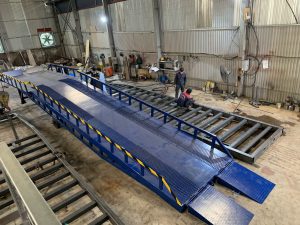
- Perform technical inspections and maintenance on lifting equipment before installation.
- Ensure all equipment parts are in good working order, with no damage or leaks.
Proper installation
- Strictly follow the manufacturer’s installation instructions.
- Use genuine tools, materials, and accessories.
- Assign installation tasks to experienced individuals trained in occupational safety.
Using safety protective gear
- Installers must use full personal protective equipment (PPE) such as helmets, safety goggles, gloves, and safety shoes.
Power check
- Check the electrical system to ensure it meets the technical and safety requirements of the lifting equipment.
See more: General regulations on stacking and securing goods during transport
Hydraulic lifting equipment safety regulations during operation
User training
- Train operators on how to use lifting equipment safely and correctly.
- Operators must master the operating principles, operating procedures, and troubleshooting measures of the equipment.
Checking equipment before use
- Check the technical condition of the lifting equipment before each shift.
- Ensure parts are working well, with no damage or oil leaks.
Compliance with permissible load
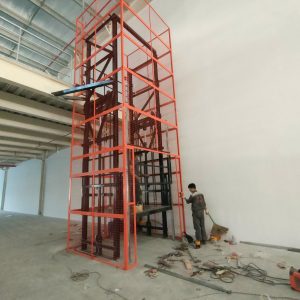
- Do not lift or lower goods that exceed the equipment’s permissible load capacity.
- Distribute the load evenly on the pallet or lifting attachment.
Ensuring work area safety
- Streamline traffic and establish a safety zone around the operating lifting equipment.
- Prohibit unauthorized persons from standing near the operating area of the lifting equipment.
Following proper procedures
- Comply with the equipment operating procedures according to the manufacturer’s instructions.
- Correctly perform procedures for hooking loads, securing goods, moving, and lifting.
Regulations on inspection and maintenance
Registration and inspection
- Register and inspect lifting equipment according to legal regulations.
- Only use lifting equipment that has been inspected and remains valid.
Service and Maintenance
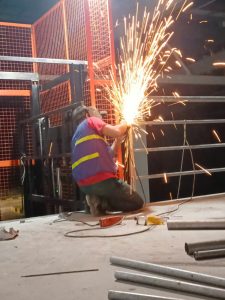
- Perform periodic maintenance on lifting equipment as per the manufacturer’s guide.
- Keep complete records in the maintenance logbook.
Operator certification
- Lifting equipment operators must possess valid certification and operating experience.
General regulations
- Equip operators with full personal protective equipment.
- Do not use lifting equipment when there are signs of damage.
- Report immediately to the supervisor when a malfunction is detected.
- Comply with other safety regulations of the enterprise.
Legal basis
- Law on Occupational Safety and Hygiene No. 84/2015/QH13.
- Decree No. 44/2016/ND-CP providing detailed regulations on some articles of the Law on Occupational Safety and Hygiene.
- National Technical Regulation QCVN 7:2012/BLDTBXH on occupational safety for lifting equipment.
>>> Safe working load in industrial lifting and cargo handling
Naltako – A provider of quality hydraulic lifting equipment
Naltako is a reputable brand specializing in high-end lifting products. With years of experience in the hydraulic lifting industry, Naltako always brings customers high-quality products with diverse and reasonable designs.
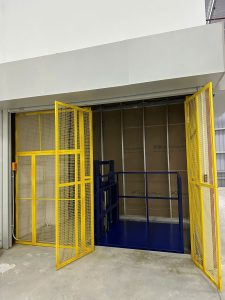
Here are the reasons why you should choose Naltako’s lifting equipment:
- Lifting devices are made from quality materials, offering high durability and good load-bearing capacity.
- Diverse product models, with equipment manufactured based on customer requirements.
- Reasonable and competitive pricing, suitable for customer investment budgets.
- Warranty policy up to 12 months.
Naltako ensures compliance with hydraulic lifting equipment safety regulations, giving customers peace of mind when using our products. For further details, please contact:
CONTACT INFORMATION
Website: https://naltako.vn/
Hotline: 0981.977.898
Email: nhat.mtk53@gmail.com
Workshop Address: Dong De Village, Phu Yen, Chuong My, Hanoi
Representative Office Address: 4th Floor, SME Hoang Gia Building, To Hieu, Ha Dong, Hanoi
Nội dung có liên quan:
-
 Detailed Man Lift Rental Services in Hanoi
Are you looking for man lift rental services in Hanoi but still have questions about costs and usage notes? Don't worry, the following article will provide...
Detailed Man Lift Rental Services in Hanoi
Are you looking for man lift rental services in Hanoi but still have questions about costs and usage notes? Don't worry, the following article will provide...
-
 What is a prefabricated container house? Reputable container home installation addresses
Nếu nhà mái tranh làm cho ta hiện hữu những ký ức về xã hội nông nghiệp thì với sự phát triển của xã hội hiện nay, nhà lắp ghép container đang chiếm ưu thế...
What is a prefabricated container house? Reputable container home installation addresses
Nếu nhà mái tranh làm cho ta hiện hữu những ký ức về xã hội nông nghiệp thì với sự phát triển của xã hội hiện nay, nhà lắp ghép container đang chiếm ưu thế...
-
 Explore stunning & artistic container house designs
If you are too familiar with traditional houses, container houses will bring you a completely new living space. The container home model is weaving its way...
Explore stunning & artistic container house designs
If you are too familiar with traditional houses, container houses will bring you a completely new living space. The container home model is weaving its way...
-
 Hydraulic Oil Reservoirs: Functions, Classification, and Selection
Hydraulic systems play a vital role in many modern industries. And one of the indispensable components of this system is the hydraulic oil tank (reservoir)...
Hydraulic Oil Reservoirs: Functions, Classification, and Selection
Hydraulic systems play a vital role in many modern industries. And one of the indispensable components of this system is the hydraulic oil tank (reservoir)...
-
 Basic structure of hydraulic lifting equipment
Hydraulic lifting equipment has become an indispensable part of modern industries today, from manufacturing and construction to logistics and transportatio...
Basic structure of hydraulic lifting equipment
Hydraulic lifting equipment has become an indispensable part of modern industries today, from manufacturing and construction to logistics and transportatio...
-
 The history of hydraulic lifting equipment through the ages
Since the dawn of time, humans have constantly sought ways to move and lift heavy objects far beyond their own physical strength. The birth of hydraulic li...
The history of hydraulic lifting equipment through the ages
Since the dawn of time, humans have constantly sought ways to move and lift heavy objects far beyond their own physical strength. The birth of hydraulic li...
-
 Construction lifting solutions: Elevating project efficiency
The construction industry has always been a key economic sector, contributing significantly to the infrastructure and economic development of every nation....
Construction lifting solutions: Elevating project efficiency
The construction industry has always been a key economic sector, contributing significantly to the infrastructure and economic development of every nation....
-
 What is a Car Lift? Common Types of Automotive Lifts
A car lift is indispensable equipment in garages, repair shops, and maintenance centers. This device is used to raise vehicles, creating favorable conditio...
What is a Car Lift? Common Types of Automotive Lifts
A car lift is indispensable equipment in garages, repair shops, and maintenance centers. This device is used to raise vehicles, creating favorable conditio...