

 Tiếng Việt
7 Common Cargo Lift Faults: Self-Diagnosis Secrets, Quick Fixes & Tips to Avoid Overcharging
A cargo lift suddenly “going on strike” during peak hours not only disrupts the supply chain but can also cost businesses millions in repair expenses. While most articles today only list generic causes, this post from Naltako offers a completely different perspective. Moving beyond pure theory, we will guide you on how to “self-diagnose” your lift through sound and intuition, while exposing minor faults that dishonest repairmen often exploit to “overcharge” you. By mastering these tips, you will take full control of your equipment and thoroughly optimize maintenance costs for your warehouse.
Stop Wasting Money! Exposing Faults Repairmen Often Exaggerate
When a lift malfunctions, the common mindset of managers is to fix it as quickly as possible to avoid cargo backlogs. However, without basic knowledge, it is easy to fall into the “making a mountain out of a molehill” trap set by untrustworthy repair services. Here are the most common faults whose severity is often inflated:
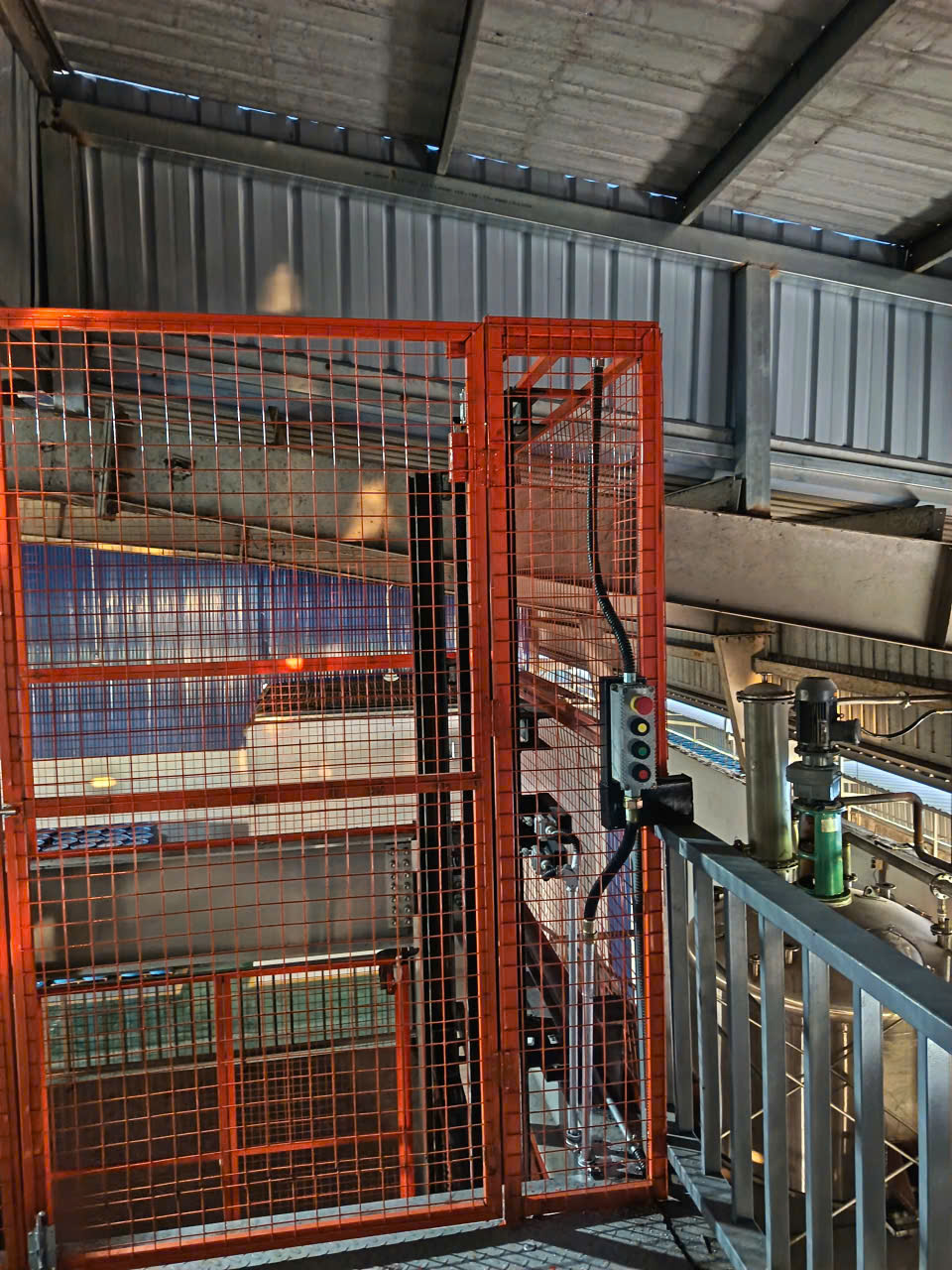
Loose signal wires reported as “Burnt Motherboards”
- The Truth: When a lift is completely paralyzed or fails to start, the root cause is often as simple as a power loss, a tripped circuit breaker, a weak battery, or loose contact points in the control buttons.
- The “Exaggeration” Tactic: Repairmen might claim the entire control circuit or motherboard is burnt to inflate replacement costs several times over.
- How to Handle: Before calling a technician, ask warehouse staff to check the main power source, wiring, fuses, and battery voltage. Simply tightening loose connections or cleaning battery terminals is often enough to get the lift running again at zero cost.
Clogged hydraulic valves reported as “Broken Pumps or Torn Seals”
- The Truth: For hydraulic lifts, symptoms like very slow lowering or getting stuck are usually caused by debris or obstructions clogging the release valve.
- The “Exaggeration” Tactic: A technician might overcomplicate the issue by reporting a broken hydraulic pump or torn cylinder seals, requiring the expensive dismantling and replacement of components.
- How to Handle: Insist that the technician first check and clean any debris inside the release valve to ensure normal oil flow. This simple cleaning is the most effective and quickest fix for slow lift movement.
Tips for “Self-Diagnosing” Cargo Lifts Through Sound and Perception
Warehouse keepers or operators can fully identify early signs of abnormalities to prevent costly chain-reaction failures:
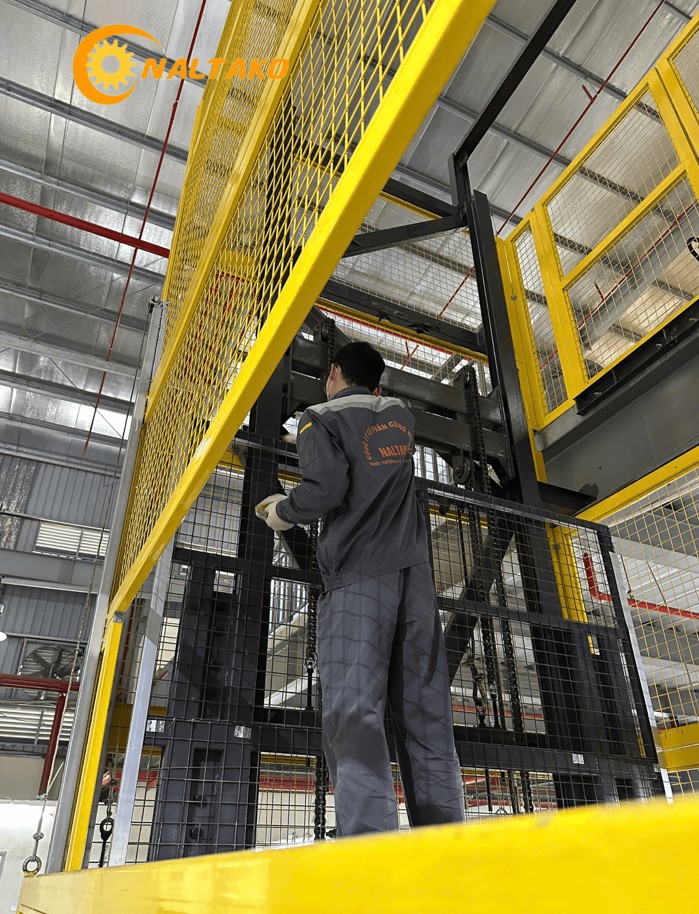
Ear-piercing screeches, clattering, or jerky movements during operation
Diagnosis: This is a “cry for help” from the mechanical system suffering from dry friction due to cables not being lubricated for a long time, a dry gearbox, or worn pulleys.
Handling: Check and apply grease to the cables and top up the gear oil (ISO VG68 standard recommended). If left unaddressed, cables will fray and break, leading to massive replacement costs for the hoist system and a serious risk of the cabin falling.
Feeling the cabin vibrate strongly, rock, or tilt
Diagnosis: This is usually due to unsynchronized load cables on both sides, eccentric guide pulleys, or guide rails being clogged with excessive dirt. For hydraulic lifts, this is also a warning sign of low oil levels or a clogged oil filter.
Handling: Stop the lift immediately to clean the guide rails and retighten the cabin base anchor bolts. If the tilt persists, only then should you call a professional technician to recalibrate the cable anchoring positions.
Summary of Core Technical Fault Groups and Precise Handling
Mechanical & Cable System Group (Hoists, Winches)
- Uneven cable spooling or overlapping: Caused by cables slipping out of grooves or eccentric pulleys. Handling: Stop operation immediately and realign the cables correctly in the drum grooves.
- Frayed, rusted, or snapped cable strands: Due to frequent overloading or lack of maintenance. Handling: There is no temporary fix for this. You must stop operation and replace the cables with new, load-rated ones. Do not skimp on cable replacement, as the cost of a fallen cabin is hundreds of times higher.
Electrical & Sensor System Group
- Limit switch failing to cut off: This causes the lift to slide past its stop point, risking a crash into the ceiling or the pit floor. Handling: Cut the power completely and clean the limit switch on the rail. If the sensor fails to respond, it must be replaced immediately.
- Constant overload alarms: This triggers when cargo weight exceeds the limit to protect the system. Handling: This is a safety mechanism, not necessarily a fault. Never attempt to bypass this sensor; instead, split the cargo and adhere to the design load capacity.
Specific Hydraulic Lift Faults
- Hydraulic oil leaks: Recognizable by a drop in lifting pressure, lift slipping, or visible oil stains. Handling: Replace oil seals, tighten or replace damaged hoses, and top up with the correct hydraulic oil.
- Lift can lower but not raise (or operates very slowly): Caused by insufficient voltage, damaged motor bearings, burnt brakes, or a clogged hydraulic release valve. Handling: Check the input voltage and clean the hydraulic valve to restore normal oil flow.
The “3 Golden Minutes” Maintenance Checklist for Every Shift
Performing this checklist at the start of every shift helps prevent up to 80% of major breakdown risks:
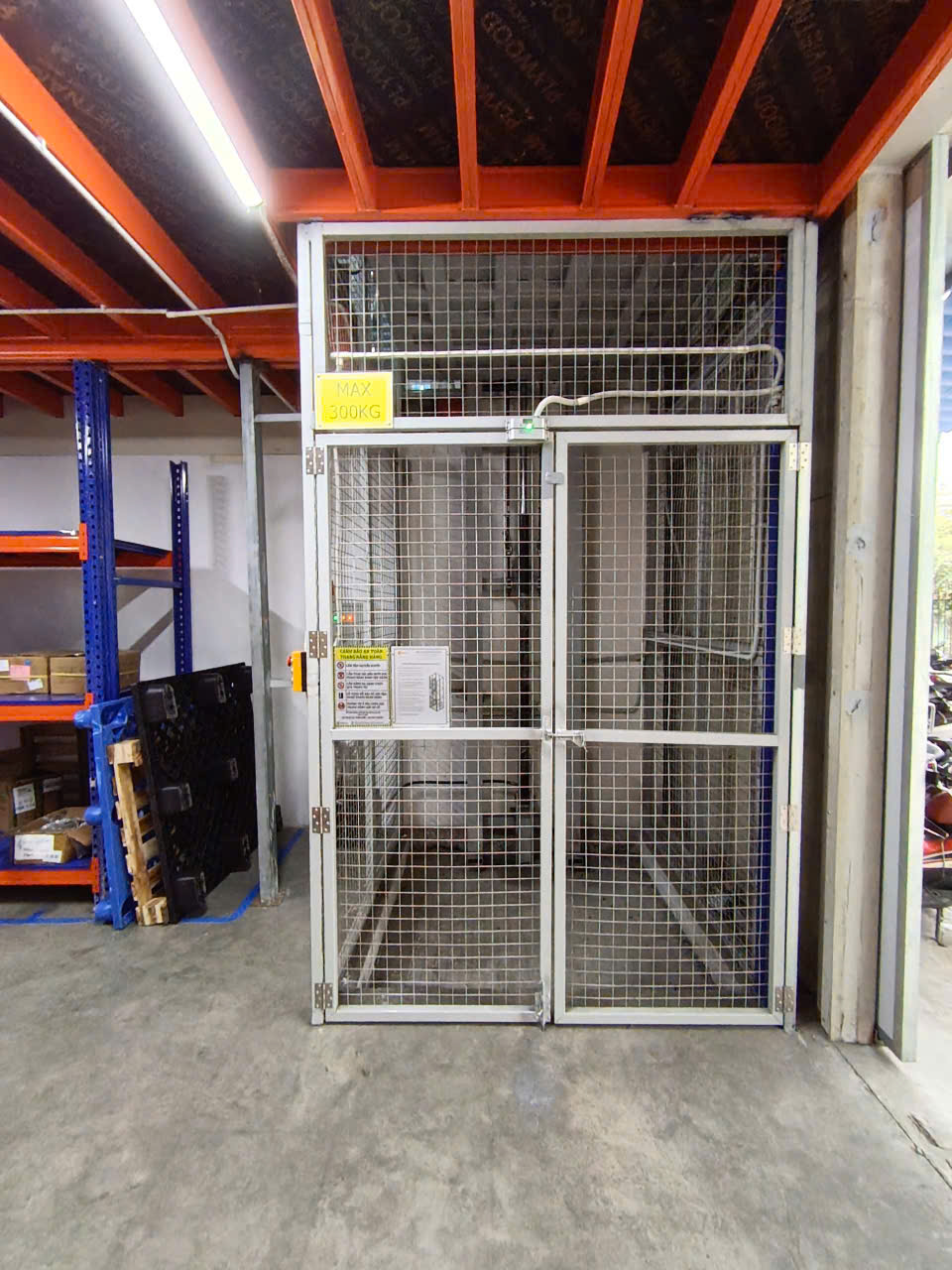
- Minute 1 (Observation): Check guide rails for obstructions; ensure cables aren’t out of their grooves; check the pit for oil leaks (for hydraulic lifts).
- Minute 2 (Safety Test): Run the lift empty for one cycle to listen for strange noises. Test the emergency stop button and limit switches at all floors.
- Minute 3 (Load Control): Strictly avoid loading cargo beyond the design capacity. Overloading is the direct cause of snapped cables, warped frames, and burnt motors.
Constant Repairs or an Upgrade? Cost-Optimization Advice
If your cargo lift frequently “goes on strike” 2-3 times a month and annual maintenance costs exceed 30% of the equipment’s value, continuous repair is an economic mistake. Old, patched-up systems not only consume more electricity but also pose unpredictable workplace safety risks.
Solution: Explore Naltako’s new-generation cargo lift systems. Our equipment features monolithic cast steel frames, integrated Inverter technology, and advanced anti-fall safety sensors.
Need immediate advice? Record a video of your lift’s current status and send it to Naltako via Zalo. Our engineers will “diagnose” the issue and provide a solution for free within just 5 minutes!
Hotline: 0981.977.898 – 0986.868.003
Nội dung có liên quan:
-
 What is a Mechanical Dock Leveler? How does it differ from a Hydraulic Dock Leveler?
Are you looking for a device to support loading and unloading goods from containers to the warehouse floor that is low-cost, highly durable, and easy to in...
What is a Mechanical Dock Leveler? How does it differ from a Hydraulic Dock Leveler?
Are you looking for a device to support loading and unloading goods from containers to the warehouse floor that is low-cost, highly durable, and easy to in...
-
 Popular Types of Hydraulic Freight Elevators Today
The role of hydraulic freight elevators in warehouses, production workshops, or construction sites is indisputable. However, the types of hydraulic freight...
Popular Types of Hydraulic Freight Elevators Today
The role of hydraulic freight elevators in warehouses, production workshops, or construction sites is indisputable. However, the types of hydraulic freight...
-
 Safe Working Load in Industrial Lifting and Cargo Handling
In the modern industrial and logistics environment, lifting and cargo handling activities take place continuously with large volumes and high frequencies. ...
Safe Working Load in Industrial Lifting and Cargo Handling
In the modern industrial and logistics environment, lifting and cargo handling activities take place continuously with large volumes and high frequencies. ...
-
 The Differences Between Mechanical Dock Levelers and Hydraulic Dock Levelers
The difference between hydraulic dock levelers and mechanical dock levelers is very clear – Hydraulic dock levelers operate automatically with a push of a ...
The Differences Between Mechanical Dock Levelers and Hydraulic Dock Levelers
The difference between hydraulic dock levelers and mechanical dock levelers is very clear – Hydraulic dock levelers operate automatically with a push of a ...
-
 What Should You Consider When Buying a 700kg Hydraulic Lift Table?
The 700kg hydraulic lift table is a popular tool widely used in production workshops and warehouses. With a lifting capacity of 700kg, this hydraulic lift ...
What Should You Consider When Buying a 700kg Hydraulic Lift Table?
The 700kg hydraulic lift table is a popular tool widely used in production workshops and warehouses. With a lifting capacity of 700kg, this hydraulic lift ...
-
 When Should You Use a 1000kg Hydraulic Lift Table?
Are you running a business in a warehouse or workshop that isn't too large and feeling that work efficiency hasn't reached your expectations? Are you looki...
When Should You Use a 1000kg Hydraulic Lift Table?
Are you running a business in a warehouse or workshop that isn't too large and feeling that work efficiency hasn't reached your expectations? Are you looki...
-
 Advantages of 500kg Manual Lift Tables You Should Know
Are you looking to buy a medium-duty manual hydraulic lift table for home use? Is your work frequency intermittent, and are you looking for a product with ...
Advantages of 500kg Manual Lift Tables You Should Know
Are you looking to buy a medium-duty manual hydraulic lift table for home use? Is your work frequency intermittent, and are you looking for a product with ...
-
 A Guide to Choosing High-Quality Hydraulic Dock Levelers Today
Hydraulic Dock Levelers are among the essential support devices for many fields and industries. Thanks to this product, the transport and storage of goods ...
A Guide to Choosing High-Quality Hydraulic Dock Levelers Today
Hydraulic Dock Levelers are among the essential support devices for many fields and industries. Thanks to this product, the transport and storage of goods ...