

 Tiếng Việt
What is Investment Cost? How to Manage Investment Costs Effectively
Investment cost is a core element in business development strategies, helping to create long-term value through asset acquisition and infrastructure construction. From investing in equipment to market research, investment costs drive growth and profitability. Naltako, a leading provider of lifting equipment, offers solutions such as low-profile hand pallet trucks and hydraulic lift tables to optimize costs. This article will explain the concepts, types, and how to manage investment costs effectively.
What is Investment Cost in Business?
Investment cost is the accumulated or mobilized assets intended for business development and profitability, including the purchase of fixed assets, market research, and infrastructure construction. In business, investment costs help companies expand scale, enhance production capacity, and compete in the market. For example, investing in scissor lifts or freight elevators increases warehouse efficiency, creating a long-term advantage. According to the World Bank, infrastructure investment drives economic growth by an average of 1.5% annually.

The role of investment cost lies in its ability to create a foundation for sustainable development. A manufacturing business can invest in forklift ramps to optimize goods transportation, thereby reducing operational costs.
Common Types of Investment Costs
Investment costs are divided into two main categories: capital expenditure (CAPEX) and operating expenditure (OPEX). CAPEX includes long-term investments such as purchasing hydraulic lift tables, building workshops, or installing production lines. According to CBRE Vietnam, CAPEX accounts for 60-70% of total investment costs in the manufacturing industry, helping to create high-value fixed assets. Conversely, OPEX refers to daily expenses such as equipment maintenance, utilities, or employee salaries.
Each type of cost has its own application. For example, a logistics company invests CAPEX in hydraulic hand pallet trucks to increase productivity, while OPEX is used for periodic maintenance.
Capital Expenditure vs. Operating Expenditure?
Capital expenditure (CAPEX) and operating expenditure (OPEX) differ in purpose and duration. CAPEX is a long-term investment, such as buying hydraulic lift tables or building warehouses, aimed at creating fixed assets and sustainable value. In contrast, OPEX consists of short-term expenses, such as freight elevator maintenance or fuel costs, accounting for 20-30% of the annual budget for small businesses (according to Deloitte).

For example, a business invests CAPEX in forklift ramps to increase transport efficiency, while OPEX is used for lubrication and periodic equipment inspections. CAPEX usually requires a large initial capital but brings long-term benefits, while OPEX requires continuous management to avoid waste.
>>> What is heavy industry? Equipment solutions from Naltako
Managing Investment Costs Effectively
Effective investment cost management requires careful planning, technology utilization, and capital optimization. Businesses need to:
- Investment planning: Predict the need for purchasing scissor lifts or building workshops based on market research.
- Use of technology: Financial management software helps track CAPEX and OPEX, reducing cost waste by 15% (according to Gartner).
- Financial risk management: Evaluate profitability before investing in tilting lift tables.
For instance, a logistics company uses software to analyze the cost of purchasing hydraulic hand pallet trucks, thereby optimizing the budget.
The Impact of Investment Cost on Finances
Investment costs significantly impact corporate finances in both the short and long term. In the short term, large CAPEX investments, such as purchasing freight elevators, can reduce cash flow and cause financial pressure. However, if invested correctly, such as in hydraulic hand pallet trucks, businesses can increase productivity and long-term profitability. According to PwC, poor investment decisions result in a loss of 10-20% of annual profits.
Financial risk management is the key factor to minimize negative impacts. For example, investing in mini cranes from Naltako helps increase warehouse efficiency, bringing sustainable profits. Naltako provides lifting equipment designed to optimize costs and reduce investment risks.
Contact Naltako via info@naltako.vn to receive tilting lift table solutions that reduce investment risks!
Nội dung có liên quan:
-
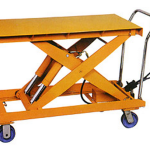 Should You Use a Mini Hydraulic Lift Table?
A lift table is a very useful device for warehouses and workshops. They are used to transport goods as quickly as possible. Among the many types of lift ta...
Should You Use a Mini Hydraulic Lift Table?
A lift table is a very useful device for warehouses and workshops. They are used to transport goods as quickly as possible. Among the many types of lift ta...
-
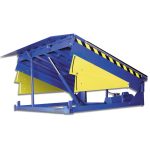 Choosing Between Hydraulic Dock Levelers or Forklift Ramps for Cargo Handling?
Currently in Vietnam, businesses are applying many different methods to carry out import and export operations. Some businesses continue to follow traditio...
Choosing Between Hydraulic Dock Levelers or Forklift Ramps for Cargo Handling?
Currently in Vietnam, businesses are applying many different methods to carry out import and export operations. Some businesses continue to follow traditio...
-
 What is a Loading Dock? What does a Loading Dock system include?
Is your business facing difficulties in transporting goods? Is loading and unloading taking too much time and increasing costs? Have you researched solutio...
What is a Loading Dock? What does a Loading Dock system include?
Is your business facing difficulties in transporting goods? Is loading and unloading taking too much time and increasing costs? Have you researched solutio...
-
 Hydraulic Cylinder Structure, Specifications, and Operating Principles
Hydraulic cylinders, also known as hydraulic rams, are one of the most critical components in a hydraulic system. They have the ability to convert hydrauli...
Hydraulic Cylinder Structure, Specifications, and Operating Principles
Hydraulic cylinders, also known as hydraulic rams, are one of the most critical components in a hydraulic system. They have the ability to convert hydrauli...
-
 Differences Between Freight Elevators and Goods Hoists
Choosing between a freight elevator and a goods hoist is always a difficult puzzle for many businesses. Understanding this, Naltako will help you solve the...
Differences Between Freight Elevators and Goods Hoists
Choosing between a freight elevator and a goods hoist is always a difficult puzzle for many businesses. Understanding this, Naltako will help you solve the...
-
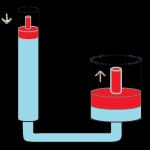 Hydraulics: Concept, Structure, and Basic Operating Principles
Hydraulics is a vital technology, widely used in modern life. From industrial machinery like dock levelers to vehicles, this system plays an indispensable ...
Hydraulics: Concept, Structure, and Basic Operating Principles
Hydraulics is a vital technology, widely used in modern life. From industrial machinery like dock levelers to vehicles, this system plays an indispensable ...
-
 Dock Shelter and Dock Leveler: The Perfect Combination for Your Warehouse
Is your warehouse operating inefficiently, with high risks of cargo damage and low productivity? Don't worry, the optimal solution is here! The combination...
Dock Shelter and Dock Leveler: The Perfect Combination for Your Warehouse
Is your warehouse operating inefficiently, with high risks of cargo damage and low productivity? Don't worry, the optimal solution is here! The combination...
-
 What is a Raised Floor? What are the components of its structure?
Raised floors, hydraulic dock levelers, and access floors are popular types of flooring widely used in modern construction engineering today. To learn deta...
What is a Raised Floor? What are the components of its structure?
Raised floors, hydraulic dock levelers, and access floors are popular types of flooring widely used in modern construction engineering today. To learn deta...