

 Tiếng Việt
What is a Plastic Chain Conveyor? Applications of Plastic Conveyor Chains
One of the effective and flexible goods transportation solutions in production activities is the plastic chain conveyor. This is a type of conveyor made from plastic, featuring good load-bearing capacity and abrasion resistance, widely used in many industries to transport materials easily. Let’s explore this modern device in the article below.
What is a Plastic Chain Conveyor?

A plastic chain conveyor is also known as a chain conveyor or modular plastic conveyor. Chain conveyors are primarily used to move goods and raw products. This type of conveyor consists of interconnected links joined vertically with a lightweight profile. With these advantages, chain conveyors are utilized in many production fields.
You may be interested in: What is a Stainless Steel Mesh Conveyor? Applications of Stainless Steel Mesh Conveyors
Detailed Component Structure of Plastic Chain Conveyors
Plastic Links
Plastic links are constructed from engineering plastics such as POM, PP, PE, PU… These are high-durability materials with excellent abrasion resistance. Additionally, some types of plastic links can be reinforced with fiberglass and other additives to increase load capacity.
Conveyor Frame
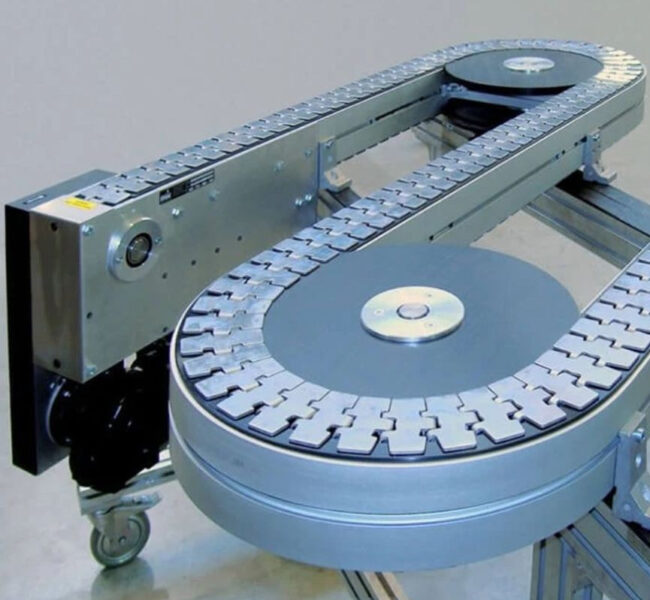
The conveyor frame is constructed from sturdy steel, offering good load-bearing capacity and is often used for heavy-duty applications. It is also suitable for light and medium-duty applications. After workers load goods from a hydraulic pallet jack onto the conveyor, the frame ensures the plastic chain moves in the right direction without deviating.
Drive System
The drive system includes various motors with different power outputs, depending on the required load and speed. Additionally, other components include gearboxes, pulleys, and belts.
Guide System
The guide system consists of guide rails placed along the conveyor frame to keep the chain moving smoothly. Guide rollers help reduce noise and friction during operation.
Other Accessories
- Rollers: Support the transportation of goods on the conveyor.
- Scrapers: Remove excess materials or dust from the conveyor belt.
- Sensors: Detect incidents or overload conditions, helping to protect the conveyor and the system.
- Control System: Controls the speed, direction of movement, and other functions of the conveyor.
See more: What are Plastic Conveyor Rollers? Advantages of Usage
Outstanding Advantages of Using Plastic Chain Conveyors
Plastic conveyors are an efficient and flexible material handling solution. The advantages of these conveyors include:
Flexibility and Versatility
They can transport a wide variety of materials and goods, from bulk materials to packaged products. Thanks to their modular flexibility, these conveyors can be designed in many shapes and sizes to fit the specific requirements of each application.
High Durability
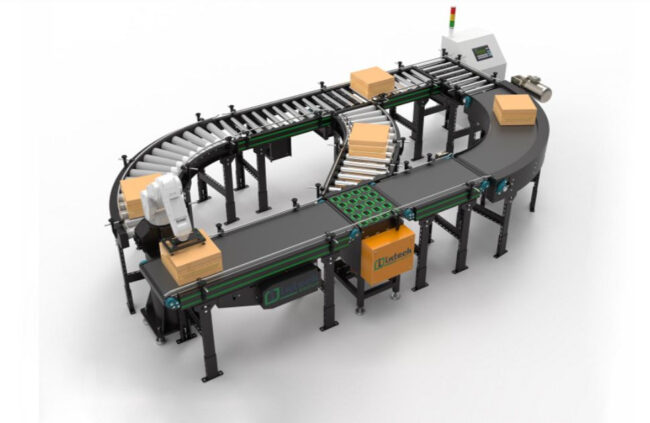
The plastic chain link system is highly durable and resistant to abrasion, chemicals, and heavy loads. Due to the long-lasting materials and sturdy construction, it helps save on maintenance and replacement costs.
Easy to Clean
The structure of plastic chain conveyors is manufactured for easy sanitation. The plastic belt can be cleaned easily after use. These characteristics are highly valued in the food and beverage industry.
Reasonable Cost
In general, plastic conveyor chains are more affordable than many other types of conveyors, especially specialized or complexly structured ones. You can request a quote for plastic chain conveyors from professional suppliers.
See more: Heat-Resistant Mesh Conveyors: Classification and Advantages
Conclusion
Plastic chain conveyors have emerged as an optimal material handling solution in many industries thanks to a harmonious blend of flexibility and efficiency. These conveyors have proven excellent adaptability from food and pharmaceutical sectors to heavy industries. We hope the information provided by Naltako has given you a clearer view of the equipment that helps optimize costs and enhance competitiveness.
Nội dung có liên quan:
-
 What is a Conveyor? Benefits of Using Cargo Conveyors
Before the appearance of conveyors, goods transportation relied mainly on human labor. However, due to drawbacks in efficiency and the potential for errors...
What is a Conveyor? Benefits of Using Cargo Conveyors
Before the appearance of conveyors, goods transportation relied mainly on human labor. However, due to drawbacks in efficiency and the potential for errors...
-
 What is a Trailer? Detailed Component Structure of Trailers
Have you ever seen giant trucks on the highway and wondered what the part behind them is? That is a trailer. It is a type of vehicle without an engine, des...
What is a Trailer? Detailed Component Structure of Trailers
Have you ever seen giant trucks on the highway and wondered what the part behind them is? That is a trailer. It is a type of vehicle without an engine, des...
-
 What is a PVC Conveyor? Advantages and Disadvantages of Use
PVC conveyors are not merely transport devices but comprehensive solutions that help businesses optimize production processes, improve product quality, and...
What is a PVC Conveyor? Advantages and Disadvantages of Use
PVC conveyors are not merely transport devices but comprehensive solutions that help businesses optimize production processes, improve product quality, and...
-
 What is a Semi-trailer? Distinguishing Between Trailers and Semi-trailers
In today's context of booming trade, semi-trailers have become an indispensable link in the freight transport system. With the capacity to carry large volu...
What is a Semi-trailer? Distinguishing Between Trailers and Semi-trailers
In today's context of booming trade, semi-trailers have become an indispensable link in the freight transport system. With the capacity to carry large volu...
-
 What is a Stainless Steel Mesh Conveyor? Current Applications of Stainless Steel Conveyors
Stainless steel mesh conveyor is a transport device constructed from stainless steel wires tightly woven together to form a mesh surface. Thanks to its div...
What is a Stainless Steel Mesh Conveyor? Current Applications of Stainless Steel Conveyors
Stainless steel mesh conveyor is a transport device constructed from stainless steel wires tightly woven together to form a mesh surface. Thanks to its div...
-
 What is a Hydraulic Jack? Classification and Working Principle
A hydraulic jack is a mechanical device used to lift or adjust the position of heavy objects thanks to the operating principle of liquids. Hydraulic jacks ...
What is a Hydraulic Jack? Classification and Working Principle
A hydraulic jack is a mechanical device used to lift or adjust the position of heavy objects thanks to the operating principle of liquids. Hydraulic jacks ...
-
 What is a Mini Overhead Crane? Applications of Mini Overhead Cranes
Mini overhead cranes are a type of lifting equipment designed with a compact size and lighter weight compared to traditional overhead cranes. They are typi...
What is a Mini Overhead Crane? Applications of Mini Overhead Cranes
Mini overhead cranes are a type of lifting equipment designed with a compact size and lighter weight compared to traditional overhead cranes. They are typi...
-
 Truck-Mounted Mini Cranes: Benefits and Outstanding Features
The transportation and unloading of goods play an extremely important role, especially in the industrial, construction, and transport sectors. Owning a min...
Truck-Mounted Mini Cranes: Benefits and Outstanding Features
The transportation and unloading of goods play an extremely important role, especially in the industrial, construction, and transport sectors. Owning a min...