

 Tiếng Việt
Industrial Factory Construction: From Design to Execution
Industrial factory construction is not merely building a structure but a complex process. Starting from conceptualization, construction design, and finishing, every stage plays a vital role in the quality and efficiency of the project. Follow the article below to learn about the process of factory construction and execution.
Factory Design
To begin factory construction, the first step is design. Although it takes a lot of time, this step helps investors and contractors clearly understand the future production process. From there, it prevents additional costs during construction and optimizes expenses.
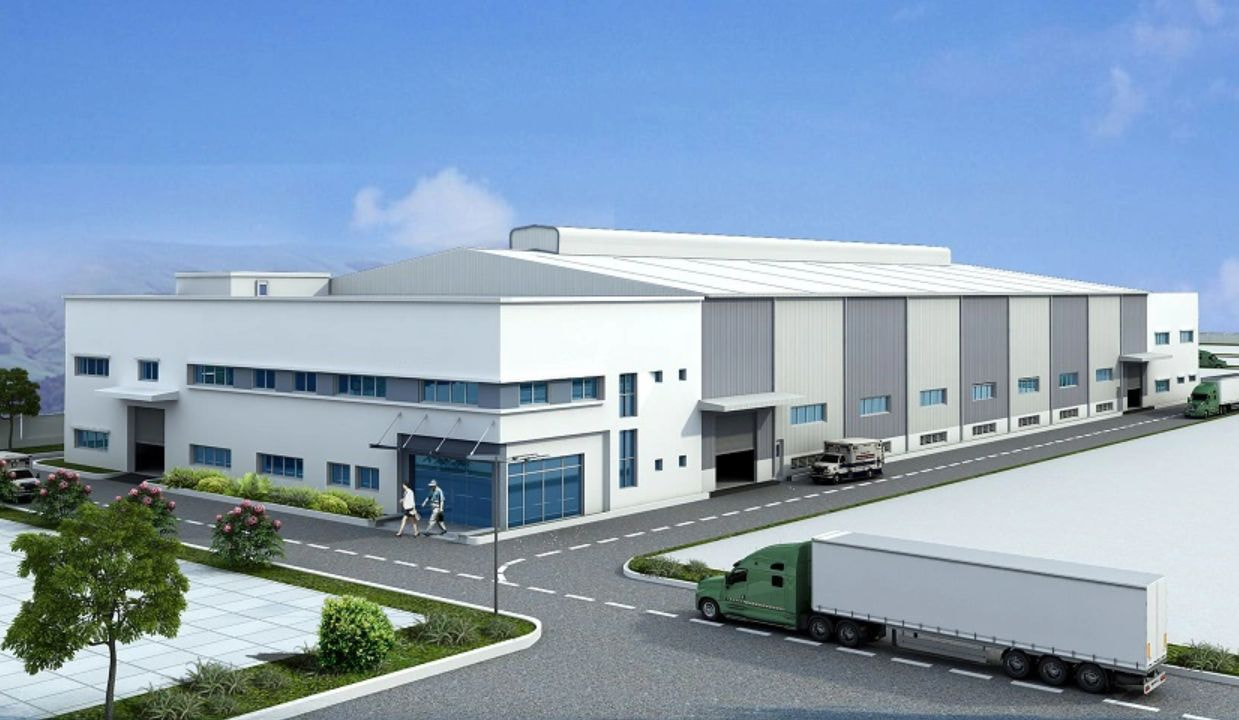
When designing a factory, it is important to consider:
- Environmental protection regulations.
- Fire prevention and fighting regulations.
- Geological factors of the construction site.
General Factory Drawing Design
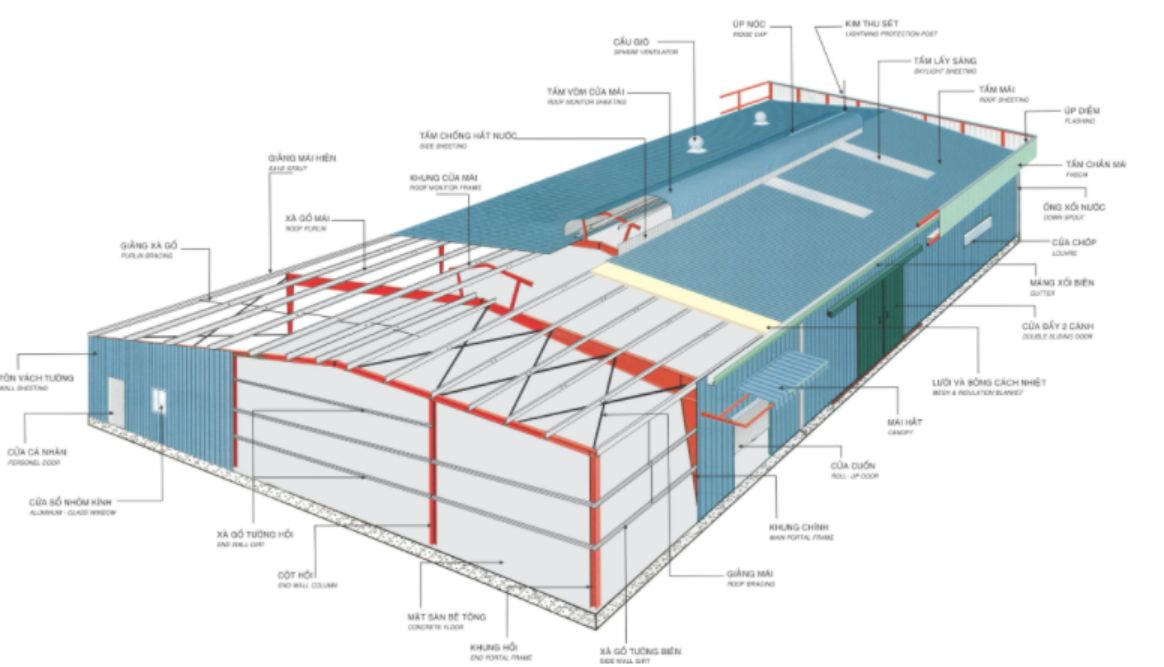
The general drawing is for illustrative and reference purposes only. After discussions, architects will begin drawing the following:
- Master plan layout drawing.
- Detailed item drawings.
- 3D perspective drawings.
From these drawings, investors will have an overview of the industrial factory construction process. The drawings need to show items such as:
- Building boundaries.
- Internal roads.
- Campus landscape.
- Fire protection and emergency exits.
- Necessary warehouse equipment.
See more: 8 essential warehouse equipment today
Construction Drawing Design
After agreeing on the preliminary plan, the construction drawing design stage begins. Drawings at this stage will show:
- Foundation structure.
- Pre-engineered steel frame drawings.
- Connection nodes.
- Material specifications.
- M&E (Mechanical & Electrical) drawings.
- Fire protection for specific items.
Preparation for Industrial Factory Construction
The construction process must be carried out carefully and in detail. Every arising issue can affect the progress and quality of the project.
Component Fabrication
Factories are often built with a system of columns and frames made entirely of steel. These materials are fabricated and assembled based on the architect’s design drawings.
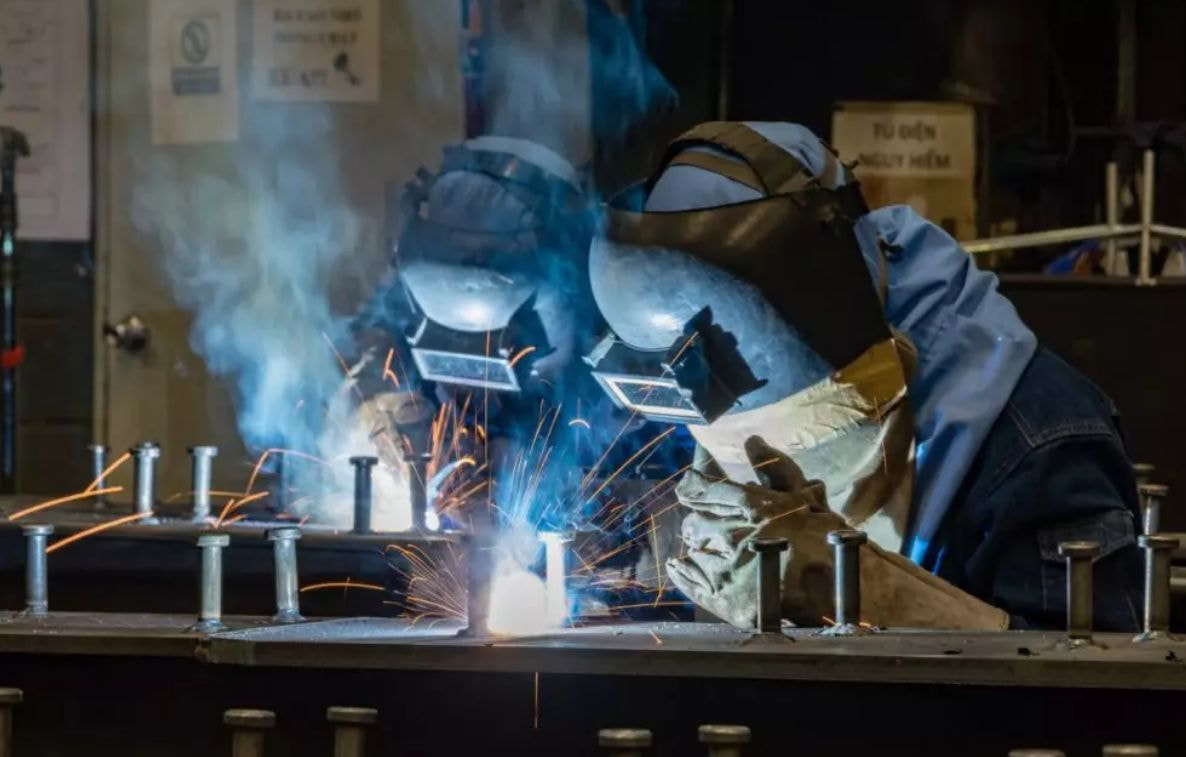
After inspection confirms there are no abnormalities, the fabrication work will proceed.
Developing Construction Plans
To ensure the industrial factory construction plan stays on schedule, the contractor needs to establish:
Construction Organization Drawings
Construction organization drawings include detailed drawings and diagrams to guide and manage construction. These include:
- Construction organization plan.
- Site layout diagram.
- Construction methods for important items.
- Construction schedule.
Construction Schedule Table
The construction schedule table is a diagram showing the construction items of the industrial factory. Creating a schedule helps you track progress and allocate time reasonably for personnel. Additionally, this table makes it easy to evaluate work efficiency and adjust if necessary.
Reference: Experience in choosing a reputable Dock Leveler supplier
Factory Construction
Foundation Construction
For industrial factory construction, there are two solutions: pile foundations or single foundations. During this stage, anchor bolts must be embedded in the foundation. Then, the contractor proceeds with backfilling and soil compaction to ensure stability.
Next, proceed with reinforcing steel installation and concrete pouring for the floor to ensure durability.
Steel Frame Construction
Currently, most factories are built using pre-engineered steel frames. The main steel frames of the factory are manufactured at the plant before being brought to the site. Using pre-engineered steel frames increases accuracy and shortens construction time.
Building Envelope Construction
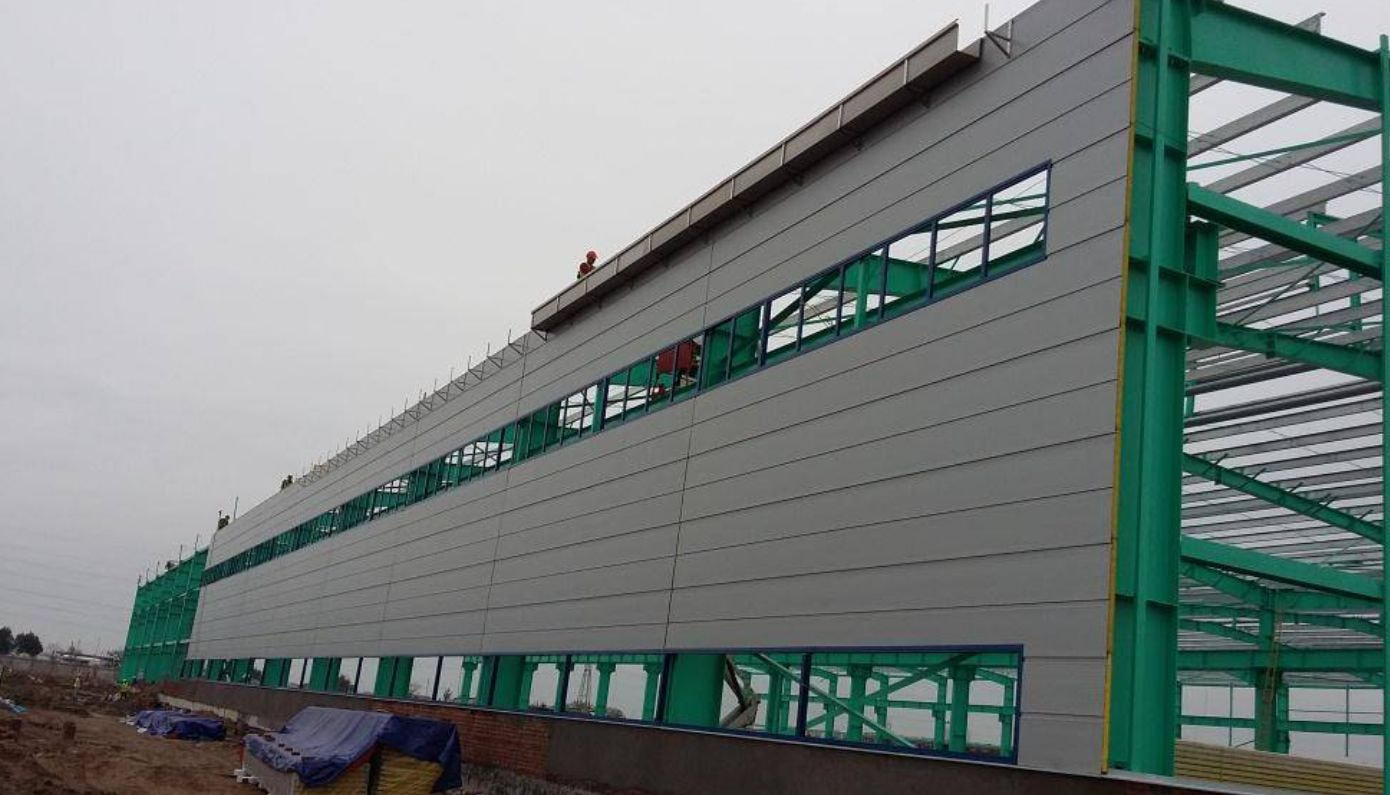
The building envelope helps save energy and regulate temperature. Currently, the envelope will be executed according to the previous technical records.
Infrastructure Construction
Factory infrastructure is very important as it affects future operations. Basic factory infrastructure includes: internal traffic roads, and water supply and drainage pipes.
Tasks to be performed include:
- Installation of the plumbing system.
- Road base compaction.
- Road surface maintenance.
Technical System Installation
When building an industrial factory, the technical system cannot be overlooked. This system includes:
- Electricity and water.
- Factory design for installing hydraulic dock levelers, hydraulic lift tables, container ramps…
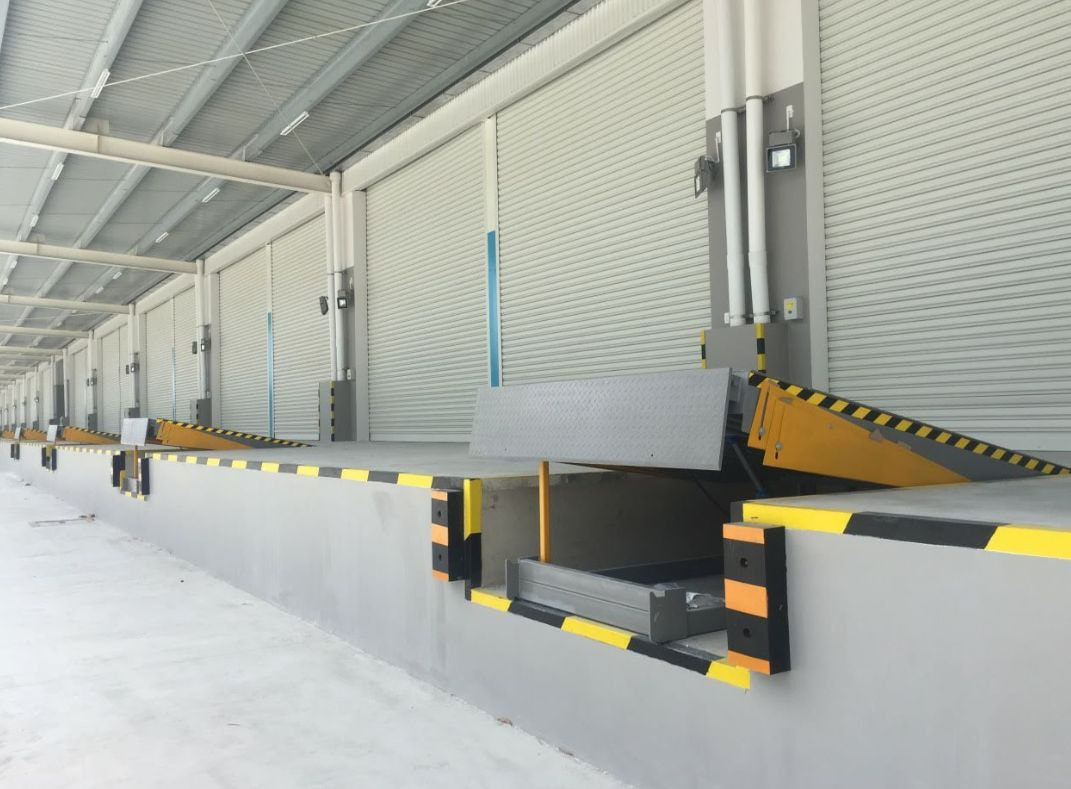
- Fire prevention and fighting.
See more: Dock Leveler accessories – an upgrade solution not to be missed
Finishing
The final step in the factory construction process is finishing, which involves tasks such as:
- Installing gypsum ceilings for the office area.
- Outdoor landscaping such as planting trees, decorating fences…
- Conducting factory cleaning.
You may be interested in: Guide to selecting and applying industrial lifting equipment
Inspection and Handover
The factory undergoes a general cleaning before being handed over to the investor. Then, final inspection and handover of the completed project are conducted.
Conclusion
Industrial factory construction is a complex and important process, serving as the foundation for the development of industrial sectors. To achieve success, cooperation between the investor, the design unit, and the construction contractor is required… If you have any further questions regarding the information in this article, please contact:
CONTACT INFORMATION
NALTAKO INDUSTRIAL JOINT STOCK COMPANY
Address: Dong De, Phu Yen, Chuong My, Hanoi.
Hotline: 0981.977.898.
Nội dung có liên quan:
-
 Professional Hydraulic Cargo Lift Design Process
Hydraulic cargo lifts are indispensable products in warehouses, car showrooms, workshops, etc. Currently, many people wonder about the design process of hy...
Professional Hydraulic Cargo Lift Design Process
Hydraulic cargo lifts are indispensable products in warehouses, car showrooms, workshops, etc. Currently, many people wonder about the design process of hy...
-
 Naltako – A Leading Dock Leveler Solution Provider
Naltako is a Vietnamese hydraulic lifting equipment brand aiming to provide the best quality products. Therefore, Naltako's Dock Levelers are heavily inves...
Naltako – A Leading Dock Leveler Solution Provider
Naltako is a Vietnamese hydraulic lifting equipment brand aiming to provide the best quality products. Therefore, Naltako's Dock Levelers are heavily inves...
-
 Experience in Choosing a Reputable Dock Leveler Supplier
It can be seen that there are currently hundreds of units providing Dock Levelers on the market. Therefore, how to choose a quality supplier is a question ...
Experience in Choosing a Reputable Dock Leveler Supplier
It can be seen that there are currently hundreds of units providing Dock Levelers on the market. Therefore, how to choose a quality supplier is a question ...
-
 8 Essential Warehouse Equipment Today
Warehouse equipment is a key factor in improving work efficiency. From storage and organization to goods transportation, these tools help enhance productiv...
8 Essential Warehouse Equipment Today
Warehouse equipment is a key factor in improving work efficiency. From storage and organization to goods transportation, these tools help enhance productiv...
-
 Detailed and Safe Installation Process for Hydraulic Freight Lifts
Whether installing a freight lift is difficult is a common question today. The installation of a freight lift requires precision and compliance with safety...
Detailed and Safe Installation Process for Hydraulic Freight Lifts
Whether installing a freight lift is difficult is a common question today. The installation of a freight lift requires precision and compliance with safety...
-
 Common Faults in Hydraulic Freight Lifts and How to Fix Them
Freight elevators play an indispensable role in transporting goods and require safe operation. However, it is inevitable that this equipment may occasional...
Common Faults in Hydraulic Freight Lifts and How to Fix Them
Freight elevators play an indispensable role in transporting goods and require safe operation. However, it is inevitable that this equipment may occasional...
-
 Should you buy a new or used freight lift?
The decision to invest in a freight elevator significantly impacts your production and business operations. Both new and used lifts have their own advantag...
Should you buy a new or used freight lift?
The decision to invest in a freight elevator significantly impacts your production and business operations. Both new and used lifts have their own advantag...
-
 Latest Man Lift Rental Price List Update
Renting a man lift has become an optimal solution for both safety and efficiency. Among the vast number of service providers, determining the rental price ...
Latest Man Lift Rental Price List Update
Renting a man lift has become an optimal solution for both safety and efficiency. Among the vast number of service providers, determining the rental price ...