

 Tiếng Việt
Forklift Load Capacity: A Guide to Choosing the Right Forklift
When choosing lifting equipment for a manufacturing plant or warehouse, understanding forklift load capacity is a key factor in ensuring safety and work efficiency. Load capacity is not just about the weight of the goods but also relates to various other factors such as the load center and load distribution. This article will provide detailed information on calculation methods, the importance, and how to choose the right forklift in a logistics system. Let’s find out to make the right decision for your business!
What Is Forklift Load Capacity and How to Calculate It?
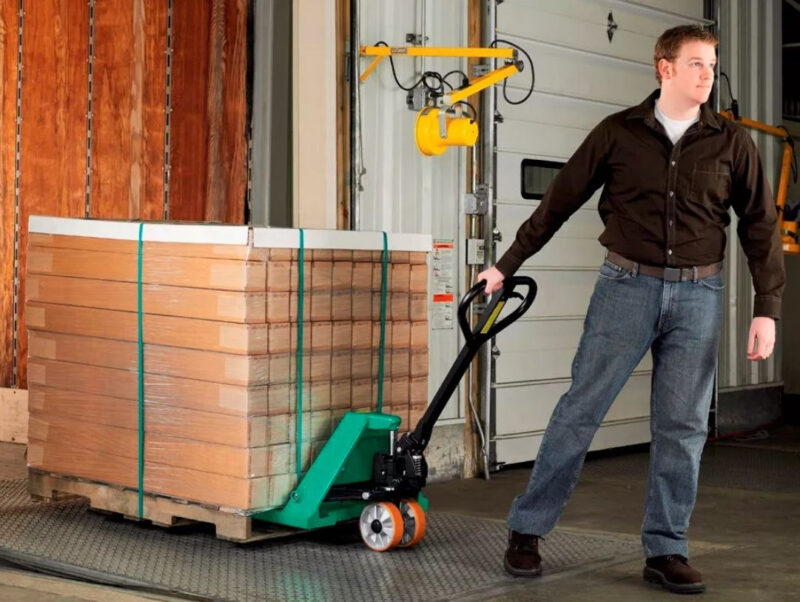
Lifting capacity or load capacity is the maximum weight that a vehicle can safely lift under standard conditions. To calculate accurately, it is necessary to rely on the load center, which is the distance from the face of the forks to the center of gravity of the cargo. Typically, the load center is 500mm for small forklifts and 600mm for forklifts over 6 tons. Capacity depends not only on the weight of the goods but also on the dimensions and distribution of the load on the forks; therefore, careful measurement is required before operating within a cargo lifting equipment environment.
The Importance of Forklift Load Capacity
Determining the correct rated capacity plays a vital role in ensuring occupational safety and operational efficiency in warehouses. If the allowable load is exceeded, the vehicle may tip over or be damaged, endangering the operator and the cargo. Real-life accidents have occurred due to incorrect load center calculations or overloading, leading to significant property and human losses in cargo handling systems.
Difference Between Load Capacity and Forklift Weight?
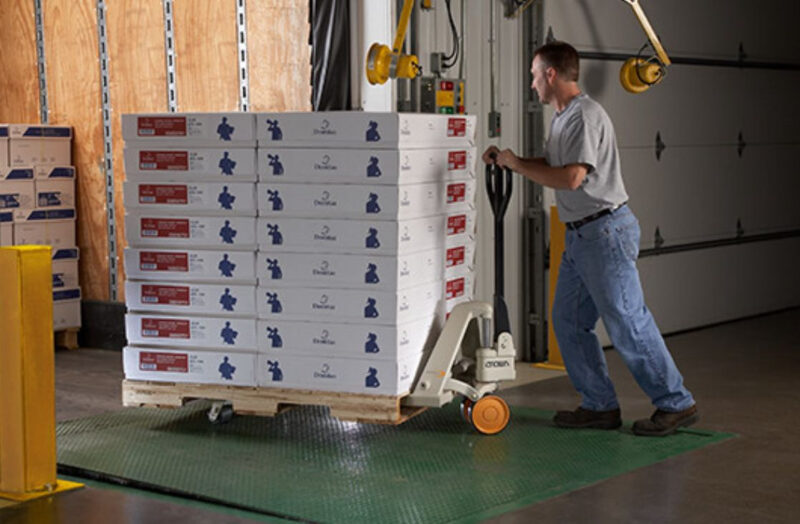
Many people confuse load capacity with the weight of the vehicle itself in warehouse equipment. Load capacity is the maximum lifting capacity the vehicle can handle—for example, 2 tons or 5 tons—while the forklift weight is the actual mass of the vehicle, which is usually much heavier to ensure stability when lifting loads. Understanding this difference helps you choose the right equipment and avoid risks when operating in docks or commercial centers.
Choosing a Forklift Suitable for the Load Capacity
To choose a low-profile pallet jack or high-lift forklift that matches the maximum cargo weight in a logistics solution, it is necessary to clearly define the weight and type of goods to be transported. Modern forklifts have capacities ranging from 1 ton to over 50 tons depending on design and purpose, from hand pallet trucks for small loads to container handlers for heavy loads. Additionally, consider the working environment, such as narrow spaces or rough terrain at manufacturing plants, to select the appropriate vehicle type.
Learn more about logistics solutions from Naltako, including forklift ramps and mini cranes, to support your work!
How Load Center Affects Lifting Capacity
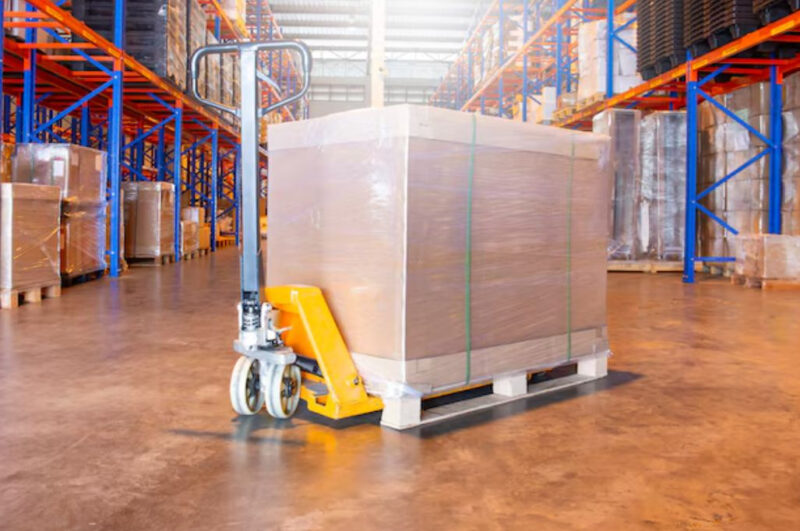
The load center is the decisive factor for operational safety and lifting capacity in a lifting system. If the load center falls outside the standard range—for instance, if the cargo is too long or unevenly distributed—the lifting capacity of the vehicle will decrease significantly, potentially causing a tip-over. For example, with large-sized goods, the load center may shift beyond 500mm, reducing the rated capacity of the forklift in the warehouse.
Contact Naltako for technical advice on products such as scissor lifts and to ensure maximum safety!
Frequently Asked Questions About Forklift Load Capacity
Below are some common questions regarding forklift load capacity in logistics technology:
- What is forklift load capacity and how is it calculated? It is the maximum weight the vehicle can lift, calculated based on the load center and cargo distribution.
- How does the forklift load center affect lifting capacity? An incorrect load center can reduce lifting capacity and cause danger.
- How to choose a forklift suitable for the cargo load? Determine the weight and type of goods, then select a forklift with the appropriate capacity.
- What is the difference between load capacity and forklift weight? Load capacity is the lifting ability; forklift weight is the mass of the vehicle itself.
- Why should you not exceed the allowable load capacity of a forklift? It creates a risk of tipping the vehicle and damaging the equipment.
Contact Naltako via email at info@naltako.vn for further support on solutions such as hydraulic tilt tables and other lifting equipment!
Nội dung có liên quan:
-
 What is a Car Lift? Common Types of Automotive Lifts
A car lift is indispensable equipment in garages, repair shops, and maintenance centers. This device is used to raise vehicles, creating favorable conditio...
What is a Car Lift? Common Types of Automotive Lifts
A car lift is indispensable equipment in garages, repair shops, and maintenance centers. This device is used to raise vehicles, creating favorable conditio...
-
 What are Conveyor Rollers? Which Factors Influence Roller Prices?
In modern production lines, conveyor rollers play an indispensable role in moving packages within the factory. They serve as the core of the transportation...
What are Conveyor Rollers? Which Factors Influence Roller Prices?
In modern production lines, conveyor rollers play an indispensable role in moving packages within the factory. They serve as the core of the transportation...
-
 What is a Single-Post Car Wash Lift? A Reputable Supplier for Quality Equipment
Do you want to own a modern and professional car garage? You cannot overlook the single-post car wash lift. This equipment brings many outstanding benefits...
What is a Single-Post Car Wash Lift? A Reputable Supplier for Quality Equipment
Do you want to own a modern and professional car garage? You cannot overlook the single-post car wash lift. This equipment brings many outstanding benefits...
-
 Building a Professional Inventory Management System in Logistics
Inventory management in logistics plays a pivotal role in ensuring the smooth and efficient operation of the supply chain. Effective inventory management n...
Building a Professional Inventory Management System in Logistics
Inventory management in logistics plays a pivotal role in ensuring the smooth and efficient operation of the supply chain. Effective inventory management n...
-
 Heat-Resistant Mesh Conveyors: Classification and Advantages
In industries such as metallurgy, food processing, ceramics, glass, and many other sectors, transporting materials at high temperatures is always a signifi...
Heat-Resistant Mesh Conveyors: Classification and Advantages
In industries such as metallurgy, food processing, ceramics, glass, and many other sectors, transporting materials at high temperatures is always a signifi...
-
 What is a Mini Spider Crane? Outstanding Advantages of Mini Spider Cranes
A mini spider crane is a compact lifting device specifically designed for working in restricted spaces. With a spider-like leg structure, it has the abilit...
What is a Mini Spider Crane? Outstanding Advantages of Mini Spider Cranes
A mini spider crane is a compact lifting device specifically designed for working in restricted spaces. With a spider-like leg structure, it has the abilit...
-
 What is a Mini Tower Crane? Benefits of Using Mini Tower Cranes
The mini tower crane is a versatile lifting device that combines the advantages of various types of equipment. Tower cranes are suitable for small and medi...
What is a Mini Tower Crane? Benefits of Using Mini Tower Cranes
The mini tower crane is a versatile lifting device that combines the advantages of various types of equipment. Tower cranes are suitable for small and medi...
-
 What is a 220V Diesel Pump? Advantages of Using Diesel Pumps
Are you looking for an optimal solution to transport diesel fuel quickly and efficiently? The 220V diesel pump is the perfect choice for you. With a powerf...
What is a 220V Diesel Pump? Advantages of Using Diesel Pumps
Are you looking for an optimal solution to transport diesel fuel quickly and efficiently? The 220V diesel pump is the perfect choice for you. With a powerf...