

 Tiếng Việt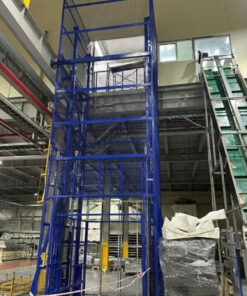
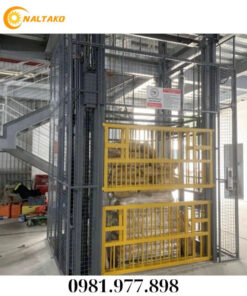
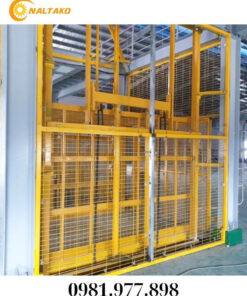
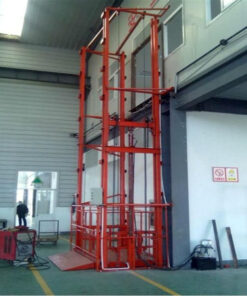
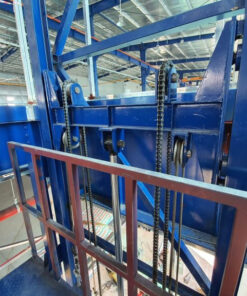

Introduction to Hydraulic Cargo Lifts
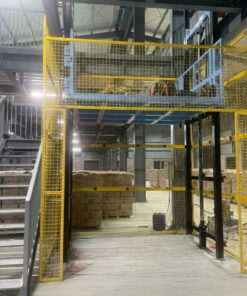
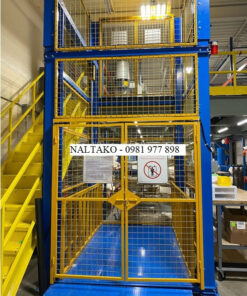
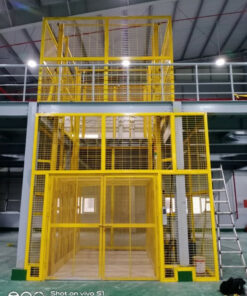
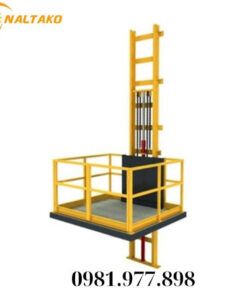
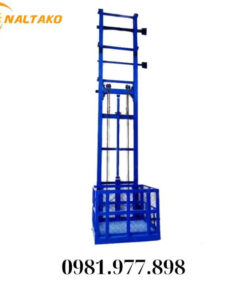
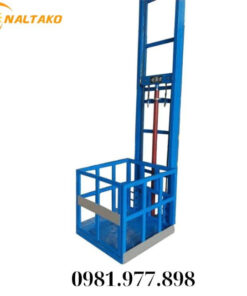
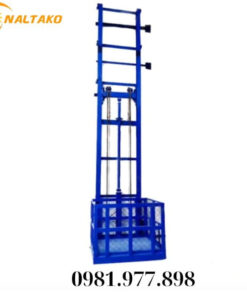
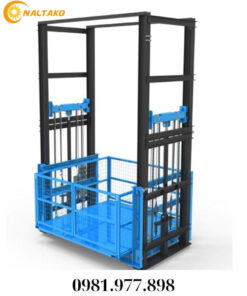
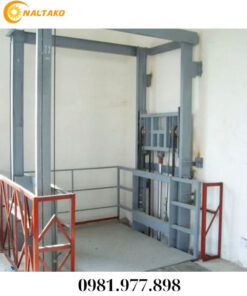
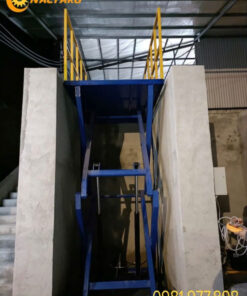
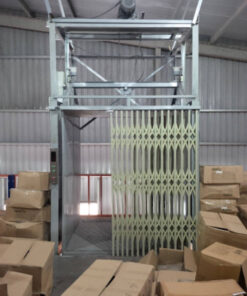
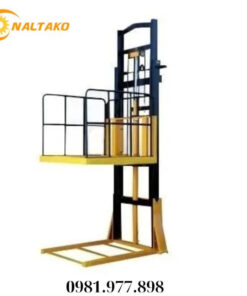
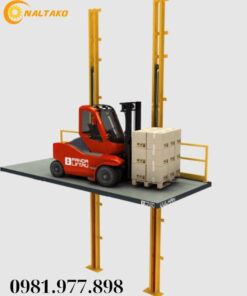
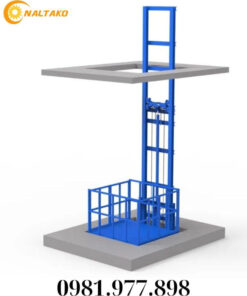
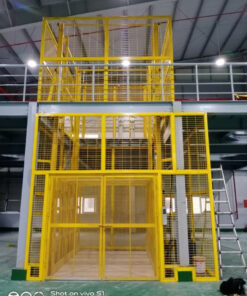
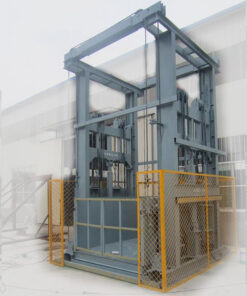
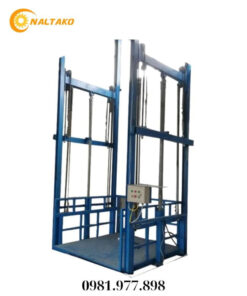
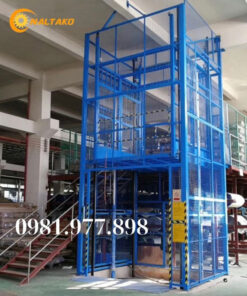
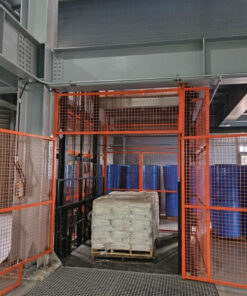
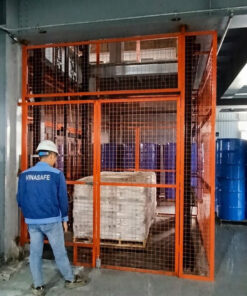
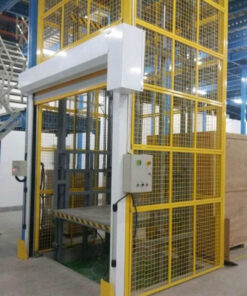
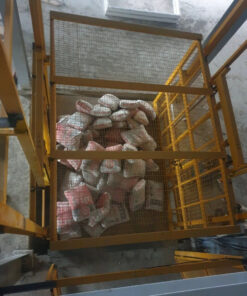
A hydraulic cargo lift is a device for lifting and transporting goods between floors in warehouses and construction sites. This equipment is particularly useful for locations with narrow spaces, limited height, completed structures, or where elevator pits cannot be excavated.
Hydraulic lifts are also known as indoor lifts, cargo elevators, freight lifts, or industrial goods lifts.
Component Details
Mechanical Parts
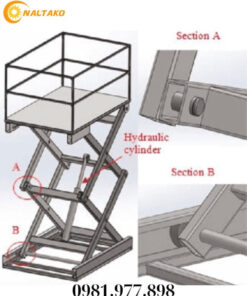
Lifting platform, protective cabin frame, load-bearing frame system, cage, and base.
+ Lifting platform: The place where goods are placed, usually made of steel or stainless steel with a checkered surface to increase friction. The size and load capacity of the platform are designed according to usage needs.
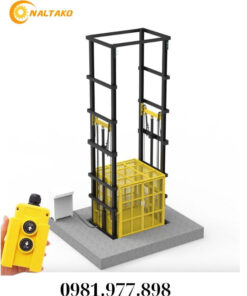
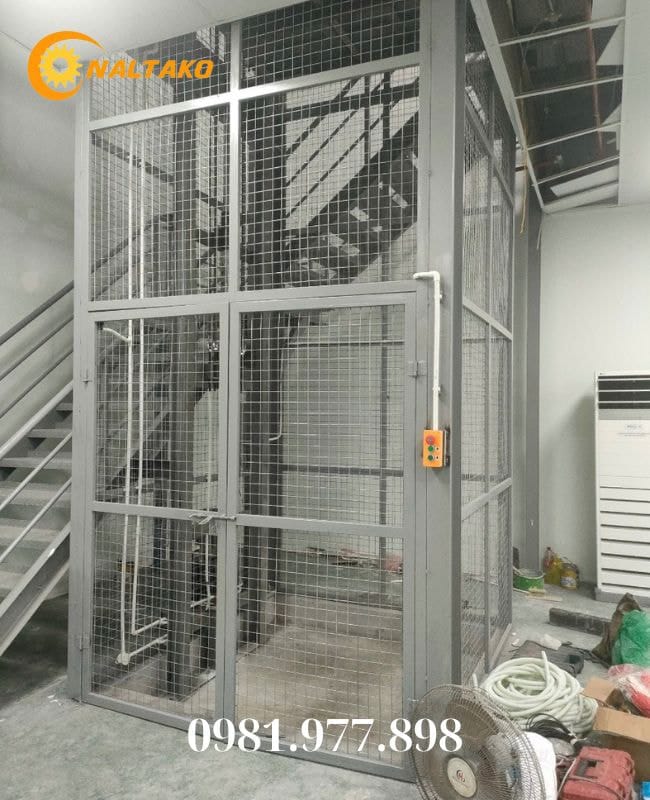 Protective lift cabin frame
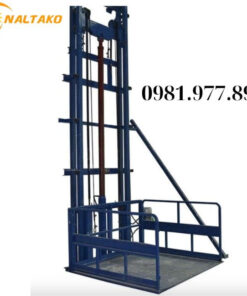
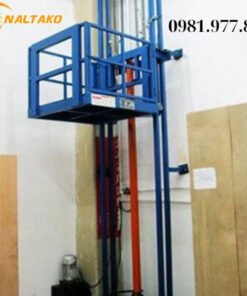
+ Lift frame: The main load-bearing part of the hydraulic lift, usually made of sturdy steel to ensure durability and stability.
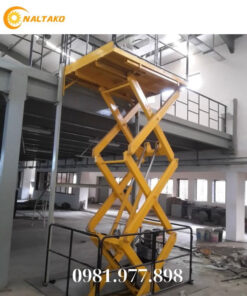
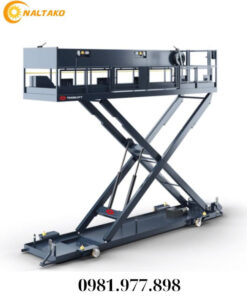
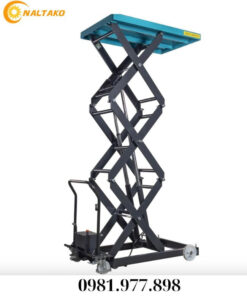
- Scissor lift style: Uses steel bars stacked in an X-shape. When hydraulics push these bars to extend, the platform is raised.
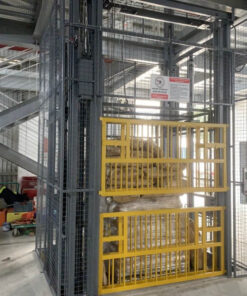
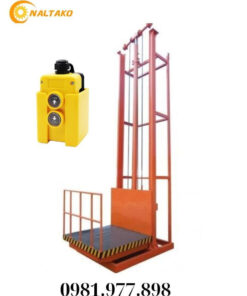
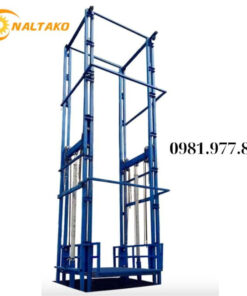
- Vertical mast lift style: Uses one or more vertical masts to raise the platform.
Hydraulic Parts
Hydraulic pump system, control valves, hydraulic cylinders, oil hoses, and accessories ensuring lifting operations.
+ Hydraulic cylinder: Converts hydraulic energy into linear motion to lift the platform.
+ Hydraulic valves: Control oil flow and pressure in the system, including types such as check valves, throttle valves, distribution valves, and safety valves.
+ Oil tank: Contains hydraulic oil to supply the system.
+ Oil hoses and pipes: Connect hydraulic components together.
Electrical Parts
Electric motor (usually Mitsubishi motor), central control cabinet, electronic circuit boards, safety relay system, and electrical wiring ensuring safety and precision during operation.
+ Electric motor: Provides energy for the hydraulic pump to operate.
+ Control cabinet: Controls lift operations, including up/down buttons, emergency stop, and other functions.
+ Safety devices: Such as limit switches, overload relays, travel limit switches, emergency stop buttons, safety valves, etc., ensuring safety during operation.
Advantages and Disadvantages
Advantages
Hydraulic cargo lifts possess many outstanding advantages, making them a popular choice in factories and warehouses:
Thanks to the above advantages, hydraulic cargo lifts are widely applied in many industries, helping to improve work efficiency and reduce human labor.
Disadvantages
Popular Types of Hydraulic Cargo Lifts Today
Currently, there are many types of freight elevators used in industry. Below are some of the cargo lift types most chosen by users today.
Hydraulic Motorcycle Lift
Scissor cargo lifts can be used to lift motorcycles
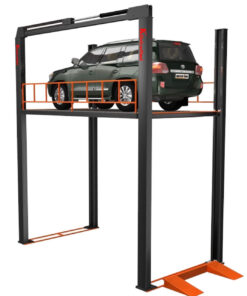
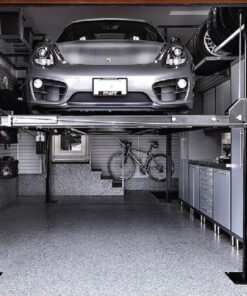
Hydraulic Car Lift
Mini Cargo Lift (250kg – 500kg Load Capacity)
Cargo Lift (1000kg – 2000kg Load Capacity)
Cargo Lift (2000kg – 5000kg Load Capacity)
Reference Specifications for Cargo Lifts
Hydraulic lift dimensions depend on many factors such as: Load capacity, height, style, and manufacturer. Below is a reference size table of some popular hydraulic lift types at Naltako:
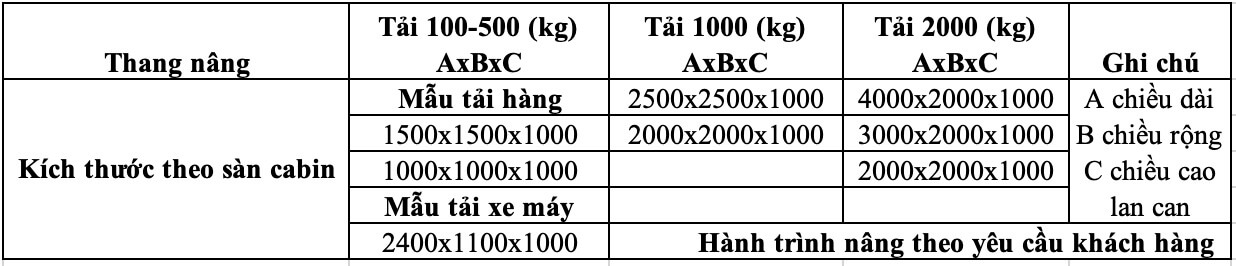 Technical specifications
Current Standard Cargo Lift Quotation
The price of hydraulic cargo lifts depends on many factors, including load capacity, lifting height, platform size, brand, and other options. Suppliers of indoor lifts usually have detailed price lists based on specific technical specifications.
Factors affecting the price include:
- Motor: Motor type, motor capacity.
- Control system: Type of control cabinet, safety features, and utilities.
- Steel structure: Manufacturing material, steel thickness, size, and load capacity of the lift.
- Other options: Moving wheels, guardrails, electronic weighing systems, etc.
For an exact quote suitable for your needs, you should directly contact reputable hydraulic lift suppliers like Naltako (hotline: 0981 977 898). They will advise and provide you with the optimal solution.
Address to Buy Good Price, Quality Hydraulic Lifts
If you are looking to buy quality hydraulic lifts at competitive prices, please refer to the products of Naltako Industrial Joint Stock Company.
Naltako is a unit specializing in providing hydraulic cargo lifts, with a team of experienced experts and engineers and a skilled technical team. We commit to bringing customers high-quality products, dedicated warranty and maintenance services, ensuring the elevator operates safely and efficiently.
Contact Information:
- Website: Naltako.vn
- Address: KM 19, National Highway 6, Bien Giang, Ha Dong, Hanoi
- Hotline: 0981.977.898
- Email: nhat.mtk53@gmail.com
Frequently Asked Questions
Which type of cargo lift is best?
There is no single answer to the question of which cargo lift type is best because it depends on the buyer’s needs. Additionally, regarding subjective factors, you need to choose a reputable cargo lift seller to ensure product quality as well as the warranty and maintenance process.
Are hydraulic lifts safe?
If used correctly and in compliance with labor safety regulations, hydraulic cargo lifts are rated as safe equipment. The lift is equipped with a safety valve system to help keep the lift fixed in place in case of incidents such as power failure or hydraulic system malfunction. Furthermore, in case the lift has to carry more than the specified weight, there will be an automatic stop mode.
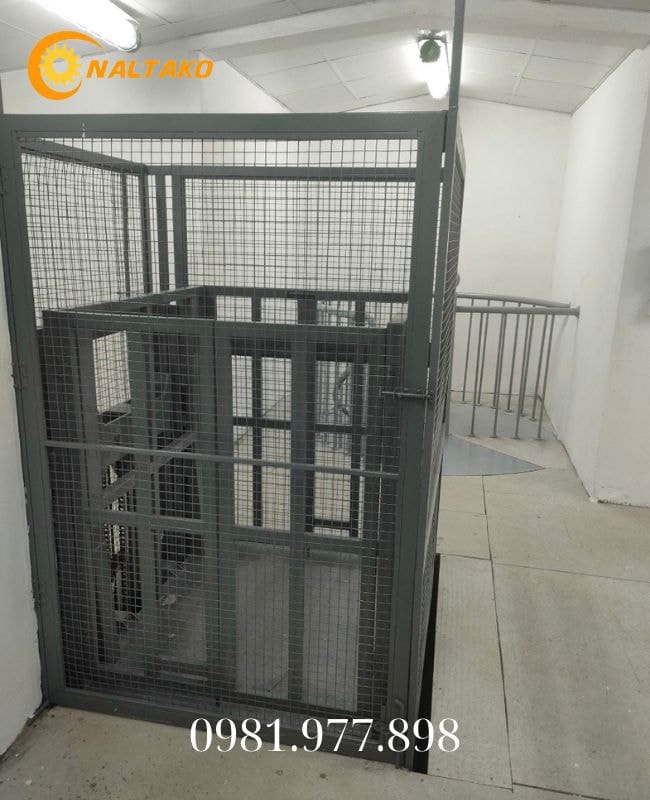 The lift is equipped with a safety frame system
Which hydraulic lift type suits my needs?
To determine the hydraulic lift type suitable for your needs, 5 main factors must be considered:
- Load capacity
- Height
- Dimensions
- Design model
- Budget
Hydraulic cargo lifts help lift and lower goods vertically but do not have the ability to move goods horizontally. In factories, lifts are often combined with chain hoists to create a complete system: the lift takes goods to the required height, the chain hoist moves goods to the storage or processing location. It is best to contact Naltako for the most accurate advice for your needs.
Conclusion
With the outstanding advantages mentioned above, hydraulic lifts are the perfect choice for cargo lifting needs in factories, warehouses, construction sites, etc. Contact Naltako immediately for advice and to choose the most suitable lift type for your needs!