

 Tiếng Việt
Building a Professional Inventory Management System in Logistics
Inventory management in logistics plays a pivotal role in ensuring the smooth and efficient operation of the supply chain. Effective inventory management not only helps minimize costs but also optimizes the ability to meet customer demand. So, what does inventory management in logistics actually involve?
What is Inventory Management?
Inventory management is the process of controlling a business’s goods in stock. The main goal is to ensure that necessary items are available to meet customer demand, ensuring that essential items are always ready when needed.
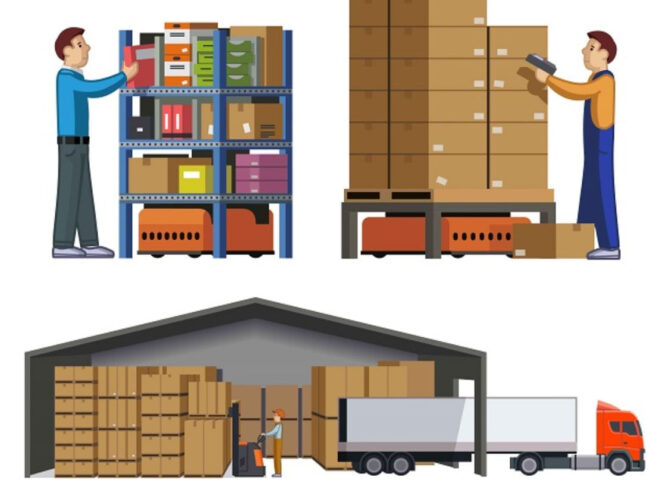
Inventory management in logistics involves using information technology to track, manage, and forecast goods demand effectively.
>>> Current logistics lifting solutions
Why is Inventory Management Necessary in Logistics?
Logistics activities are becoming increasingly developed and bring many benefits to businesses. Here are the reasons why inventory management is necessary in logistics:
Ensuring Continuous Supply
- Maintain inventory levels without causing shortages or excessive overstocking.
- Plan purchases reasonably, minimizing the risk of shortages due to supplier delays.
Optimizing Costs

- Minimize storage costs, including warehouse rent, preservation, and inventory management fees.
- Invest in other business activities that generate higher profits when working capital is released.
- Track inventory promptly, reducing losses due to damaged or depreciated goods.
Responding Quickly to Customer Needs
- Effective inventory management helps businesses have enough goods to meet demand quickly.
- Businesses compete more effectively in the market due to rapid response times.
Current Logistics Warehouse Management Process
An efficient logistics warehouse management process is key to ensuring smooth business operations, minimizing costs, and enhancing customer satisfaction. Below is the current standard management process, including basic steps and important notes:
Receiving Goods (Inbound)
- Inspection:
- Quantity: Compare the actual quantity with the quantity on the documents.
- Quality: Check the condition of the goods, ensuring they are not damaged or dented.
- Type of goods: Verify the correct type and SKU codes.
- Recording:
- Create receiving slip: Record full information about the goods (name, code, quantity, unit…).
- Update system: Enter data into the warehouse management software.
- Put-away:
- Classification: Arrange goods by category or group.
- Location: Place goods in appropriate storage locations (as designated).
Reference: Container cargo handling process you should not miss
Storage
- Preservation:
- Conditions: Ensure temperature, humidity, and lighting are suitable for each type of goods.
- Hygiene: Keep the warehouse clean and well-ventilated.
- Security: Ensure warehouse security, fire prevention, and theft protection.
- Management:
- Monitoring: Regularly check the condition of the goods.
- Inventory: Periodically perform inventory counts to reconcile with the system.
Picking (Outbound)
- Confirmation:
- Order: Check order information (recipient, address, items, quantity…).
- Delivery note: Create a delivery note based on the order.
- Selection:
- Location: Identify the location of the goods in the warehouse.
- Equipment: Use appropriate means to pick goods (forklifts, trolleys…).
- Delivery:
- Inspection: Re-check goods before delivery.
- Handover: Deliver goods to the recipient and obtain a signature.
Inventory Management
- Tracking:
- Quantity: Regularly update inventory quantities.
- Value: Monitor the value of inventory.
- Analysis:
- Status: Evaluate inventory status (best-sellers, long-term stock…).
- Forecasting: Forecast future goods demand.
- Adjustment:
- Ordering: Place replenishment orders when necessary.
- Processing: Handle excess or obsolete inventory.
Other Activities
- Transportation:
- Selection: Choose appropriate transportation equipment such as hydraulic pallet jacks and dock levelers to help receive goods efficiently.
- Monitoring: Track the transportation process.
- Packaging:
- Specifications: Ensure packaging specifications match each type of goods.
- Labeling: Attach labels with full information.
- Returns Processing:
- Receipt: Receive returned goods from customers.
- Inspection: Check the condition of returned goods.
- Processing: Handle returns according to regulations.
You may be interested in: 8 essential warehouse equipment today
Conclusion
Inventory management in logistics plays a key role in the success of every business. It not only helps optimize costs and improve the ability to meet customer needs but also creates a foundation for sustainable development and competitive advantage in the market. We hope the information Naltako provided in this article helps you successfully apply and develop an effective inventory management system for your business.
Nội dung có liên quan:
-
 What is a Car Lift? Common Types of Automotive Lifts
A car lift is indispensable equipment in garages, repair shops, and maintenance centers. This device is used to raise vehicles, creating favorable conditio...
What is a Car Lift? Common Types of Automotive Lifts
A car lift is indispensable equipment in garages, repair shops, and maintenance centers. This device is used to raise vehicles, creating favorable conditio...
-
 What are Conveyor Rollers? Which Factors Influence Roller Prices?
In modern production lines, conveyor rollers play an indispensable role in moving packages within the factory. They serve as the core of the transportation...
What are Conveyor Rollers? Which Factors Influence Roller Prices?
In modern production lines, conveyor rollers play an indispensable role in moving packages within the factory. They serve as the core of the transportation...
-
 What is a Single-Post Car Wash Lift? A Reputable Supplier for Quality Equipment
Do you want to own a modern and professional car garage? You cannot overlook the single-post car wash lift. This equipment brings many outstanding benefits...
What is a Single-Post Car Wash Lift? A Reputable Supplier for Quality Equipment
Do you want to own a modern and professional car garage? You cannot overlook the single-post car wash lift. This equipment brings many outstanding benefits...
-
 Heat-Resistant Mesh Conveyors: Classification and Advantages
In industries such as metallurgy, food processing, ceramics, glass, and many other sectors, transporting materials at high temperatures is always a signifi...
Heat-Resistant Mesh Conveyors: Classification and Advantages
In industries such as metallurgy, food processing, ceramics, glass, and many other sectors, transporting materials at high temperatures is always a signifi...
-
 What is a Mini Spider Crane? Outstanding Advantages of Mini Spider Cranes
A mini spider crane is a compact lifting device specifically designed for working in restricted spaces. With a spider-like leg structure, it has the abilit...
What is a Mini Spider Crane? Outstanding Advantages of Mini Spider Cranes
A mini spider crane is a compact lifting device specifically designed for working in restricted spaces. With a spider-like leg structure, it has the abilit...
-
 What is a Mini Tower Crane? Benefits of Using Mini Tower Cranes
The mini tower crane is a versatile lifting device that combines the advantages of various types of equipment. Tower cranes are suitable for small and medi...
What is a Mini Tower Crane? Benefits of Using Mini Tower Cranes
The mini tower crane is a versatile lifting device that combines the advantages of various types of equipment. Tower cranes are suitable for small and medi...
-
 What is a 220V Diesel Pump? Advantages of Using Diesel Pumps
Are you looking for an optimal solution to transport diesel fuel quickly and efficiently? The 220V diesel pump is the perfect choice for you. With a powerf...
What is a 220V Diesel Pump? Advantages of Using Diesel Pumps
Are you looking for an optimal solution to transport diesel fuel quickly and efficiently? The 220V diesel pump is the perfect choice for you. With a powerf...
-
 What-is-an-Engine-Hoist-Structure-and-Classification
An engine hoist is a specialized lifting device designed for disassembling, assembling, and moving engines and heavy machinery. With its sturdy constructio...
What-is-an-Engine-Hoist-Structure-and-Classification
An engine hoist is a specialized lifting device designed for disassembling, assembling, and moving engines and heavy machinery. With its sturdy constructio...