

 Tiếng Việt
What is a Rotary Hand Pump? Pros and Cons of Oil Pumps
The oil pump is a useful tool widely used in various fields, from industry and agriculture to daily life. With its simple design, ease of use, flexibility, and high applicability, the oil pump has become a powerful assistant in transporting and pumping liquids, especially lubricants.
Detailed Component Structure of a Rotary Hand Pump
A rotary hand pump is a tool used to transfer liquids from one container to another. If you need to move the containers themselves, the transporter can use a mini crane to do so easily. Below is the general structure of a rotary hand pump:
Pump Housing
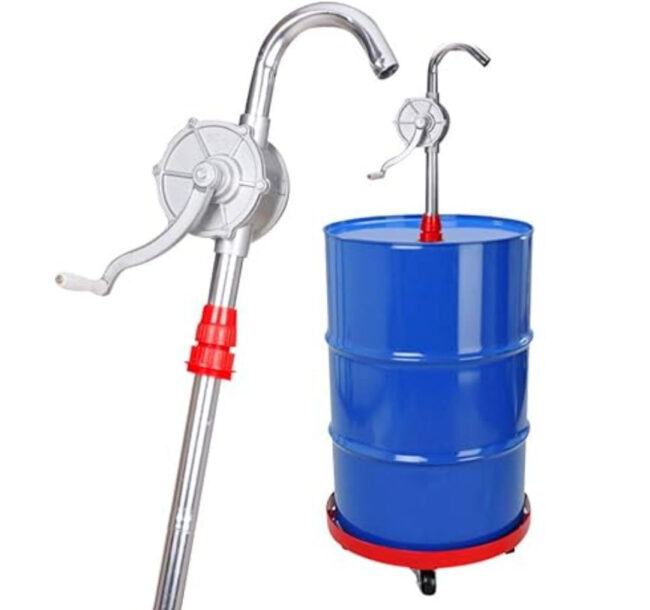
The pump housing is made from cast iron, steel, or aluminum. This material must be durable and corrosion-resistant to ensure the pump’s long-term operation. This part encloses and protects the internal components of the pump.
Suction and Discharge Pipes
The suction pipe leads oil from the container into the pump. The head of the suction pipe is usually submerged in the oil. The discharge pipe leads oil from the pump to the target container or desired location.
Pump Shaft and Hand Crank
The pump shaft is a metal rod connecting the hand crank to the moving parts inside the pump.
The hand crank is the external part that allows the user to apply rotational force to the pump shaft.
Gears or Vanes
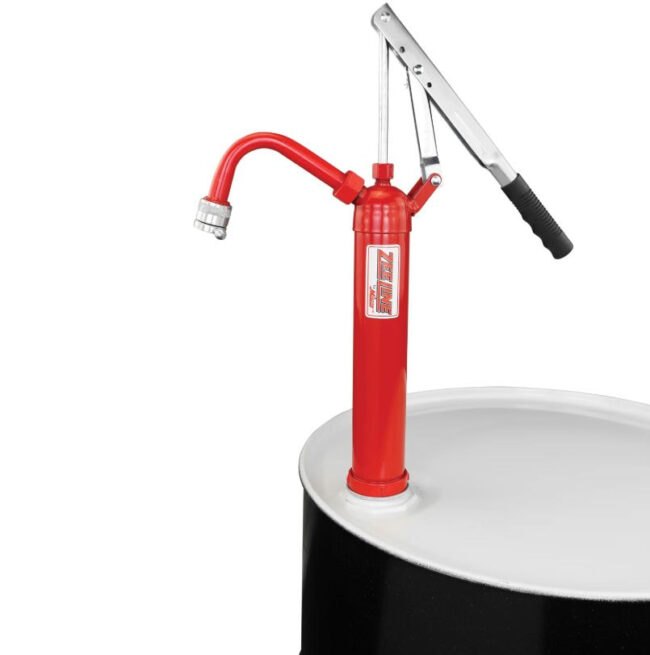
Gears or vanes can be made from metal or wear-resistant plastic. This is the primary component that generates suction and pushes the oil. Rotary hand pumps can use either gears or vanes depending on the design.
Check Valve
A check valve is a valve that allows oil to flow in a single direction, from the suction pipe into the pump and from the pump out to the discharge pipe. The non-return valve prevents oil from flowing backward.
Seals
Seals are gaskets used to prevent oil from leaking out at the connection points between components.
>>> What is a Mini Diesel Pump? Common Applications of the Pump
Operating Principle of a Rotary Hand Pump
Manual oil pumps operate on the principle of creating pressure. When the user turns the hand crank, a mechanism is activated to create pressure inside the pump body. This pressure generates suction, drawing oil from the container through the discharge valve into the pump. Subsequently, the oil is pushed out through a delivery hose for various needs.
Pros and Cons of Using a Rotary Hand Pump
Advantages
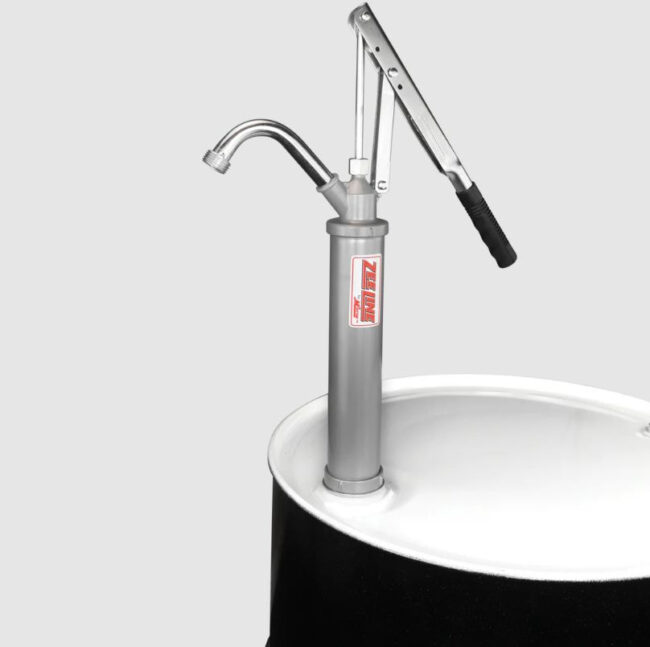
- Compared to other types of oil pumps, rotary hand pumps are more affordable and fit the user’s budget.
- Rotary hand pumps have a simple structure, making them easy to use and maintain. Users do not need extensive specialized knowledge to operate and maintain the pump.
- The oil pump is compact and lightweight, making it easy to move.
- The pump does not require electricity, allowing users to be proactive, especially in places without a power source.
- Oil pumps are applied in many different fields, such as pumping lubricants for cars, motorcycles, industrial machinery, and chemical pumping…
Disadvantages
- Compared to other oil pumps, rotary hand pumps have lower productivity and are not suitable for tasks requiring large volumes of oil.
- Users need manual effort to turn the pump, which can be tiring.
- The pump may face difficulties when handling high-viscosity liquids.
- Some types of rotary hand pumps have limited durability and may be prone to damage after a period of use.
See more: Applications of Diesel Hand Pumps
Conclusion
The rotary hand pump is a useful solution for saving costs in oil transport. Despite limitations in productivity and manual effort requirements, its advantages in price and portability make it a popular and suitable choice for many tasks that do not require high performance. We hope the information provided by Naltako has helped you better understand the equipment and invest effectively.
Nội dung có liên quan:
-
 What is a Mechanical Dock Leveler? How does it differ from a Hydraulic Dock Leveler?
Are you looking for a device to support loading and unloading goods from containers to the warehouse floor that is low-cost, highly durable, and easy to in...
What is a Mechanical Dock Leveler? How does it differ from a Hydraulic Dock Leveler?
Are you looking for a device to support loading and unloading goods from containers to the warehouse floor that is low-cost, highly durable, and easy to in...
-
 Popular Types of Hydraulic Freight Elevators Today
The role of hydraulic freight elevators in warehouses, production workshops, or construction sites is indisputable. However, the types of hydraulic freight...
Popular Types of Hydraulic Freight Elevators Today
The role of hydraulic freight elevators in warehouses, production workshops, or construction sites is indisputable. However, the types of hydraulic freight...
-
 Safe Working Load in Industrial Lifting and Cargo Handling
In the modern industrial and logistics environment, lifting and cargo handling activities take place continuously with large volumes and high frequencies. ...
Safe Working Load in Industrial Lifting and Cargo Handling
In the modern industrial and logistics environment, lifting and cargo handling activities take place continuously with large volumes and high frequencies. ...
-
 The Differences Between Mechanical Dock Levelers and Hydraulic Dock Levelers
The difference between hydraulic dock levelers and mechanical dock levelers is very clear – Hydraulic dock levelers operate automatically with a push of a ...
The Differences Between Mechanical Dock Levelers and Hydraulic Dock Levelers
The difference between hydraulic dock levelers and mechanical dock levelers is very clear – Hydraulic dock levelers operate automatically with a push of a ...
-
 What Should You Consider When Buying a 700kg Hydraulic Lift Table?
The 700kg hydraulic lift table is a popular tool widely used in production workshops and warehouses. With a lifting capacity of 700kg, this hydraulic lift ...
What Should You Consider When Buying a 700kg Hydraulic Lift Table?
The 700kg hydraulic lift table is a popular tool widely used in production workshops and warehouses. With a lifting capacity of 700kg, this hydraulic lift ...
-
 When Should You Use a 1000kg Hydraulic Lift Table?
Are you running a business in a warehouse or workshop that isn't too large and feeling that work efficiency hasn't reached your expectations? Are you looki...
When Should You Use a 1000kg Hydraulic Lift Table?
Are you running a business in a warehouse or workshop that isn't too large and feeling that work efficiency hasn't reached your expectations? Are you looki...
-
 Advantages of 500kg Manual Lift Tables You Should Know
Are you looking to buy a medium-duty manual hydraulic lift table for home use? Is your work frequency intermittent, and are you looking for a product with ...
Advantages of 500kg Manual Lift Tables You Should Know
Are you looking to buy a medium-duty manual hydraulic lift table for home use? Is your work frequency intermittent, and are you looking for a product with ...
-
 A Guide to Choosing High-Quality Hydraulic Dock Levelers Today
Hydraulic Dock Levelers are among the essential support devices for many fields and industries. Thanks to this product, the transport and storage of goods ...
A Guide to Choosing High-Quality Hydraulic Dock Levelers Today
Hydraulic Dock Levelers are among the essential support devices for many fields and industries. Thanks to this product, the transport and storage of goods ...