

 Tiếng Việt
What is a Nylon Wheel? Applications of Nylon Wheels in Industry
Nylon wheels are an indispensable component in transport and lifting equipment at factories and warehouses. Known for their high load capacity and impressive durability, these wheels provide effective solutions for various applications. So, what is a Nylon wheel and what is its structure?
What is a Nylon Wheel and Its Key Features
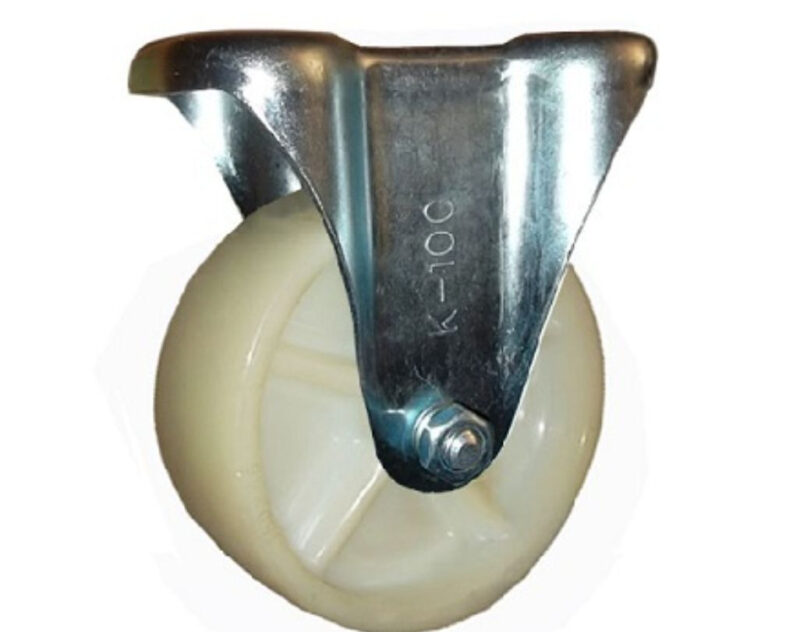
A Nylon wheel is a type of wheel made from Nylon plastic, a synthetic polymer noted for its high hardness and ability to withstand heavy loads in material handling equipment. A standout feature of this material is its excellent chemical resistance, resistance to rapid aging, and stable operation in wet environments or when exposed to oil and grease. Nylon also has effective low-temperature resistance, making it suitable for cold storage at docks or commercial centers. Thanks to these superior properties, Nylon wheels are widely used in many modern industries.
Advantages of Heavy-Duty Nylon Wheels
Nylon wheels offer many outstanding benefits in cargo handling systems, especially their high load-bearing capacity, with some types capable of supporting massive weights without deformation. Additionally, Nylon wheels feature high durability, excellent wear resistance, immunity to corrosion from chemicals and oils, and stable performance in humid warehouse environments. These advantages help increase work efficiency and reduce maintenance costs, particularly in harsh conditions.
Industrial Applications of Nylon Wheels
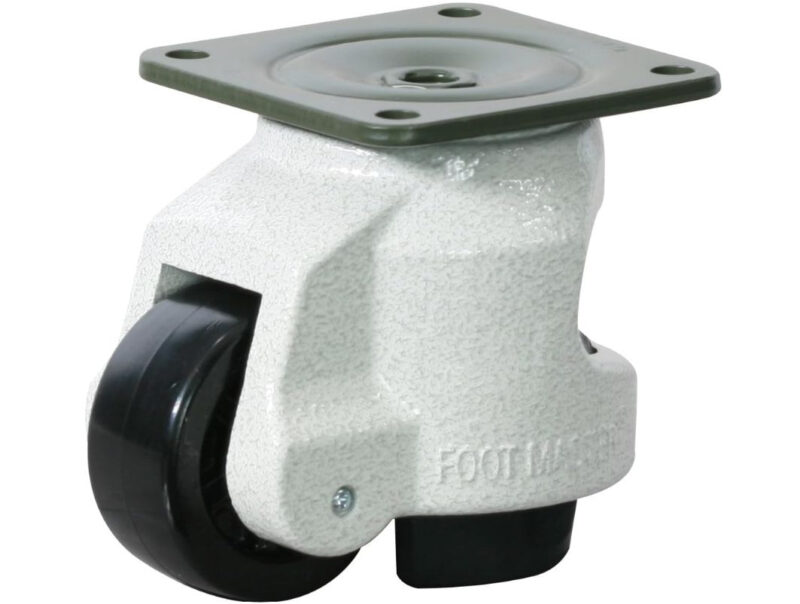
Nylon wheels are widely applied across various fields due to their flexibility and durability in logistics solutions. In industry, they are commonly used for forklifts, industrial carts, and machinery at manufacturing plants and enterprises, especially in cold storage due to their low-temperature resistance. Additionally, Nylon wheels appear in civil applications such as shopping carts at supermarkets or hospitals, suitable for wet environments and high hygiene requirements.
How to Preserve Nylon Wheels Effectively
To extend the lifespan of Nylon wheels in logistics technology, proper preservation and usage are required. Avoid long-term exposure to excessively high temperatures, as this can reduce the average service life of 3-5 years. Regular cleaning, wear checks, and avoiding use beyond the allowable load capacity at logistics companies are recommended. Storing wheels in a dry place away from direct sunlight is also an effective protection method.
The Difference Between Nylon and PU Wheels
When comparing Nylon and PU wheels in warehouse equipment, each type has its own advantages. Nylon wheels stand out for their chemical resistance and low-temperature capability, suitable for cold storage and wet environments at docks, while PU wheels offer higher elasticity, reduced noise, and better floor protection, ideal for clean workshops. Regarding high durability, both are comparable, but Nylon is generally harder, whereas PU is softer and absorbs shock better.
Frequently Asked Questions About Nylon Wheels
Below are some common questions regarding Nylon wheels in lifting systems:
- What is a Nylon wheel and what are its key features?: It is a wheel made from Nylon plastic, featuring high load capacity and excellent chemical resistance.
- What are the advantages of Nylon wheels compared to other types?: High load-bearing, wear resistance, and good performance in humid environments.
- How to preserve Nylon wheels to extend their lifespan?: Regular cleaning, avoiding high temperatures, and preventing overloading.
- In which fields are Nylon wheels applied?: Industrial (forklifts, machinery) and civil (carts).
- What is the difference between Nylon and PU wheels?: Nylon is hard and chemical-resistant; PU is elastic and noise-reducing.
Contact Naltako via email info@naltako.vn for further support regarding tilting lift tables and other lifting equipment solutions!
Nội dung có liên quan:
-
 What is a Piston? Structure and Operating Principle
If you work in the repair and installation of industrial equipment, you have surely heard terms such as: steam engines, internal combustion engines, etc. A...
What is a Piston? Structure and Operating Principle
If you work in the repair and installation of industrial equipment, you have surely heard terms such as: steam engines, internal combustion engines, etc. A...
-
 Hydraulic Oil Radiators – Oil Coolers for Hydraulic Systems
What solution will support you in the process of cooling and cleaning hydraulic oil? That is using a hydraulic oil cooler immediately. However, each system...
Hydraulic Oil Radiators – Oil Coolers for Hydraulic Systems
What solution will support you in the process of cooling and cleaning hydraulic oil? That is using a hydraulic oil cooler immediately. However, each system...
-
 Compressed Air Filters: Construction, Working Principle, and Classification
Compressed air filters are a common and essential device, designed to effectively remove impurities and dirt that may exist in compressed air, helping you ...
Compressed Air Filters: Construction, Working Principle, and Classification
Compressed air filters are a common and essential device, designed to effectively remove impurities and dirt that may exist in compressed air, helping you ...
-
 Piston Pumps: Definition, Classification, Applications, and Pricing
If vane pumps or hydraulic gear pumps are selected for low-pressure systems, the hydraulic piston pump line is designed for high-pressure machinery requiri...
Piston Pumps: Definition, Classification, Applications, and Pricing
If vane pumps or hydraulic gear pumps are selected for low-pressure systems, the hydraulic piston pump line is designed for high-pressure machinery requiri...
-
 What is a Gear Hydraulic Pump? Structure and Classification
With a simple structure, convenient assembly and operation, and the ability to withstand heavy loads for a specific duration, gear hydraulic pumps are wide...
What is a Gear Hydraulic Pump? Structure and Classification
With a simple structure, convenient assembly and operation, and the ability to withstand heavy loads for a specific duration, gear hydraulic pumps are wide...
-
 Hydraulic Pumps
In today's industries, from high-rise buildings to manufacturing plants, hydraulic pumps play a crucial role. This component helps devices such as yard ram...
Hydraulic Pumps
In today's industries, from high-rise buildings to manufacturing plants, hydraulic pumps play a crucial role. This component helps devices such as yard ram...
-
 Hydraulic Seals: Classification, Installation & Replacement
Hydraulic seals are vital components in a hydraulic system, yet not everyone fully understands them. If you are looking for information on seal types, inst...
Hydraulic Seals: Classification, Installation & Replacement
Hydraulic seals are vital components in a hydraulic system, yet not everyone fully understands them. If you are looking for information on seal types, inst...
-
 Grating Flooring (Galvanized Steel Grating): Features, Applications, and Quotes
What is Grating Flooring?
Grating flooring (also known as galvanized steel grating or grating panels) is a type of floor formed from load-bearing steel ba...
Grating Flooring (Galvanized Steel Grating): Features, Applications, and Quotes
What is Grating Flooring?
Grating flooring (also known as galvanized steel grating or grating panels) is a type of floor formed from load-bearing steel ba...