

 Tiếng Việt
What is a Hydraulic Jack? Classification and Working Principle
A hydraulic jack is a mechanical device used to lift or adjust the position of heavy objects thanks to the operating principle of liquids. Hydraulic jacks are applied in many fields such as construction, automotive maintenance, mini crane manufacturing, and other industrial applications, helping to save time and effort during the handling of heavy objects.
What is a Hydraulic Jack?
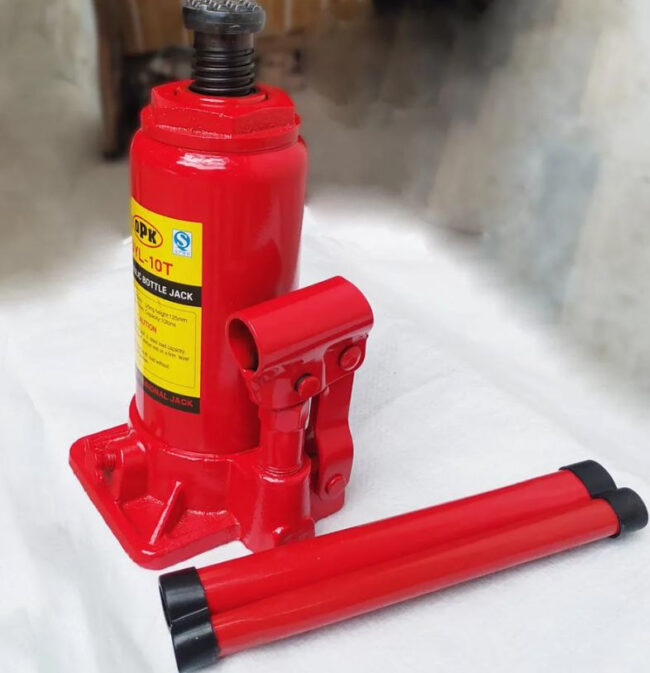
A hydraulic jack, also known as a bottle jack, is a device for lifting heavy objects. The operating principle of a hydraulic jack is based on Pascal’s Law. Accordingly, liquid pressure is transmitted undiminished within an enclosed space.
Detailed Structure of a Hydraulic Jack
A hydraulic jack consists of many different parts that coordinate to create a complete lifting system. Below is the detailed structure of a hydraulic jack:
Shell
The shell is the external part of the hydraulic jack, usually made from cast iron or steel. The shell plays a role in protecting internal components and withstanding external impact forces.
Oil Reservoir
The oil reservoir is the place to store and cool the internal fluid. Under input pressure, the hydraulic oil helps transmit force to the cylinder and creates thrust for the jack.
Control Valve
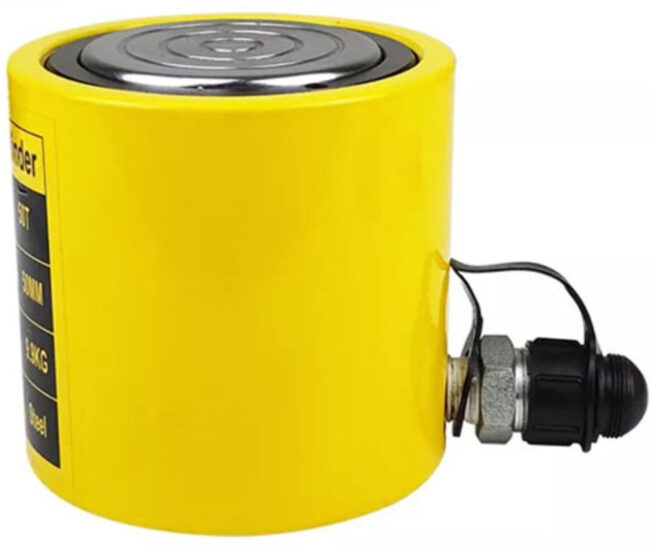
The control valve is used to regulate the oil flow in the hydraulic system. The control valve helps activate lifting and lowering operations. There are many different types of valves, such as check valves, safety valves, and release valves.
Cylinder
The cylinder is the cylindrical tube containing the piston and hydraulic oil. The cylinder is made from steel with high precision to ensure the effective operation of the jack.
Lock
The lock is a small part of the hydraulic jack, but it is extremely important for holding heavy objects at a certain height. From there, you can rest assured doing subsequent tasks without the jack suddenly dropping.
Working Principle of a Hydraulic Jack
A hydraulic jack operates based on two main mechanisms: upward lifting and downward lowering.
Upward Lifting
- Open valve: First, the valve is opened to connect the two cylinders.
- Apply force: Force F1 is applied to the cylinder with surface area S1.
- Transmit pressure: Pressure from force F1 is transmitted undiminished through the liquid to the cylinder with surface area S2 (S2 > S1).
- Create lifting force: Since area S2 is larger than S1, the force acting on cylinder S2 (F2) will be greater than F1. This force F2 creates lifting force and pushes the cylinder up to a height L2.
- Maintain height: To hold the heavy object at the lifted height, the valve will be locked.
Downward Lowering
- Unlock: When wanting to lower the heavy object, the lock will be opened.
- Close valve: The valve will close, preventing liquid from flowing from cylinder S2 to cylinder S1.
- Oil backflow: Oil in the reservoir will flow back into cylinder S2, reducing pressure.
- Lower cylinder: The pressure reduction causes cylinder S2 to lower, bringing the heavy object back to its original position.
Classification of Hydraulic Jacks
To choose the right hydraulic jack, we need to classify them according to various criteria. Below are common hydraulic jack classifications:
Classification by Thrust Capacity
- By maximum load: This is a common classification based on maximum lifting capability. Jacks on the market today have diverse load capacities (from 2 tons to 200 tons).
- Choice by need: The higher the load capacity, the higher the price of the hydraulic jack. Therefore, you should choose the type of jack suitable for your usage needs. For example, if you need to lift a passenger car or a pickup truck, a 2-ton, 5-ton, or 10-ton jack is sufficient.
Classification by Lifting Direction
- Single-acting hydraulic jack: This type of jack has a simple design and small maximum lifting load. They can only lift vertically.
- Double-acting hydraulic jack: This type of jack allows lifting and lowering in both horizontal and vertical directions. Therefore, they are also known as horizontal jacks. Double-acting hydraulic jacks are often used in more complex tasks requiring flexibility in lifting.
Conclusion
A hydraulic jack is an essential tool in many industries and different fields. Thanks to its simple and effective operating principle, this device not only lifts heavy objects quickly but also optimizes the workflow. Hopefully, with the information provided by Nalatko, you have understood the correct way to use hydraulic jacks to enhance productivity and minimize risks in activities related to load lifting.
Nội dung có liên quan:
-
 What is a Conveyor? Benefits of Using Cargo Conveyors
Before the appearance of conveyors, goods transportation relied mainly on human labor. However, due to drawbacks in efficiency and the potential for errors...
What is a Conveyor? Benefits of Using Cargo Conveyors
Before the appearance of conveyors, goods transportation relied mainly on human labor. However, due to drawbacks in efficiency and the potential for errors...
-
 What is a Trailer? Detailed Component Structure of Trailers
Have you ever seen giant trucks on the highway and wondered what the part behind them is? That is a trailer. It is a type of vehicle without an engine, des...
What is a Trailer? Detailed Component Structure of Trailers
Have you ever seen giant trucks on the highway and wondered what the part behind them is? That is a trailer. It is a type of vehicle without an engine, des...
-
 What is a PVC Conveyor? Advantages and Disadvantages of Use
PVC conveyors are not merely transport devices but comprehensive solutions that help businesses optimize production processes, improve product quality, and...
What is a PVC Conveyor? Advantages and Disadvantages of Use
PVC conveyors are not merely transport devices but comprehensive solutions that help businesses optimize production processes, improve product quality, and...
-
 What is a Semi-trailer? Distinguishing Between Trailers and Semi-trailers
In today's context of booming trade, semi-trailers have become an indispensable link in the freight transport system. With the capacity to carry large volu...
What is a Semi-trailer? Distinguishing Between Trailers and Semi-trailers
In today's context of booming trade, semi-trailers have become an indispensable link in the freight transport system. With the capacity to carry large volu...
-
 What is a Stainless Steel Mesh Conveyor? Current Applications of Stainless Steel Conveyors
Stainless steel mesh conveyor is a transport device constructed from stainless steel wires tightly woven together to form a mesh surface. Thanks to its div...
What is a Stainless Steel Mesh Conveyor? Current Applications of Stainless Steel Conveyors
Stainless steel mesh conveyor is a transport device constructed from stainless steel wires tightly woven together to form a mesh surface. Thanks to its div...
-
 What is a Plastic Chain Conveyor? Applications of Plastic Conveyor Chains
One of the effective and flexible goods transportation solutions in production activities is the plastic chain conveyor. This is a type of conveyor made fr...
What is a Plastic Chain Conveyor? Applications of Plastic Conveyor Chains
One of the effective and flexible goods transportation solutions in production activities is the plastic chain conveyor. This is a type of conveyor made fr...
-
 What is a Mini Overhead Crane? Applications of Mini Overhead Cranes
Mini overhead cranes are a type of lifting equipment designed with a compact size and lighter weight compared to traditional overhead cranes. They are typi...
What is a Mini Overhead Crane? Applications of Mini Overhead Cranes
Mini overhead cranes are a type of lifting equipment designed with a compact size and lighter weight compared to traditional overhead cranes. They are typi...
-
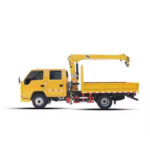 Truck-Mounted Mini Cranes: Benefits and Outstanding Features
The transportation and unloading of goods play an extremely important role, especially in the industrial, construction, and transport sectors. Owning a min...
Truck-Mounted Mini Cranes: Benefits and Outstanding Features
The transportation and unloading of goods play an extremely important role, especially in the industrial, construction, and transport sectors. Owning a min...