

 Tiếng Việt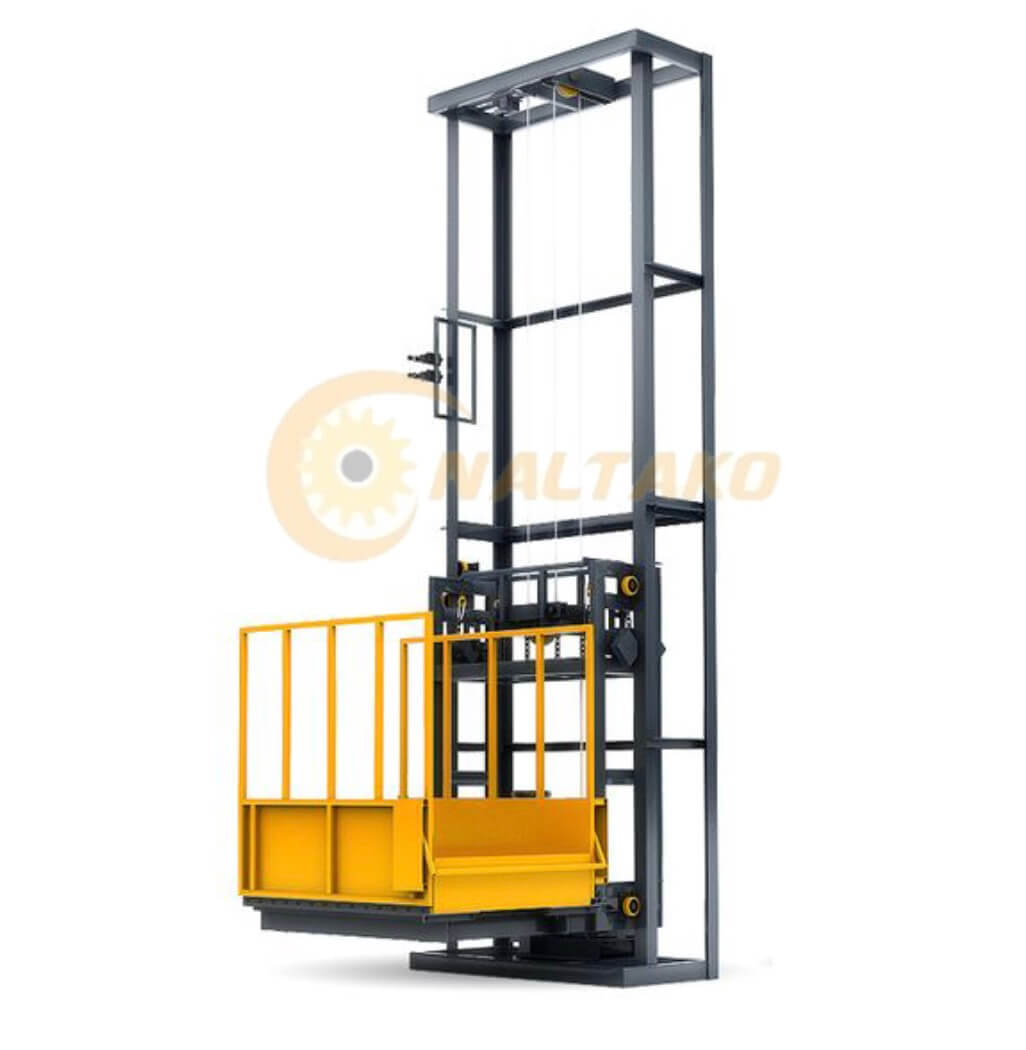
Freight Hoist
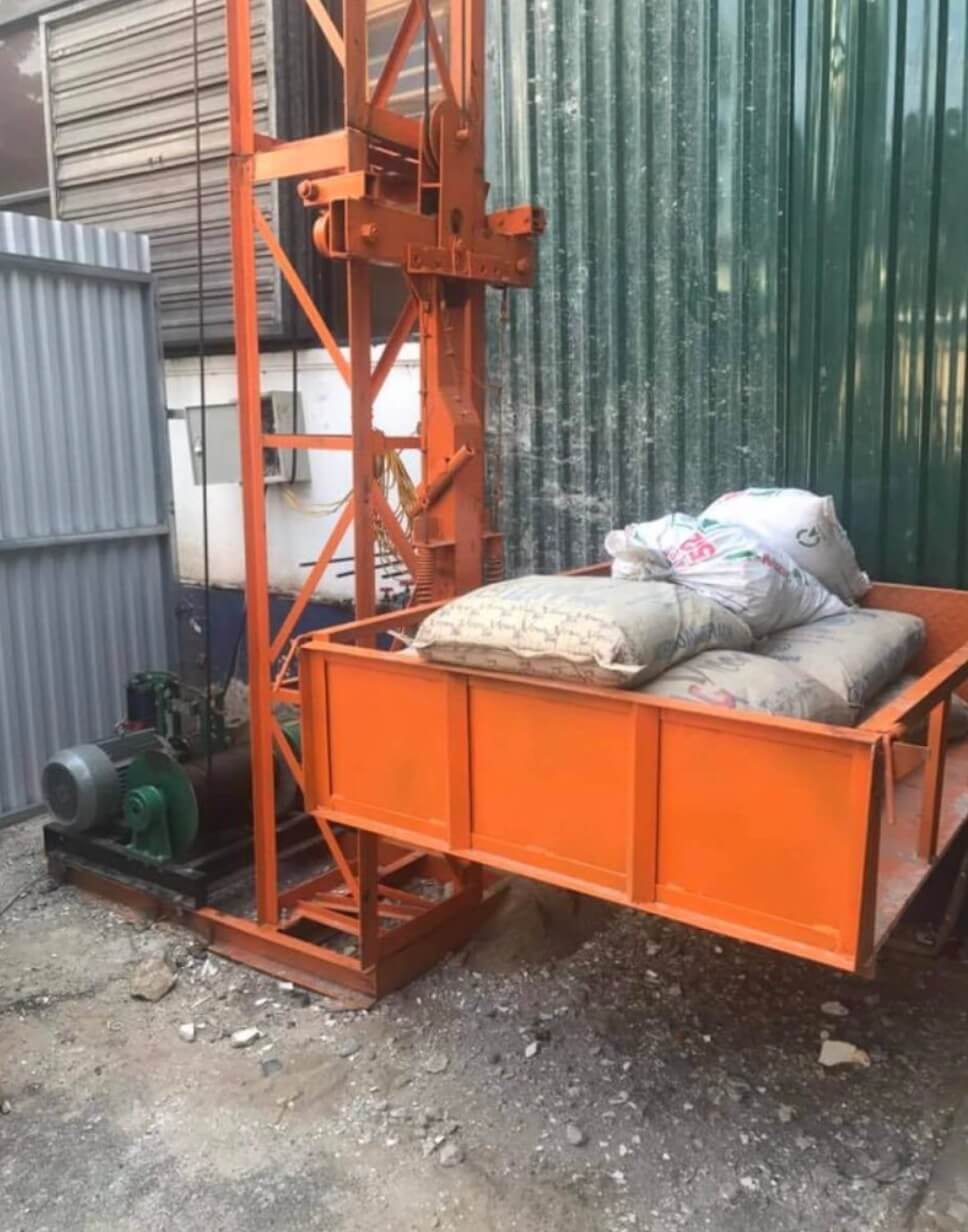
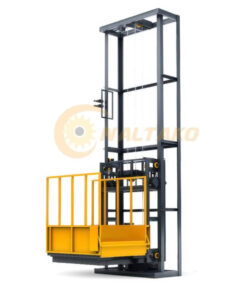
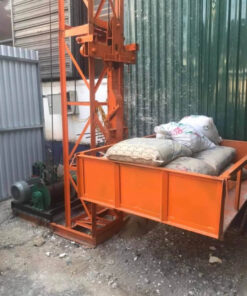
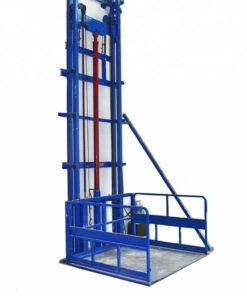
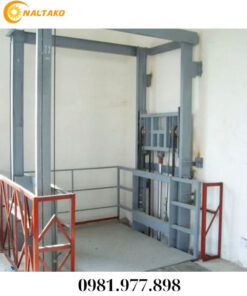
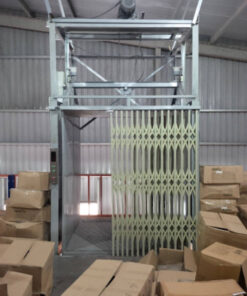
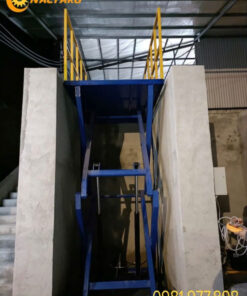
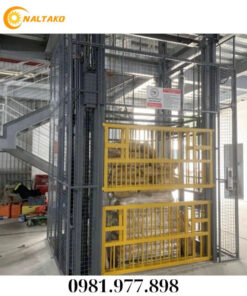
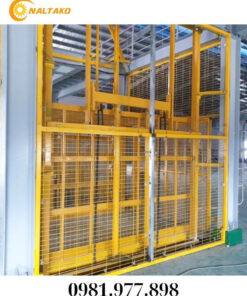
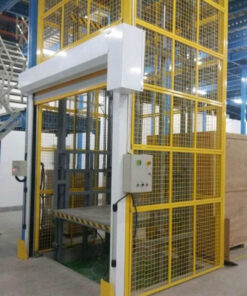
A freight hoist is a specialized device designed for transporting goods from the ground to higher elevations or vice versa. This equipment is also known by various names such as goods hoists, construction hoists, and more.
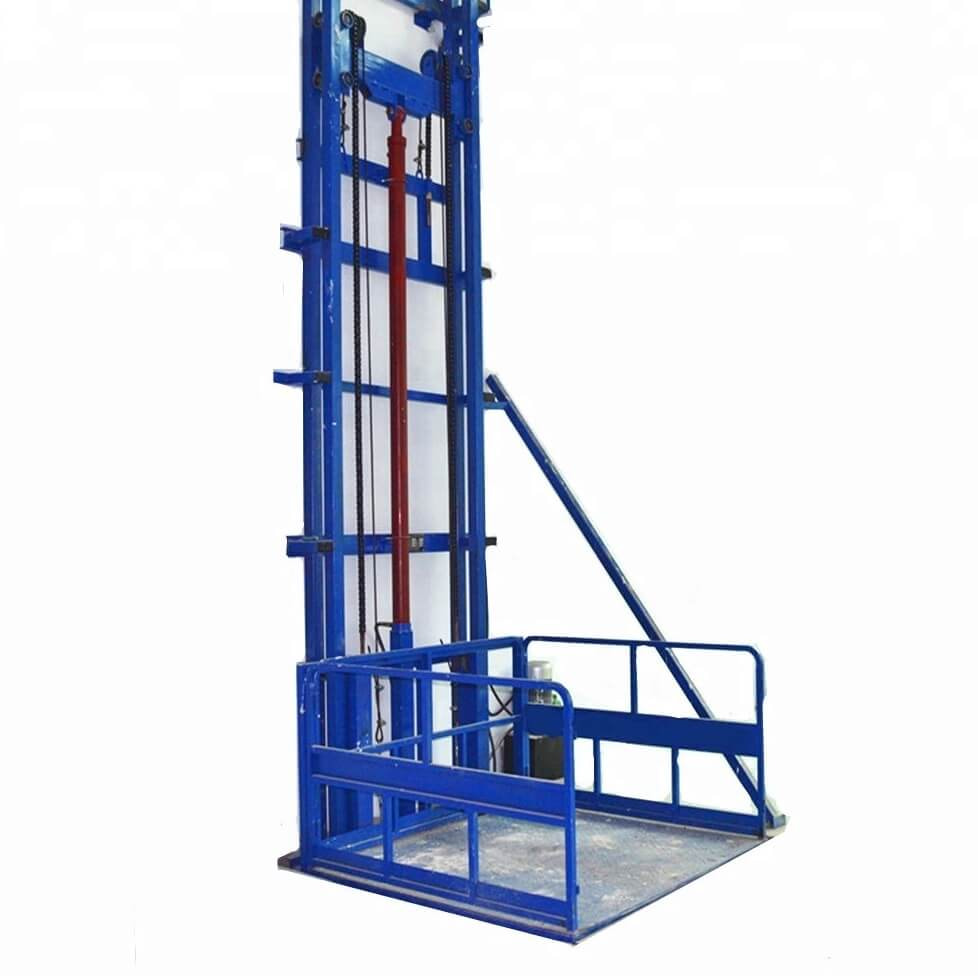
Freight hoists can utilize either electric motors or hydraulic systems to generate vertical traction. Each type comes with its own set of advantages and disadvantages, as well as different price points.
Does transporting goods to heights pose many safety risks and require heavy labor? Do traditional methods like forklifts or pulleys fail to meet the needs for large volumes and high elevations? A freight hoist is the optimal solution for your business.
This equipment, belonging to the industrial lift group, helps optimize the safe, efficient, and economical transportation of goods to heights. Let’s learn about freight hoists in the article below.
What is a freight hoist?
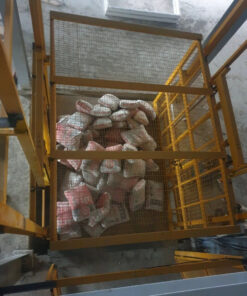
A freight hoist is a specialized device used for lifting and lowering goods at high-rise construction sites, or in some special cases, for underground construction projects or lowering items from mountain peaks.
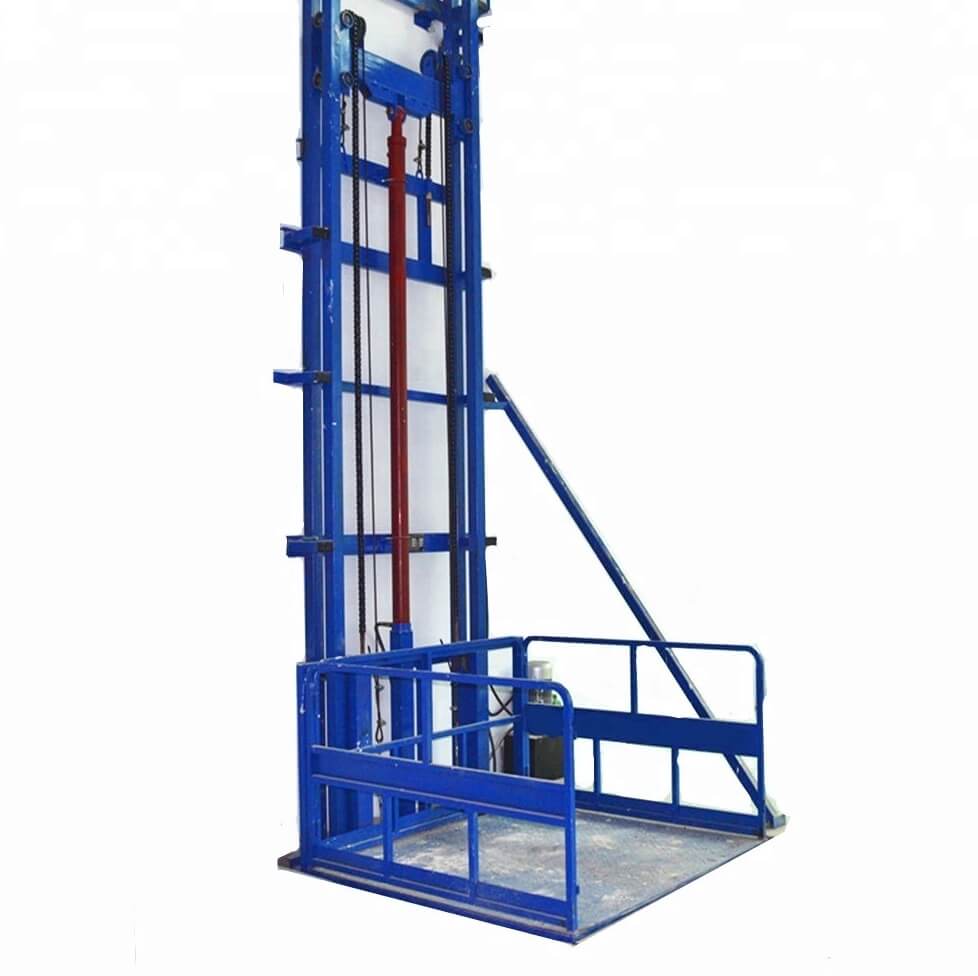
A freight hoist differs from a standard hoist in that it is exclusively used for carrying goods. This is because the device only meets technical standards for lifting cargo. Therefore, a freight hoist cannot carry people even if it meets the payload or maximum lifting height requirements.
Hoists can use electric motors or hydraulic systems to generate vertical traction. Each type has its own advantages, disadvantages, and different price points.
Advantages
Freight hoists offer many outstanding advantages compared to traditional lifting methods like forklifts, pulleys, overhead cranes, etc.
The equipment is equipped with safety systems and a sturdy frame to ensure the safety of users and goods during transportation.
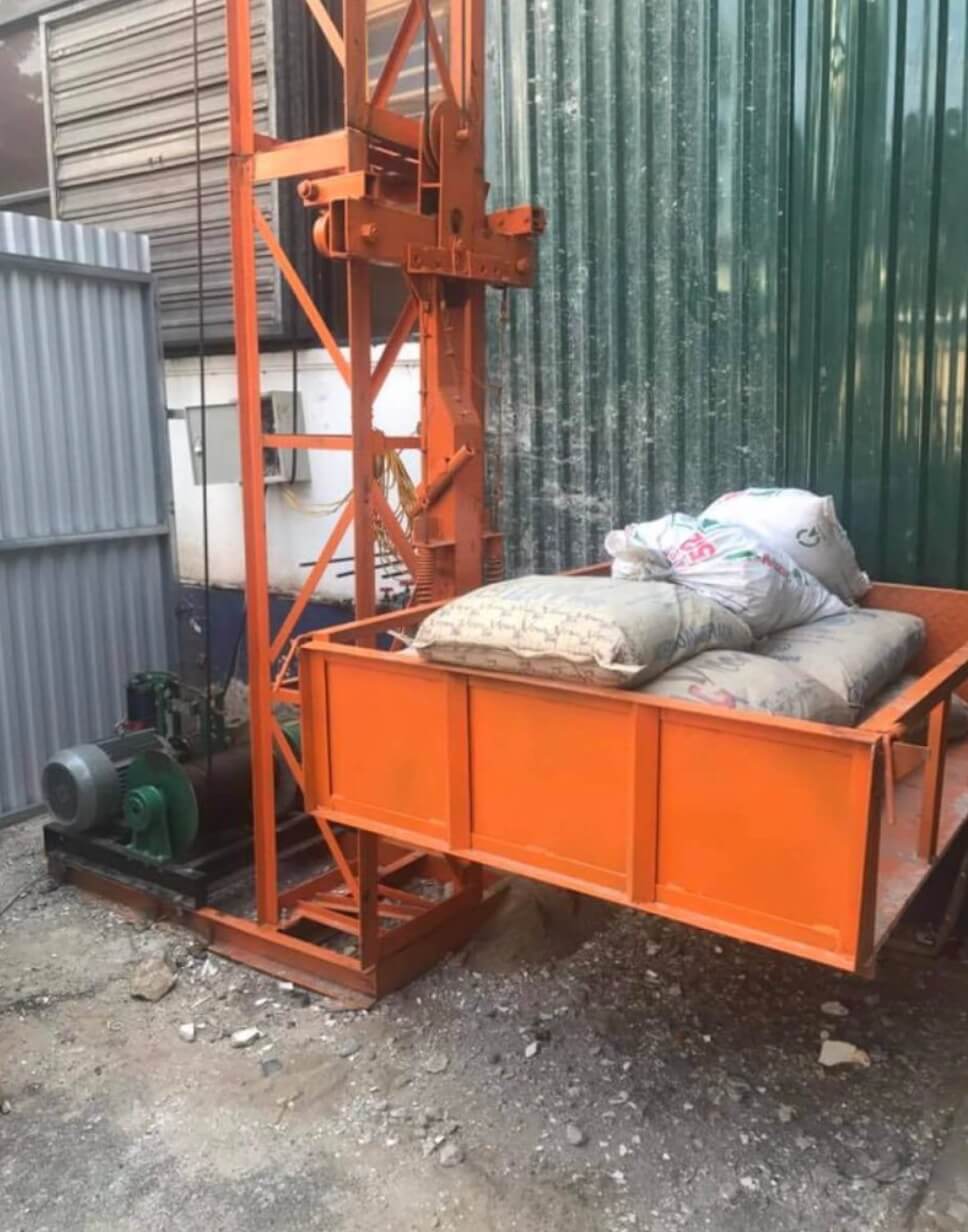
Hoists have the capability to lift large payloads to great heights, helping to increase work productivity.
The product helps save labor costs and minimizes the risk of damage to goods and construction materials during transport.
The control system is simple, making it easy to operate, maintain, and service.
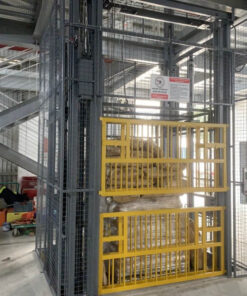
In addition to construction hoists, the product is also widely applied in warehouses, factories, yards, etc.
Limitations
Despite many advantages, freight hoists have certain limitations. Among them, the high cost is a drawback that makes it difficult for many small and medium enterprises or individual businesses to access.
Additionally, the product requires the construction of a hoist foundation and professional installation for stable and safe use.
Structure and Operating Principle of a Freight Hoist
Structure
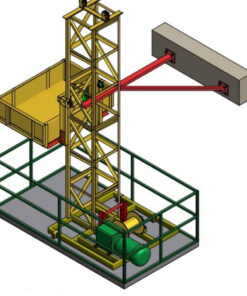
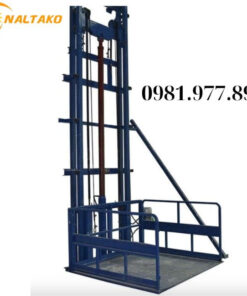
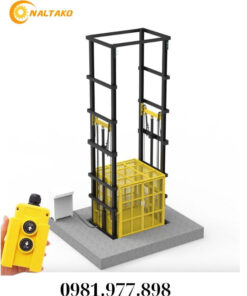
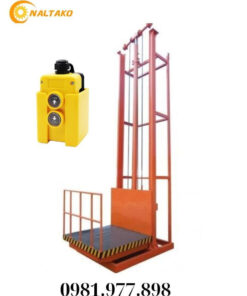
Lifting Frame: Made of sturdy steel with high load-bearing capacity, ensuring safety for the operator and goods.
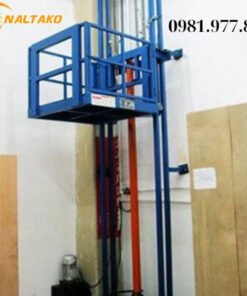
Lifting Platform: The place where goods to be lifted are placed. The platform can be made of steel, wood, or other materials.
Control System: Helps the operator control the direction and speed of the hoist. The control system can be in the form of buttons or a remote control.
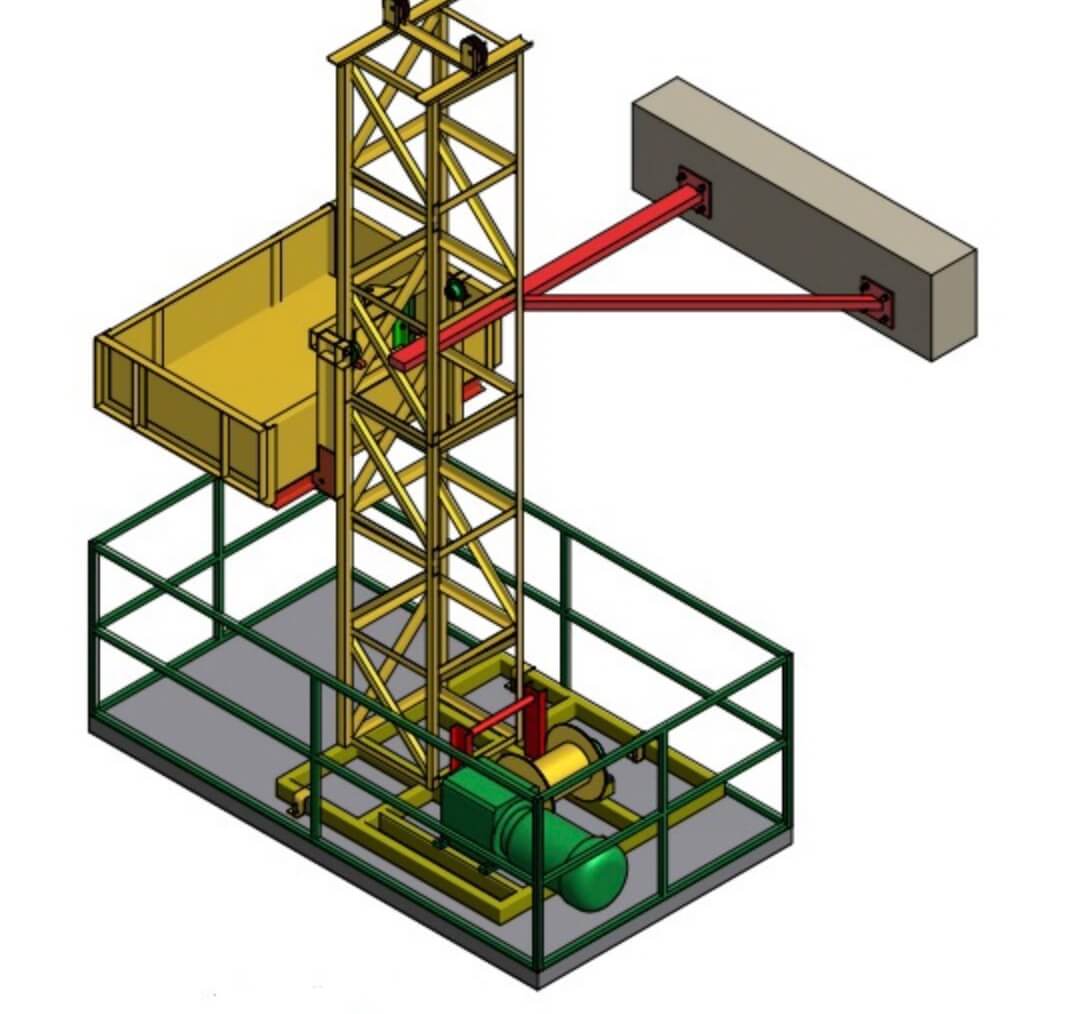
Safety System: Includes devices such as brakes, locking mechanisms, safety gates, etc., ensuring safety for users and goods during transport.
Lifting / Traction System: Currently, there are 3 types of lifting systems for freight hoists on the market: hydraulic systems, cable-pull systems, and pulley systems. Details of the pros and cons of each type will be introduced by Naltako in the next section.
See more: Hydraulic Freight Lift
Operating Principle
Although they have different structures and detailed operating principles, the 3 lifting/traction systems above are all based on the basic principles of power transmission and movement to move the lifting platform up and down. The choice of hoist type depends on usage needs, financial capability, and specific conditions.
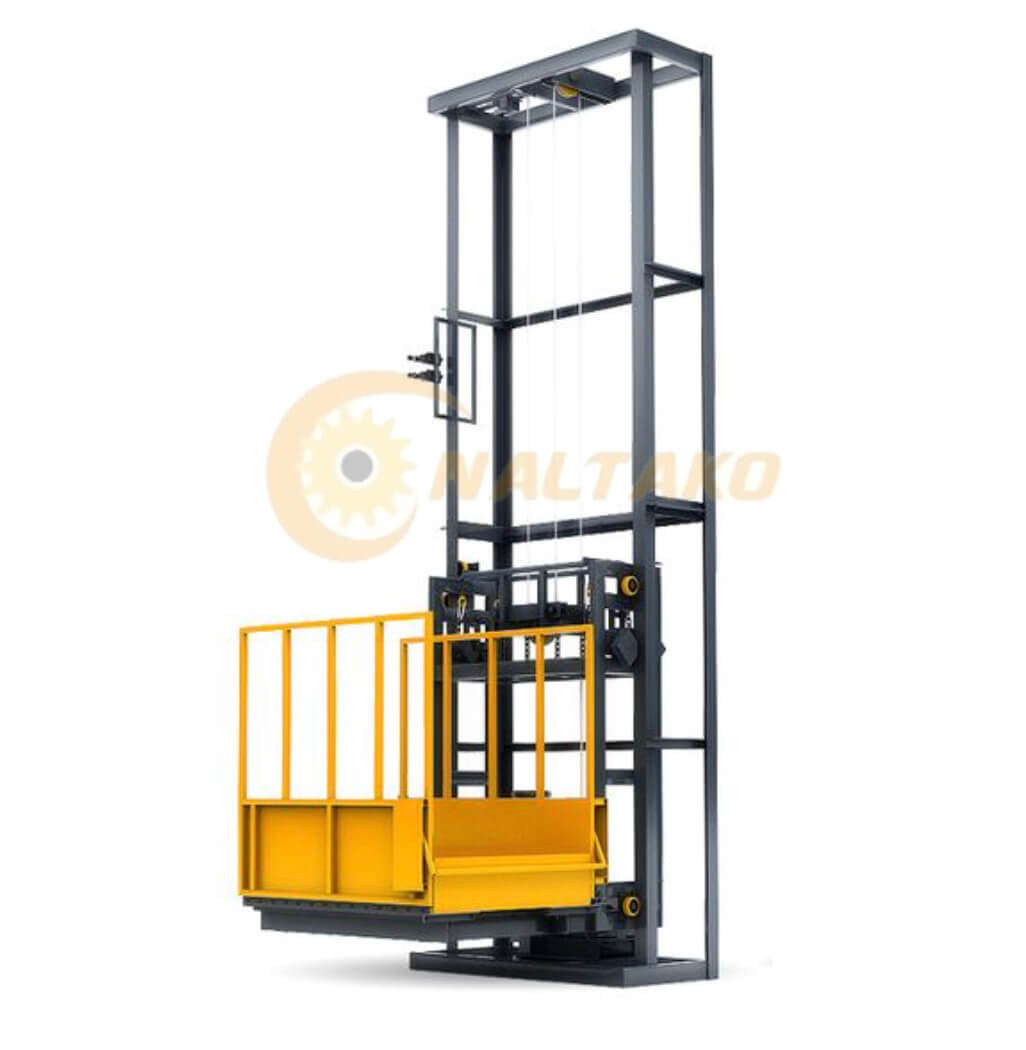
Reference Technical Specifications of Freight Hoists at Naltako
Manufacturer: Naltako Industrial Joint Stock Company
Maximum payload: 300kg – 2 tons (common)
Maximum lifting height: 6m – 60m
Lifting speed: 20 – 30m/min
Platform size: 1200 x 800 mm
Lifting frame size: 1400 x 1000 x 3000 mm
Foundation size: 1600 x 1200 x 200 mm
Lifting system: Hydraulic
Safety system: Upon request
Weight: 500kg – 1500kg
Material: High-strength steel
Color: Upon request
Note: The above are for reference only. For detailed consultation, please contact hotline: 0981.977.898.
Common Types of Freight Hoists
Classification by Lifting System
Hydraulic Hoists
Operating based on the thrust of hydraulic cylinders, they are capable of lifting large payloads of several tons. Additionally, hydraulic hoists can lift goods to great heights quickly and operate smoothly. Specifically, hydraulic hoists offer high durability, stability, and safety. However, the disadvantage of this type is the high cost.
Cable-Pull Hoists
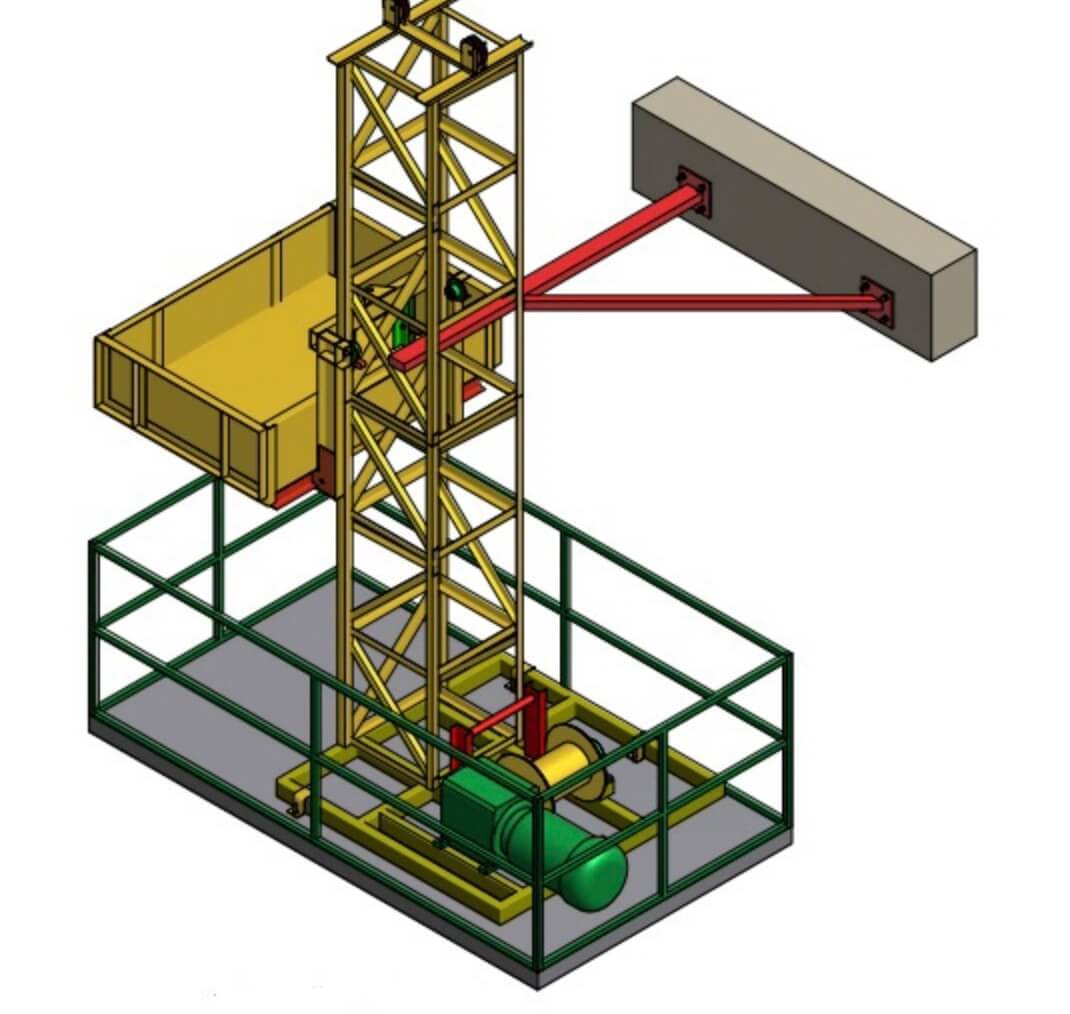
Operating based on the traction of steel cables. Typically, this type uses an electric motor or an internal combustion engine to rotate a drum, transmitting force through a cable system to move the platform vertically.
This type is capable of lifting medium payloads and is relatively cheap compared to hydraulic hoists. Cable-pull hoists share many similarities with cargo winches powered by electric motors.
Pulley Hoists
Operating based on the lever principle, they can only lift small payloads to low heights.
Classification by Lifting Mast
There are currently 3 types of freight hoists classified by lifting mast on the market:
1-Mast Hoist: Uses 1 main supporting mast to hold the entire hoist structure, suitable for small payload needs.
2-Mast Hoist: Uses 2 main supporting masts to hold the entire structure, suitable for medium payload needs.
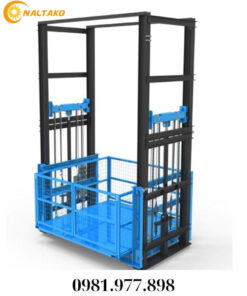
4-Mast Hoist: Uses 4 main supporting masts to hold the entire structure, suitable for large payload needs.
Classification by Payload
Freight hoists come in many different payloads depending on customer requirements. Below are some types commonly chosen by businesses.
300kg Freight Hoist
Also known as a mini hoist or residential hoist. With a maximum payload of 300kg, the device meets basic lifting needs with heights from 3m to 6m.
Reference price: 15,000,000 VND to 25,000,000 VND.
500kg Hoist
Meets the needs for heavier goods, with lifting heights from 3m to 8m.
Reference price: 25,000,000 VND to 35,000,000 VND.
1000kg Freight Hoist
Maximum payload of 1000kg, suitable for heavy lifting, with heights ranging from 4m to 10m.
Reference price: 40,000,000 VND to 50,000,000 VND.
2000kg Hoist
Maximum payload of 2 tons, meeting very heavy lifting needs, with heights from 5m to 12m.
Reference price: 60,000,000 VND to 80,000,000 VND.
Important Notes When Choosing a Construction Hoist
Determine the maximum payload, height, and dimensions of the goods to be lifted to choose a suitable hoist. Don’t forget to consider the maximum load capacity needed.
Example: If you need to lift construction materials under 300kg, you should choose a 300kg – 1-mast – hydraulic lifting system hoist.
Choose reputable brands with experience in manufacturing freight hoists and freight lifts. Also, carefully consider price, warranty, and maintenance policies after purchase.
Consult with people experienced in using hoists and cargo winches.
If your needs are infrequent, you can choose to buy a used hoist or find hoist rental units.
Address for High-Quality Freight Hoists
Naltako is a specialized provider of hydraulic hoists and hydraulic freight lifts. With over 7 years of experience in this field, Naltako has established its position in the market and become a trusted partner for many businesses.
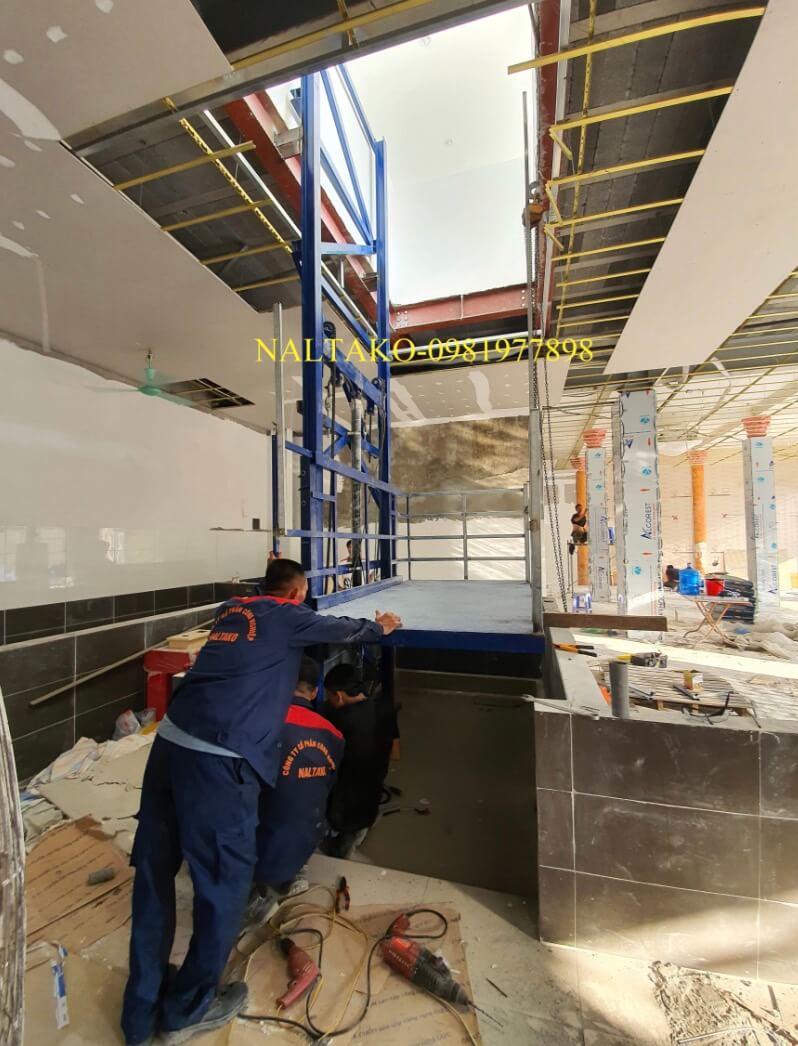
We are also the direct manufacturer, designer, installer, and maintainer, so we offer the best prices.
Naltako commits to:
- Providing genuine, high-quality hoists at competitive prices.
- A team of highly specialized engineers providing free consultation and attentive customer support.
- Professional installation, warranty, and maintenance services.
Contact Naltako now for detailed consultation and quotes:
- Website: https://naltako.vn/
- Hotline: 0981.977.898
- Email: nhat.mtk53@gmail.com
- Workshop address: Dong De Village, Phu Yen, Chuong My, Hanoi.
Be the first to review “Freight Hoist”
You must be logged in to post a review.






Reviews
There are no reviews yet.