

 Tiếng Việt
Exploring Effective Inventory Management Methods
How many inventory management methods are there is a common question for businesses looking to optimize warehouse management and reduce costs. Applying the right methods helps improve supply chain management efficiency, ensuring goods are always available without causing waste. Naltako, specializing in providing forklift ramps, offers solutions to support efficient warehouse operations. The article below will introduce popular inventory management methods and how to apply them in practice.
How Many Popular Inventory Management Methods Are There?

How many inventory management methods are there? Currently, there are about 8-10 main methods widely used globally, helping businesses optimize production management and asset management. Popular methods include:
- FIFO (First In, First Out): The first goods received are the first dispatched, suitable for food and pharmaceuticals.
- LIFO (Last In, First Out): The last goods received are the first dispatched, used for building materials.
- ABC Analysis: Classifying goods by value and frequency of use.
- Just-In-Time (JIT): Importing goods exactly when needed, reducing storage costs.
- Economic Order Quantity (EOQ): Calculating the optimal order quantity.
- Setting inventory quotas (Min/Max Inventory): Maintaining minimum and maximum inventory levels.
- SKU Barcoding: Tracking goods using barcodes to increase accuracy.
- Push/Pull strategy: Management based on forecasts or actual orders.
- Periodic Order Quantity (POQ): Ordering based on the production cycle.
- Quantitative Decision-Making (QDM): Based on data analysis.
How Do FIFO and LIFO Methods Differ?
FIFO (First In, First Out) and LIFO (Last In, First Out) are two common inventory management methods, but they have distinct differences:
- FIFO: The first goods received are the first to be dispatched, suitable for products with expiration dates like food and pharmaceuticals. The advantage is reducing the risk of expired goods and ensuring quality. The disadvantage is that costs may increase when raw material prices rise.
- LIFO: The last goods received are the first to be dispatched, typically applied to materials without expiration dates such as cement and steel. LIFO helps reduce the impact of inflation when prices rise, but can lead to older goods sitting in storage for a long time, wasting warehouse space.
For example, a food warehouse uses FIFO to ensure fresh goods, while a building materials warehouse chooses LIFO to optimize costs. According to statistics, 60% of food businesses apply FIFO to prevent spoilage.
What is an automated warehouse? Outstanding benefits of automated warehouses
What is the ABC Analysis Method and How is it Applied?
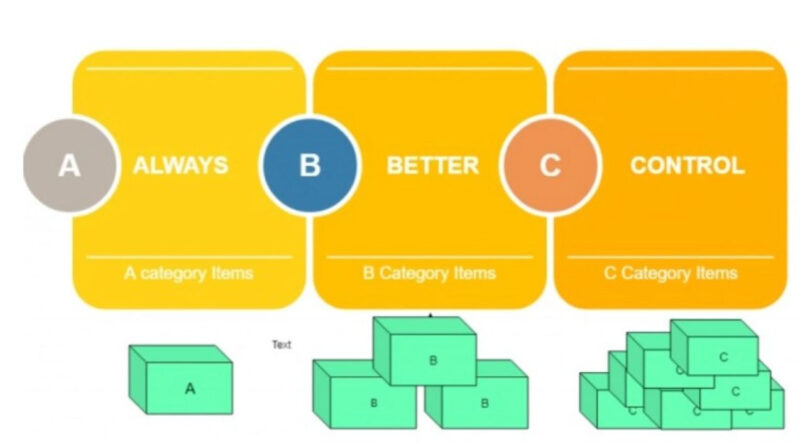
ABC Analysis is an inventory classification method based on the 80/20 Pareto principle, dividing goods into three groups:
- Group A: Accounts for 20% of the quantity but contributes 80% of the inventory value, requiring strict management.
- Group B: Accounts for 30% of the quantity and contributes 15% of the value, requiring moderate management.
- Group C: Accounts for 50% of the quantity but only contributes 5% of the value, requiring simple management.
Application: Businesses prioritize frequent inventory checks for Group A and reduce the frequency for Group C. For example, in the pharmaceutical industry, expensive drugs belonging to Group A are strictly controlled. This method helps reduce warehouse management time by 25%, according to logistics research.
How to Choose the Right Inventory Management Method?
To choose the right inventory management method, businesses need to consider:
- Product characteristics: Perishable goods (food) are suitable for FIFO, while durable goods (building materials) use LIFO.
- Storage costs: EOQ and JIT help optimize ordering and storage costs.
- Inventory turnover: ABC Analysis is suitable for businesses with a wide variety of goods.
- Demand forecasting: The pull strategy suits actual orders, while the push strategy relies on forecasts.
- Business scale: Small businesses can use SKU barcoding, while large enterprises apply QDM.
For example, an electronics manufacturing plant chooses JIT to reduce component inventory, while a retail store uses ABC to manage diverse goods. No single method is perfect, but a flexible combination helps increase warehouse efficiency by 15-20%.
Does Inventory Management Software Optimize Processes?
Inventory management software plays a crucial role in optimizing inventory import/export management, reducing errors, and saving time. Features like tracking SKU barcodes, integrating with warehouse management systems, and supporting the JIT method help businesses accurately manage inventory levels. For example, software like SAP or Odoo automatically updates inventory, forecasts demand, and sends alerts when stock is running low.
Benefits include a 30% reduction in inventory counting time and a 20% reduction in operational costs, according to logistics research. IoT technology for loading and unloading monitoring also helps track goods’ status in real-time. Naltako provides tilting lift tables, supporting bulk goods handling in the warehouse. Contact Naltako at 0981.977.898 for consultations on integrating technology into warehouse management!
Nội dung có liên quan:
-
 Should You Use a Mini Hydraulic Lift Table?
A lift table is a very useful device for warehouses and workshops. They are used to transport goods as quickly as possible. Among the many types of lift ta...
Should You Use a Mini Hydraulic Lift Table?
A lift table is a very useful device for warehouses and workshops. They are used to transport goods as quickly as possible. Among the many types of lift ta...
-
 Choosing Between Hydraulic Dock Levelers or Forklift Ramps for Cargo Handling?
Currently in Vietnam, businesses are applying many different methods to carry out import and export operations. Some businesses continue to follow traditio...
Choosing Between Hydraulic Dock Levelers or Forklift Ramps for Cargo Handling?
Currently in Vietnam, businesses are applying many different methods to carry out import and export operations. Some businesses continue to follow traditio...
-
 What is a Loading Dock? What does a Loading Dock system include?
Is your business facing difficulties in transporting goods? Is loading and unloading taking too much time and increasing costs? Have you researched solutio...
What is a Loading Dock? What does a Loading Dock system include?
Is your business facing difficulties in transporting goods? Is loading and unloading taking too much time and increasing costs? Have you researched solutio...
-
 Hydraulic Cylinder Structure, Specifications, and Operating Principles
Hydraulic cylinders, also known as hydraulic rams, are one of the most critical components in a hydraulic system. They have the ability to convert hydrauli...
Hydraulic Cylinder Structure, Specifications, and Operating Principles
Hydraulic cylinders, also known as hydraulic rams, are one of the most critical components in a hydraulic system. They have the ability to convert hydrauli...
-
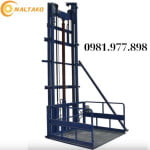 Differences Between Freight Elevators and Goods Hoists
Choosing between a freight elevator and a goods hoist is always a difficult puzzle for many businesses. Understanding this, Naltako will help you solve the...
Differences Between Freight Elevators and Goods Hoists
Choosing between a freight elevator and a goods hoist is always a difficult puzzle for many businesses. Understanding this, Naltako will help you solve the...
-
 Hydraulics: Concept, Structure, and Basic Operating Principles
Hydraulics is a vital technology, widely used in modern life. From industrial machinery like dock levelers to vehicles, this system plays an indispensable ...
Hydraulics: Concept, Structure, and Basic Operating Principles
Hydraulics is a vital technology, widely used in modern life. From industrial machinery like dock levelers to vehicles, this system plays an indispensable ...
-
 Dock Shelter and Dock Leveler: The Perfect Combination for Your Warehouse
Is your warehouse operating inefficiently, with high risks of cargo damage and low productivity? Don't worry, the optimal solution is here! The combination...
Dock Shelter and Dock Leveler: The Perfect Combination for Your Warehouse
Is your warehouse operating inefficiently, with high risks of cargo damage and low productivity? Don't worry, the optimal solution is here! The combination...
-
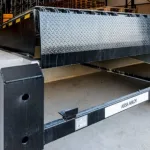 What is a Raised Floor? What are the components of its structure?
Raised floors, hydraulic dock levelers, and access floors are popular types of flooring widely used in modern construction engineering today. To learn deta...
What is a Raised Floor? What are the components of its structure?
Raised floors, hydraulic dock levelers, and access floors are popular types of flooring widely used in modern construction engineering today. To learn deta...