

 Tiếng Việt
Forklift Batteries: Classification, Usage, Maintenance, and Replacement Instructions
Are you having a headache because your electric forklift is operating inconsistently? Is the forklift battery running out quickly, failing to charge fully, or even “going on strike” in the middle of a shift?
If not selected, used, and maintained correctly, forklift batteries not only cause work disruptions but also pose potential risks to occupational safety. Not to mention, constantly replacing batteries will consume a significant amount of money.
The following article by Naltako will provide you with all the necessary information about electric forklift batteries, from popular types, how to choose the right one, and effective usage to periodic maintenance and replacement.
Overview of Forklift Batteries
Concept
A forklift battery (electric forklift power pack) is the core component that provides energy for all activities of an electric forklift, including lifting, moving, and operating hydraulic systems. Forklift batteries operate on the principle of converting chemical energy into electrical energy, allowing for recharging and reuse multiple times.
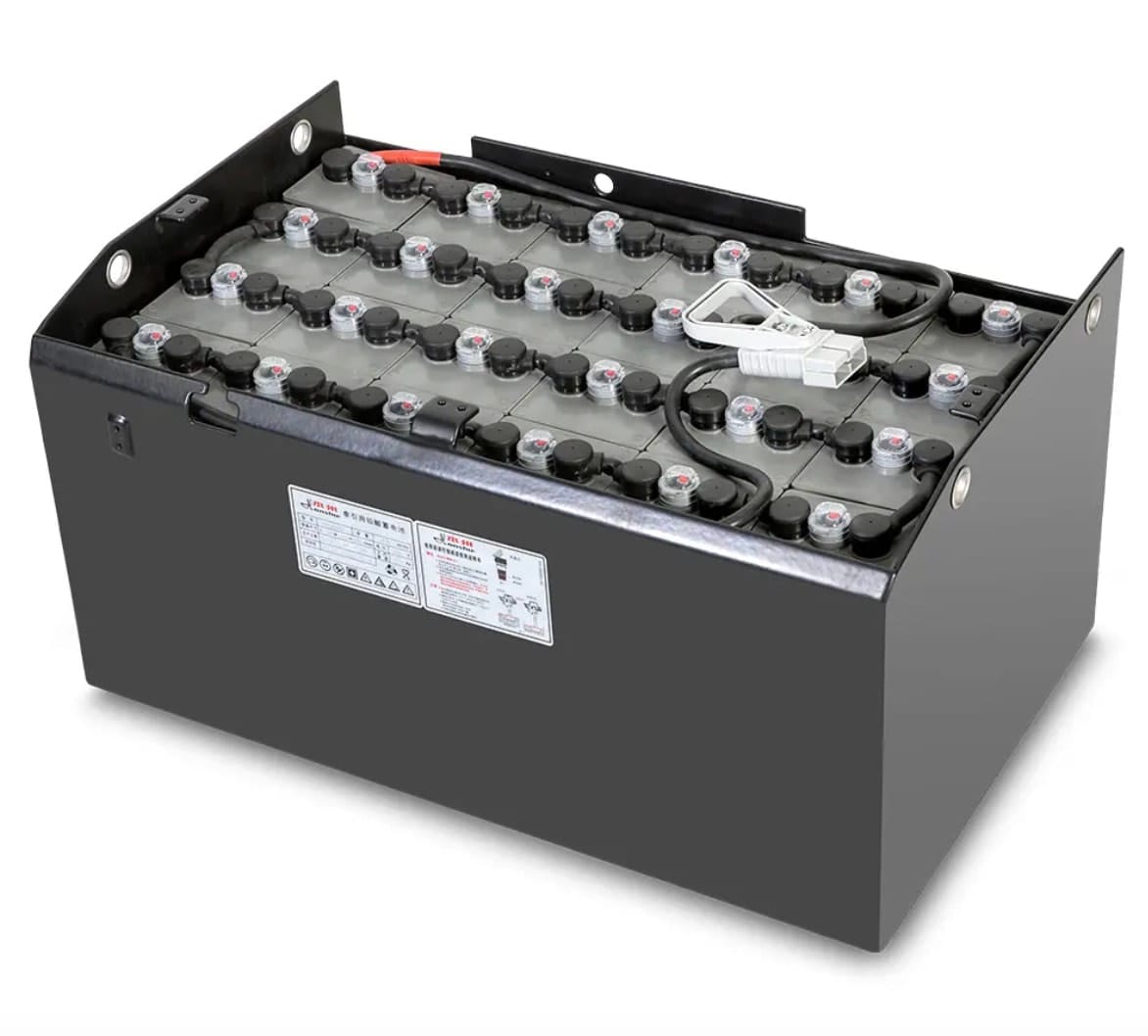
Structure
- Electrochemical Cell: Consists of alternating positive plates (usually made of lead dioxide) and negative plates (usually made of pure lead). These plates are separated by a porous separator soaked in an electrolyte solution (usually sulfuric acid).
- Busbars: Plates of the same polarity are linked together by busbars, forming the positive and negative terminals of the cell.

- Case: Made of insulating and acid-resistant materials like ebonite plastic or polypropylene, protecting the internal electrochemical cells.
- Terminals: Located on the case, used to connect the battery to the forklift’s electrical system.
- Vent caps (for flooded batteries): Allow gases generated during charging to escape while preventing dirt from entering the battery.
Note: Detailed structure may vary depending on the battery type (lead-acid, lithium-ion, etc.) and the manufacturer.
Classification of Forklift Batteries
By Electrolyte
Lead-acid batteries: The most common on the market, using sulfuric acid solution as the electrolyte. There are two main types:
- Flooded lead-acid batteries: Require periodic maintenance (topping up with distilled water), and may release harmful acid gases.
- Valve Regulated Lead-Acid (VRLA) batteries: Maintenance-free, non-gassing, safer, but generally have a shorter lifespan than flooded types.
- Lithium-ion (Li-ion) batteries: New technology with outstanding advantages in performance, lifespan, fast charging, and no maintenance required. However, the cost is higher.
Nickel-cadmium (NiCd) batteries: Less common, high load capacity, good lifespan but lower efficiency compared to Li-ion.
By Purpose of Use
- Starting Batteries (SLI): Used to start the forklift engine.
- Traction/Deep Cycle Batteries: Provide continuous energy for forklift operations over long periods.
Pros and Cons of Current Electric Forklift Battery Types
| Criteria | Flooded Lead-Acid | Sealed Lead-Acid (VRLA) |
Lithium-ion (Li-ion)
|
| Advantages | Lowest cost | Maintenance-free |
Longest lifespan (2-3 times lead-acid)
|
| Common tech, easy to replace | Safe, no toxic gas emission |
Fastest charging time
|
|
|
Highest energy efficiency
|
|||
|
No maintenance required
|
|||
| Disadvantages | Needs regular maintenance (distilled water) | Shorter lifespan than flooded types |
Highest cost
|
| May release toxic gases |
Higher cost than flooded types
|
Criteria for Selecting Electric Forklift Batteries
To select the right forklift battery, you need to carefully consider the following criteria:
Type of Forklift and Usage Needs
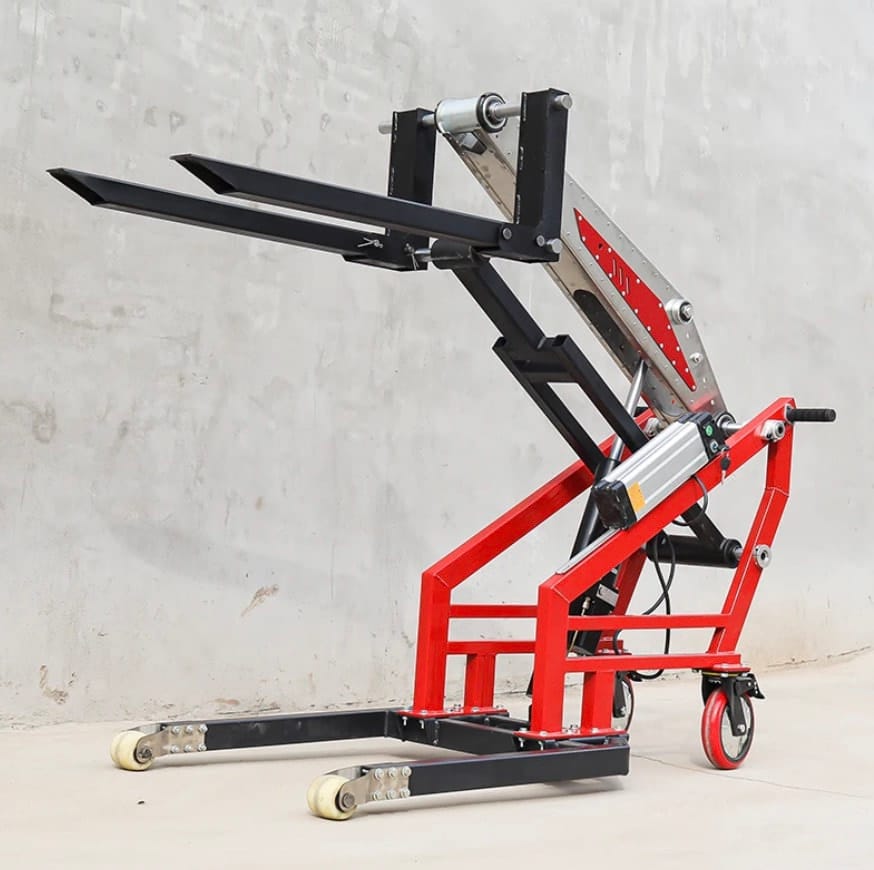
Electric Pallet Jacks (Semi-automatic forklifts): Usually use 12V sealed lead-acid batteries due to their compact size, zero maintenance, and reasonable cost.
Stand-on/Sit-down Electric Forklifts: Can use lead-acid batteries (24V/48V) or Lithium-ion batteries depending on the budget and frequency of use. If the vehicle operates continuously over multiple shifts, prioritize Li-ion batteries for sit-down forklifts to ensure performance and save charging time.
Voltage and Battery Capacity
Voltage: Must be compatible with the forklift’s electrical system (usually 24V or 48V forklift batteries).
Capacity (Ah): The higher the capacity, the longer the vehicle’s operating time. Choose a capacity suitable for the expected working hours.
Battery Technology
Lead-acid batteries: Low cost, common but require periodic maintenance (flooded) or have a shorter lifespan (sealed).
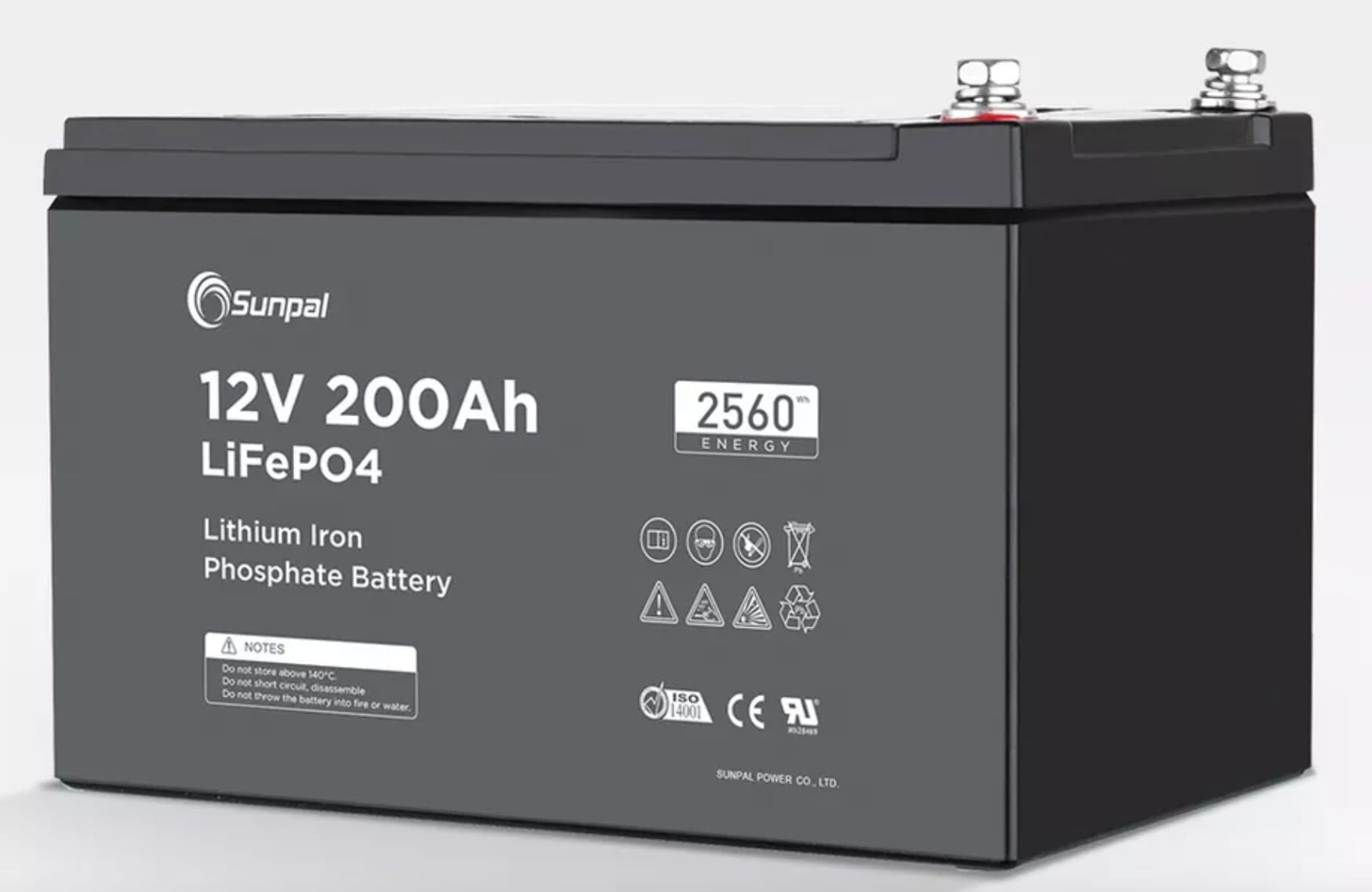
Lithium-ion batteries: High efficiency, superior lifespan, fast charging, no maintenance required but higher cost.
Operating Conditions
Working Environment: If the forklift operates in harsh environments (high temperature, lots of dust), sealed lead-acid or Li-ion batteries should be chosen to ensure durability.
Frequency of Use: If the vehicle operates continuously, Li-ion batteries will be the better choice due to their fast charging capability and long life.
Budget
Lead-acid batteries: Suitable for limited budgets.
Lithium-ion batteries: More expensive upfront but save long-term operating costs thanks to their long life and zero maintenance.
See more: Electric forklift battery prices
Brand and Warranty Policy
Choose batteries from reputable brands such as GS Yuasa, Hitachi, Rocket, Trojan, and Exide to ensure quality and durability. Pay attention to the supplier’s warranty policy for peace of mind.
User Manual for Forklift Batteries
Charging
- Charging Current: Use a dedicated forklift battery charger, adjusting the charging current to 1/10 or 1/8 of the battery capacity (Ah). Fast charging is possible but requires shorter durations to avoid overheating.
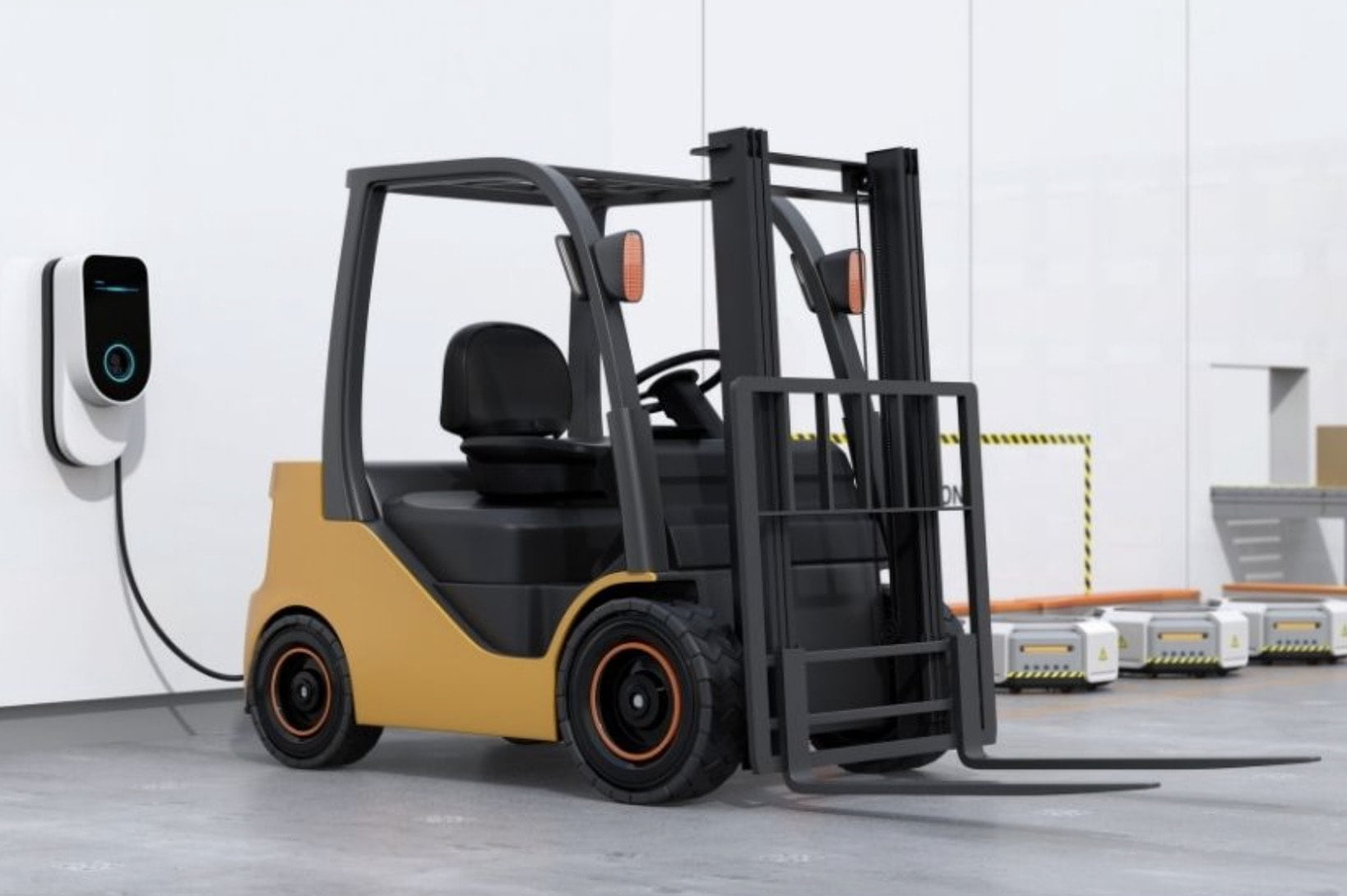
- Charging Environment: Charge in a cool place, away from direct sunlight and heat sources. Ensure a well-ventilated space so gases released during charging are not harmful.
- Check Solution Level (Flooded Batteries): After charging, check and supplement with distilled water if necessary, ensuring the solution level is between the LOWER and UPPER marks.
- Cleaning: Wipe down the terminals and battery case before installation.
Installation
- Correct Polarity: Connect the red wire (+) of the charger to the positive terminal (+) of the battery and the black wire (-) to the negative terminal (-).
- Installation Sequence: Install the battery on the vehicle, connecting the positive wire first, then the negative wire.
- Terminal Protection: Apply a layer of specialized grease to the terminals to prevent corrosion.
Notes
- Do not cover the battery caps during charging (for flooded batteries).
- Do not charge the battery in areas with a risk of fire or explosion.
- Regularly check the battery status, clean and maintain periodically to ensure performance and extend lifespan.
Maintenance Guide for Electric Forklift Batteries
Regular Maintenance
- Avoid Deep Discharge: Do not let the battery discharge below 20% capacity, as this can cause permanent damage.
- Avoid Overcharging: Disconnect the charger when the battery is full; avoid forced charging which causes overheating and reduces life.
- Control Charging Temperature: The ideal temperature for charging is 30-40°C. Avoid charging at temperatures too high or too low.
- Clean the Battery: Regularly wipe off dirt, check terminals and cable connections to ensure good contact.
- Check Electrolyte Level (Flooded Batteries): Maintain the solution level about 1/4 inch (6mm) from the battery neck. Only top up with pure distilled water (conductivity ≤ 30µS/cm) after a full charge.
Periodic Maintenance
- Equalizing Cell Voltage (Flooded Batteries): Perform periodically every 3-6 months to ensure cells operate evenly, extending battery life.
- Supplementary Charging (for batteries not used frequently): Fully charge the battery at least once a week to avoid self-discharge.
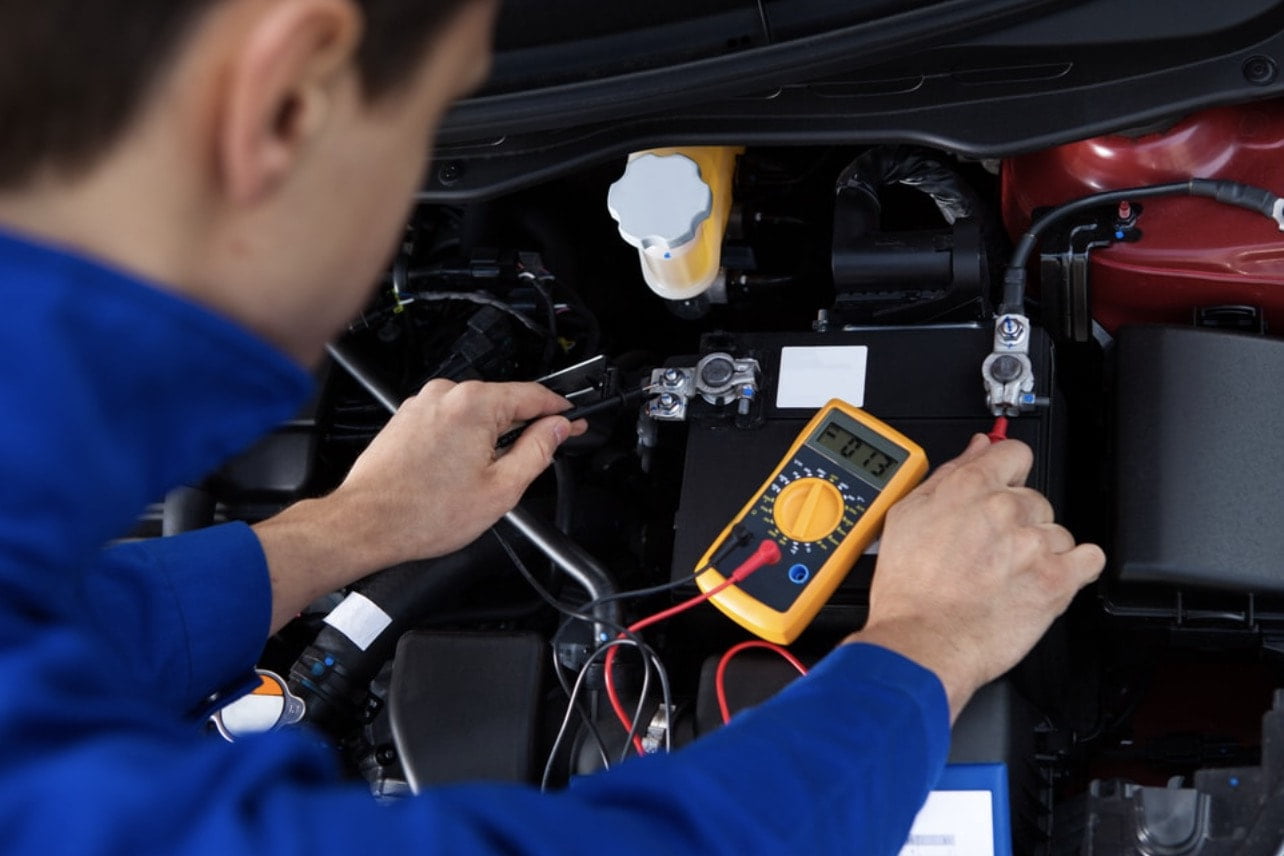
- Overall Inspection: Take the battery to a professional maintenance center for a full check every 6 months or as recommended by the manufacturer.
Notes
- Comply with the manufacturer’s usage and maintenance instructions.
- Use a genuine charger suitable for the battery type.
- Avoid continuous charging during short breaks (lunch hour), as this will reduce battery life.
Storage Guide for Electric Forklift Batteries
If not using the forklift battery for a long time, perform the following steps to ensure longevity and performance:
- Fully Charge the Battery: Before storing, fully charge the battery to prevent self-discharge from reducing capacity.
- Store in a Cool, Dry Place: Avoid direct sunlight, high temperatures, and excessive humidity. The ideal temperature is between 10°C and 25°C.
- Place Battery on a Pallet: Do not place the battery directly on the floor to avoid moisture and electrolyte leakage.
- Periodic Check: If storage time is long, check the battery voltage periodically (about every 1-2 months) and provide supplementary charging if necessary.
- Clean and Protect Terminals: Clean the terminals thoroughly and apply a thin layer of Vaseline to prevent oxidation.
Notes:
- For flooded lead-acid batteries, check electrolyte levels periodically and top up with distilled water if necessary.
- For Li-ion batteries, do not store them in a fully charged or fully discharged state. Keep the charge level around 40-60%.
- Refer to specific storage instructions from the manufacturer for safety and efficiency.
Guide to Replacing Electric Forklift Batteries
Periodic Replacement Time
Forklift battery life depends on many factors such as the type of battery, frequency of use, and how it’s charged and maintained. On average, a battery can operate for 1500 to 2000 charge/discharge cycles. With normal use, a battery can last from 3 to 5 years.
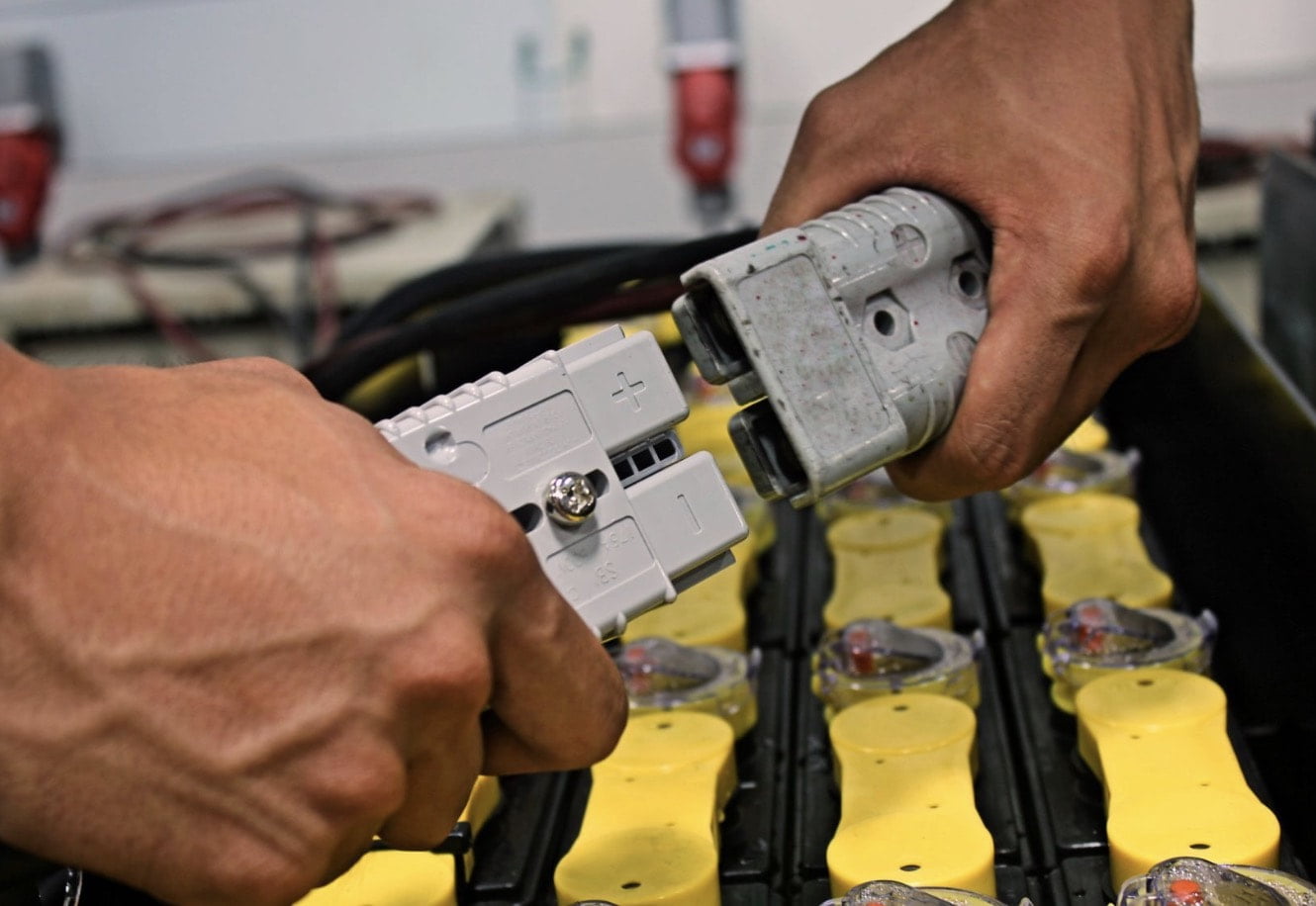
However, to ensure performance and safety, you should check periodically and replace the battery when signs of degradation appear such as:
- Significantly reduced operating time.
- Weak forklift, not reaching maximum power.
- Battery voltage drops rapidly during use.
- Signs of damage like bulging or solution leakage.
Replacement Process
- Disconnect Power: Ensure the forklift is turned off and the power source is disconnected before removing the old battery.
- Remove Old Battery: Use appropriate tools to disconnect terminals and cables, then gently remove the old battery from the vehicle.
- Clean Battery Compartment: Remove dust and debris from the battery compartment.
- Install New Battery: Place the new battery in the correct position, and connect the terminals and cables according to the correct polarity.
- Check and Charge: Recheck connections and proceed to fully charge the new battery before use.
Notes
- Safety: Wear gloves and protective goggles when working with batteries.
- Capacity and Voltage: Choose a new battery with a capacity (Ah) and voltage (V) suitable for the forklift.
- Reputable Brands: Select batteries from trusted brands like GS Yuasa, Hitachi, Rocket, etc.
- Do Not Repair Yourself: If you lack experience, seek a professional technician to replace the battery.
Common Errors in Usage, Maintenance, and Replacement of Forklift Batteries
Usage:
- Battery runs out quickly: Overloading, excessive use, insufficient charging, old battery.
- Weak forklift performance: Weak battery, loose connections, forklift motor issues.
- Abnormally hot battery: Overloading, charging with excessive current, damaged battery.
- Bulging or leaking battery: Overheating, overcharging, old battery.
Maintenance:
- Adding wrong water: Use only distilled or deionized water (for flooded lead-acid batteries).
- Not cleaning the battery: Dirt causes electrical leakage, reducing efficiency.
- Incorrect charging: Overcharging or insufficient charging both reduce battery life.
Replacement:
- Choosing wrong battery: Incorrect voltage or capacity.
- Wrong polarity connection: Causes short circuit and battery damage.
- Loose terminals: Cause sparking and reduce performance.
- Not fully charging the new battery: Affects lifespan.
Troubleshooting:
- Check and maintain batteries regularly.
- Use the forklift within its rated capacity.
- Replace the battery when necessary.
- Ask for technical support if you lack experience.
Top Reputable Forklift Battery Brands
| Brand | Origin | Key Tech | Advantages | Disadvantages |
| GS Yuasa | Japan | Lead-acid | High durability, stable performance, superior life | Higher cost than some brands |
| Hitachi | Japan | Lead-acid | Deep discharge capability, long life, performs well in extreme temps | High cost |
| Trojan | USA | Lead-acid | High durability, good performance, withstands harsh working conditions | High cost |
| Exide | USA | Lead-acid, Li-ion |
Advanced tech, stable performance, long life, diverse products
|
|
| Hawker | USA | Lead-acid | High durability, good performance, customizable | High cost |
| Faam | Italy | Lithium-ion | High quality, superior performance, long life | Very high cost |
| Chloride | India | Lead-acid | Competitive price, stable quality | Tech not yet equal to Japan/USA brands |
| Rocket | South Korea | Lead-acid | Common, reasonable cost | Average lifespan |
Conclusion
We hope that the detailed information in this article has helped you better understand the types of forklift batteries, selection criteria, and maintenance methods to ensure your forklift always operates at its best.
Don’t forget to share this article if you found it useful!
Nội dung có liên quan:
-
 What is a Gear Hydraulic Pump? Structure and Classification
With a simple structure, convenient assembly and operation, and the ability to withstand heavy loads for a specific duration, gear hydraulic pumps are wide...
What is a Gear Hydraulic Pump? Structure and Classification
With a simple structure, convenient assembly and operation, and the ability to withstand heavy loads for a specific duration, gear hydraulic pumps are wide...
-
 Hydraulic Pumps
In today's industries, from high-rise buildings to manufacturing plants, hydraulic pumps play a crucial role. This component helps devices such as yard ram...
Hydraulic Pumps
In today's industries, from high-rise buildings to manufacturing plants, hydraulic pumps play a crucial role. This component helps devices such as yard ram...
-
 Hydraulic Seals: Classification, Installation & Replacement
Hydraulic seals are vital components in a hydraulic system, yet not everyone fully understands them. If you are looking for information on seal types, inst...
Hydraulic Seals: Classification, Installation & Replacement
Hydraulic seals are vital components in a hydraulic system, yet not everyone fully understands them. If you are looking for information on seal types, inst...
-
 Grating Flooring (Galvanized Steel Grating): Features, Applications, and Quotes
What is Grating Flooring?
Grating flooring (also known as galvanized steel grating or grating panels) is a type of floor formed from load-bearing steel ba...
Grating Flooring (Galvanized Steel Grating): Features, Applications, and Quotes
What is Grating Flooring?
Grating flooring (also known as galvanized steel grating or grating panels) is a type of floor formed from load-bearing steel ba...
-
 What is a 500kg Hydraulic Jack? Structure and Operating Principle
Nowadays, the 500kg hydraulic lift table, lifting 280 - 900 mm is a popular lifting device in many fields. With the ability to lift heavy objects easily an...
What is a 500kg Hydraulic Jack? Structure and Operating Principle
Nowadays, the 500kg hydraulic lift table, lifting 280 - 900 mm is a popular lifting device in many fields. With the ability to lift heavy objects easily an...
-
 Top 5 Reputable Addresses for Affordable, High-Quality Electric Forklift Wheels
Are you struggling to find a place to buy electric forklift wheels that are affordable yet still guarantee quality? Choosing the wrong supplier not only wa...
Top 5 Reputable Addresses for Affordable, High-Quality Electric Forklift Wheels
Are you struggling to find a place to buy electric forklift wheels that are affordable yet still guarantee quality? Choosing the wrong supplier not only wa...
-
 Types of Crane Hooks & Detailed Price Quotes
Are you having a headache finding the right crane hook for your needs and budget? Naltako will help you understand the popular types of crane hooks on the ...
Types of Crane Hooks & Detailed Price Quotes
Are you having a headache finding the right crane hook for your needs and budget? Naltako will help you understand the popular types of crane hooks on the ...
-
 Hydraulic Throttle Valves: Structure, Operating Principle, and Applications
Are you struggling with products like hydraulic dock levelers operating inefficiently, consuming too much energy, and being difficult to control? Don't wor...
Hydraulic Throttle Valves: Structure, Operating Principle, and Applications
Are you struggling with products like hydraulic dock levelers operating inefficiently, consuming too much energy, and being difficult to control? Don't wor...