

 Tiếng Việt
Detailed Container Loading and Unloading Process
In the modern maritime industry, containers play a vital role in global goods transportation. The container loading and unloading process is a critical link in the supply chain, ensuring that goods are transported safely and efficiently from sea vessels to shore and vice versa. So, is this process complex? Let’s follow the detailed goods handling process.
Professional Loading and Unloading Equipment
There are many devices that assist in making the container loading and unloading process more professional and efficient. Below are some common and important devices:
Cranes
Cranes are often used at large seaports to handle containers. Typically, two common types are gantry cranes and mobile mini cranes. They play an important role by providing rapid ground-level efficiency.
Forklifts
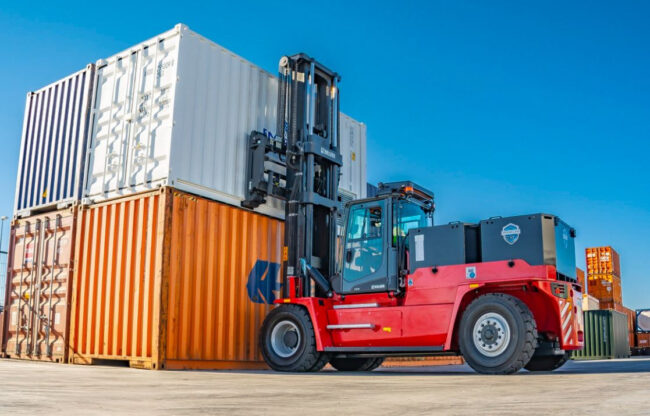
Forklifts are specialized vehicles for lifting and moving goods in warehouses and containers. Forklifts have high lifting capabilities and are often used when winching goods from containers.
Lifting Equipment
In the port loading and unloading process, lifting equipment plays a vital role. These include devices such as:
- Dock levelers: Creating a flat and continuous surface to connect the warehouse floor with the container floor.
- Forklift ramps: Helping to adjust height, eliminate differences, and facilitate forklift movement during goods retrieval.
You may be interested in: Building a professional inventory management system in logistics
How Does the Cargo Handling Process Take Place?
The cargo handling process at the port is divided into 3 stages:
Inside the ship’s hold, workers will perform lashing to secure the containers. Then, the spreader beam and twistlocks are guided into the corner castings of the container. The crane then pulls the container to a safe position.
Once the crane lowers the goods to the designated position, the twistlocks rotate 90 degrees in reverse to unlock and release the frame from the cargo.
On the Vessel
Importing Goods
- The crane will move the goods from the vessel down to the pier or the trailer bed.
- For semi-automatic spreaders, workers will manually rotate the twistlocks 90 degrees to lock the container to the frame.
- With automatic spreaders, workers simply unlock via remote control.
- Once the container is locked to the spreader, the crane will lift it off the vessel.
- Forklifts or tractors will transport the goods from the pier to the storage yard or warehouse.
Exporting Goods
- Forklifts or tractors will transport the goods from the storage yard or warehouse to the pier.
- The crane will lower the spreader for workers to attach the container.
- For semi-automatic spreaders, workers will rotate the twistlocks 90 degrees to lock the container.
- Before lowering the cargo into the ship’s hold, the crane will temporarily stop at a height of 2 – 2.5 meters for a safety check.
- After ensuring safety, the crane will continue to lower the cargo into the ship’s hold.
At the Storage Yard
At the storage yard, the container handling process is carried out using various methods. Specialized lifting equipment or manual labor can be used to move goods.
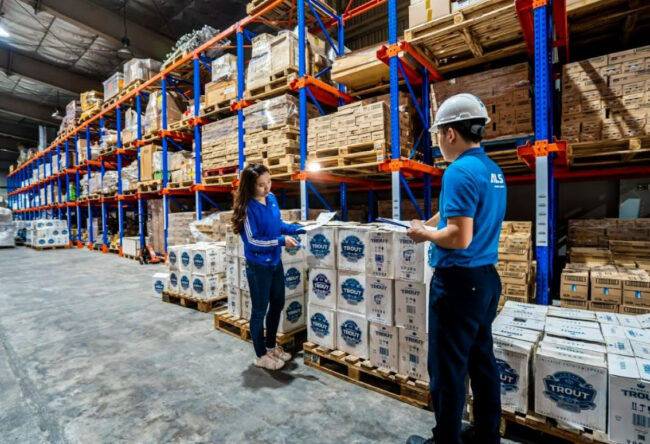
For goods packaged on pallets, the loading and unloading technique usually proceeds as follows:
- Arranging goods: Goods are neatly arranged and securely fixed on the pallets.
- Approaching the pallet: The forklift will approach the pallet of goods.
- Lifting the pallet: The forklift will lift the pallet off the ground.
- Moving the pallet: The forklift will move the pallet to the required position in the yard.
- Loading and unloading: Depending on the requirements, the forklift can lift or lower goods from the pallet to the desired location.
Important Notes in the Container Handling Process
The container handling process is a vital stage in goods transportation. Important notes when loading goods onto containers include:
Checking the Container
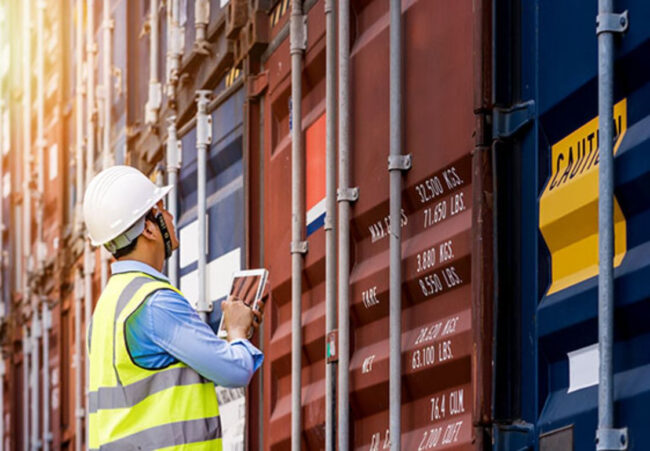
- Before loading, it is necessary to check the shell, doors, floor, roof, and other details. Ensure the container shows no signs of abnormality.
- Seal the container to ensure the integrity of the goods.
Selecting the Optimal Loading Method
Select a loading method suitable for each type of goods based on size, weight, properties, and storage requirements.
Complying with Safety Rules
- Ensure worker safety by providing full protective gear. Additionally, provide instructions on handling techniques and comply with occupational safety regulations.
- Ensure traffic safety when transporting containers by tractor-trucks or trailers.
Conclusion
The container loading and unloading process is a sequence of complex activities requiring smooth and precise coordination. Mastering this process ensures smooth transportation, minimizes risks, and optimizes logistics costs. We hope that with the information provided by Naltako, you have gained a comprehensive and detailed overview of the container handling process.
Nội dung có liên quan:
-
 What is a Homemade Conveyor? Should You Use DIY Conveyors?
Have you ever thought about creating your own conveyor belt to transport objects or organize items? Instead of spending a large amount of money to buy an i...
What is a Homemade Conveyor? Should You Use DIY Conveyors?
Have you ever thought about creating your own conveyor belt to transport objects or organize items? Instead of spending a large amount of money to buy an i...
-
 What is a Chain Hoist? Structure and Applications of Hoists
A chain hoist is a lifting tool widely used in many industries and daily life. With a simple yet effective design, chain hoists help people lift and lower ...
What is a Chain Hoist? Structure and Applications of Hoists
A chain hoist is a lifting tool widely used in many industries and daily life. With a simple yet effective design, chain hoists help people lift and lower ...
-
 What is a Lifting Shackle? Structure and Applications of Lifting Shackles
How can massive blocks of cargo be moved safely and easily? The secret lies in a tiny but powerful tool: the lifting shackle. With an intelligent design an...
What is a Lifting Shackle? Structure and Applications of Lifting Shackles
How can massive blocks of cargo be moved safely and easily? The secret lies in a tiny but powerful tool: the lifting shackle. With an intelligent design an...
-
 Webbing Slings and the Benefits of Using Them
Webbing slings are a type of lifting and securing material widely used in many industries. They are manufactured from high-strength synthetic fibers with e...
Webbing Slings and the Benefits of Using Them
Webbing slings are a type of lifting and securing material widely used in many industries. They are manufactured from high-strength synthetic fibers with e...
-
 What is Steel Wire Rope? Amazing Applications of Steel Wire Rope
Steel wire rope is an indispensable material in many industries, stands out for its incredible load-bearing capacity and durability. From massive construct...
What is Steel Wire Rope? Amazing Applications of Steel Wire Rope
Steel wire rope is an indispensable material in many industries, stands out for its incredible load-bearing capacity and durability. From massive construct...
-
 What is Winch Cable? Which Factors Affect Winch Cable Prices?
Safety is always the top priority in all production and construction activities. Winch cable, with its crucial role in lifting and moving materials, demand...
What is Winch Cable? Which Factors Affect Winch Cable Prices?
Safety is always the top priority in all production and construction activities. Winch cable, with its crucial role in lifting and moving materials, demand...
-
 Ratchet Straps: Structure and Practical Applications
Ratchet tie-down straps are one of the most important pieces of equipment in the construction and transportation industries. With high load-bearing capacit...
Ratchet Straps: Structure and Practical Applications
Ratchet tie-down straps are one of the most important pieces of equipment in the construction and transportation industries. With high load-bearing capacit...
-
 What is Plastic-Coated Steel Wire? Key Considerations for Use
Plastic-coated steel wire is a versatile material widely used in various fields of production and daily life. Its structure is quite simple, consisting of ...
What is Plastic-Coated Steel Wire? Key Considerations for Use
Plastic-coated steel wire is a versatile material widely used in various fields of production and daily life. Its structure is quite simple, consisting of ...