

 Tiếng Việt
Convenient Container Bridges Integrated with Hydraulic Dock Systems Today
Container bridges integrated with hydraulic floor systems open up entirely new potential in automatically balancing the height between the flat surface of the forklift ramp and the vehicle beds of various transport means. This means that the process of importing and exporting goods becomes more flexible and efficient than ever before.
Learn about forklift container ramps integrated with hydraulic lifting floors
The use of hand cranks or rotating motors to raise and lower landing gear legs has become common in balancing the height between the flat surface of the container yard ramp and the transport vehicle beds. While this is familiar to import-export businesses, a challenge arises when many units require further optimization—avoiding manual or complicated lifting equipment and instead desiring automation for faster operation.
Therefore, a new breakthrough in design has been introduced: integrating a hydraulic dock leveler system into the surface of the container bridge. This allows height adjustment to take place quickly and easily, while remaining compatible with various types of trailers on the market.
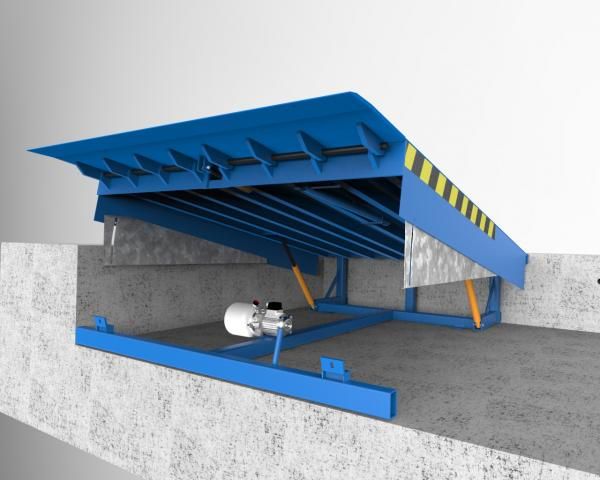
This forklift ramp model becomes a perfect solution for loading and unloading goods from containers and trucks, especially in situations where fixed warehouse space is unavailable. This product is particularly suitable for use in areas with hard surfaces such as concrete or asphalt.
This type of container bridge is also recommended for balancing the height of transport vehicles, with a range fluctuating from 700mm to 1650mm. This helps meet the needs of many types of vehicles and ensures the import-export process takes place more efficiently and smoothly than ever.
References:
- Safe & efficient dock leveler operation guide
- Dock leveler inspection standards and procedures
- What is a pit? Standards and dimensions for dock leveler pits
- Dock Shelter and Dock Leveler: The perfect combination for warehouses
- What is an Automatic Dock Leveler? Advantages & Classification
Container bridges integrated with hydraulic systems are also known as tipping platforms, which are widely used in manufacturing workshops, industrial parks, agricultural services, and construction sites. With the ability to lift and lower heavy materials, these devices are an efficient and safe solution for businesses.
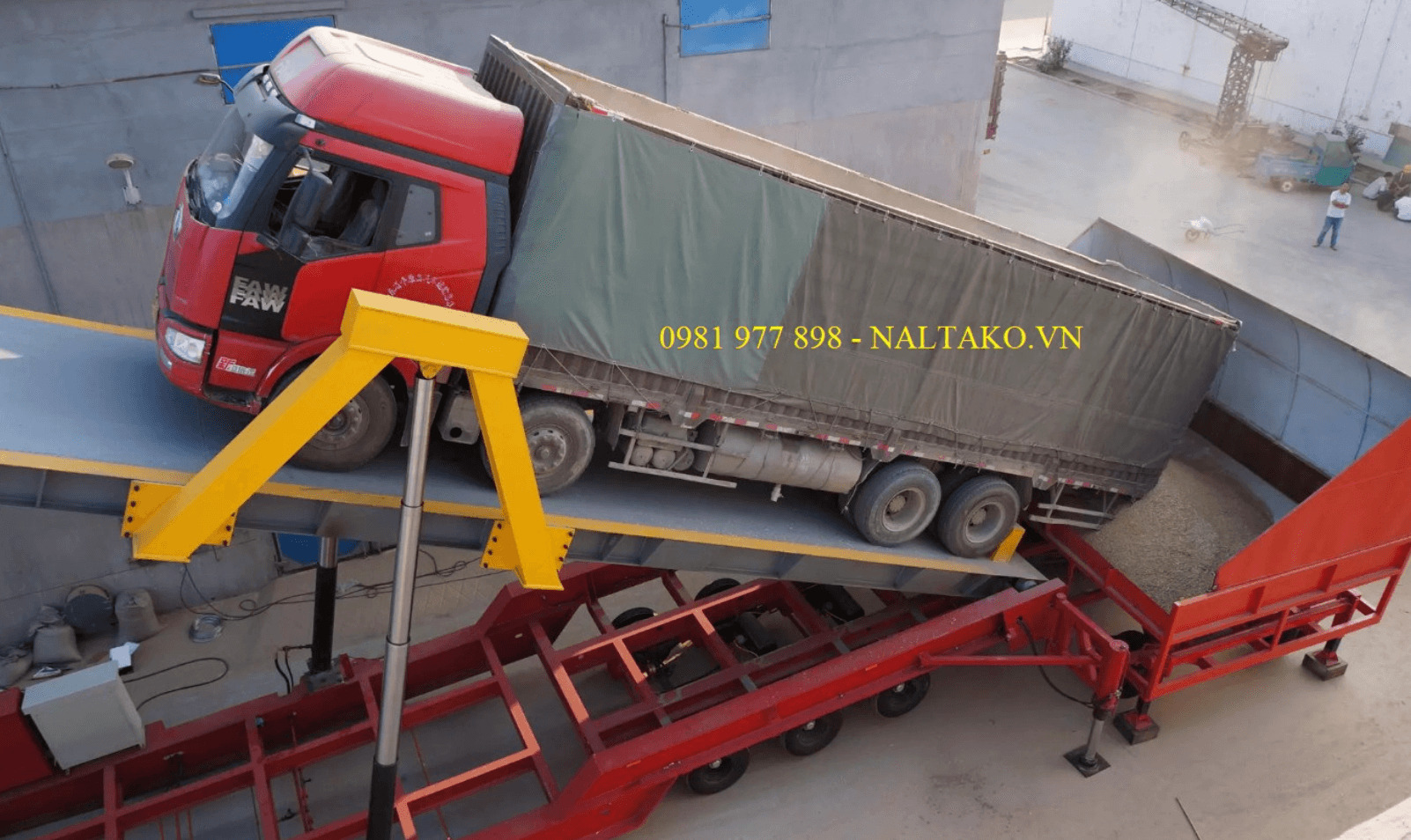
Advantages of hydraulic integrated container bridges
The technology of integrating hydraulic dock leveler systems into container bridges offers a range of important benefits, ensuring safety and optimizing efficiency during the process of loading and unloading goods from trucks and containers.
Safety and Time Efficiency:
Integrating a hydraulic lift system into a container loading ramp helps create a safer working environment for workers involved in loading and unloading activities. By eliminating the need for complex manual lifting equipment, the risk of accidents and injuries is significantly reduced. At the same time, the loading and unloading process becomes faster, saving time and optimizing work performance.
Reduced Costs and Workload:
This product brings significant economic benefits by reducing labor costs and increasing productivity. Automation in adjusting the height between the container bridge floor and the truck bed helps minimize dependence on manual labor and eliminates procedural steps, thereby minimizing time and resources.
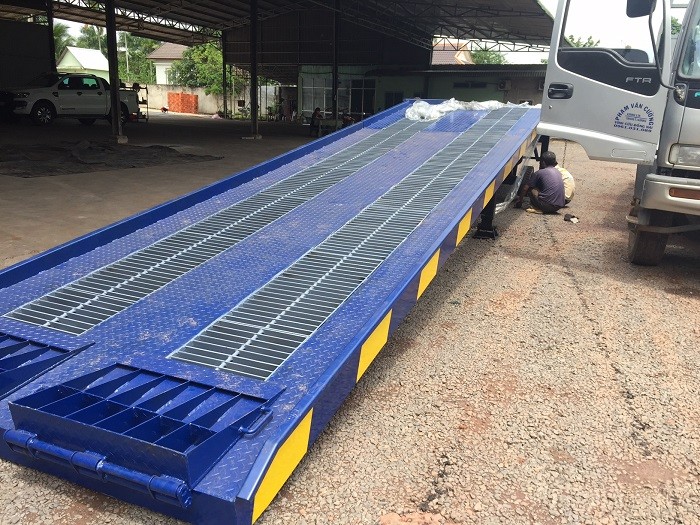
Flexibility when needed:
This product is designed to be mobile, allowing for easy movement and use at various locations. This is truly useful in situations where it is necessary to change work locations or move the loading and unloading process to different points.
Electronic Hydraulic Height Adjustment (AC):
The hydraulic lift system is adjusted via an electronic system (AC), enabling rapid and precise height adjustment. This allows for easy and efficient changes in truck height, optimizing the loading and unloading process.
Disadvantages of hydraulic integrated container bridges
Despite offering many outstanding benefits, investing in a container bridge integrated with a hydraulic lift system incurs a higher cost compared to standard container bridge models. However, this can be considered a worthwhile investment, especially for businesses that prioritize efficiency and safety in the import-export process.
Because operations take place outdoors, the electrical system and hydraulic pumps need to be maintained and inspected regularly. Periodic warranty and maintenance are crucial to ensure the system always operates stably and safely, while optimizing the product’s lifespan and performance.
Above is the detailed information about hydraulic integrated container bridges that Naltako wants to share with you. If you have any further questions, please contact us for the most detailed answers.
CONTACT INFORMATION:
Naltako Industrial Joint Stock Company
Workshop Address: Dong De, Phu Yen, Chuong My, Hanoi
Hotline: 0981.977.898
Mail: nhat.mtk53@gmail.com
Nội dung có liên quan:
-
 The Differences Between Mechanical Dock Levelers and Hydraulic Dock Levelers
The difference between hydraulic dock levelers and mechanical dock levelers is very clear – Hydraulic dock levelers operate automatically with a push of a ...
The Differences Between Mechanical Dock Levelers and Hydraulic Dock Levelers
The difference between hydraulic dock levelers and mechanical dock levelers is very clear – Hydraulic dock levelers operate automatically with a push of a ...
-
 What Should You Consider When Buying a 700kg Hydraulic Lift Table?
The 700kg hydraulic lift table is a popular tool widely used in production workshops and warehouses. With a lifting capacity of 700kg, this hydraulic lift ...
What Should You Consider When Buying a 700kg Hydraulic Lift Table?
The 700kg hydraulic lift table is a popular tool widely used in production workshops and warehouses. With a lifting capacity of 700kg, this hydraulic lift ...
-
 When Should You Use a 1000kg Hydraulic Lift Table?
Are you running a business in a warehouse or workshop that isn't too large and feeling that work efficiency hasn't reached your expectations? Are you looki...
When Should You Use a 1000kg Hydraulic Lift Table?
Are you running a business in a warehouse or workshop that isn't too large and feeling that work efficiency hasn't reached your expectations? Are you looki...
-
 Advantages of 500kg Manual Lift Tables You Should Know
Are you looking to buy a medium-duty manual hydraulic lift table for home use? Is your work frequency intermittent, and are you looking for a product with ...
Advantages of 500kg Manual Lift Tables You Should Know
Are you looking to buy a medium-duty manual hydraulic lift table for home use? Is your work frequency intermittent, and are you looking for a product with ...
-
 A Guide to Choosing High-Quality Hydraulic Dock Levelers Today
Hydraulic Dock Levelers are among the essential support devices for many fields and industries. Thanks to this product, the transport and storage of goods ...
A Guide to Choosing High-Quality Hydraulic Dock Levelers Today
Hydraulic Dock Levelers are among the essential support devices for many fields and industries. Thanks to this product, the transport and storage of goods ...
-
 The Most Popular Industrial Dock Leveler Models in 2026
In the context of an ever-growing industrial sector, optimizing logistics processes has become more important than ever. One of the indispensable devices f...
The Most Popular Industrial Dock Leveler Models in 2026
In the context of an ever-growing industrial sector, optimizing logistics processes has become more important than ever. One of the indispensable devices f...
-
 Guide to Choosing High-Quality Dock Levelers
Choosing the right dock leveler not only helps optimize the loading and unloading process but also saves costs and ensures occupational safety. Let's explo...
Guide to Choosing High-Quality Dock Levelers
Choosing the right dock leveler not only helps optimize the loading and unloading process but also saves costs and ensures occupational safety. Let's explo...
-
 General Regulations on Cargo Loading and Securing During Transport
The safe transportation of goods primarily requires them to be loaded and secured safely; this not only ensures no damage to the goods but also makes movin...
General Regulations on Cargo Loading and Securing During Transport
The safe transportation of goods primarily requires them to be loaded and secured safely; this not only ensures no damage to the goods but also makes movin...