

 Tiếng Việt
What is a terminal? Distinguishing between a terminal and a wharf
A terminal is a crucial area within a seaport where ships berth to load and unload goods, playing a core role in maritime transport. In Vietnam, terminals support both international and domestic trade. Naltako, specializing in providing container loading ramps, offers lifting equipment that optimizes operations at berthing areas. The article below will explain in detail what a terminal is and how Naltako supports efficient operations.
What is a terminal and what are its functions?
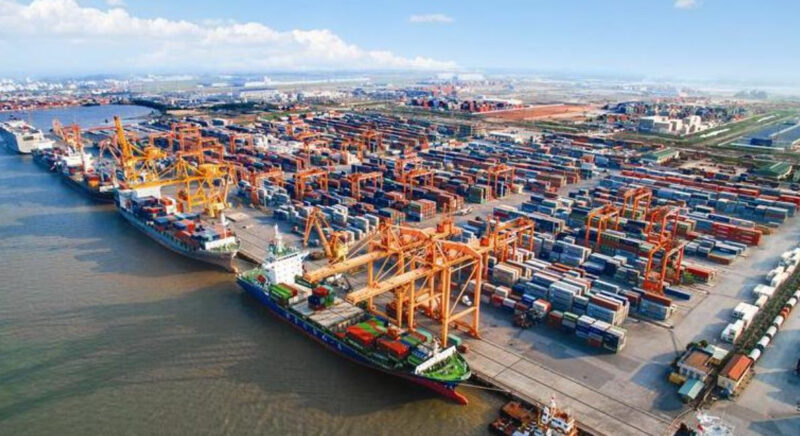
A terminal is an area within a seaport designed for ships to berth, perform cargo handling services, and related activities. According to the Vietnam Maritime Code, a terminal includes the water surface and infrastructure such as storage yards. Key functions include:
- Ship berthing: Ensuring safety for sea vessels.
- Cargo handling: Using container loading ramps to transfer goods on/off ships.
- Temporary storage: Goods waiting for transport at port warehouses.
What is a manufacturing factory? How does the operation process work?
How to distinguish between a terminal and a wharf?

A terminal is a broad area within the port zone, including both water and land for ship berthing and cargo processing. A wharf is a solid structure, often made of concrete, used for direct loading and unloading onto ships. The differences:
- Terminal: Includes maritime channels and ship berthing areas, supporting multiple activities.
- Wharf: Only a part of a terminal, focusing specifically on loading and unloading.
Common types of terminals in Vietnam?
Popular types of terminals in Vietnam:
- Container terminal: Handling containers at Tan Cang Cat Lai Terminal, using freight elevators for stacking.
- Bulk terminal: Handling cargo like cement and grains, requiring mini cranes for loading.
- Liquid terminal: Serving oil and chemicals, requiring specialized safety equipment.
Modern terminal operation process?

The process at a modern terminal includes:
- Ship berthing: Ships enter the maritime channel and are secured at the berth.
- Cargo handling: Using scissor lifts to access high-level containers.
- Intra-port transport: Moving goods to warehouses using hydraulic pallet jacks.
- Storage and distribution: Goods are managed through the port communication system.
What is a Distribution Centre? What is its role in logistics?
Which types of vessels do terminals serve?
Terminals serve various types of vessels:
- Container ships: Carrying containers at container terminals, requiring freight elevators for processing.
- Bulk carriers: Transporting coal and ore, using mini cranes for unloading.
- Liquid tankers: Carrying oil and chemicals, requiring specialized equipment.
- Passenger ships: Serving passengers at smaller ports.
Naltako supports handling cargo from container ships with modern hydraulic lifting equipment, ensuring safety and efficiency. Contact us at 0981.977.898 to partner with Naltako for terminal equipment!
Nội dung có liên quan:
-
 What is a Mechanical Dock Leveler? How does it differ from a Hydraulic Dock Leveler?
Are you looking for a device to support loading and unloading goods from containers to the warehouse floor that is low-cost, highly durable, and easy to in...
What is a Mechanical Dock Leveler? How does it differ from a Hydraulic Dock Leveler?
Are you looking for a device to support loading and unloading goods from containers to the warehouse floor that is low-cost, highly durable, and easy to in...
-
 Popular Types of Hydraulic Freight Elevators Today
The role of hydraulic freight elevators in warehouses, production workshops, or construction sites is indisputable. However, the types of hydraulic freight...
Popular Types of Hydraulic Freight Elevators Today
The role of hydraulic freight elevators in warehouses, production workshops, or construction sites is indisputable. However, the types of hydraulic freight...
-
 Safe Working Load in Industrial Lifting and Cargo Handling
In the modern industrial and logistics environment, lifting and cargo handling activities take place continuously with large volumes and high frequencies. ...
Safe Working Load in Industrial Lifting and Cargo Handling
In the modern industrial and logistics environment, lifting and cargo handling activities take place continuously with large volumes and high frequencies. ...
-
 The Differences Between Mechanical Dock Levelers and Hydraulic Dock Levelers
The difference between hydraulic dock levelers and mechanical dock levelers is very clear – Hydraulic dock levelers operate automatically with a push of a ...
The Differences Between Mechanical Dock Levelers and Hydraulic Dock Levelers
The difference between hydraulic dock levelers and mechanical dock levelers is very clear – Hydraulic dock levelers operate automatically with a push of a ...
-
 What Should You Consider When Buying a 700kg Hydraulic Lift Table?
The 700kg hydraulic lift table is a popular tool widely used in production workshops and warehouses. With a lifting capacity of 700kg, this hydraulic lift ...
What Should You Consider When Buying a 700kg Hydraulic Lift Table?
The 700kg hydraulic lift table is a popular tool widely used in production workshops and warehouses. With a lifting capacity of 700kg, this hydraulic lift ...
-
 When Should You Use a 1000kg Hydraulic Lift Table?
Are you running a business in a warehouse or workshop that isn't too large and feeling that work efficiency hasn't reached your expectations? Are you looki...
When Should You Use a 1000kg Hydraulic Lift Table?
Are you running a business in a warehouse or workshop that isn't too large and feeling that work efficiency hasn't reached your expectations? Are you looki...
-
 Advantages of 500kg Manual Lift Tables You Should Know
Are you looking to buy a medium-duty manual hydraulic lift table for home use? Is your work frequency intermittent, and are you looking for a product with ...
Advantages of 500kg Manual Lift Tables You Should Know
Are you looking to buy a medium-duty manual hydraulic lift table for home use? Is your work frequency intermittent, and are you looking for a product with ...
-
 A Guide to Choosing High-Quality Hydraulic Dock Levelers Today
Hydraulic Dock Levelers are among the essential support devices for many fields and industries. Thanks to this product, the transport and storage of goods ...
A Guide to Choosing High-Quality Hydraulic Dock Levelers Today
Hydraulic Dock Levelers are among the essential support devices for many fields and industries. Thanks to this product, the transport and storage of goods ...