

 Tiếng Việt
What is a safety valve? Common types of safety valves today
Safety valves play an important role in ensuring safety for industrial systems, especially hydraulic lifting equipment. As a pioneer unit in Vietnam, Naltako has integrated safety valves into quality products such as hydraulic lift tables, dock levelers, and container loading ramps to protect the system and operators. This article will provide detailed information about safety valves, from definitions, structure, and working principles to applications in Naltako’s equipment.
What is a safety valve in industry?
A safety valve is an automatic device designed to release fluids such as gas or liquid when the pressure in the system exceeds the set safety threshold. Thanks to this, it helps protect safety equipment systems from damage, while preventing the risk of explosion due to overpressure. In industries, safety valves are widely used in hydraulic systems, boilers, air compressors, and fire protection systems.
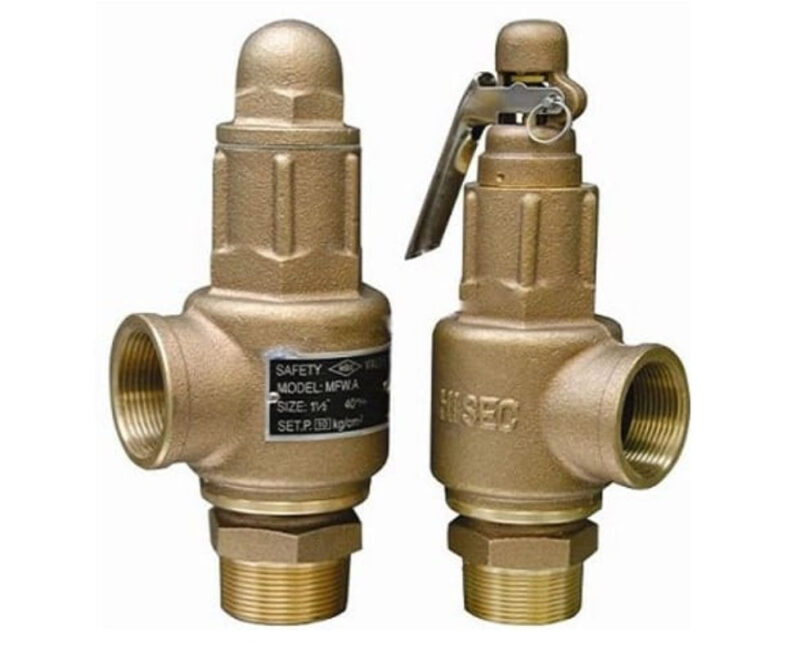
At Naltako, safety valves are indispensable components in lifting equipment such as hydraulic lift tables and hydraulic hand pallet trucks. For instance, in hydraulic lift tables, pressure safety valves control oil pressure, avoiding overload or sudden incidents. Naltako’s products are designed with optimal safety pressure thresholds; for example, hydraulic lift tables with a load capacity of up to 2 tons have a maximum pressure of 250 bar, ensuring smooth and safe operation in all conditions. This not only extends equipment life but also brings peace of mind to users.
What are the components of a safety valve structure?
Safety valves have a simple but durable structure, consisting of the following main parts:
- Valve body: Made of steel, stainless steel, or bronze, withstanding high pressure and effectively resisting corrosion.
- Stainless steel spring: Keeps the valve disc tightly closed, adjusting elasticity to control pressure.
- Valve disc: Directly contacts fluid, opens to release pressure when pressure exceeds the threshold.
- Valve stem: Connects the valve disc to the spring, ensuring flexible opening and closing.
- Sealing gasket: Usually uses EPDM rubber or PTFE, preventing fluid leakage.
- Pressure adjustment screw: Allows customizing the valve opening pressure threshold.
- Lifting lever: Supports manual pressure release when necessary.
Naltako utilizes safety valves with sturdy structures in products such as cargo lifts. With steel valve bodies and stainless steel springs, Naltako’s equipment meets the strict requirements of hydraulic systems in industrial environments. Valve sizes here range from DN15 to DN200, suitable for many types of lifting equipment, ensuring optimal efficiency and safety.
What is the working principle of a safety valve?
Safety valves operate based on the principle of force balance between fluid pressure and the spring’s elastic force. When the pressure in the system is lower than the safety threshold, the stainless steel spring keeps the valve disc tightly closed. If pressure exceeds the set level, the fluid’s thrust overcomes the spring force, causing the valve disc to open to release fluid. When pressure returns to normal, the spring pulls the valve disc closed, maintaining stability for the system.
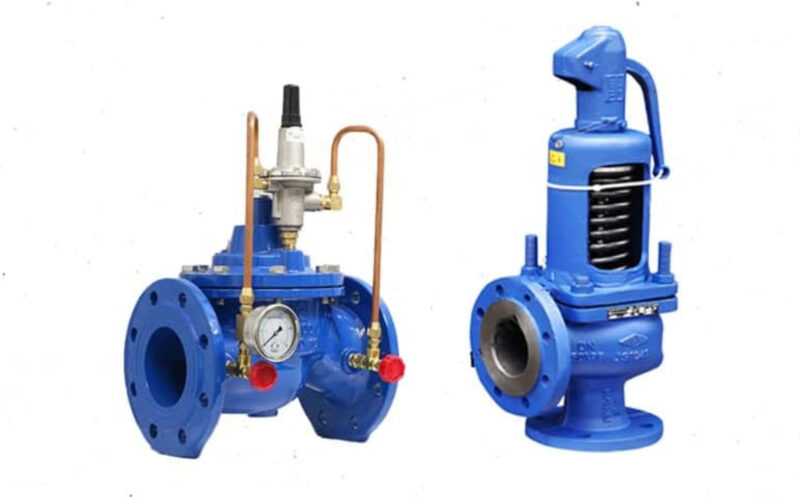
In Naltako’s equipment such as container loading ramps, pressure relief valves are integrated to automatically adjust hydraulic oil pressure. For example, if pressure exceeds 200 bar, the safety valve will activate to protect the system from damage. This is especially important in heavy industrial safety equipment systems, where high pressure poses many risks.
What is Pascal’s Law? Applications of Pascal’s Law in industry
What common types of safety valves are there?
Currently, safety valves are divided into several types, suitable for specific applications:
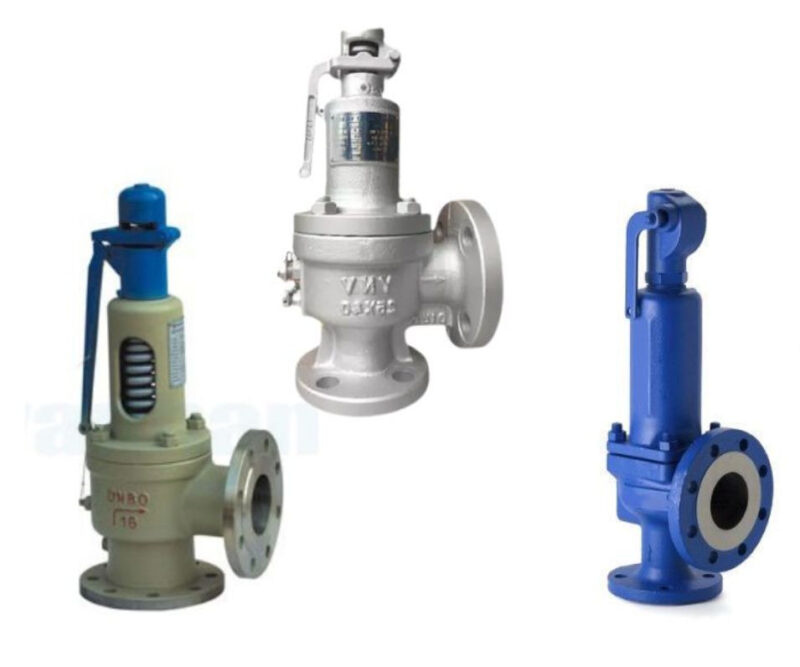
- Spring-loaded safety valve: Most popular due to fast response, uses a spring to keep the valve disc closed, easy to adjust via the pressure adjustment screw.
- Dead-weight safety valve: Uses weight instead of a spring, suitable for low-pressure systems.
- Diaphragm safety valve: Uses an elastic diaphragm, less common but effective in some special cases.
Naltako often chooses spring-loaded safety valves for equipment like mini cranes thanks to their high durability and fast response capability. This type of valve not only ensures safety but is also flexible in operation, helping optimize the performance of industrial valve systems.
How to check and maintain safety valves?
For safety valves to operate effectively, periodic inspection and maintenance are essential. Below are important steps:
- Periodic inspection: According to TCVN 7915-1:2009 standards (equivalent to ISO 4126-1:2004), valves need to be inspected annually or after every operating cycle.
- Leak check: Ensure the sealing gasket is not damaged to avoid fluid leakage.
- Spring check: Verify the spring is not fatigued or broken, affecting opening and closing ability.
- Handling failure to open: If the valve does not open when pressure exceeds the threshold, adjustment or spring replacement is needed.
Naltako provides professional maintenance services for equipment such as scissor lifts, ensuring safety valves are always in the best condition. Our technical team strictly adheres to standards like API and ASME, bringing absolute peace of mind to customers.
Cooperate with Naltako to own safety equipment and quality maintenance services! Contact number 0981.977.898 today!
Nội dung có liên quan:
-
 What is a Mechanical Dock Leveler? How does it differ from a Hydraulic Dock Leveler?
Are you looking for a device to support loading and unloading goods from containers to the warehouse floor that is low-cost, highly durable, and easy to in...
What is a Mechanical Dock Leveler? How does it differ from a Hydraulic Dock Leveler?
Are you looking for a device to support loading and unloading goods from containers to the warehouse floor that is low-cost, highly durable, and easy to in...
-
 Popular Types of Hydraulic Freight Elevators Today
The role of hydraulic freight elevators in warehouses, production workshops, or construction sites is indisputable. However, the types of hydraulic freight...
Popular Types of Hydraulic Freight Elevators Today
The role of hydraulic freight elevators in warehouses, production workshops, or construction sites is indisputable. However, the types of hydraulic freight...
-
 Safe Working Load in Industrial Lifting and Cargo Handling
In the modern industrial and logistics environment, lifting and cargo handling activities take place continuously with large volumes and high frequencies. ...
Safe Working Load in Industrial Lifting and Cargo Handling
In the modern industrial and logistics environment, lifting and cargo handling activities take place continuously with large volumes and high frequencies. ...
-
 The Differences Between Mechanical Dock Levelers and Hydraulic Dock Levelers
The difference between hydraulic dock levelers and mechanical dock levelers is very clear – Hydraulic dock levelers operate automatically with a push of a ...
The Differences Between Mechanical Dock Levelers and Hydraulic Dock Levelers
The difference between hydraulic dock levelers and mechanical dock levelers is very clear – Hydraulic dock levelers operate automatically with a push of a ...
-
 What Should You Consider When Buying a 700kg Hydraulic Lift Table?
The 700kg hydraulic lift table is a popular tool widely used in production workshops and warehouses. With a lifting capacity of 700kg, this hydraulic lift ...
What Should You Consider When Buying a 700kg Hydraulic Lift Table?
The 700kg hydraulic lift table is a popular tool widely used in production workshops and warehouses. With a lifting capacity of 700kg, this hydraulic lift ...
-
 When Should You Use a 1000kg Hydraulic Lift Table?
Are you running a business in a warehouse or workshop that isn't too large and feeling that work efficiency hasn't reached your expectations? Are you looki...
When Should You Use a 1000kg Hydraulic Lift Table?
Are you running a business in a warehouse or workshop that isn't too large and feeling that work efficiency hasn't reached your expectations? Are you looki...
-
 Advantages of 500kg Manual Lift Tables You Should Know
Are you looking to buy a medium-duty manual hydraulic lift table for home use? Is your work frequency intermittent, and are you looking for a product with ...
Advantages of 500kg Manual Lift Tables You Should Know
Are you looking to buy a medium-duty manual hydraulic lift table for home use? Is your work frequency intermittent, and are you looking for a product with ...
-
 A Guide to Choosing High-Quality Hydraulic Dock Levelers Today
Hydraulic Dock Levelers are among the essential support devices for many fields and industries. Thanks to this product, the transport and storage of goods ...
A Guide to Choosing High-Quality Hydraulic Dock Levelers Today
Hydraulic Dock Levelers are among the essential support devices for many fields and industries. Thanks to this product, the transport and storage of goods ...