

 Tiếng Việt
What is a Mechanical Dock Leveler? How does it differ from a Hydraulic Dock Leveler?
Are you looking for a device to support loading and unloading goods from containers to the warehouse floor that is low-cost, highly durable, and easy to install and maintain? A Mechanical dock leveler is the answer for you.
Let’s explore this device in detail to see the outstanding benefits it brings.
What is a Mechanical dock leveler?
A Mechanical leveler, also known as a mechanical dock leveler, is a device that connects the warehouse floor with the truck bed, facilitating the movement of goods by forklifts. Unlike a hydraulic dock leveler which uses an oil pump system, a mechanical dock leveler operates based on a spring mechanism and a simple mechanical system.
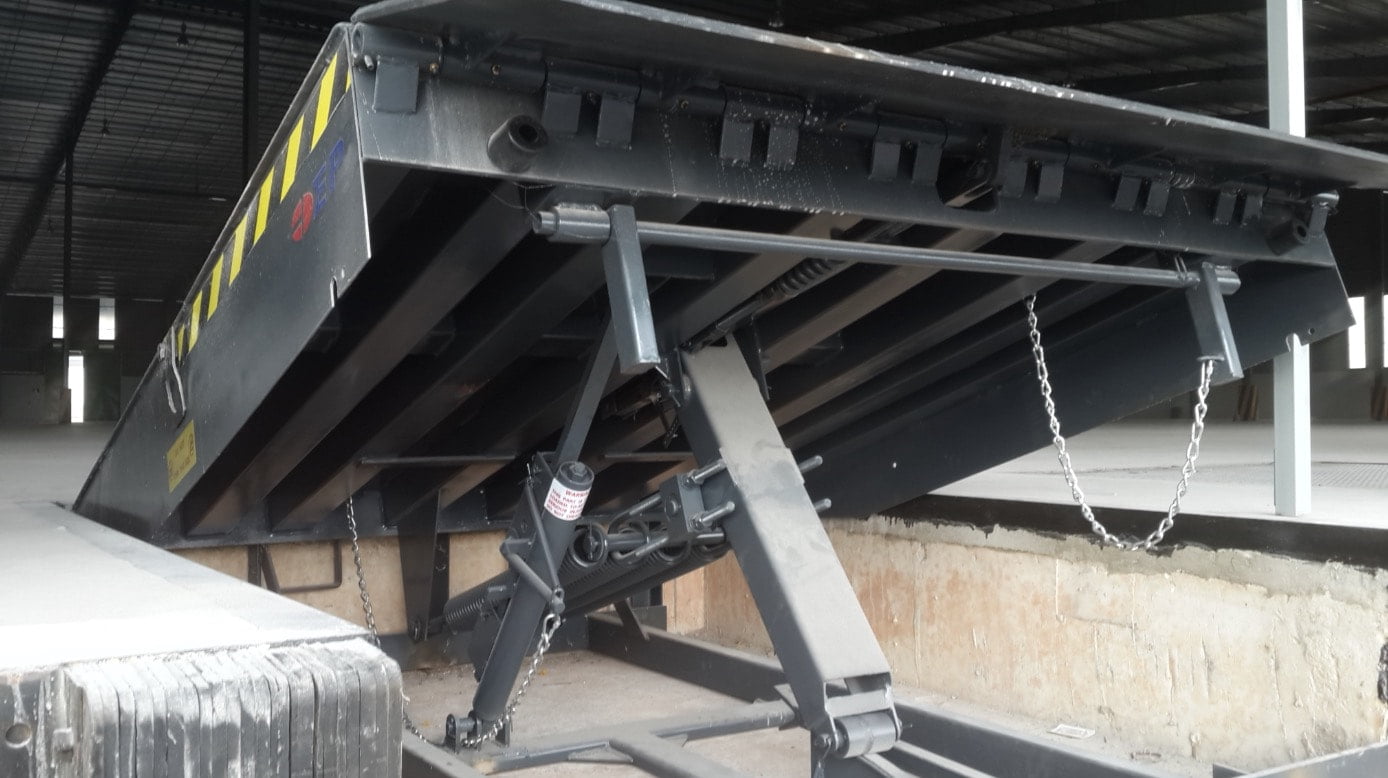
Structure and Operating Principle of Mechanical leveler
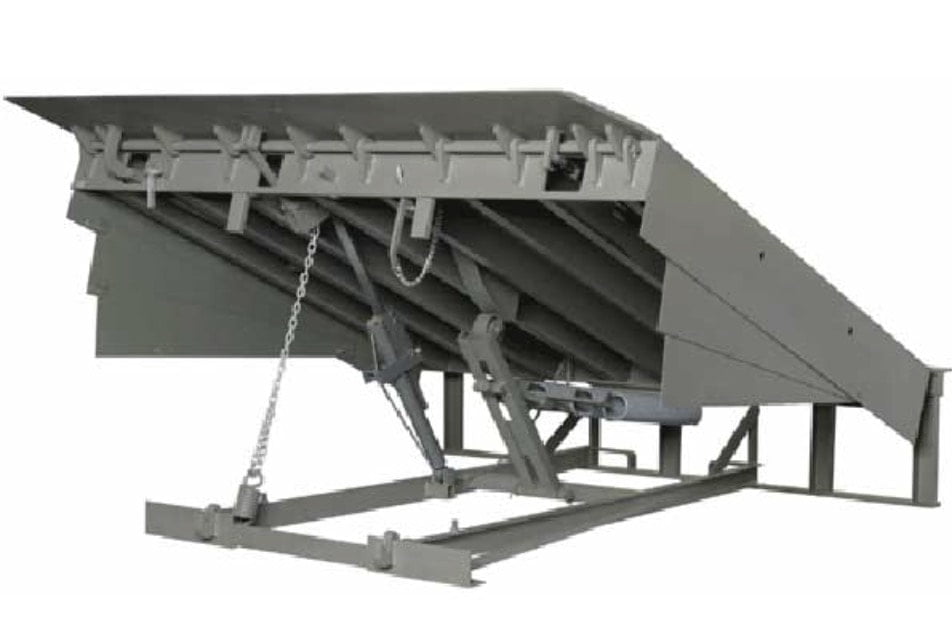
A Mechanical dock leveler has a simple structure, including the following main parts:
👉 Platform: Made of anti-slip checkered steel plate, ensuring safety for the movement of forklifts and goods.
👉 Frame: Made of steel and capable of bearing heavy loads.
👉 Lifting system: Includes springs, chains, gears, and a handle. Among them, the spring is the most important part, creating the force to raise and lower the platform. The chain plays the role of transmitting force from the spring to the platform, and the gears help adjust the lifting angle.
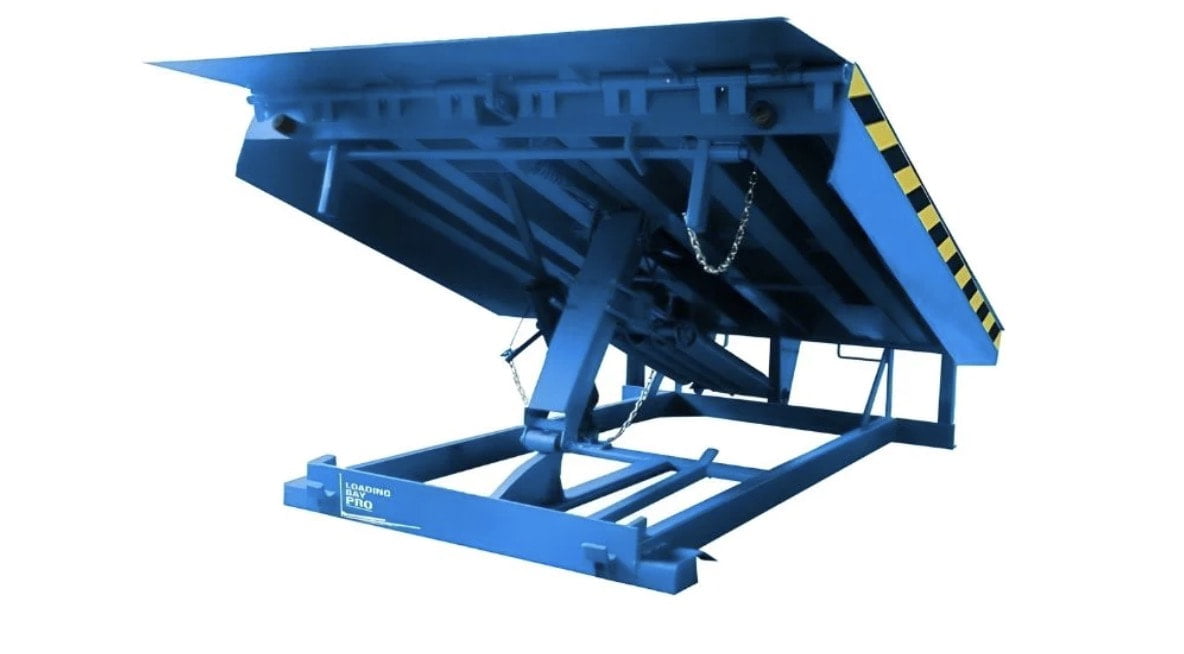
👉 Wheel Restraint: Prevents the truck from moving during loading and unloading, ensuring safety for the operator.
👉 Safety Lock: Keeps the dock leveler fixed when not in use, preventing accidents caused by the platform dropping suddenly. The lock is usually designed as a manual latch or an automatic bolt.
Reference:
- Hydraulic dock leveler specifications
- What is a Loading Dock? What does a Loading Dock include?
- What is a Dock Leveler
- Applications of Hydraulic Dock Levelers
*Operating Principle:
👉 Step 1: The user pulls the handle to create force to activate the spring, transmitting force through the chain to push the platform up (spring release). The truck or container truck will actively reverse into the position of the mechanical dock leveler.
👉 Step 2: When the forklift or user moves onto the platform, it applies enough force to help the platform lower to the height of the truck bed (spring compression). Simultaneously, the user will lock the gears to fix the platform height.
At this point, the forklift can move back and forth between the warehouse floor and the truck bed safely and conveniently.
👉 Step 3: After completing the loading/unloading process, the operator will once again pull the handle. The spring is released again so the truck or container can move to another location.
👉 Step 4: The user applies enough force to lower the platform to the truck bed height (spring compression), ready for the next use.
Advantages of Mechanical Dock Levelers
Mechanical dock levelers offer many outstanding advantages, helping to optimize warehouse operations and save operating costs:
☑️ Cost-saving:
- Operates based on a spring mechanism and mechanical system, consuming no electricity.
- Simple structure, fewer breakdowns, no need for complex hydraulic system maintenance.
- Initial investment cost is lower than hydraulic or pneumatic dock levelers.
☑️ High Durability:
- Few moving parts: Minimizes friction and wear, extending product lifespan.
- Stable operation in dusty, humid, or high-temperature environments.
- Mechanical levelers also have fewer moving parts, resulting in a long service life.
☑️ Easy to Install and Use:
- Requires no complex installation techniques, can be performed by warehouse staff.
- Only simple pull/push actions are needed to raise or lower the platform.
☑️ Flexible and Convenient:
- Can be adjusted to connect with various types of vehicles with different bed heights.
- Can be installed and moved to another location when necessary.
Disadvantages of Mechanical Dock Levelers
Because it operates on a spring and mechanical mechanism, raising and lowering the platform requires the operator to use manual pull/push force instead of just using controls like an automatic leveler.
Mechanical dock levelers have smaller load capacities and limited lifting heights, making them unsuitable for extremely heavy goods and large truck bed heights.
Levelers using mechanical systems are equipped with fewer safety features due to their low cost. This requires operators to be careful and strictly comply with occupational safety regulations.
Who is the Mechanical Dock Leveler suitable for?
The Mechanical Dock Leveler is the right choice for the following:
✔️ Small and medium enterprises with low investment and operating costs.
✔️ Warehouses with low frequency of use and moderate load capacity (under 5 tons).
✔️ Suitable for warehouses with small areas or limited space because mechanical levelers do not necessarily require a pit foundation.
✔️ Due to its simple structure and fewer breakdowns, it does not require complex periodic maintenance like hydraulic levelers, helping to save maintenance costs significantly.
✔️ Additionally, mechanical dock levelers are suitable for warehouses containing flammable or explosive materials where the use of electricity needs to be restricted to ensure safety.
Conclusion
With the analysis of the Mechanical Dock Leveler, we hope you have enough information to make the right choice for your needs. If you need a cost-effective solution that is easy to install and maintain, the mechanical dock leveler is an ideal choice.
However, if you prioritize lifting heavy loads, a Hydraulic Dock Leveler would be a more optimal choice. Contact the experts at Naltako.vn now for detailed advice and to choose the most suitable product for your business!
Nội dung có liên quan:
-
 Popular Types of Hydraulic Freight Elevators Today
The role of hydraulic freight elevators in warehouses, production workshops, or construction sites is indisputable. However, the types of hydraulic freight...
Popular Types of Hydraulic Freight Elevators Today
The role of hydraulic freight elevators in warehouses, production workshops, or construction sites is indisputable. However, the types of hydraulic freight...
-
 Safe Working Load in Industrial Lifting and Cargo Handling
In the modern industrial and logistics environment, lifting and cargo handling activities take place continuously with large volumes and high frequencies. ...
Safe Working Load in Industrial Lifting and Cargo Handling
In the modern industrial and logistics environment, lifting and cargo handling activities take place continuously with large volumes and high frequencies. ...
-
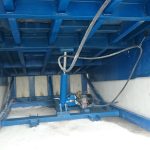 The Differences Between Mechanical Dock Levelers and Hydraulic Dock Levelers
The difference between hydraulic dock levelers and mechanical dock levelers is very clear – Hydraulic dock levelers operate automatically with a push of a ...
The Differences Between Mechanical Dock Levelers and Hydraulic Dock Levelers
The difference between hydraulic dock levelers and mechanical dock levelers is very clear – Hydraulic dock levelers operate automatically with a push of a ...
-
 What Should You Consider When Buying a 700kg Hydraulic Lift Table?
The 700kg hydraulic lift table is a popular tool widely used in production workshops and warehouses. With a lifting capacity of 700kg, this hydraulic lift ...
What Should You Consider When Buying a 700kg Hydraulic Lift Table?
The 700kg hydraulic lift table is a popular tool widely used in production workshops and warehouses. With a lifting capacity of 700kg, this hydraulic lift ...
-
 When Should You Use a 1000kg Hydraulic Lift Table?
Are you running a business in a warehouse or workshop that isn't too large and feeling that work efficiency hasn't reached your expectations? Are you looki...
When Should You Use a 1000kg Hydraulic Lift Table?
Are you running a business in a warehouse or workshop that isn't too large and feeling that work efficiency hasn't reached your expectations? Are you looki...
-
 Advantages of 500kg Manual Lift Tables You Should Know
Are you looking to buy a medium-duty manual hydraulic lift table for home use? Is your work frequency intermittent, and are you looking for a product with ...
Advantages of 500kg Manual Lift Tables You Should Know
Are you looking to buy a medium-duty manual hydraulic lift table for home use? Is your work frequency intermittent, and are you looking for a product with ...
-
 A Guide to Choosing High-Quality Hydraulic Dock Levelers Today
Hydraulic Dock Levelers are among the essential support devices for many fields and industries. Thanks to this product, the transport and storage of goods ...
A Guide to Choosing High-Quality Hydraulic Dock Levelers Today
Hydraulic Dock Levelers are among the essential support devices for many fields and industries. Thanks to this product, the transport and storage of goods ...
-
 The Most Popular Industrial Dock Leveler Models in 2026
In the context of an ever-growing industrial sector, optimizing logistics processes has become more important than ever. One of the indispensable devices f...
The Most Popular Industrial Dock Leveler Models in 2026
In the context of an ever-growing industrial sector, optimizing logistics processes has become more important than ever. One of the indispensable devices f...