

 Tiếng Việt
What is a Forklift Fork? Understanding Forklift Fork Structure
In the field of goods transportation and lifting at manufacturing plants or warehouses, the question “what are forklift forks” is often raised when learning about the vital components of a forklift. Forklift forks, also known as forklift tines, play an indispensable role in securing and moving goods safely. This article will help you clearly understand the concept, structure, types, and maintenance of this component within the logistics system. Let’s explore the details to optimize your operations!
What are Forklift Forks and Their Crucial Role
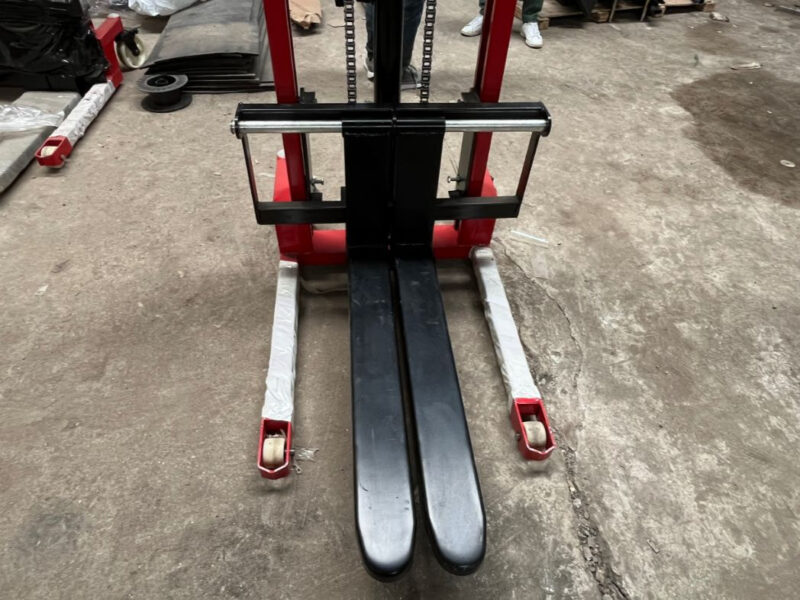
Forklift forks are the components in direct contact with the goods, usually attached to the front of a hand pallet truck. They are responsible for lifting, lowering, and moving goods such as pallets, cartons, or large packages in material handling equipment. Their primary role is to ensure that goods are firmly fixed and do not slide or fall during transport, thereby increasing safety and efficiency in the warehouse. Designed to withstand heavy forces, forklift forks are one of the most critical parts, directly affecting work productivity and vehicle durability in dock or commercial center environments.
What is the Structure of Forklift Forks?
Forklift forks are designed with a structure consisting of several main parts, each performing a specific role in the cargo handling system. The blade is the part in direct contact with the load, the face supports the force, the heel is the bend point subject to high pressure, the shank is the main load-bearing part, the hooks help attach it to the carriage, and the positioning pin secures the entire structure. Each part is precision-engineered to ensure efficient lifting; for example, the blade must be thin enough to slide under pallets but rigid enough not to warp.
Popular Types of Forklift Forks Today
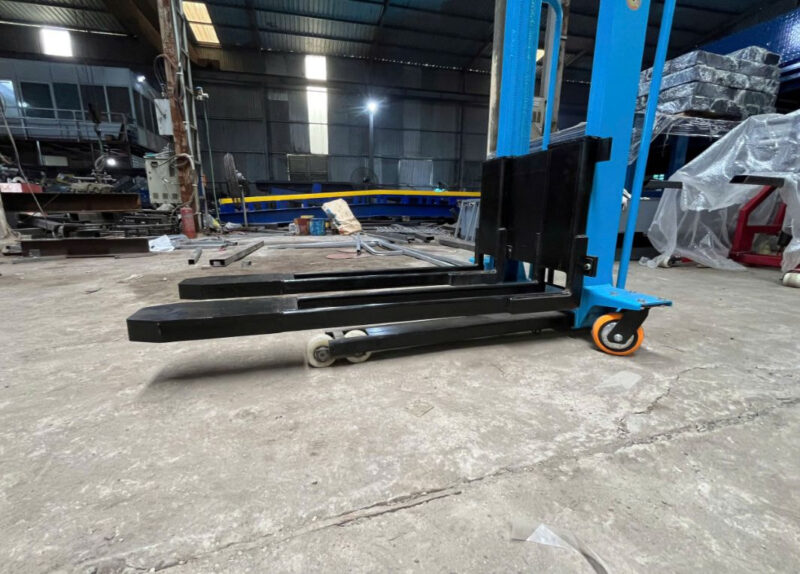
In today’s market, there are many types of forklift attachments suitable for various warehouse equipment needs. Hook-on forks are attached with hooks, easy to assemble, and suitable for versatile forklifts; Pin-type forks use a fixed pin and are often used for heavy-duty forklifts. Additionally, there are anti-slip forks for goods prone to falling and fork extensions for large-sized pallets, widely applied in manufacturing plants or logistics companies depending on the working environment.
What Materials are Used to Manufacture Forklift Forks?
Forklift forks are typically manufactured from high-grade steel or steel alloys to ensure durability and load-bearing capacity in logistics solutions. Steel types such as 4140 or 4340 are commonly used due to their wear resistance and high load capacity, helping forklift forks operate stably under heavy pressure in warehouses. High-quality materials not only extend the life of the forks but also ensure safety when operating in harsh conditions.
>>> What are forklift fork extensions? Where should you buy them?
Forklift Fork Maintenance: Why is it Important?
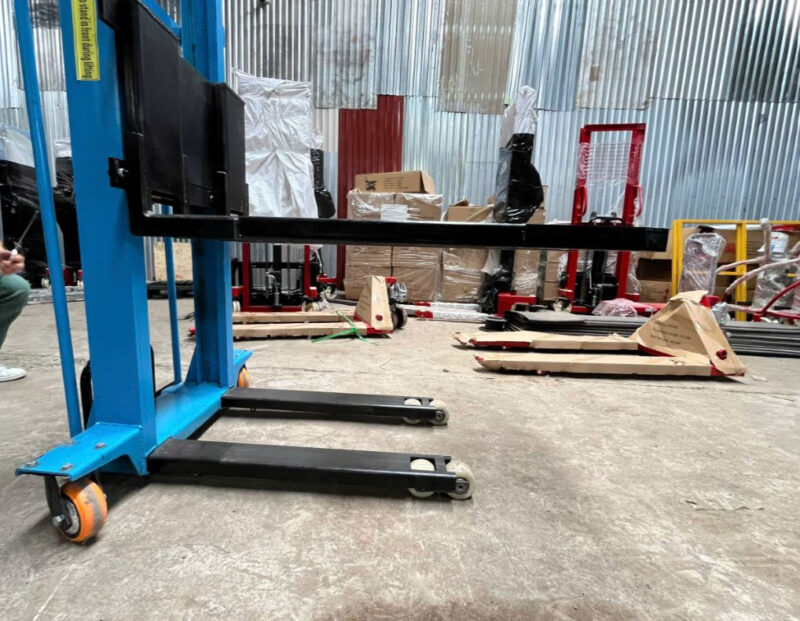
Periodic inspection and maintenance of lifting forks are crucial factors in ensuring occupational safety and work performance in logistics technology. According to the ISO 5057 standard, the fork thickness must not decrease by more than 10% from the original, otherwise, there is a risk of breakage or imbalance when lifting loads. It is necessary to frequently check for cracks or deformations and lubricate connection points to avoid damage, especially when used in harsh environments like docks.
>>> Forklift Load Capacity: A Guide to Choosing the Right Equipment
Frequently Asked Questions About Forklift Forks
Below are some common questions about forklift forks in lifting systems:
- What are forklift forks and what is their purpose?: They are the components that lift and secure goods, ensuring safety during transport.
- What are the parts of a forklift fork structure?: It includes the blade, face, heel, shank, hooks, and positioning pin.
- How do you choose forklift forks that suit your needs?: Based on load capacity, type of goods, and the working environment.
- What materials are commonly used to make forklift forks?: High-grade steel or steel alloys like 4140 and 4340.
- Why is it necessary to check and maintain forklift forks regularly?: To ensure safety, avoid damage, and maintain performance.
Contact Naltako via email at info@naltako.vn for further support on tilters and other lifting equipment solutions!
Nội dung có liên quan:
-
 What is a Piston? Structure and Operating Principle
If you work in the repair and installation of industrial equipment, you have surely heard terms such as: steam engines, internal combustion engines, etc. A...
What is a Piston? Structure and Operating Principle
If you work in the repair and installation of industrial equipment, you have surely heard terms such as: steam engines, internal combustion engines, etc. A...
-
 Hydraulic Oil Radiators – Oil Coolers for Hydraulic Systems
What solution will support you in the process of cooling and cleaning hydraulic oil? That is using a hydraulic oil cooler immediately. However, each system...
Hydraulic Oil Radiators – Oil Coolers for Hydraulic Systems
What solution will support you in the process of cooling and cleaning hydraulic oil? That is using a hydraulic oil cooler immediately. However, each system...
-
 Compressed Air Filters: Construction, Working Principle, and Classification
Compressed air filters are a common and essential device, designed to effectively remove impurities and dirt that may exist in compressed air, helping you ...
Compressed Air Filters: Construction, Working Principle, and Classification
Compressed air filters are a common and essential device, designed to effectively remove impurities and dirt that may exist in compressed air, helping you ...
-
 Piston Pumps: Definition, Classification, Applications, and Pricing
If vane pumps or hydraulic gear pumps are selected for low-pressure systems, the hydraulic piston pump line is designed for high-pressure machinery requiri...
Piston Pumps: Definition, Classification, Applications, and Pricing
If vane pumps or hydraulic gear pumps are selected for low-pressure systems, the hydraulic piston pump line is designed for high-pressure machinery requiri...
-
 What is a Gear Hydraulic Pump? Structure and Classification
With a simple structure, convenient assembly and operation, and the ability to withstand heavy loads for a specific duration, gear hydraulic pumps are wide...
What is a Gear Hydraulic Pump? Structure and Classification
With a simple structure, convenient assembly and operation, and the ability to withstand heavy loads for a specific duration, gear hydraulic pumps are wide...
-
 Hydraulic Pumps
In today's industries, from high-rise buildings to manufacturing plants, hydraulic pumps play a crucial role. This component helps devices such as yard ram...
Hydraulic Pumps
In today's industries, from high-rise buildings to manufacturing plants, hydraulic pumps play a crucial role. This component helps devices such as yard ram...
-
 Hydraulic Seals: Classification, Installation & Replacement
Hydraulic seals are vital components in a hydraulic system, yet not everyone fully understands them. If you are looking for information on seal types, inst...
Hydraulic Seals: Classification, Installation & Replacement
Hydraulic seals are vital components in a hydraulic system, yet not everyone fully understands them. If you are looking for information on seal types, inst...
-
 Grating Flooring (Galvanized Steel Grating): Features, Applications, and Quotes
What is Grating Flooring?
Grating flooring (also known as galvanized steel grating or grating panels) is a type of floor formed from load-bearing steel ba...
Grating Flooring (Galvanized Steel Grating): Features, Applications, and Quotes
What is Grating Flooring?
Grating flooring (also known as galvanized steel grating or grating panels) is a type of floor formed from load-bearing steel ba...