

 Tiếng Việt
What is a chain hoist? Structure and applications of hoists
Chain hoists are essential lifting equipment, helping to handle heavy objects efficiently in construction and industrial projects. Although Naltako does not provide chain hoists, our products such as scissor lifts, mini cranes, and freight elevators are perfect supplementary solutions, increasing efficiency when combined with chain hoists. This article will provide detailed information about chain hoists, from structure to application, helping you choose the right equipment. Discover lifting solutions from Naltako now!
What is a Chain Hoist? What Types Are There?
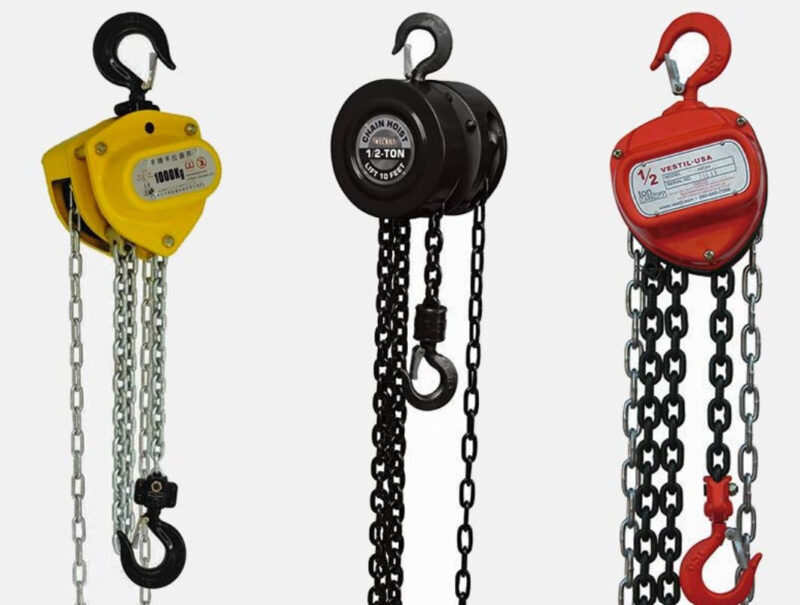
A chain hoist, or “pa lăng xích”, is a lifting device that uses load-bearing chains to pull or lift heavy objects, operating based on the principle of pulleys and hoist gears. With a load capacity from 0.5 tons to 30 tons and chain lengths from 3m to 30m, chain hoists are widely used in industrial lifting equipment. Common types include:
- Manual Chain Hoist: Operated by human power, suitable for small projects without electricity.
- Lever Hoist: Low cost, small load capacity (0.5-2 tons), used for light work.
- Electric Chain Hoist: Fast speed, remote control, ideal for large factories.
Chain hoists combine well with Naltako’s crane hooks and yard ramps, helping to transport materials safely and efficiently. The equipment meets TCVN 7472:2005 standards, satisfying needs from civil construction to heavy industry.
What is an electric hoist? Structure and operating principle
Detailed Structure of a Manual Chain Hoist?
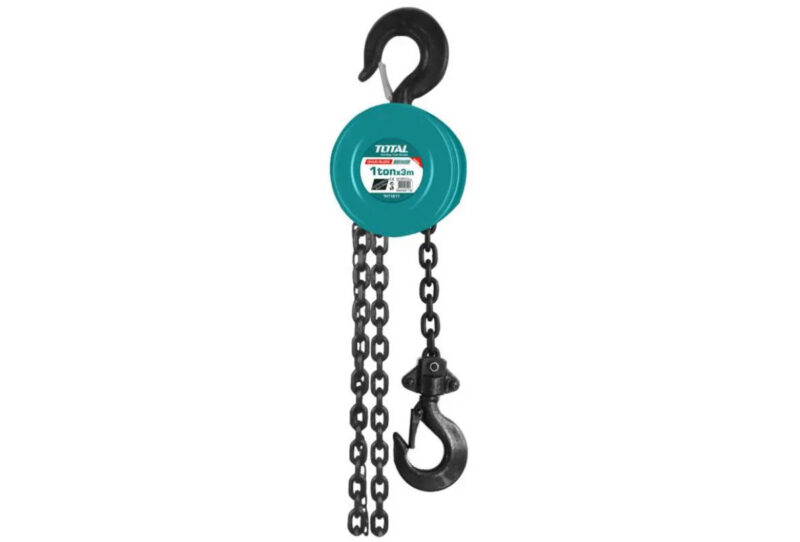
A manual chain hoist has a sophisticated structure, ensuring safe operation in goods transportation systems:
- Load chain: Alloy steel, bearing loads from 0.5 to 30 tons, galvanized for rust resistance.
- Suspension hook: Connects to frames or crane hooks, with good load-bearing capacity.
- Worm gear and shaft: Transmits power, making lifting and lowering gentle.
- Automatic hoist brake: Holds the load safely, preventing heavy objects from falling.
- Drive sprocket: Controls chain movement, reducing human effort.
- Hand chain: Pulled by hand to operate, highly durable.
The parts coordinate smoothly, helping the manual chain hoist lift and lower effectively without electricity. The automatic brake ensures absolute safety, especially when combined with Naltako’s hydraulic hand pallet trucks. The equipment is strictly tested according to ISO 9001:2015 standards, suitable for small and medium projects. Naltako recommends using chain hoists with hydraulic lift tables to optimize heavy object transport.
Common Applications of Chain Hoists in Industry?

Chain hoists are widely used in construction site equipment, thanks to their flexibility and efficiency:
- Construction: Lifting materials such as steel and concrete at high-rise building sites.
- Factories and warehouses: Moving machinery and heavy goods, combined with freight elevators.
- Ports: Lifting and lowering containers, marine equipment.
- Mining: Transporting ore and heavy materials.
- Electricity and repair: Installing and maintaining turbines and large machinery.
- Agriculture: Lifting irrigation equipment and agricultural machinery.
With capacities from 0.5 to 30 tons, chain hoists meet diverse needs, from small projects to heavy industry. Naltako suggests integrating chain hoists with mini cranes to increase operational performance. The device helps save labor and ensures safety, especially in environments without electricity.
Comparison of Pros and Cons: Manual vs. Electric Chain Hoists?
Both manual and electric chain hoists are important in industrial lifting equipment, but there are differences:
- Manual Chain Hoists (Nitto, DBK):
- Pros: No electricity needed, compact, low cost (1-5 million VND), suitable for small projects, integrates with hydraulic hand pallet trucks.
- Cons: Slow speed, depends on human power, not suitable for continuous large loads.
- Electric Chain Hoists (Kenbo, Kawasaki):
- Pros: Fast speed, powerful motor, remote control, ideal for large projects, load capacity up to 30 tons.
- Cons: Requires a stable power source, high cost (5-20 million VND), bulkier.
The right choice:
- Small projects, no electricity: Choose a manual chain hoist.
- Factories, large projects: Prioritize electric chain hoists with tipping lift tables to increase efficiency.
Naltako recommends combining chain hoists with yard ramps to optimize transportation. The equipment meets TCVN 7472:2005 safety standards, ensuring durable operation.
Where to Buy Reputable, Good Price Chain Hoists?
Although Naltako does not provide chain hoists, we are a reputable unit in hydraulic lifting equipment, offering products such as scissor lifts, hydraulic lift tables, and mini cranes to support operations with chain hoists. Benefits of choosing solutions from Naltako:
- In-depth consultation: Suggesting reputable suppliers for 1-ton to 30-ton chain hoists.
- Quality supplementary equipment: Products meet ISO 9001:2015 standards, integrating well with chain hoists.
- Attentive service: Fast delivery, 24/7 technical support, 6-12 month warranty.
With years of experience, Naltako is committed to providing safe and effective lifting solutions. Combine chain hoists with freight elevators for optimal heavy object transport, from warehouses to large construction sites.
Looking for quality lifting solutions? Contact us now via email info@naltako.vn or number 0981.977.898 to receive the best advice from Naltako!
Nội dung có liên quan:
-
 What is a Piston? Structure and Operating Principle
If you work in the repair and installation of industrial equipment, you have surely heard terms such as: steam engines, internal combustion engines, etc. A...
What is a Piston? Structure and Operating Principle
If you work in the repair and installation of industrial equipment, you have surely heard terms such as: steam engines, internal combustion engines, etc. A...
-
 Hydraulic Oil Radiators – Oil Coolers for Hydraulic Systems
What solution will support you in the process of cooling and cleaning hydraulic oil? That is using a hydraulic oil cooler immediately. However, each system...
Hydraulic Oil Radiators – Oil Coolers for Hydraulic Systems
What solution will support you in the process of cooling and cleaning hydraulic oil? That is using a hydraulic oil cooler immediately. However, each system...
-
 Compressed Air Filters: Construction, Working Principle, and Classification
Compressed air filters are a common and essential device, designed to effectively remove impurities and dirt that may exist in compressed air, helping you ...
Compressed Air Filters: Construction, Working Principle, and Classification
Compressed air filters are a common and essential device, designed to effectively remove impurities and dirt that may exist in compressed air, helping you ...
-
 Piston Pumps: Definition, Classification, Applications, and Pricing
If vane pumps or hydraulic gear pumps are selected for low-pressure systems, the hydraulic piston pump line is designed for high-pressure machinery requiri...
Piston Pumps: Definition, Classification, Applications, and Pricing
If vane pumps or hydraulic gear pumps are selected for low-pressure systems, the hydraulic piston pump line is designed for high-pressure machinery requiri...
-
 What is a Gear Hydraulic Pump? Structure and Classification
With a simple structure, convenient assembly and operation, and the ability to withstand heavy loads for a specific duration, gear hydraulic pumps are wide...
What is a Gear Hydraulic Pump? Structure and Classification
With a simple structure, convenient assembly and operation, and the ability to withstand heavy loads for a specific duration, gear hydraulic pumps are wide...
-
 Hydraulic Pumps
In today's industries, from high-rise buildings to manufacturing plants, hydraulic pumps play a crucial role. This component helps devices such as yard ram...
Hydraulic Pumps
In today's industries, from high-rise buildings to manufacturing plants, hydraulic pumps play a crucial role. This component helps devices such as yard ram...
-
 Hydraulic Seals: Classification, Installation & Replacement
Hydraulic seals are vital components in a hydraulic system, yet not everyone fully understands them. If you are looking for information on seal types, inst...
Hydraulic Seals: Classification, Installation & Replacement
Hydraulic seals are vital components in a hydraulic system, yet not everyone fully understands them. If you are looking for information on seal types, inst...
-
 Grating Flooring (Galvanized Steel Grating): Features, Applications, and Quotes
What is Grating Flooring?
Grating flooring (also known as galvanized steel grating or grating panels) is a type of floor formed from load-bearing steel ba...
Grating Flooring (Galvanized Steel Grating): Features, Applications, and Quotes
What is Grating Flooring?
Grating flooring (also known as galvanized steel grating or grating panels) is a type of floor formed from load-bearing steel ba...