

 Tiếng Việt
Warehouse management process in logistics
Effective warehouse management in logistics helps strictly control inventory, optimize storage space, and ensure the flow of goods runs smoothly. Conversely, a loose process can lead to loss, waste, and reduce the reputation of the business. This article will delve into the importance of warehouse management in logistics and help you better understand a standard process, helping to improve labor efficiency.
Why is warehouse management in logistics important?
Warehouse management plays a core role in logistics operations for the following reasons:
Cost savings
An optimal warehouse management process helps minimize operating costs, storage costs, and labor costs. By arranging scientifically, businesses can maximize warehouse space and minimize time spent searching for and importing/exporting goods.
Increase order processing speed
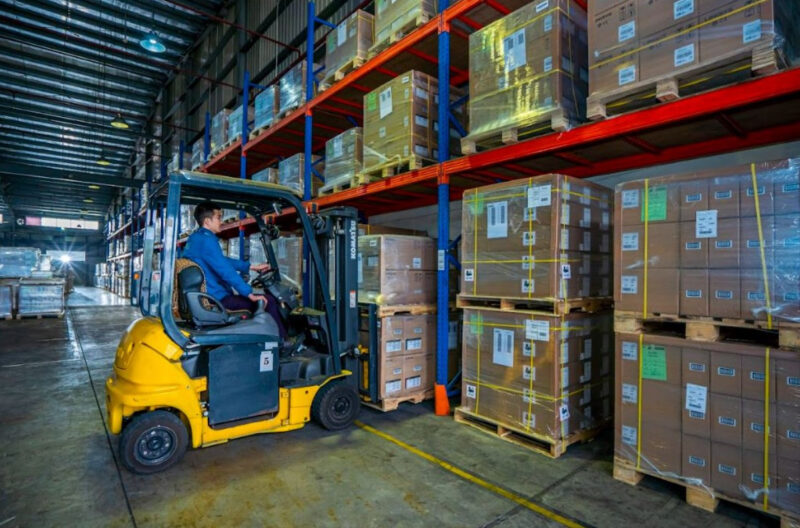
With an effective warehouse management process, finding and packing products takes place quickly, helping to shorten delivery times and increase customer satisfaction.
Inventory control
Warehouse management helps businesses accurately grasp inventory quantities, avoiding excess inventory causing capital waste or shortages leading to lost business opportunities.
Improve service quality
By strictly controlling the import and export process, warehouse management helps ensure products reach customers in the right quantity, quality, and time.
Detailed warehouse management process
A standard warehouse management process in logistics includes the following steps:
Step 1: Receiving goods
This is the first step in the process, including receiving and checking goods from suppliers.
- Checking documents: Compare information on the delivery note with the purchase order to ensure accuracy in quantity and type.
- Checking quality: Check the condition of packaging and whether products are damaged or moldy.
- Recording information: Enter goods data into the warehouse management system (WMS) or books, including item code, quantity, entry date, etc.
Step 2: Arrangement and storage
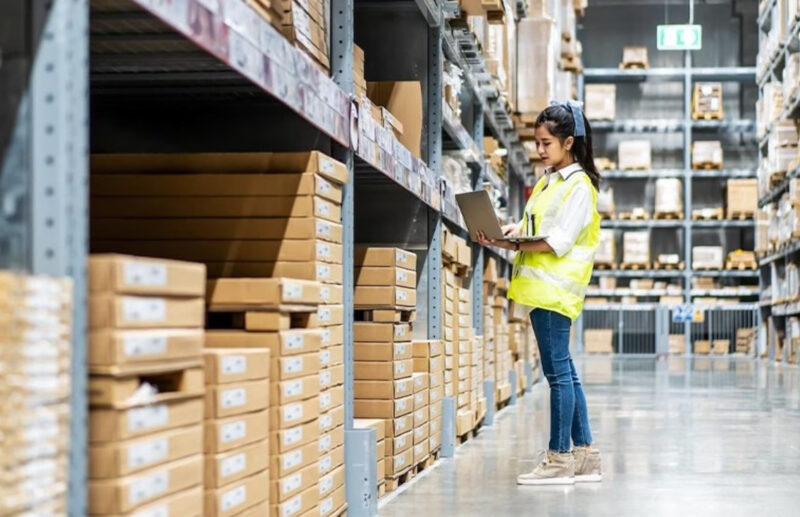
After receiving, goods need to be arranged in suitable locations in the warehouse.
- Classifying goods: Classify goods according to characteristics (fragile goods, heavy goods, goods requiring cold storage), according to import/export frequency (best-selling goods placed in easy-to-pick locations), or according to item codes.
- Using specialized equipment: Use hand pallet trucks, electric forklifts, or conveyors to move goods to storage locations. Naltako provides these devices to make the moving process easier and safer.
- Scientific arrangement: Apply arrangement methods such as FIFO (First In – First Out), LIFO (Last In – First Out) depending on the characteristics of the product to optimize space and avoid long-term inventory.
Step 3: Picking and packing
When there is an order, warehouse staff will perform picking and packing.
- Creating a warehouse release note: The system will automatically generate a release note based on the order. This note specifies the location, quantity, and type of goods to be picked.
- Picking goods: Employees use support equipment to pick goods from shelves. These devices not only help pick goods quickly but also ensure safety.
- Packing: Goods are checked one last time, then carefully packed to ensure safety during transportation.
Step 4: Exporting and transportation
This is the final step in the warehouse management process in logistics.
- Preparing export documents: Record export information into the system and prepare necessary documents (invoices, delivery notes).
- Checking and loading onto the vehicle: Goods are checked once again before being loaded onto the transport vehicle.
- Updating status: Update the status of the order in the system so that customers and related departments can track it.
>>> Building a professional inventory management system in logistics
Conclusion
An effective warehouse management process in logistics not only helps businesses save costs and optimize space but is also a key factor in improving service quality and reputation in the market. Applying the right process, combined with modern warehouse equipment, will help your business operate smoothly and achieve a sustainable competitive advantage.
If you are looking for solutions and equipment to support warehouse management, contact Naltako immediately for in-depth advice and to choose the products best suited to your needs.
Nội dung có liên quan:
-
 Should You Use a Mini Hydraulic Lift Table?
A lift table is a very useful device for warehouses and workshops. They are used to transport goods as quickly as possible. Among the many types of lift ta...
Should You Use a Mini Hydraulic Lift Table?
A lift table is a very useful device for warehouses and workshops. They are used to transport goods as quickly as possible. Among the many types of lift ta...
-
 Choosing Between Hydraulic Dock Levelers or Forklift Ramps for Cargo Handling?
Currently in Vietnam, businesses are applying many different methods to carry out import and export operations. Some businesses continue to follow traditio...
Choosing Between Hydraulic Dock Levelers or Forklift Ramps for Cargo Handling?
Currently in Vietnam, businesses are applying many different methods to carry out import and export operations. Some businesses continue to follow traditio...
-
 What is a Loading Dock? What does a Loading Dock system include?
Is your business facing difficulties in transporting goods? Is loading and unloading taking too much time and increasing costs? Have you researched solutio...
What is a Loading Dock? What does a Loading Dock system include?
Is your business facing difficulties in transporting goods? Is loading and unloading taking too much time and increasing costs? Have you researched solutio...
-
 Hydraulic Cylinder Structure, Specifications, and Operating Principles
Hydraulic cylinders, also known as hydraulic rams, are one of the most critical components in a hydraulic system. They have the ability to convert hydrauli...
Hydraulic Cylinder Structure, Specifications, and Operating Principles
Hydraulic cylinders, also known as hydraulic rams, are one of the most critical components in a hydraulic system. They have the ability to convert hydrauli...
-
 Differences Between Freight Elevators and Goods Hoists
Choosing between a freight elevator and a goods hoist is always a difficult puzzle for many businesses. Understanding this, Naltako will help you solve the...
Differences Between Freight Elevators and Goods Hoists
Choosing between a freight elevator and a goods hoist is always a difficult puzzle for many businesses. Understanding this, Naltako will help you solve the...
-
 Hydraulics: Concept, Structure, and Basic Operating Principles
Hydraulics is a vital technology, widely used in modern life. From industrial machinery like dock levelers to vehicles, this system plays an indispensable ...
Hydraulics: Concept, Structure, and Basic Operating Principles
Hydraulics is a vital technology, widely used in modern life. From industrial machinery like dock levelers to vehicles, this system plays an indispensable ...
-
 Dock Shelter and Dock Leveler: The Perfect Combination for Your Warehouse
Is your warehouse operating inefficiently, with high risks of cargo damage and low productivity? Don't worry, the optimal solution is here! The combination...
Dock Shelter and Dock Leveler: The Perfect Combination for Your Warehouse
Is your warehouse operating inefficiently, with high risks of cargo damage and low productivity? Don't worry, the optimal solution is here! The combination...
-
 What is a Raised Floor? What are the components of its structure?
Raised floors, hydraulic dock levelers, and access floors are popular types of flooring widely used in modern construction engineering today. To learn deta...
What is a Raised Floor? What are the components of its structure?
Raised floors, hydraulic dock levelers, and access floors are popular types of flooring widely used in modern construction engineering today. To learn deta...