

 Tiếng Việt
Types of Crane Hooks & Detailed Price Quotes
Are you having a headache finding the right crane hook for your needs and budget? Naltako will help you understand the popular types of crane hooks on the market, along with specific price quotes so you can easily compare and make the best choice.
Overview of Crane Hooks
Definition
A crane hook is an important device in the lifting industry, used to connect to a load and lift it with a crane. In technical terms, this component is commonly referred to as a “crane hook”.
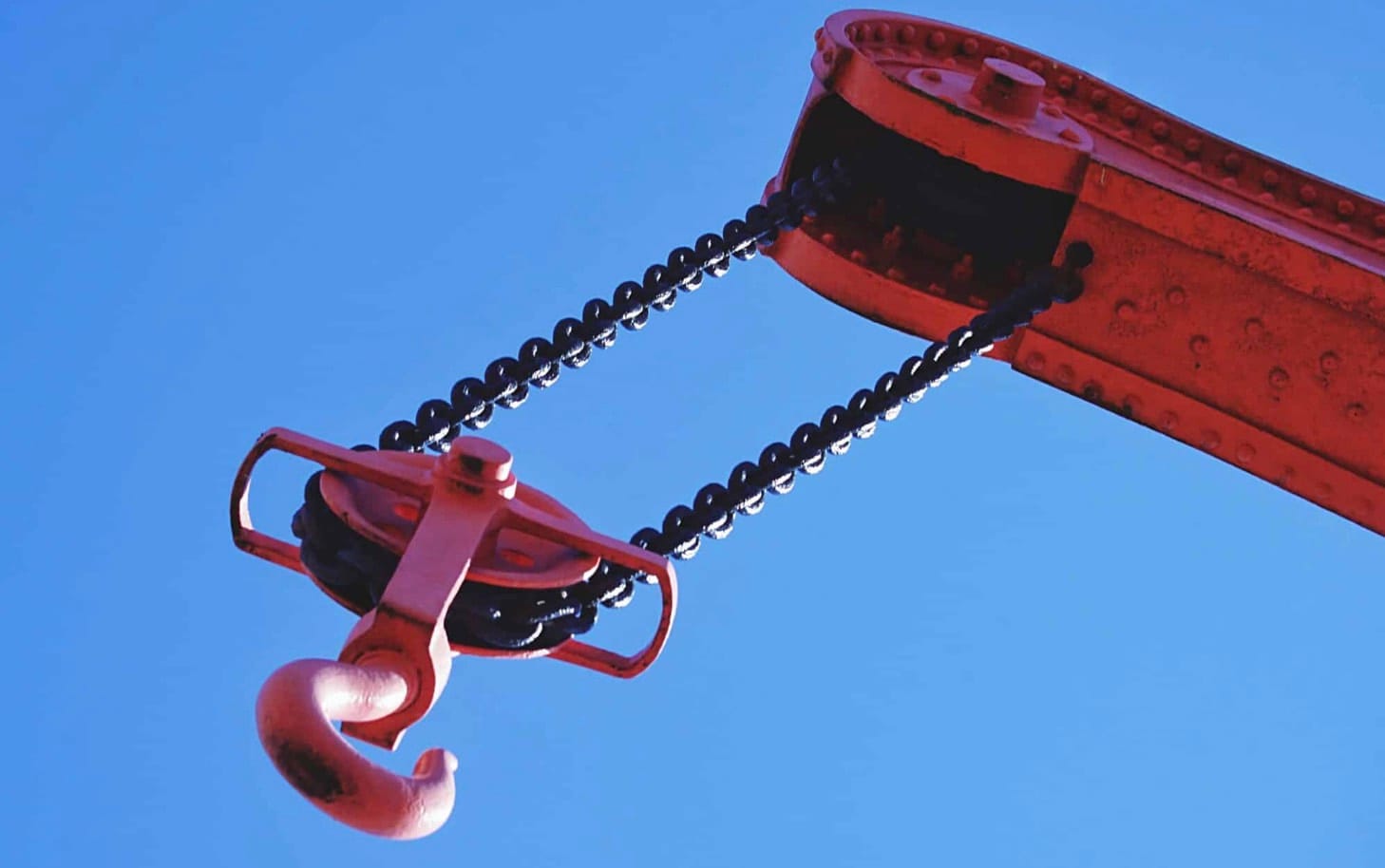
Common types of cranes that use lifting hooks today include:
- Mini cranes
- Tower cranes
- Mobile cranes
- Gantry/Beam cranes
- Jib cranes
Structure
Hook Body: The part shaped like a fishhook. The body is made from high-strength materials such as alloy steel to ensure the capacity to bear heavy loads.
Hook Eye: Located at the top, used to connect with shackles (cables or chains) of the crane. The hook eye is usually round or oval and is also made from high-strength material.
Safety Latch: This is a very important part that prevents the load from falling out of the hook during lifting. The safety latch is usually made of hardened steel and has a secure locking mechanism (automatic or manual).
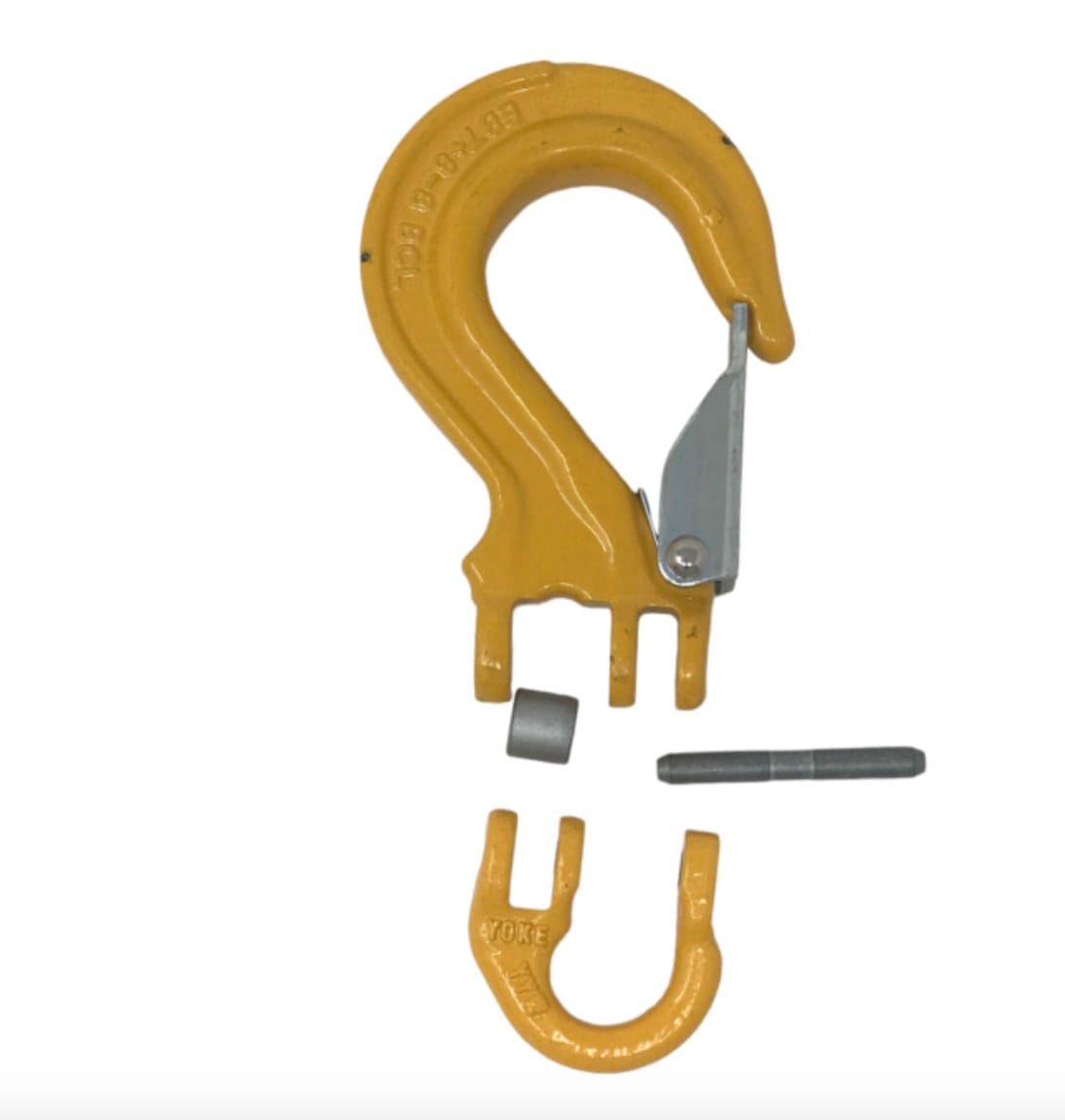
Bolts: These are special bolts with large sizes and high durability, used to connect parts of the hook together (e.g., connecting the hook body to the eye) or connecting the hook to the crane shackle.
Pulley (Sheave): Some types include pulleys to help change the direction of the cable or chain, making the lifting of loads easier.
Additionally, depending on the type of hook and purpose of use, there may be extra parts such as electronic crane scales, shields, rubber pads, or overload signaling devices.
Technical Standards
A crane lifting hook is a critical load-bearing device directly affecting safety during lifting, so it is manufactured and inspected according to strict standards to ensure quality and safety.
- Vietnam Standards (TCVN): These standards regulate materials, design, manufacturing, inspection, and testing.
- International Standards (ISO): ISO standards provide detailed technical guidelines and requirements for design, production, and inspection.
- Classification Society Standards: These organizations have their own standards for use on sea vessels, requiring higher safety and durability.
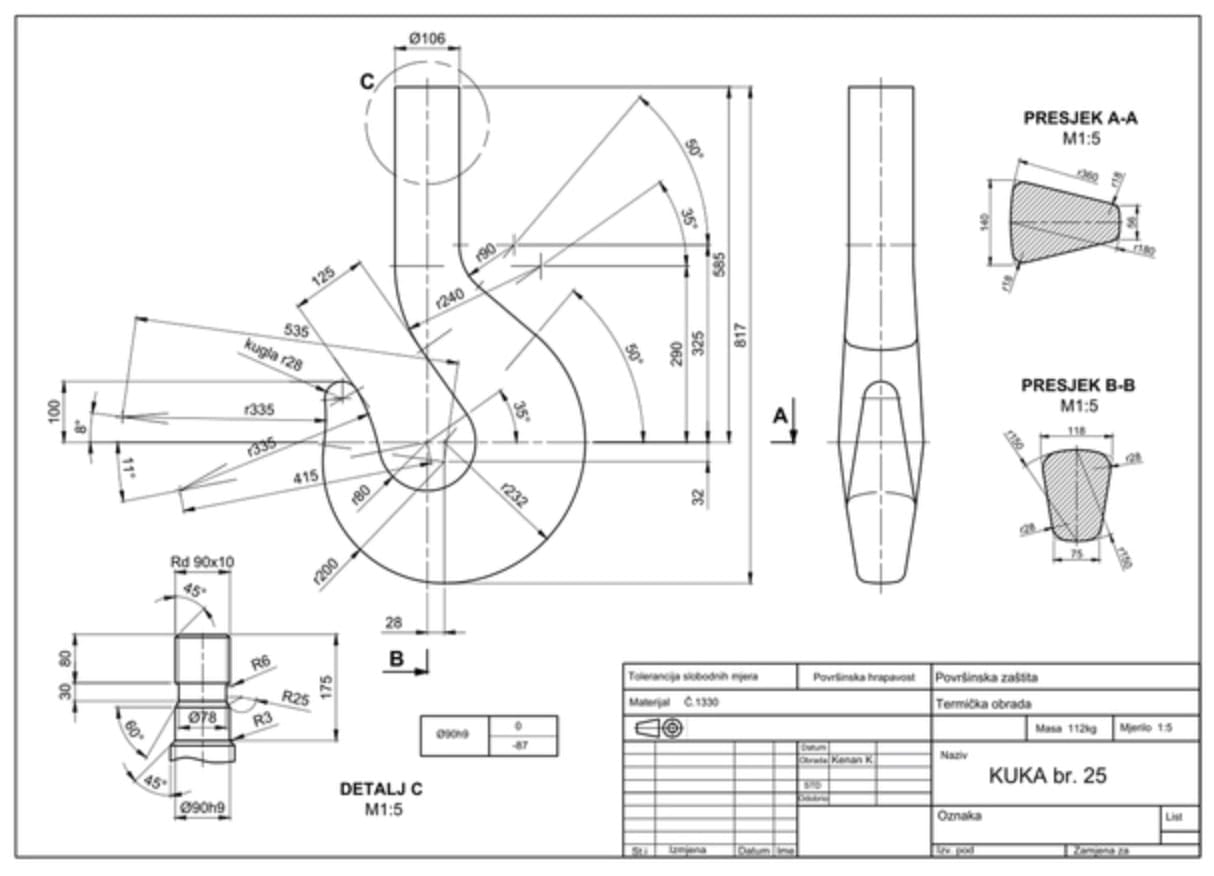
Technical Drawings
Crane hook drawings include: cross-sections, front views, and side views to fully represent the shape, dimensions, and technical parameters of the hook.
Popular Types of Crane Hooks
Classification by Load Capacity
1-ton Crane Hook: Used for light materials and small loads.
2-ton, 3-ton Crane Hooks: Common in workshops and small to medium construction projects.
5-ton, 10-ton Crane Hooks: Used in large projects, industrial zones, and for lifting heavy machinery and equipment.
Classification by Material
Steel Plate Crane Hook: High durability, good load-bearing capacity, reasonable price, widely used.
Stainless Steel Crane Hook: Corrosion resistant, high durability, suitable for humid or chemical environments.
Classification by Shape
C-hook: Simple design, easy to use, suitable for many types of loads.
L-hook: Used for lifting objects with an off-center center of gravity, ensuring balance during lifting.

Classification by Specialized Goods
Sheet Metal Hook: Specially designed to clamp and lift metal sheets.
- Flat Sheet Hook: Used for flat metal sheets.
- Coil Hook: Used for metal coils.
Mold Lifting Hook: Used for lifting various types of casting molds.
Pallet Hook: Designed to lift pallets of goods.
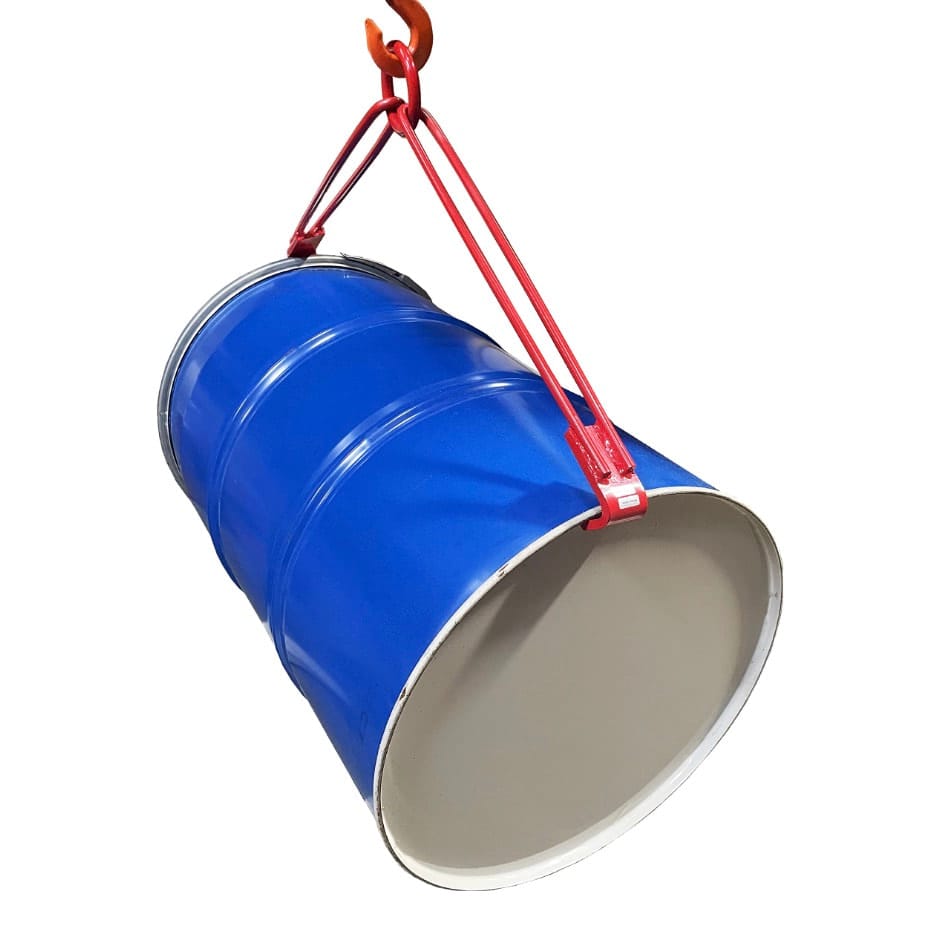
Drum Lifting Hook: Used to lift drums containing liquids or chemicals.
Pipe Lifting Hook: Used to lift steel or plastic pipes.
Timber/Log Hook: Designed to lift planks or round logs.
Classification by Connection Mechanism
Chain Crane Hook: Uses chains as the connection between the crane hook and the goods. Chains have the advantage of good load-bearing capacity, high durability, and easy length adjustment.
Wire Rope Crane Hook: Uses steel wire rope as the connection between the crane hook and the goods. Wire rope is flexible, easy to handle, and can withstand larger loads than chain.
Classification by Swivel Capability
Swivel Crane Hook: Can rotate 360 degrees around its axis, preventing chains or cables from twisting during the lifting process.
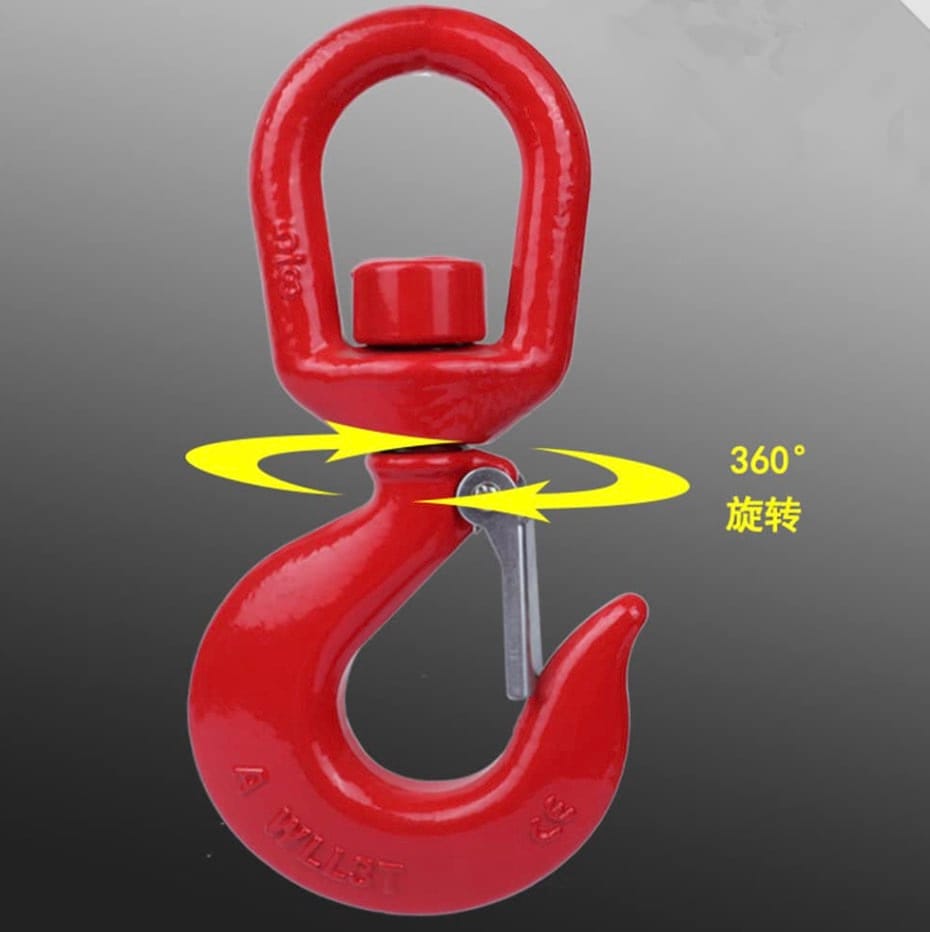
Fixed Hook: Does not have rotating capability. Usually used in simple applications.
Classification by Locking Structure
Sling Hook (Eye Hook): Wide mouth, easy to hook and unhook cables, usually has a basic safety latch.
Self-locking Hook: Features an automatic safety lock, ensuring maximum safety when lifting.
Grab Hook: Has a throat designed to “grab” and secure chains, requiring specific hooking techniques.
Guide to Hooking Crane Cables
Step 1: Preparation
- Ensure the cable is not frayed, torn, broken, or deformed. Check joints and cable ends.
- Ensure the lifting hook is not cracked, broken, deformed, or excessively worn. Check that the safety latch works well.
- Ensure the load does not exceed the allowed capacity of the cable and hook.
Step 2: Hooking the Cable

- Ensure goods are placed on a flat and stable surface.
- Identify safe hooking points on the load (usually high-strength load-bearing positions).
- Thread the cable through the hook eye and ensure the safety latch is locked.
- Ensure the cable is evenly tensioned and not twisted.
Step 3: Lifting and Lowering
- Start lifting the load slowly to check balance and stability.
- During lifting, continuously observe the cable, hook, and load to detect any abnormal signs.
- Never stand or work under a suspended load.
- When lowering the load, do it slowly and gently to avoid impact.
Step 4: Unhooking the Cable
- Ensure the load has been placed in a safe and stable position.
- Open the safety latch of the lifting hook.
- Carefully remove the cable from the hook.
Price Quotation
The price of crane hooks can fluctuate greatly, depending on factors such as the type of hook, load capacity, brand, origin…
- Standard types for small loads range from a few hundred thousand to several million VND.
- Specialized types can cost from several million to tens of millions of VND.
To get the most accurate quote, you should contact suppliers directly or refer to reputable sales websites.
Some suppliers may provide other special crane lifting hooks at different prices.
Top 3 Reputable Crane Hook Sellers
– Nhat Minh DVKT
– THAI VIET INDUSTRIAL EQUIPMENT CO., LTD
– H.N.Q TRADING SERVICE CO., LTD
Common Mistakes to Avoid When Using Crane Lifting Hooks
- Do not lift items heavier than the rated load capacity.
- Lift slowly, avoid sudden direction changes to prevent accidents.
- Always inspect before use; check if hooks or cables are damaged; if so, they must be repaired first.
- Each type of hook has its own usage method; read carefully and follow instructions.

- Perform periodic maintenance to detect and fix small issues before they become serious.
- If cracks, wear, or any abnormal signs are found, repair immediately.
- Only use genuine spare parts to ensure quality and safety.
- Always wear helmets, safety shoes, and safety harnesses when operating.
- Avoid use during rainstorms, poor visibility, or in unsafe locations.
By following these simple steps, you can ensure safety for yourself and those around you, while helping the components operate better and last longer.
Frequently Asked Questions
How to choose the right hook?
You need to know what you will be lifting and how heavy it is to choose a hook that is capable and safe. It is advisable to choose a slightly stronger type as a precaution.
Additionally, pay attention to what items you are lifting: if they are easily scratched, choose a type with a protective layer; for wet areas, choose a rust-proof type; for frequent use, choose a durable, easy-to-repair type.
How to maintain hooks for long-term use?
Just as a motorcycle needs maintenance, crane hooks need regular care. Before and after each use, remember to check for any damage. Clean them thoroughly and lubricate necessary parts according to the instructions. When not in use, store them in a dry, cool place.
Conclusion
We hope the information about the types of crane hooks and the detailed price list above has helped you gain an overview and choose the right product for your needs. Do not hesitate to contact us for the best advice and support. Good luck with your work!
Nội dung có liên quan:
-
 What is a Gear Hydraulic Pump? Structure and Classification
With a simple structure, convenient assembly and operation, and the ability to withstand heavy loads for a specific duration, gear hydraulic pumps are wide...
What is a Gear Hydraulic Pump? Structure and Classification
With a simple structure, convenient assembly and operation, and the ability to withstand heavy loads for a specific duration, gear hydraulic pumps are wide...
-
 Hydraulic Pumps
In today's industries, from high-rise buildings to manufacturing plants, hydraulic pumps play a crucial role. This component helps devices such as yard ram...
Hydraulic Pumps
In today's industries, from high-rise buildings to manufacturing plants, hydraulic pumps play a crucial role. This component helps devices such as yard ram...
-
 Hydraulic Seals: Classification, Installation & Replacement
Hydraulic seals are vital components in a hydraulic system, yet not everyone fully understands them. If you are looking for information on seal types, inst...
Hydraulic Seals: Classification, Installation & Replacement
Hydraulic seals are vital components in a hydraulic system, yet not everyone fully understands them. If you are looking for information on seal types, inst...
-
 Grating Flooring (Galvanized Steel Grating): Features, Applications, and Quotes
What is Grating Flooring?
Grating flooring (also known as galvanized steel grating or grating panels) is a type of floor formed from load-bearing steel ba...
Grating Flooring (Galvanized Steel Grating): Features, Applications, and Quotes
What is Grating Flooring?
Grating flooring (also known as galvanized steel grating or grating panels) is a type of floor formed from load-bearing steel ba...
-
 What is a 500kg Hydraulic Jack? Structure and Operating Principle
Nowadays, the 500kg hydraulic lift table, lifting 280 - 900 mm is a popular lifting device in many fields. With the ability to lift heavy objects easily an...
What is a 500kg Hydraulic Jack? Structure and Operating Principle
Nowadays, the 500kg hydraulic lift table, lifting 280 - 900 mm is a popular lifting device in many fields. With the ability to lift heavy objects easily an...
-
 Forklift Batteries: Classification, Usage, Maintenance, and Replacement Instructions
Are you having a headache because your electric forklift is operating inconsistently? Is the forklift battery running out quickly, failing to charge fully,...
Forklift Batteries: Classification, Usage, Maintenance, and Replacement Instructions
Are you having a headache because your electric forklift is operating inconsistently? Is the forklift battery running out quickly, failing to charge fully,...
-
 Top 5 Reputable Addresses for Affordable, High-Quality Electric Forklift Wheels
Are you struggling to find a place to buy electric forklift wheels that are affordable yet still guarantee quality? Choosing the wrong supplier not only wa...
Top 5 Reputable Addresses for Affordable, High-Quality Electric Forklift Wheels
Are you struggling to find a place to buy electric forklift wheels that are affordable yet still guarantee quality? Choosing the wrong supplier not only wa...
-
 Hydraulic Throttle Valves: Structure, Operating Principle, and Applications
Are you struggling with products like hydraulic dock levelers operating inefficiently, consuming too much energy, and being difficult to control? Don't wor...
Hydraulic Throttle Valves: Structure, Operating Principle, and Applications
Are you struggling with products like hydraulic dock levelers operating inefficiently, consuming too much energy, and being difficult to control? Don't wor...