

 Tiếng Việt
The Most Widely Used Cargo Handling Support Tools Today
There are many different tools available to support cargo loading and unloading, each with its own advantages and disadvantages. Users need to research and consider the most appropriate method of use. Let’s explore the details with us in the article below.
Forklift Ramps
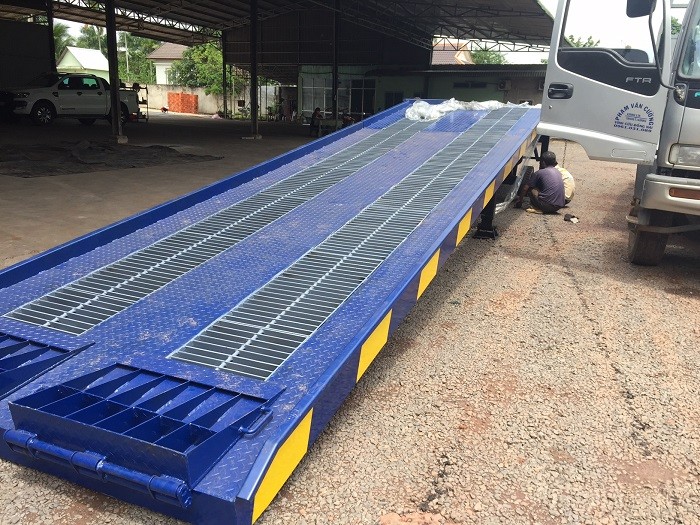
Forklift ramps, also known as container ramps, are tools with a steel frame structure connecting the operating floor to the container floor for forklifts to move both loaded and unloaded through the bridge. When combined with a forklift, this creates a loading duo with significantly increased efficiency, sometimes supplemented by a hydraulic lifting table.
Bed or Container Flooring Cushioning Materials
Depending on the different types of goods, they may or may not be placed directly on the container/vehicle floor. In some cases, goods need to be covered with a thin layer of material to increase friction between the shipment and the floor, such as being placed on wooden pallets before the container/vehicle floor. This helps protect the container floor from damage during loading as well as prevent scratches on the goods during the handling process.
Goods can be stacked vertically on the container floor without the need for cushions if the shipment can stand independently, the load weight does not affect the container or vehicle floor structure, and the goods do not have biochemical effects on the container or vehicle. Some examples include cardboard boxes, paper boxes, or certain cargo crates.
Pallets
Pallets are primarily used to increase the speed of cargo handling, for instance, with cardboard boxes containing small items because they can be easily moved with motorized forklifts instead of manual pallet jacks.
They can be stacked and wrapped with thin plastic film and nylon straps around the pallet; in these cases, each pallet is part of the shipment unit.
The disadvantage of pallets is that in some cases, they cannot completely fill a standard container. The gaps between pallets must be tightly filled with other materials.
Usually, to stack pallets, wooden frames and supports are also needed to optimize the space within the container or truck body.
Cambered Wooden Beams
A structure consisting of various rectangular wooden frames combined is a basic form that helps distribute the load evenly across the container floor. Depending on the type of cargo, each piece of wood can vary from 5 cm in height down to a 20 x 20 cm square structure, with non-load-bearing parts not exceeding 1 m.
Steel Frames
These are often used for heavy and oversized items; therefore, anti-slip materials must be used when two steel surfaces come into contact with each other.
Securing Materials for Cargo on Trucks
Lashing and securing materials help prevent movements in various directions, including horizontal and vertical, especially reducing impact during transportation.
Lashing materials should be used with shipments whose load is lower than the maximum capacity of the lashing equipment. Each type of material has a different elasticity; therefore, different types of lashing materials should not be used for the same item.
When force is applied, the goods will be fixed by the material with the lowest elasticity. If that material breaks, other lashing devices will also quickly fail. Using multiple types of lashing materials with different elasticities in the same direction will not have the effect most people expect. However, they can be combined if used in different directions.
Cords and Ropes
Ropes braided from natural materials (plant fibers, stems) can be damaged by acidic conditions, corrosive substances, or by moisture levels in the air. Ropes made from synthetic fibers are more susceptible to environmental damage but often have less durable elasticity; thus, they are only used for securing small goods.
Nylon Straps
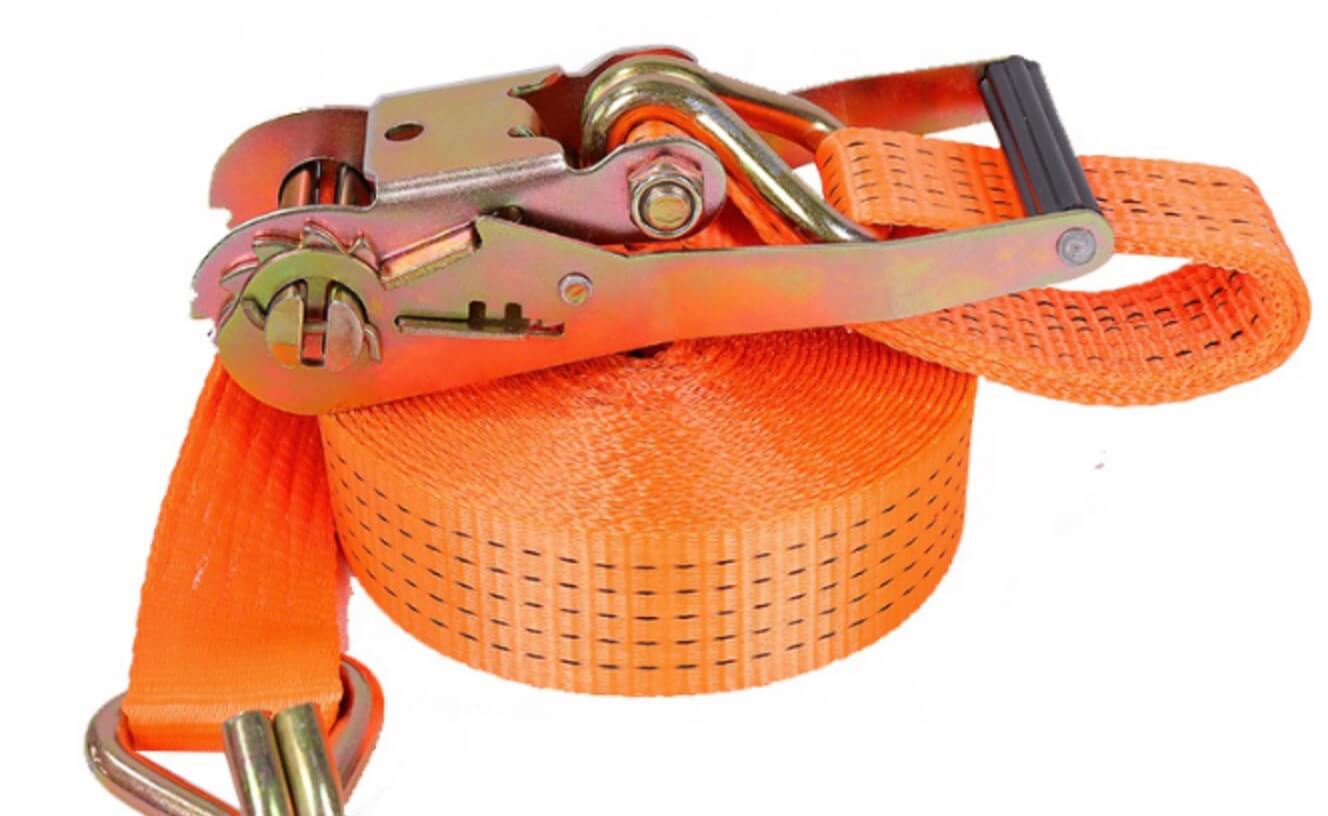
The best type for lashing is nylon straps, available in many types with different load capacities. Protective sleeves should be used for ropes at contact points with sharp edges. It is forbidden to simply tie nylon straps due to the slippery nature of the material; instead, straps with buckles/rings or tight fasteners should be used.
Steel Bands
Steel bands have no elasticity, making them unsuitable for soft shipments. If the wooden beams deform, the steel bands can snap easily. Therefore, ensure that goods secured with steel bands do not shift or decrease in volume during transport.
Steel bands are very useful for transporting steel bundles. They can be tightened extremely quickly with specialized tools. Steel bands should not be used on sharp surfaces or uneven corners.
Steel Wire, Hooks, and Shackles
Steel wires are also commonly used for securing bulky goods. They come in a wide variety of sizes, have low elasticity, and high strength. However, they should not be used at very narrow angles or steep slopes. When using wires, all supporting equipment like shackles, tensioners, and load-bearing eyelets must be present.
Chains
Chains have a very high load limit. Lashing points on the cargo or container are stronger than steel chains. Chains are typically used for securing large cargo and do not lose effectiveness on rounded edges, provided the chain links are not bent. Chains have no elasticity and are tightened with the help of load-tensioning screws or levers/hooks.
Infill and Dunnage Materials
Airbags: Airbags of various sizes are used to fill the gaps between each shipment after loading to ensure that no gaps exist between units or between units and the container/truck walls, ensuring optimal stability during transport. Note: do not place airbags close to metal edges to prevent tearing and loss of effectiveness.

Sawdust: Used to increase friction between goods and the floor surface to prevent slipping. Sawdust is also used under container floors or on vertical surfaces. When using sawdust, note that it can be compressed or create gaps different from the original state or even fall out due to vibration.
Packaging Materials: The best way to keep cargo units from shifting is to fill the gaps with packaging materials. Ensure that force distribution remains within limits.
Wooden Boards can be used to support heavy cargo units, but since the load capacity of container walls is lower than the floor, heavy shipments require a plan to distribute the load evenly against the walls. The optimal method is to use a structure that transfers the load to the container’s structural ribs.
Conclusion
In summary, there are many popular cargo handling support tools today that help improve work efficiency and safety. Choosing the right tool depends on many factors such as the type of cargo, weight, and dimensions.
Hopefully, this article has provided you with an overview of the cargo loading and unloading support tools commonly used today.“`
Would you like me to translate the Meta Description for this article to help with its international SEO?
Nội dung có liên quan:
-
 The Uses of Dock Levelers in Today’s Cold Storage Facilities
To ensure the operational efficiency of cold storage, selecting and using the correct support equipment is extremely important. One of the indispensable so...
The Uses of Dock Levelers in Today’s Cold Storage Facilities
To ensure the operational efficiency of cold storage, selecting and using the correct support equipment is extremely important. One of the indispensable so...
-
 Applications of Hydraulic Dock Levelers
Hydraulic Dock Leveler is a connecting device between the container floor and the warehouse floor, widely used in warehouses with high import and export fr...
Applications of Hydraulic Dock Levelers
Hydraulic Dock Leveler is a connecting device between the container floor and the warehouse floor, widely used in warehouses with high import and export fr...
-
 Why Are Forklift Ramps the Preferred Choice for Import and Export Operations?
Container loading ramps bring many important benefits to transport and cargo handling operations. Specially designed, container forklift ramps not only hel...
Why Are Forklift Ramps the Preferred Choice for Import and Export Operations?
Container loading ramps bring many important benefits to transport and cargo handling operations. Specially designed, container forklift ramps not only hel...
-
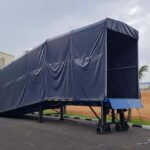 Popular Forklift Ramp Models with Roofs in Use Today
Currently, forklift ramps with roofs have quickly attracted the attention of small and medium-sized enterprises. Not only are they a convenient means of tr...
Popular Forklift Ramp Models with Roofs in Use Today
Currently, forklift ramps with roofs have quickly attracted the attention of small and medium-sized enterprises. Not only are they a convenient means of tr...
-
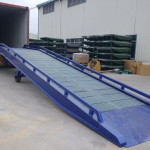 What is a Loading Ramp? Applications of Ramps in Goods Transportation
What is a Loading Ramp?
A loading ramp, also known as a yard ramp or forklift ramp, is a powerful support device in the transportation of goods.
Essentia...
What is a Loading Ramp? Applications of Ramps in Goods Transportation
What is a Loading Ramp?
A loading ramp, also known as a yard ramp or forklift ramp, is a powerful support device in the transportation of goods.
Essentia...
-
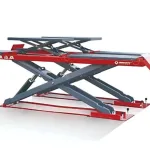 What is a scissor mechanism? Applications of scissor mechanisms in hydraulic lifting equipment
Today, scissor mechanisms are widely applied in hydraulic lifting equipment. These applications are extensively used in construction projects and bring hig...
What is a scissor mechanism? Applications of scissor mechanisms in hydraulic lifting equipment
Today, scissor mechanisms are widely applied in hydraulic lifting equipment. These applications are extensively used in construction projects and bring hig...
-
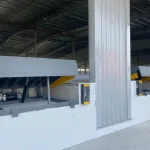 Applications of dock levelers in production
A Dock Leveler is not just a bridge between the warehouse and the transport vehicle, but also a powerful assistant that helps you operate your production p...
Applications of dock levelers in production
A Dock Leveler is not just a bridge between the warehouse and the transport vehicle, but also a powerful assistant that helps you operate your production p...
-
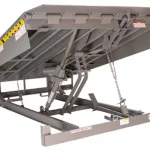 When should a Dock Leveler be repaired or replaced?
Dock Levelers are essential equipment in the process of importing and exporting goods at warehouses. Continuous operation and heavy loads make Dock Leveler...
When should a Dock Leveler be repaired or replaced?
Dock Levelers are essential equipment in the process of importing and exporting goods at warehouses. Continuous operation and heavy loads make Dock Leveler...