

 Tiếng Việt
Should You Choose a Hydraulic Freight Elevator or a Motor Hoist Elevator?
Choosing between a hydraulic freight elevator and a motor hoist elevator is not simple. Each type has its own advantages and disadvantages, suitable for different needs and conditions.
Don’t worry! Naltako will help you compare these two types of elevators in detail, from pros and cons, applications to investment and maintenance costs. After reading, you will be confident in making the right decision, choosing the optimal solution to save costs and improve labor productivity.
Introduction to Freight Elevators
A freight elevator is a general term for specialized equipment used to move goods up and down between floors in a building or construction project. They help minimize labor, increase transport speed, and ensure safety for both goods and operators.
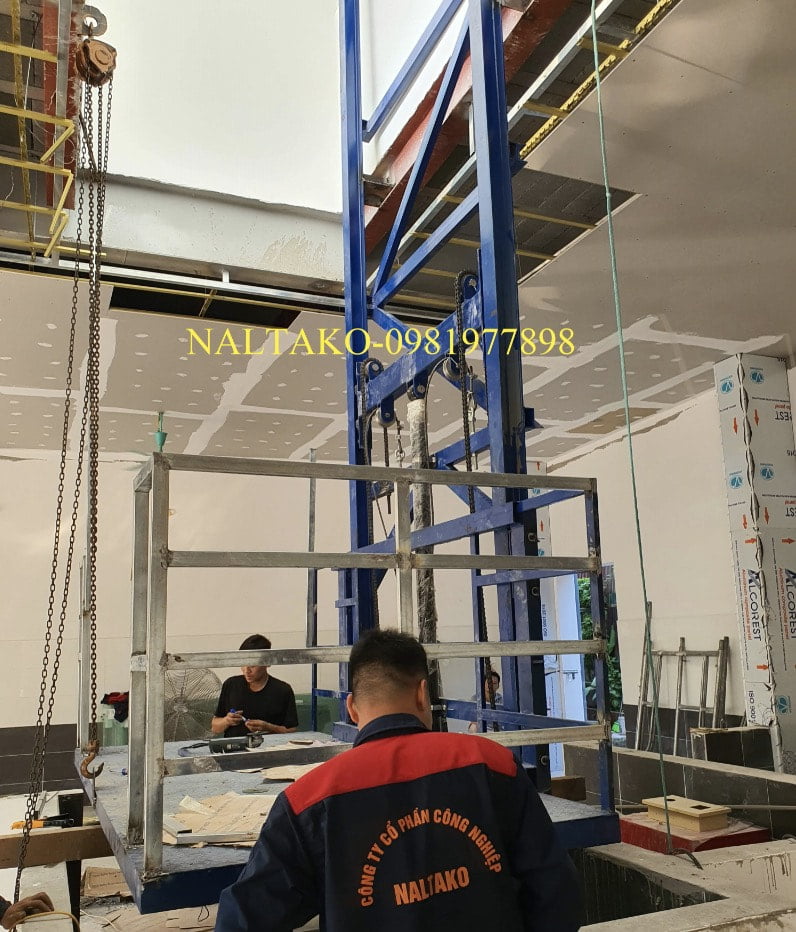
Classification of Freight Elevators
There are two popular types of freight elevators on the market today:
- Hydraulic Freight Elevator: Operates based on hydraulic principles, using pistons and hydraulic oil to lift and lower goods. Advantages include safety, ease of use, durability, and high load capacity.
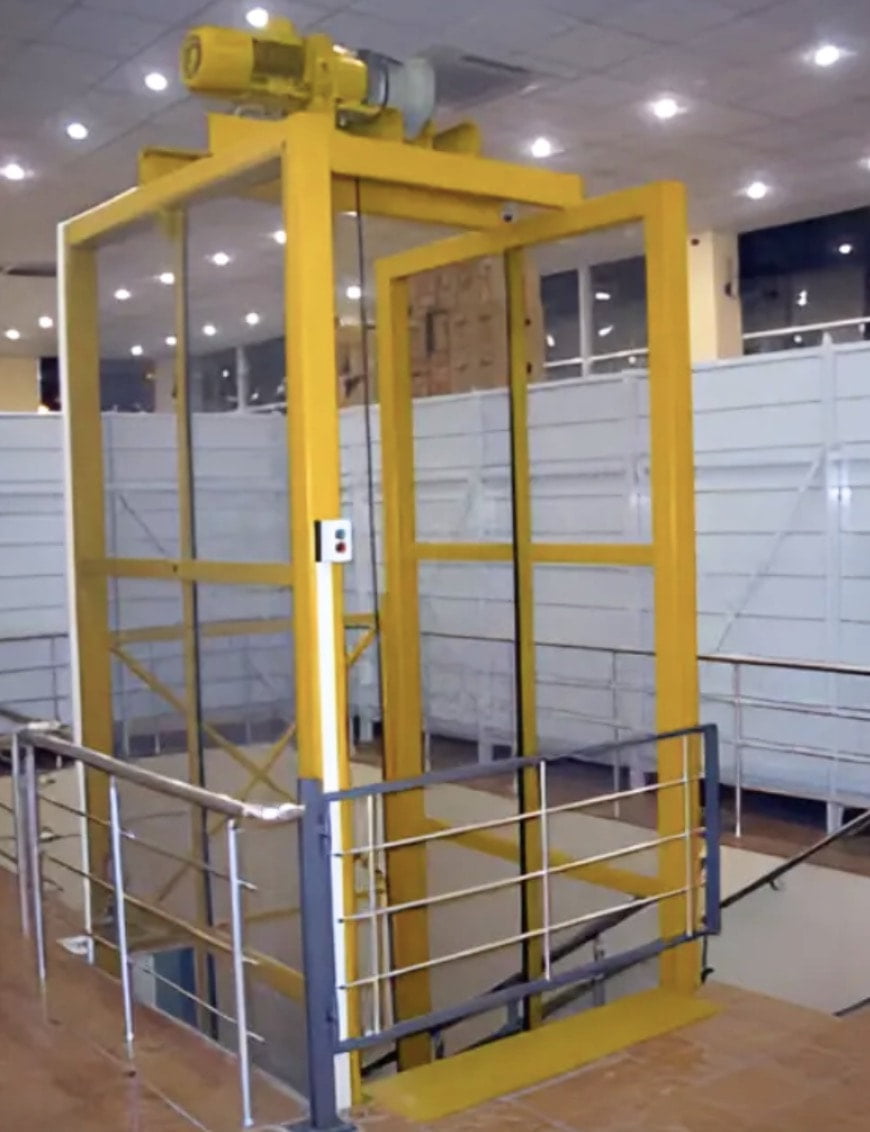
- Motor Hoist Elevator: Uses an electric motor to pull cables and lift/lower goods. Advantages include fast lifting speed, low cost, and suitability for high-rise buildings, but the disadvantage is smaller load capacity.
Reference:
Detailed installation process for hydraulic freight elevators
Detailed Comparison: Hydraulic Freight Elevator vs. Motor Hoist
| Criteria | Hydraulic Freight Elevator |
Motor Hoist Elevator
|
| Load Capacity | Medium to high (can be up to several tons) | Low to medium (usually under 1 ton) |
| Speed | Slow (0.1 – 0.5 m/s) |
Fast (0.5 – 1.5 m/s)
|
| Initial Investment Cost | Higher | Lower |
| Maintenance Cost | Low |
Higher (requires periodic motor maintenance)
|
| Advantages | Safe, easy to use, less breakdown, no machine room required |
Fast speed, high load capacity, suitable for high-rise buildings
|
| Disadvantages | Slow speed, high price, not suitable for high-rise buildings, limited travel distance |
Small load capacity, poor durability, higher noise level
|
| Application | Factories, enterprises, construction projects, large commercial centers | Small warehouses, workshops, supermarkets, restaurants, shops, small construction projects |
Should You Choose a Hydraulic Freight Elevator or a Motor Hoist?
When to Choose a Hydraulic Freight Elevator?
- Suitable for lifting heavy loads over 1 ton, meeting the transportation needs of factories, enterprises, construction projects, and large commercial centers.
- Simple operation, fewer breakdowns, and no special operating skills required.
- For businesses with a large budget that want high-capacity equipment that is durable and stable.
Reference:
[Quotation] High-quality Hydraulic Freight Elevators 300kg – 2000kg
When to Choose a Motor Hoist Elevator?
- Suitable for lifting loads under 1 ton, well-meeting transport needs in small warehouses, workshops, supermarkets, restaurants, shops, and small construction projects.
- The equipment has a faster lifting speed and is suitable for high-rise buildings.
- Product reference: Hydraulic Mini Hoist Elevator – A product that leverages the strengths and overcomes the limitations of traditional motor hoists.
If you are still hesitant, please contact Naltako – the unit with leading experts in freight elevators for support and answers to your questions.
Reference:
Conclusion
Accurately choosing between a hydraulic freight elevator and a motor hoist elevator will help businesses save costs and increase labor productivity. Carefully consider the factors analyzed in this article to make the most suitable choice for your needs and financial capability.
Nội dung có liên quan:
-
 What are Dock Leveler Seals? Popular types of warehouse dock shelters
Does the gap between the warehouse floor and the truck during the loading process affect the temperature inside the warehouse? Can factors like dust and in...
What are Dock Leveler Seals? Popular types of warehouse dock shelters
Does the gap between the warehouse floor and the truck during the loading process affect the temperature inside the warehouse? Can factors like dust and in...
-
 What is an Automatic Dock Leveler? Advantages & Classification
The process of loading and unloading goods between warehouses and trucks often faces many difficulties due to the height difference between the two floor s...
What is an Automatic Dock Leveler? Advantages & Classification
The process of loading and unloading goods between warehouses and trucks often faces many difficulties due to the height difference between the two floor s...
-
 Leading Causes of Forklift Accidents and How to Prevent Them
According to statistics from the Department of Occupational Safety, Vietnam records hundreds of forklift-related accidents every year, causing heavy damage...
Leading Causes of Forklift Accidents and How to Prevent Them
According to statistics from the Department of Occupational Safety, Vietnam records hundreds of forklift-related accidents every year, causing heavy damage...
-
 Should You Buy a Used Container Loading Ramp? Tips & Reputable Sellers
Buying a used container loading ramp can be a significant cost-saving solution for businesses, especially small and medium-sized enterprises. However, this...
Should You Buy a Used Container Loading Ramp? Tips & Reputable Sellers
Buying a used container loading ramp can be a significant cost-saving solution for businesses, especially small and medium-sized enterprises. However, this...
-
 Understanding the Structure of a 300kg Hydraulic Lift Table
Do you want to better understand the operating principle and structure of a 300kg hydraulic lift table? This article will answer all your questions, helpin...
Understanding the Structure of a 300kg Hydraulic Lift Table
Do you want to better understand the operating principle and structure of a 300kg hydraulic lift table? This article will answer all your questions, helpin...
-
 Where to Buy Used Hydraulic Lift Tables? Pricing Guide
Have you considered buying a used hydraulic lift table but don't know where to find a reputable supplier? Don't worry! This article will help you solve you...
Where to Buy Used Hydraulic Lift Tables? Pricing Guide
Have you considered buying a used hydraulic lift table but don't know where to find a reputable supplier? Don't worry! This article will help you solve you...
-
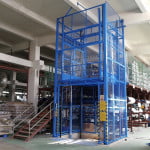 Operating Principle of Hydraulic Freight Elevators
Have you ever wondered how hydraulic freight elevators can lift heavy loads smoothly and safely? The secret lies in its operating principle. In this articl...
Operating Principle of Hydraulic Freight Elevators
Have you ever wondered how hydraulic freight elevators can lift heavy loads smoothly and safely? The secret lies in its operating principle. In this articl...
-
 Standards and Procedures for Dock Leveler Inspection
The Importance of Dock Leveler Inspection
Periodic inspection of dock levelers plays a key role in ensuring occupational safety, optimizing operational pe...
Standards and Procedures for Dock Leveler Inspection
The Importance of Dock Leveler Inspection
Periodic inspection of dock levelers plays a key role in ensuring occupational safety, optimizing operational pe...