

 Tiếng Việt
Safety standards for hydraulic freight elevators in Vietnam
Are you worrying about the safety of hydraulic freight elevators in your business? Let’s join Naltako to learn and apply the latest safety standards for hydraulic freight elevators in Vietnam to ensure a safe and efficient working environment.
Safety standards for hydraulic freight elevators according to the latest regulations
To ensure maximum safety for workers and goods, complying with safety regulations and standards for hydraulic lifts is extremely important. Below are the latest legal documents related to this issue:
Circular 42/2019/TT-BLDTBXH
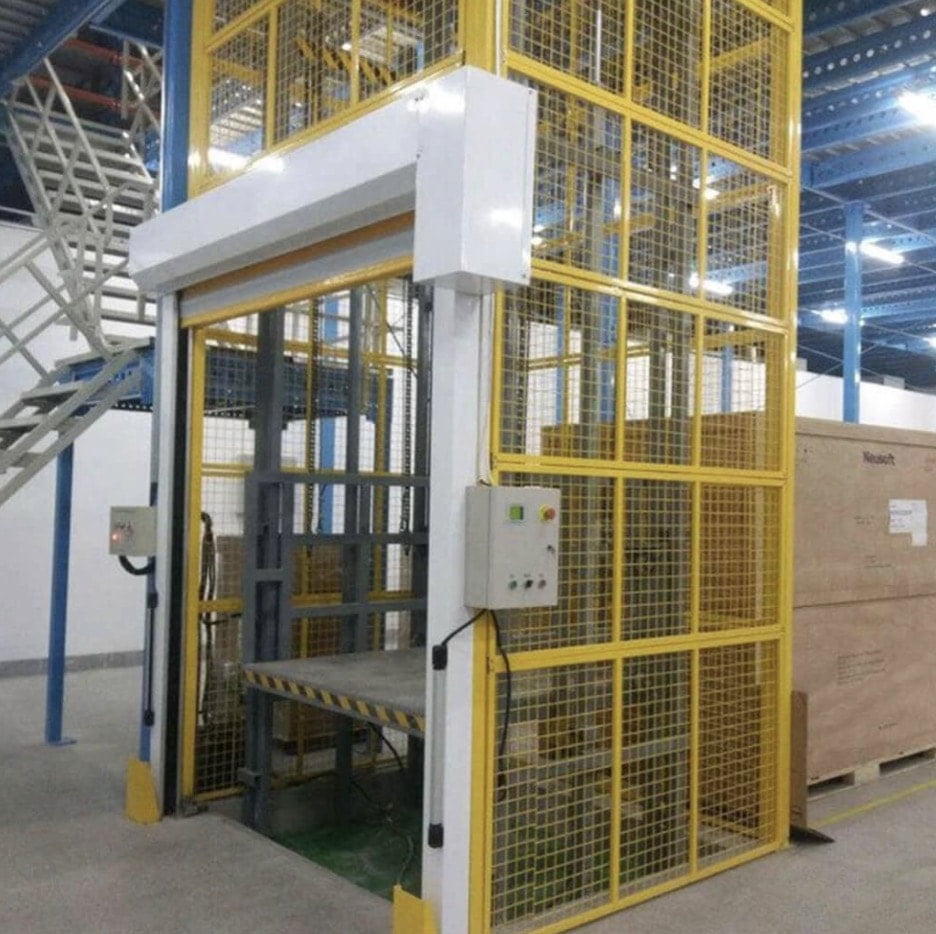
This circular is the National Technical Regulation on occupational safety for elevators, including hydraulic freight elevators. The document provides detailed regulations on the design, installation, operation, maintenance, and inspection of elevators to ensure safety for users and goods.
Circular 12/2021/TT-BLDTBXH
This circular regulates the technical safety inspection process for elevators, including hydraulic freight elevators. The document details the steps for checking, evaluating, and confirming the safety of elevators before being put into use and during operation.
See more:
Regulation QCVN 02:2011/BLDTBXH
This is the National Technical Regulation on occupational safety for electric elevators. Although focusing on electric elevators, some regulations in this QCVN can also be applied to hydraulic freight elevators, especially the requirements for the design, installation, and maintenance of safety equipment.
Safety standard TCVN 6396-2:2009 (EN 81-2:1998)
This standard regulates the safety requirements for the construction and installation of hydraulic elevators, including requirements for materials, design, manufacturing, installation, testing, and acceptance.
Safety standard TCVN 6396-3:2010 (EN 81-3:2000)
This standard regulates the safety requirements for the construction and installation of freight elevators, including both electric and hydraulic elevators. The document includes requirements for the design, manufacturing, installation, testing, and acceptance of freight elevators.
Mastering and complying with the safety standards for hydraulic freight elevators is the responsibility of every business. This not only ensures safety for workers and goods but also helps businesses avoid unnecessary legal and financial risks.
Reference:
How to operate hydraulic freight elevators safely
Before operation
Ensure the elevator operates normally, without strange noises, oil leaks, or other signs of damage.
Determine the maximum allowable load of the elevator and ensure this limit is not exceeded.
Arrange goods neatly and balancedly on the elevator floor, avoiding letting goods protrude or block the view.
Ensure the elevator doors are closed tightly before operation.
During operation
Start and stop the elevator slowly, avoiding sudden jerks that cause danger to goods and operators.
Always pay attention to observing the surroundings to detect obstacles or people moving near the elevator area.
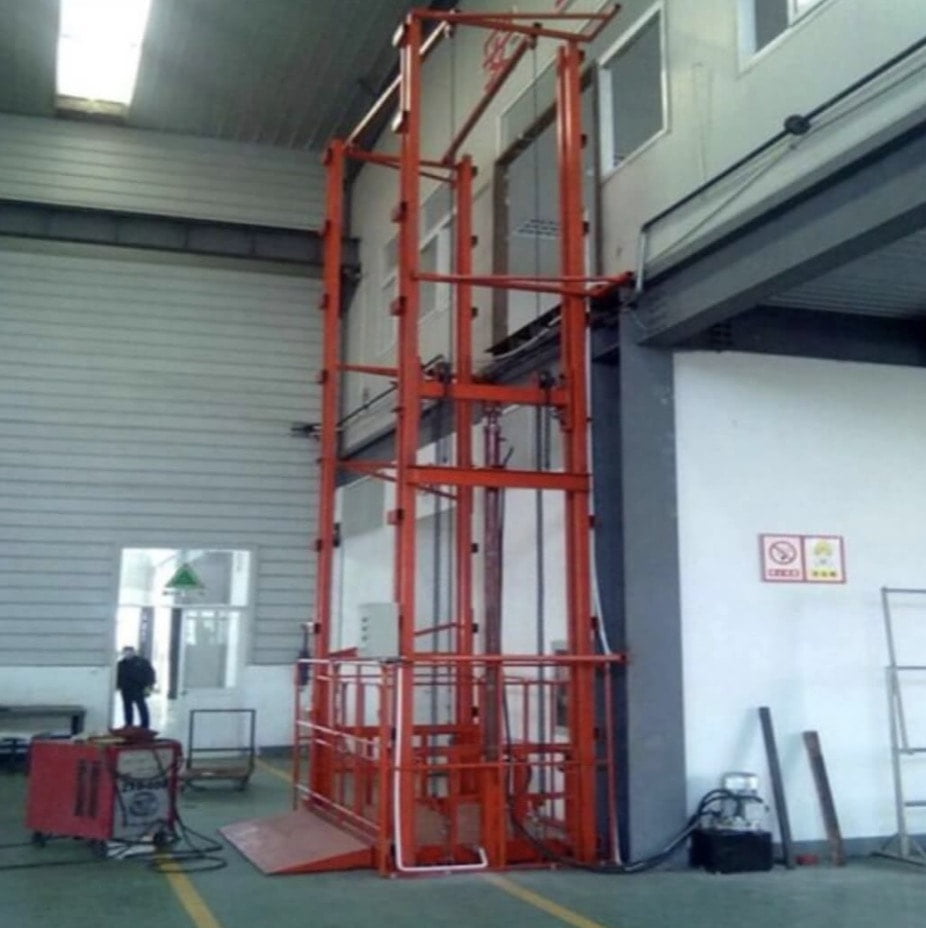
Hydraulic freight elevators are mainly used for transporting goods and must not be used to carry people, especially hydraulic hoists.
If any incidents are detected, stop operating immediately and report to the technical department for inspection and repair.
After operation
Lower the elevator floor to the lowest position and turn off the power.
Ensure the elevator doors are locked carefully to avoid accidents.
Clean the surrounding area and on the elevator floor to ensure safety and hygiene in the working environment.
See more:
Important notes
Only trained personnel with operation certificates are allowed to operate hydraulic freight elevators.
- Strictly comply with safety standards for hydraulic freight elevators.
- Regularly inspect and maintain the elevator periodically to ensure stable and safe operation.
- Buy hydraulic freight elevators from reputable units, ensuring safety standards prescribed by current laws.
Where to buy a reputable hydraulic freight elevator?
If you are looking for a reliable supplier of hydraulic freight elevators that fully meets the criteria of quality, service, and price, Naltako Company is the perfect choice for you.
Experience and reputation:
With over 7 years of experience in the field of designing, manufacturing, and supplying hydraulic lifting equipment, Naltako has affirmed its position in the market. We are proud to bring optimal lifting solutions, meeting all customer needs.
Outstanding product quality:
Naltako is committed to providing hydraulic freight elevators that meet quality and safety standards according to Vietnamese and international regulations. Every product is strictly inspected before reaching customers, ensuring stable, durable, and absolutely safe operation.
Dedicated warranty and maintenance services:
We understand that customer satisfaction is the most important factor. Therefore, Naltako always strives to provide professional, fast, and dedicated warranty and maintenance services. Our team of experienced technicians is always ready to support customers 24/7.
Best price in the market:
As a domestic manufacturer and fabricator, without intermediaries, Naltako is confident in bringing customers the most competitive prices in the market. We commit to unchanged product quality, helping you save significantly on investment costs.
[Báo Giá] Thang nâng hàng thuỷ lực 300kg – 2000kg chất lượng
Professional customer support:
Naltako has a team of experienced, enthusiastic, and dedicated technicians, always ready to advise and support customers in every stage, from selecting suitable products to installation, operation, and maintenance.
Let Naltako accompany you in building a safe and efficient working environment with high-quality hydraulic freight elevators!
Nội dung có liên quan:
-
 Should You Use a Mini Hydraulic Lift Table?
A lift table is a very useful device for warehouses and workshops. They are used to transport goods as quickly as possible. Among the many types of lift ta...
Should You Use a Mini Hydraulic Lift Table?
A lift table is a very useful device for warehouses and workshops. They are used to transport goods as quickly as possible. Among the many types of lift ta...
-
 Choosing Between Hydraulic Dock Levelers or Forklift Ramps for Cargo Handling?
Currently in Vietnam, businesses are applying many different methods to carry out import and export operations. Some businesses continue to follow traditio...
Choosing Between Hydraulic Dock Levelers or Forklift Ramps for Cargo Handling?
Currently in Vietnam, businesses are applying many different methods to carry out import and export operations. Some businesses continue to follow traditio...
-
 What is a Loading Dock? What does a Loading Dock system include?
Is your business facing difficulties in transporting goods? Is loading and unloading taking too much time and increasing costs? Have you researched solutio...
What is a Loading Dock? What does a Loading Dock system include?
Is your business facing difficulties in transporting goods? Is loading and unloading taking too much time and increasing costs? Have you researched solutio...
-
 Hydraulic Cylinder Structure, Specifications, and Operating Principles
Hydraulic cylinders, also known as hydraulic rams, are one of the most critical components in a hydraulic system. They have the ability to convert hydrauli...
Hydraulic Cylinder Structure, Specifications, and Operating Principles
Hydraulic cylinders, also known as hydraulic rams, are one of the most critical components in a hydraulic system. They have the ability to convert hydrauli...
-
 Differences Between Freight Elevators and Goods Hoists
Choosing between a freight elevator and a goods hoist is always a difficult puzzle for many businesses. Understanding this, Naltako will help you solve the...
Differences Between Freight Elevators and Goods Hoists
Choosing between a freight elevator and a goods hoist is always a difficult puzzle for many businesses. Understanding this, Naltako will help you solve the...
-
 Hydraulics: Concept, Structure, and Basic Operating Principles
Hydraulics is a vital technology, widely used in modern life. From industrial machinery like dock levelers to vehicles, this system plays an indispensable ...
Hydraulics: Concept, Structure, and Basic Operating Principles
Hydraulics is a vital technology, widely used in modern life. From industrial machinery like dock levelers to vehicles, this system plays an indispensable ...
-
 Dock Shelter and Dock Leveler: The Perfect Combination for Your Warehouse
Is your warehouse operating inefficiently, with high risks of cargo damage and low productivity? Don't worry, the optimal solution is here! The combination...
Dock Shelter and Dock Leveler: The Perfect Combination for Your Warehouse
Is your warehouse operating inefficiently, with high risks of cargo damage and low productivity? Don't worry, the optimal solution is here! The combination...
-
 What is a Raised Floor? What are the components of its structure?
Raised floors, hydraulic dock levelers, and access floors are popular types of flooring widely used in modern construction engineering today. To learn deta...
What is a Raised Floor? What are the components of its structure?
Raised floors, hydraulic dock levelers, and access floors are popular types of flooring widely used in modern construction engineering today. To learn deta...