

 Tiếng Việt
Popular Types of Hydraulic Freight Elevators Today
The role of hydraulic freight elevators in warehouses, production workshops, or construction sites is indisputable. However, the types of hydraulic freight elevators on the market today each have their own advantages and disadvantages.
In this article, we will explore the popular types of hydraulic freight elevators currently available, helping you choose the product that best suits your needs.
Classification by Lift Frame
Scissor Lift (X-type)
With a flexible X-shaped lifting mechanism design, this line of lifts has a large lifting capacity, durability, and high stability. The equipment is commonly used in warehouses and production workshops to lift heavy goods to moderate heights.
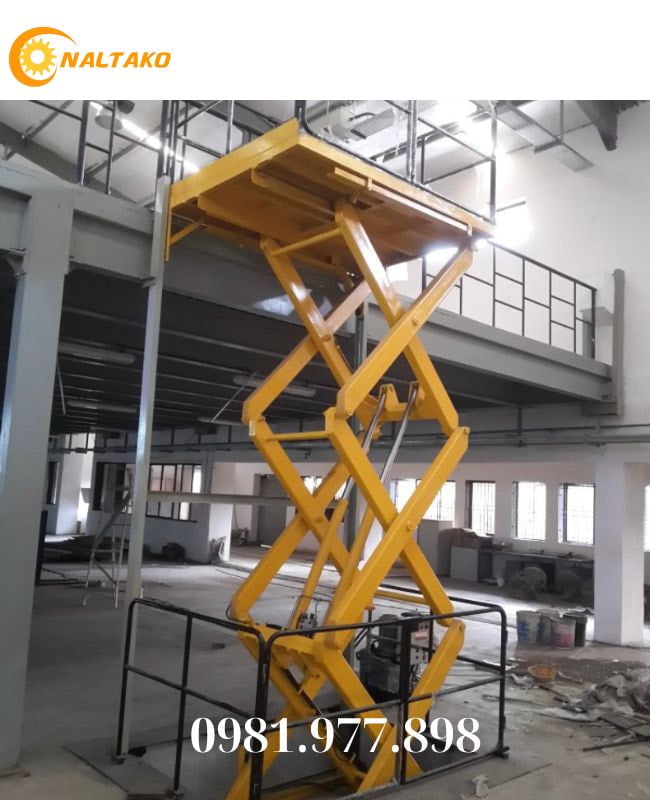
Disadvantage: Scissor lifts require a large space to operate.
See more:
Post Lift (Column type)
2-Post: Simple structure, space optimization, easy to install and operate. Suitable for lifting light and medium-duty goods in industrial environments.
4-Post: With four solid lifting posts, this type of lift ensures higher load capacity, meeting the needs for lifting heavy goods in factories and construction sites.
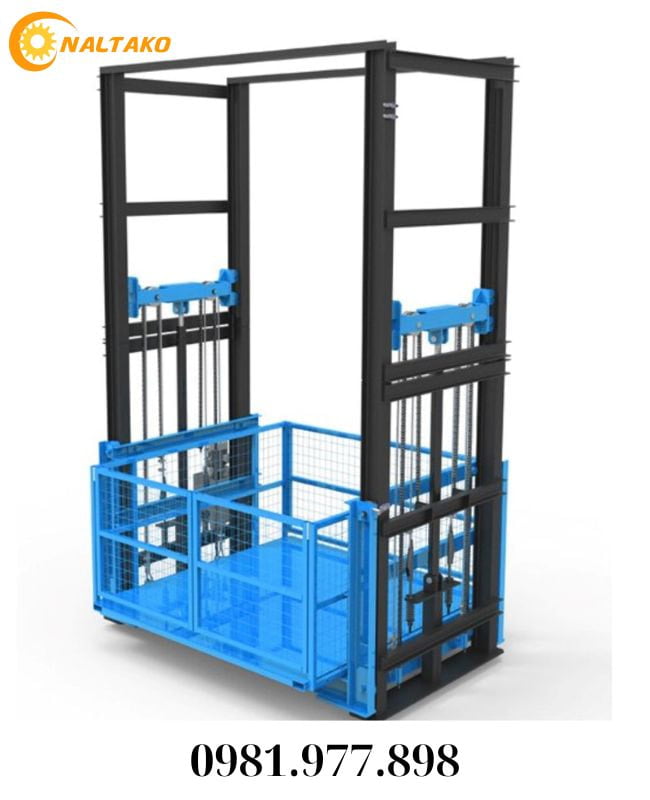
Disadvantage: Less stability compared to scissor lifts, especially when lifting goods at great heights or with heavy loads.
See more: What is a food lift?
Classification by Mobility
Mobile Lift
High mobility, easy to move to different work locations. Battery power allows independent operation, independent of a fixed power source.
Load capacity is usually under 1 ton, suitable for lifting light and medium goods in warehouses and supermarkets.
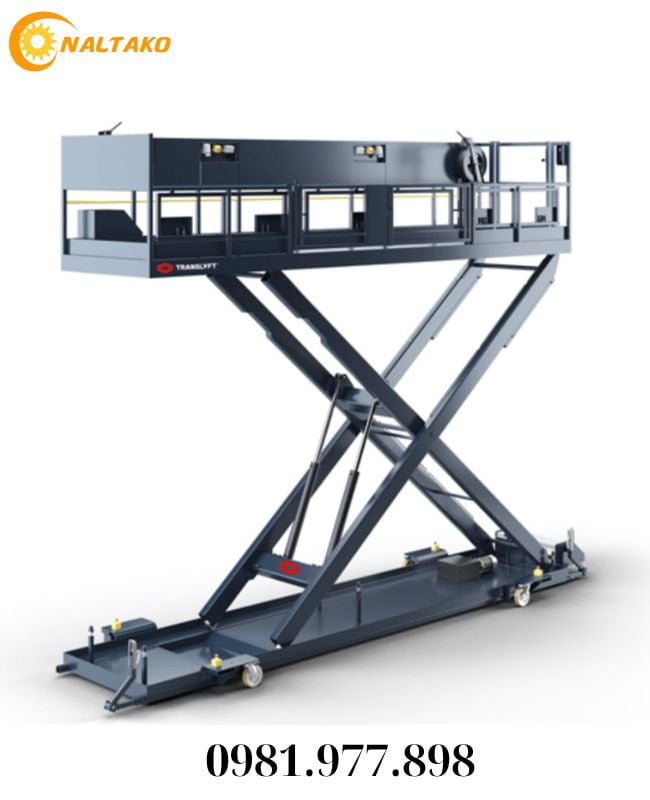
Disadvantage: Small load capacity, less stable.
Reference:
The most accurate technical specifications of hydraulic freight elevators
Stationary Lift
Requires fixed installation into a foundation pit, ensuring stability and high load-bearing capacity.
Powerful capacity, meeting the needs for lifting heavy goods in factories and industrial zones.
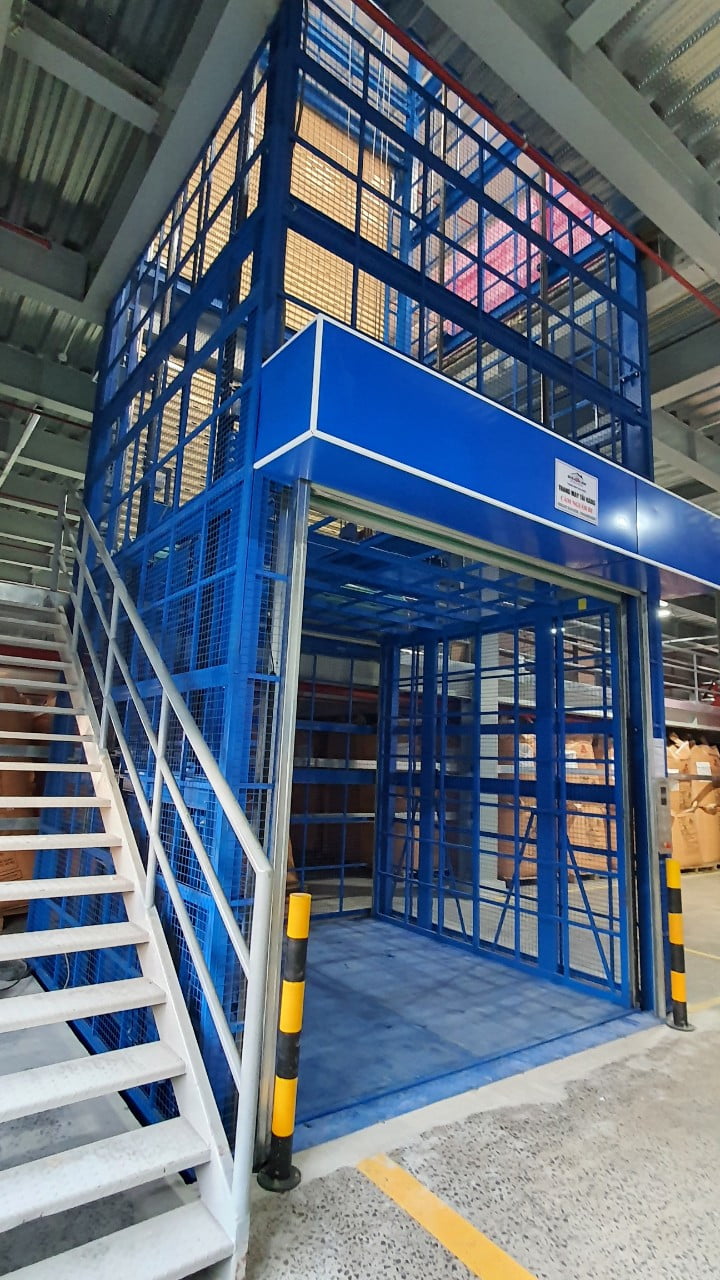
Disadvantage: Requires complex construction and installation, cannot be moved flexibly.
Classification by Control System
Remote Control Lift
Integrated with remote control technology, allowing operators to control the lifting process from a safe distance, enhancing occupational safety.
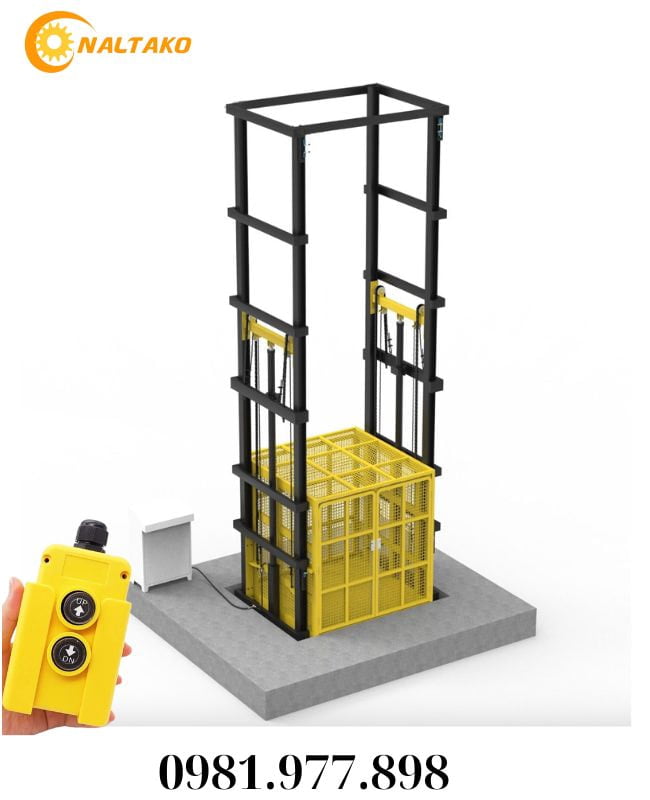
Disadvantage: High cost.
Fixed Control Lift
Uses a control panel mounted directly on the lift, with a user-friendly interface, easy to operate and function.
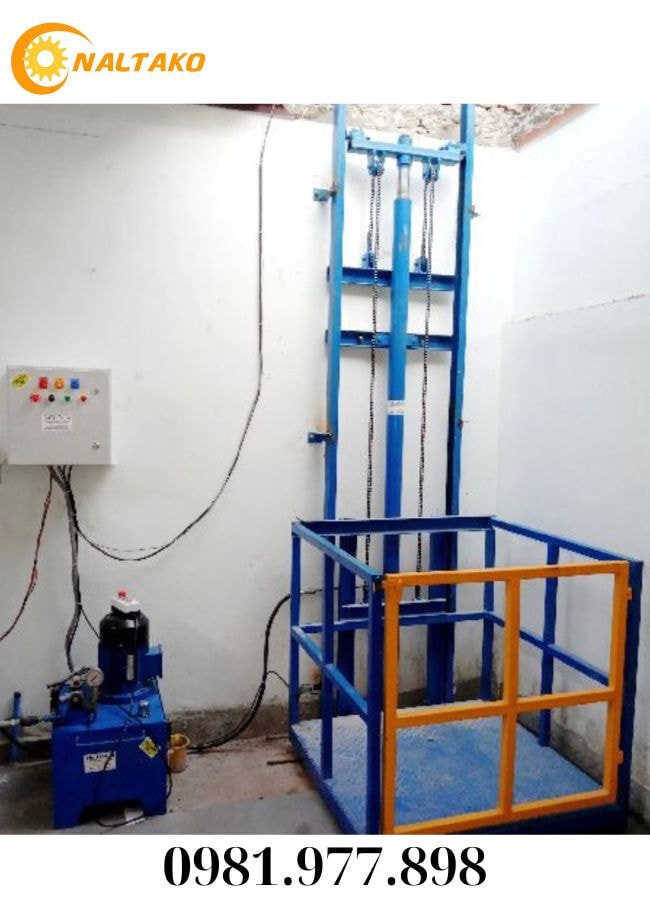
Disadvantage: Manual control operations can be time-consuming and labor-intensive.
Classification by Features
Hydraulic Elevator
Transports both passengers and goods, meeting diverse needs in buildings and commercial centers.
Equipped with many safety features such as emergency braking systems and overload sensors, ensuring maximum safety for users.
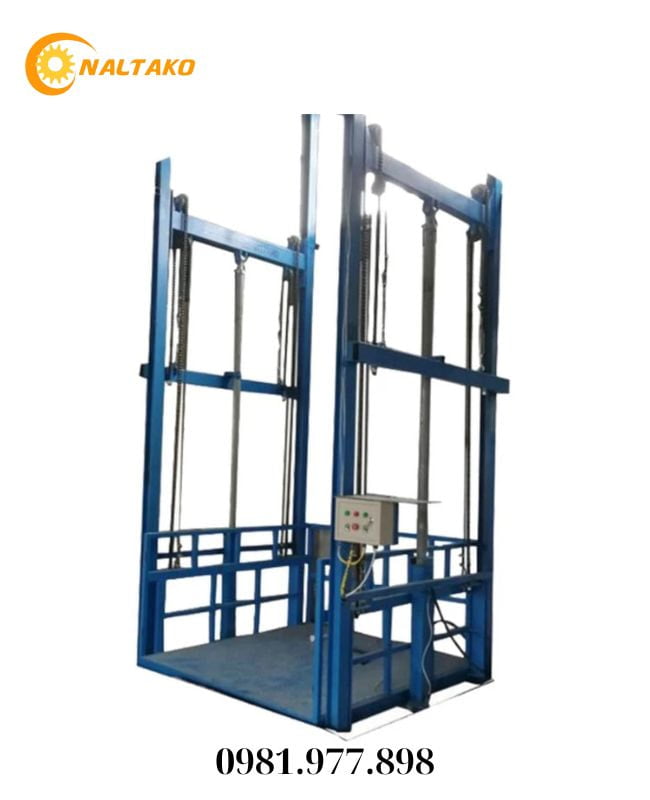
Disadvantage: High cost.
Goods Hoist
Simple design, focused on the function of lifting and lowering goods, optimizing investment costs.
Suitable for lifting construction materials and goods to heights on project sites.
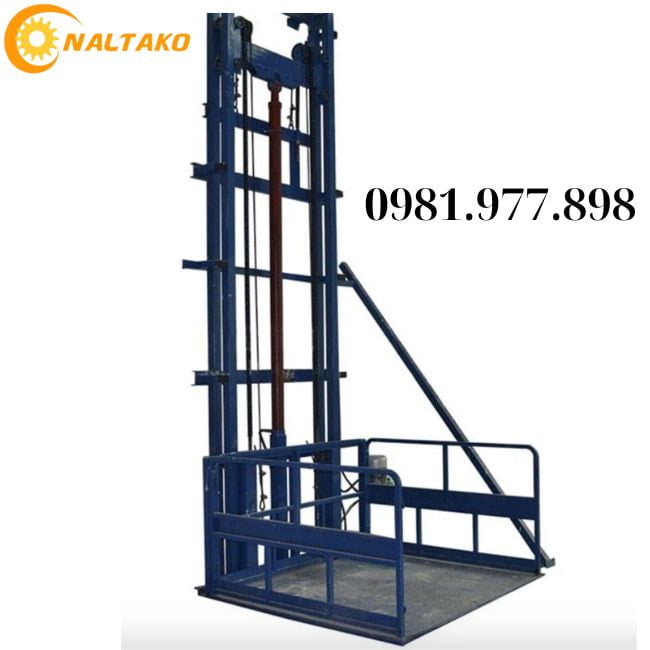
Disadvantage: Poor aesthetics, cannot lift people.
>>> Explore the top 7 reputable freight elevator suppliers
Classification by Load Capacity
Mini Lift
Load capacity under 500kg, suitable for lifting light goods in shops and households.
Affordable price, a cost-saving solution for small and medium enterprises.
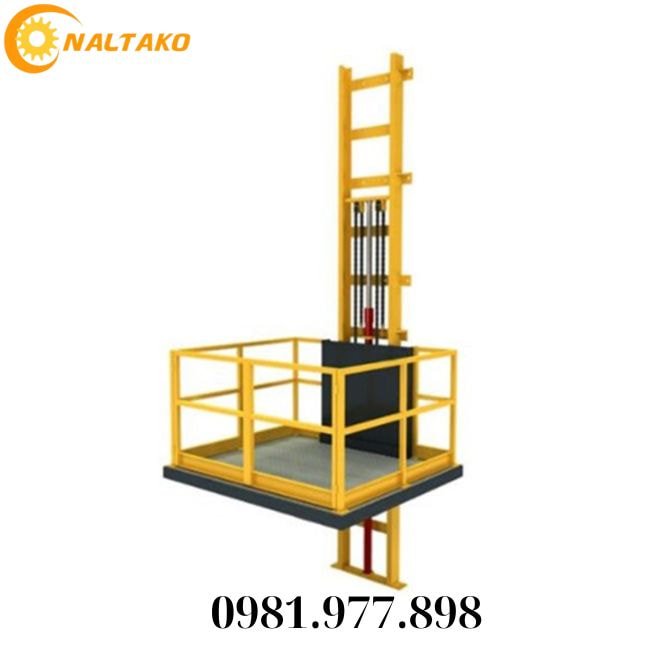
Disadvantage: Small load capacity.
High Capacity Lift
Load capacity over 500kg: Meets the needs for lifting heavy goods in large factories and warehouses.
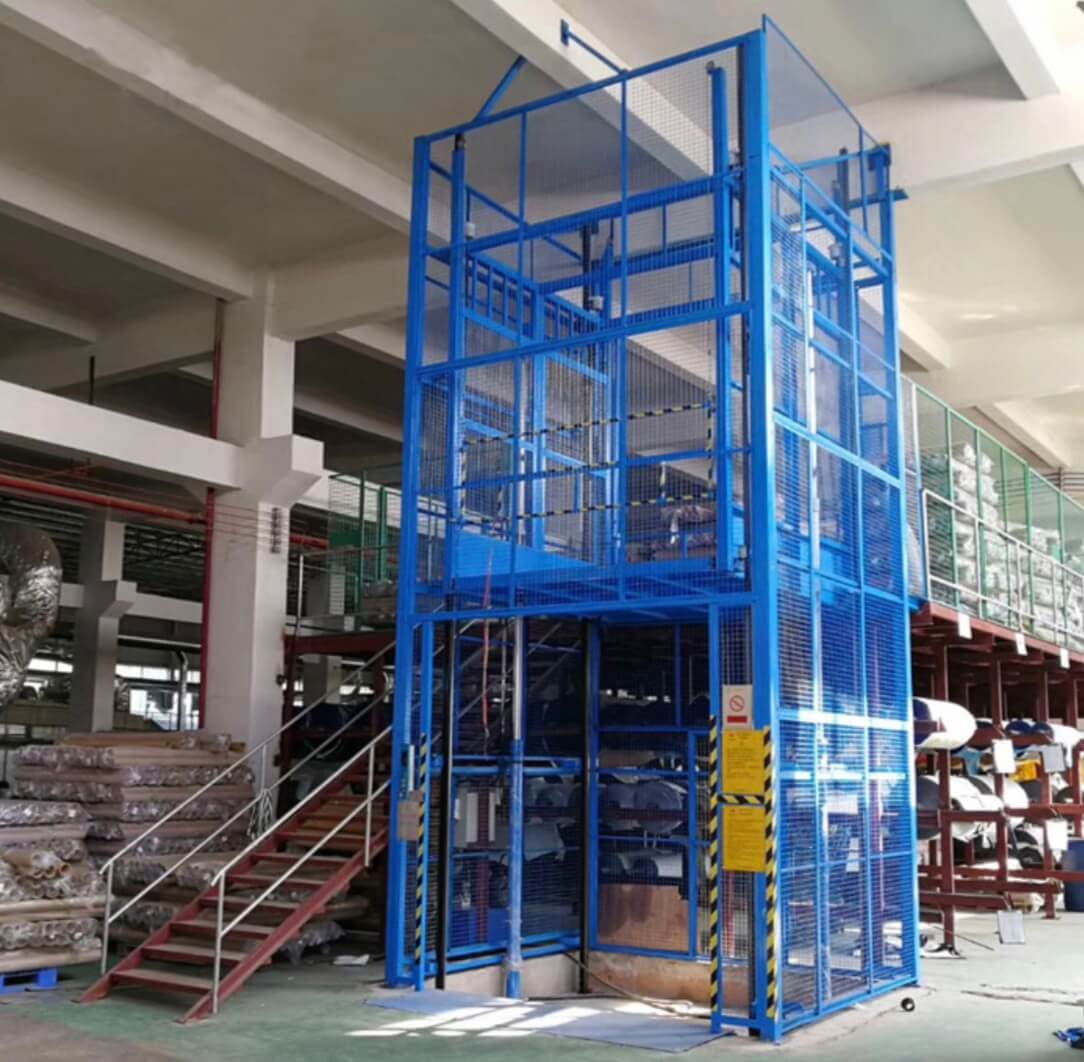
Effective investment: Although the initial investment cost is high, it brings long-term efficiency in optimizing production and logistics processes.
Disadvantage: High cost.
See more:
Who is a Hydraulic Freight Elevator Suitable For?
| Type of Lift | Suitable Target |
Application Field
|
| Scissor Lift (X-type) | Small and medium enterprises, shops, warehouses with limited area. |
Manufacturing, assembly, logistics, retail.
|
| 2-Post Lift | – Shops, small workshops. |
– Manufacturing, assembly, logistics.
|
| 4-Post Lift | – Factories, construction sites. |
– Construction, heavy industry.
|
| Mobile Lift | Businesses needing flexibility in moving goods between different areas. |
Warehouses, supermarkets, distribution centers, manufacturing.
|
| Stationary Lift | Factories, industrial zones needing to lift heavy goods regularly between fixed floors. |
Large-scale manufacturing, processing, logistics.
|
| Remote/Fixed Control Lift | Businesses prioritizing safety and convenience, needing remote control or direct panel operation. |
Manufacturing, logistics, construction.
|
| Hydraulic Elevator | Office buildings, commercial centers, hotels, hospitals. |
Service, commercial, medical.
|
| Goods Hoist | Construction sites, projects needing to lift materials and equipment to heights. |
Construction, industry.
|
| Mini Lift | Small shops, households, offices. |
Retail, service, family.
|
| High Capacity Lift | Factories, large warehouses, seaports. |
Manufacturing, logistics, transportation.
|
Conclusion
Choosing the right type of hydraulic freight elevator is not merely about buying a piece of equipment, but investing in efficiency and safety for your production and business operations. With a variety of types, features, and load capacities, each type of lift has its own unique advantages and applications.
Nội dung có liên quan:
-
 What is a Mechanical Dock Leveler? How does it differ from a Hydraulic Dock Leveler?
Are you looking for a device to support loading and unloading goods from containers to the warehouse floor that is low-cost, highly durable, and easy to in...
What is a Mechanical Dock Leveler? How does it differ from a Hydraulic Dock Leveler?
Are you looking for a device to support loading and unloading goods from containers to the warehouse floor that is low-cost, highly durable, and easy to in...
-
 Safe Working Load in Industrial Lifting and Cargo Handling
In the modern industrial and logistics environment, lifting and cargo handling activities take place continuously with large volumes and high frequencies. ...
Safe Working Load in Industrial Lifting and Cargo Handling
In the modern industrial and logistics environment, lifting and cargo handling activities take place continuously with large volumes and high frequencies. ...
-
 The Differences Between Mechanical Dock Levelers and Hydraulic Dock Levelers
The difference between hydraulic dock levelers and mechanical dock levelers is very clear – Hydraulic dock levelers operate automatically with a push of a ...
The Differences Between Mechanical Dock Levelers and Hydraulic Dock Levelers
The difference between hydraulic dock levelers and mechanical dock levelers is very clear – Hydraulic dock levelers operate automatically with a push of a ...
-
 What Should You Consider When Buying a 700kg Hydraulic Lift Table?
The 700kg hydraulic lift table is a popular tool widely used in production workshops and warehouses. With a lifting capacity of 700kg, this hydraulic lift ...
What Should You Consider When Buying a 700kg Hydraulic Lift Table?
The 700kg hydraulic lift table is a popular tool widely used in production workshops and warehouses. With a lifting capacity of 700kg, this hydraulic lift ...
-
 When Should You Use a 1000kg Hydraulic Lift Table?
Are you running a business in a warehouse or workshop that isn't too large and feeling that work efficiency hasn't reached your expectations? Are you looki...
When Should You Use a 1000kg Hydraulic Lift Table?
Are you running a business in a warehouse or workshop that isn't too large and feeling that work efficiency hasn't reached your expectations? Are you looki...
-
 Advantages of 500kg Manual Lift Tables You Should Know
Are you looking to buy a medium-duty manual hydraulic lift table for home use? Is your work frequency intermittent, and are you looking for a product with ...
Advantages of 500kg Manual Lift Tables You Should Know
Are you looking to buy a medium-duty manual hydraulic lift table for home use? Is your work frequency intermittent, and are you looking for a product with ...
-
 A Guide to Choosing High-Quality Hydraulic Dock Levelers Today
Hydraulic Dock Levelers are among the essential support devices for many fields and industries. Thanks to this product, the transport and storage of goods ...
A Guide to Choosing High-Quality Hydraulic Dock Levelers Today
Hydraulic Dock Levelers are among the essential support devices for many fields and industries. Thanks to this product, the transport and storage of goods ...
-
 The Most Popular Industrial Dock Leveler Models in 2026
In the context of an ever-growing industrial sector, optimizing logistics processes has become more important than ever. One of the indispensable devices f...
The Most Popular Industrial Dock Leveler Models in 2026
In the context of an ever-growing industrial sector, optimizing logistics processes has become more important than ever. One of the indispensable devices f...