

 Tiếng Việt
Motor structure and operating principle
The structure of a motor is the core factor determining the performance and durability of industrial electrical equipment. A motor, or electric motor, is a component that converts electrical energy into mechanical energy, widely used in various fields. Naltako, a leading provider of hydraulic lifting equipment in Vietnam, integrates high-quality motors into products such as scissor lifts, hydraulic lift tables, and freight elevators. The article below will analyze the detailed structure of a motor and how Naltako applies them to ensure optimal operational efficiency.
What are the components of a motor’s structure?
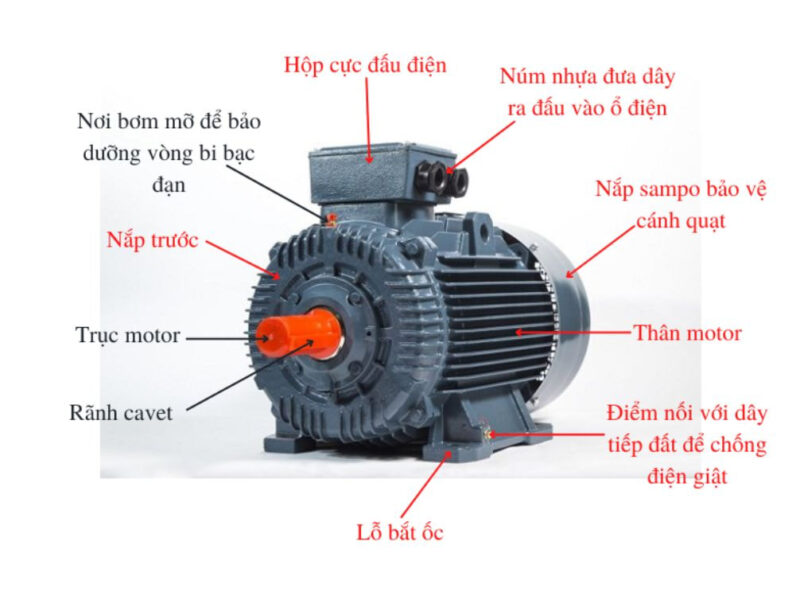
An electric motor is one of the important electrical machinery components, with a basic structure consisting of two main parts: the stationary part (stator) and the rotating part (rotor).
- Stator (stationary part):
- Steel core: Made from thin electrical steel laminations, about 0.35mm – 0.5mm thick, helping to reduce energy loss due to eddy currents.
- Copper windings: Made of copper or aluminum, placed in the slots of the steel core to create a magnetic field when current flows through.
- Frame/Housing: Usually made of aluminum or cast iron, it both protects internal components and supports effective heat dissipation.
- Rotor (rotating part):
- Steel core: Cylindrical, with slots to hold conductors or windings, ensuring stability during rotation.
- Rotor windings: Includes two main types:
- Squirrel cage rotor: Uses cast aluminum bars, short-circuited at both ends, durable and cost-effective.
- Wound rotor: Has windings similar to the stator, supporting flexible speed adjustment.
- Shaft and bearings: Ensures the rotor rotates smoothly, reducing friction during operation.
- Air gap: A small distance between the stator and rotor, usually only a few mm, allowing the rotor to move freely without collision.
How do the stator and rotor of a motor differ?
In an electric motor system, the stator and rotor play different but complementary roles:
- Stator (stationary part): The fixed component responsible for creating a rotating magnetic field thanks to copper windings and current flow. This is the “heart” of the motor, providing the initial energy for operation.
- Rotor (rotating part): The moving part that converts the magnetic field from the stator into mechanical energy through the motor shaft and rotational force.
- Air gap: A small distance, usually about 2-3mm, between the stator and rotor, optimizing drive efficiency and reducing friction.
The difference between the stator and rotor lies in their function: the stator creates the magnetic field, while the rotor converts that magnetic field into mechanical motion. In Naltako devices such as freight elevators, motors are designed with optimized stators and rotors, using thin electrical steel cores to reduce waste and increase lifespan. For example, Naltako’s loading ramps use motors with a 2mm air gap, ensuring smooth and durable operation under high pressure.
How do squirrel cage and wound motors differ?
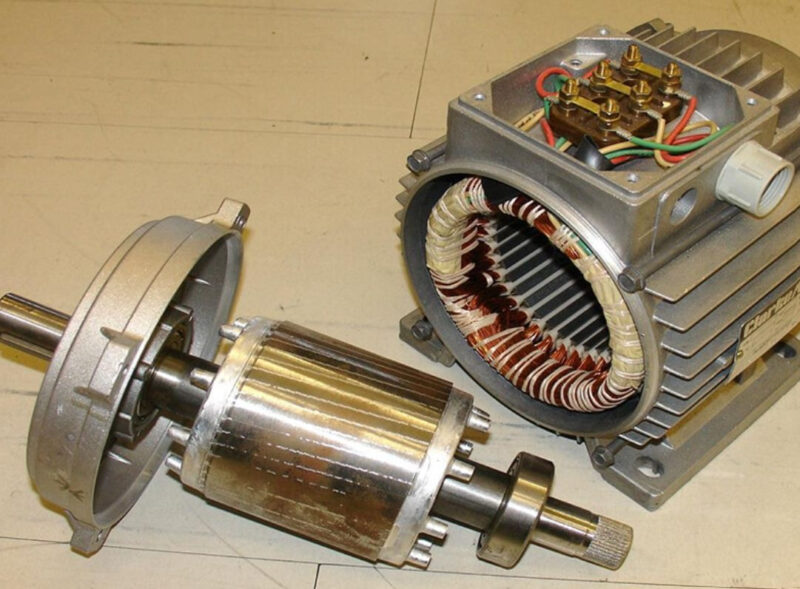
When referring to rotor types in motors, the two most common types are squirrel cage motors and wound rotor motors:
- Squirrel cage motor:
- The rotor has aluminum bars cast into slots, short-circuited at both ends, often with cooling fan blades.
- Advantages: Simple, durable, low cost, suitable for heavy industrial applications.
- Applications: Commonly found in devices that do not require speed adjustment.
- Wound rotor motor:
- The rotor has windings similar to the stator, connected via slip rings to adjust speed.
- Advantages: Flexible, suitable for applications requiring precise control.
- Disadvantages: More complex, higher cost.
Naltako selects squirrel cage motors for products like loading ramps due to their durability and cost-efficiency. Meanwhile, wound rotor motors are integrated into discharging lift tables, allowing for flexible lifting speed adjustment according to needs. This choice helps Naltako meet diverse requirements from customers in the industrial electrical equipment industry.
What is the operating principle of an electric motor?

The operating principle of an electric motor is based on electromagnetic phenomena:
- Electric current flowing through the stator windings creates a rotating magnetic field.
- This magnetic field interacts with the rotor windings, generating rotational force (torque).
- As a result, the rotor rotates, converting electrical energy into mechanical energy through a mechanical drive system.
This process is optimized thanks to a small rotor-stator air gap and a stator steel core that reduces energy loss. In Naltako products, such as mini cranes, 3-phase motors utilize alternating current to create a stable magnetic field, ensuring smooth operation under heavy loads. The motor efficiency in Naltako equipment reaches over 90%, helping to save energy and increase durability.
What is Pascal’s Law? Applications of Pascal’s Law in industry
What are the popular types of motors today?
Currently, there are many types of motors used in electrical control systems, including:
- Single-phase motor: Suitable for household appliances like fans and washing machines.
- 3-phase motor: High efficiency, common in industry, used in hydraulic hand pallet trucks.
- Synchronous motor: Constant speed, used for precision applications.
- Asynchronous motor: Also known as an induction motor, accounting for the majority in industry.
- DC motor: Used when flexible speed adjustment is needed.
- Stepper motor: Applied in precision positioning like 3D printers.
Naltako integrates 3-phase motors into hydraulic hand pallet trucks to ensure power and efficiency, while asynchronous motors are used for hydraulic lift tables, meeting the needs for continuous lifting. This diversity helps Naltako provide suitable solutions for each industrial sector.
Partner with Naltako to own high-quality lifting equipment! Contact us at 0981.977.898 today!
Nội dung có liên quan:
-
 What is a Mechanical Dock Leveler? How does it differ from a Hydraulic Dock Leveler?
Are you looking for a device to support loading and unloading goods from containers to the warehouse floor that is low-cost, highly durable, and easy to in...
What is a Mechanical Dock Leveler? How does it differ from a Hydraulic Dock Leveler?
Are you looking for a device to support loading and unloading goods from containers to the warehouse floor that is low-cost, highly durable, and easy to in...
-
 Popular Types of Hydraulic Freight Elevators Today
The role of hydraulic freight elevators in warehouses, production workshops, or construction sites is indisputable. However, the types of hydraulic freight...
Popular Types of Hydraulic Freight Elevators Today
The role of hydraulic freight elevators in warehouses, production workshops, or construction sites is indisputable. However, the types of hydraulic freight...
-
 Safe Working Load in Industrial Lifting and Cargo Handling
In the modern industrial and logistics environment, lifting and cargo handling activities take place continuously with large volumes and high frequencies. ...
Safe Working Load in Industrial Lifting and Cargo Handling
In the modern industrial and logistics environment, lifting and cargo handling activities take place continuously with large volumes and high frequencies. ...
-
 The Differences Between Mechanical Dock Levelers and Hydraulic Dock Levelers
The difference between hydraulic dock levelers and mechanical dock levelers is very clear – Hydraulic dock levelers operate automatically with a push of a ...
The Differences Between Mechanical Dock Levelers and Hydraulic Dock Levelers
The difference between hydraulic dock levelers and mechanical dock levelers is very clear – Hydraulic dock levelers operate automatically with a push of a ...
-
 What Should You Consider When Buying a 700kg Hydraulic Lift Table?
The 700kg hydraulic lift table is a popular tool widely used in production workshops and warehouses. With a lifting capacity of 700kg, this hydraulic lift ...
What Should You Consider When Buying a 700kg Hydraulic Lift Table?
The 700kg hydraulic lift table is a popular tool widely used in production workshops and warehouses. With a lifting capacity of 700kg, this hydraulic lift ...
-
 When Should You Use a 1000kg Hydraulic Lift Table?
Are you running a business in a warehouse or workshop that isn't too large and feeling that work efficiency hasn't reached your expectations? Are you looki...
When Should You Use a 1000kg Hydraulic Lift Table?
Are you running a business in a warehouse or workshop that isn't too large and feeling that work efficiency hasn't reached your expectations? Are you looki...
-
 Advantages of 500kg Manual Lift Tables You Should Know
Are you looking to buy a medium-duty manual hydraulic lift table for home use? Is your work frequency intermittent, and are you looking for a product with ...
Advantages of 500kg Manual Lift Tables You Should Know
Are you looking to buy a medium-duty manual hydraulic lift table for home use? Is your work frequency intermittent, and are you looking for a product with ...
-
 A Guide to Choosing High-Quality Hydraulic Dock Levelers Today
Hydraulic Dock Levelers are among the essential support devices for many fields and industries. Thanks to this product, the transport and storage of goods ...
A Guide to Choosing High-Quality Hydraulic Dock Levelers Today
Hydraulic Dock Levelers are among the essential support devices for many fields and industries. Thanks to this product, the transport and storage of goods ...