

 Tiếng Việt
Manual Permanent Magnetic Lifters: Features and Applications
Manual permanent magnetic lifters are an effective solution for lifting and moving metal materials in industrial settings. Although Naltako does not supply magnetic lifters, we offer equipment such as hydraulic lift tables, mini cranes, and freight elevators to optimally support your lifting needs. This article provides detailed information about manual magnetic lifters and how to combine them with Naltako equipment. Explore now to find the right solution!
What Is a Manual Permanent Magnetic Lifter?
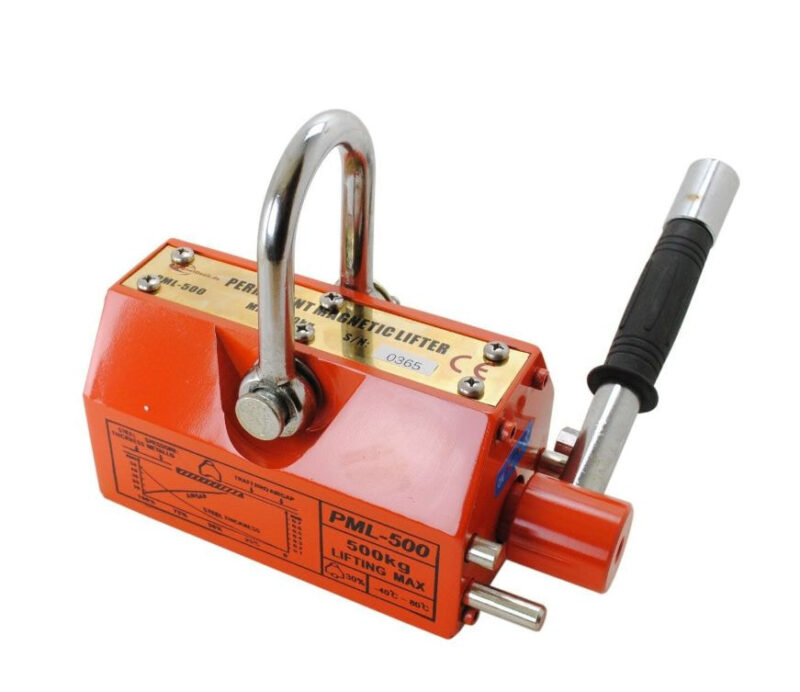
A manual permanent magnetic lifter is a device used to lift metal materials (iron, steel, plates, pipes) using magnetic force without the need for a power source. Made from neodymium rare earth magnets and a corrosion-resistant alloy shell, the device features a manual lever to switch the magnetism on/off and a lifting hook to connect with hoists or mini cranes. With a compact design that requires only one operator, magnetic lifters are suitable for heavy industry, construction, and seaports. Lifting capacities range from 100kg to 10 tons, meeting industrial standards to ensure safety and efficiency.
Key Features of Manual Permanent Magnetic Lifters
Manual magnetic lifters stand out due to the strong magnetic force from neodymium magnets, allowing for the lifting of heavy metal materials without electricity. The manual lever ON/OFF mechanism ensures safety and ease of use. Compared to lifting chains, magnets reduce the risk of breakage and do not require frequent maintenance. Compared to steel cables, this device is more compact and requires only one operator. The flat or V-shaped magnetic surface is suitable for lifting plates, pipes, or steel coils.
Common load capacities range from 600kg to 5 tons, featuring permanent magnetic force and a 1-year warranty. Naltako provides tilting lift tables and hydraulic pallet trucks to support efficient operations when combined with magnetic lifters, especially in harsh industrial environments.
Applications of Manual Permanent Magnetic Lifters
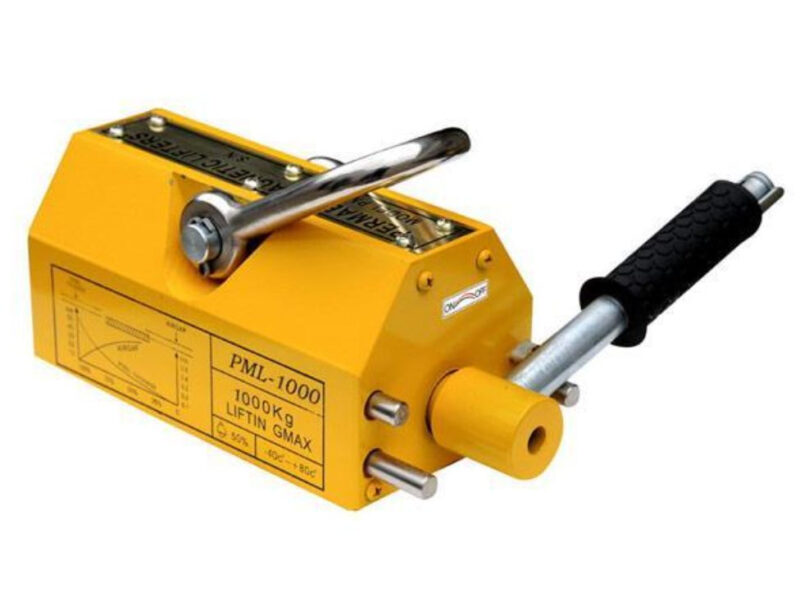
Manual magnetic lifters are widely used in steel plants, seaports, and construction. A 1-ton magnet can lift steel plates 10-50mm thick, while 2-3 ton magnets handle steel coils effectively. The device replaces lifting chains for moving plates, pipes, or metal machinery, making it ideal for harsh industrial environments. Its flexibility allows it to be combined with Naltako’s hoists or mini cranes, ensuring safety and saving time.
How to Choose a Manual Permanent Magnetic Lifter
To choose the right magnetic lifter, consider the following:
- Capacity: 600kg magnets for thin plates, 2 tons for steel coils.
- Material type: Flat surface for plates, V-shape for pipes or coils.
- Material surface: Must be clean, rust-free, with a gap <1mm to ensure magnetic force.
- Origin: Choose DBK PML models that meet industrial safety standards.
Frequently Asked Questions About Magnetic Lifters
- What is a manual permanent magnetic lifter and how does it work?
It is a device that lifts metal using the magnetic force of neodymium magnets, switched on/off via a manual lever, requiring no electricity. - What are magnetic lifters used for?
They are used to lift plates, pipes, and steel coils in factories, seaports, and construction, replacing traditional lifting chains. - How much does a manual magnetic lifter cost?
Prices range from 5-20 million VND, depending on the capacity from 100kg to 10 tons. - How to use a magnetic lifter safely?
Ensure the surface is clean, the gap is <1mm, check the lever before lifting, and never exceed the load capacity. - What are the advantages of magnets over chains?
No electricity needed, safer, more compact, reduced maintenance, though it only lifts magnetic metals.
Contact us via email at info@naltako.vn for detailed answers from Naltako regarding lifting equipment!
Nội dung có liên quan:
-
 What is a Piston? Structure and Operating Principle
If you work in the repair and installation of industrial equipment, you have surely heard terms such as: steam engines, internal combustion engines, etc. A...
What is a Piston? Structure and Operating Principle
If you work in the repair and installation of industrial equipment, you have surely heard terms such as: steam engines, internal combustion engines, etc. A...
-
 Hydraulic Oil Radiators – Oil Coolers for Hydraulic Systems
What solution will support you in the process of cooling and cleaning hydraulic oil? That is using a hydraulic oil cooler immediately. However, each system...
Hydraulic Oil Radiators – Oil Coolers for Hydraulic Systems
What solution will support you in the process of cooling and cleaning hydraulic oil? That is using a hydraulic oil cooler immediately. However, each system...
-
 Compressed Air Filters: Construction, Working Principle, and Classification
Compressed air filters are a common and essential device, designed to effectively remove impurities and dirt that may exist in compressed air, helping you ...
Compressed Air Filters: Construction, Working Principle, and Classification
Compressed air filters are a common and essential device, designed to effectively remove impurities and dirt that may exist in compressed air, helping you ...
-
 Piston Pumps: Definition, Classification, Applications, and Pricing
If vane pumps or hydraulic gear pumps are selected for low-pressure systems, the hydraulic piston pump line is designed for high-pressure machinery requiri...
Piston Pumps: Definition, Classification, Applications, and Pricing
If vane pumps or hydraulic gear pumps are selected for low-pressure systems, the hydraulic piston pump line is designed for high-pressure machinery requiri...
-
 What is a Gear Hydraulic Pump? Structure and Classification
With a simple structure, convenient assembly and operation, and the ability to withstand heavy loads for a specific duration, gear hydraulic pumps are wide...
What is a Gear Hydraulic Pump? Structure and Classification
With a simple structure, convenient assembly and operation, and the ability to withstand heavy loads for a specific duration, gear hydraulic pumps are wide...
-
 Hydraulic Pumps
In today's industries, from high-rise buildings to manufacturing plants, hydraulic pumps play a crucial role. This component helps devices such as yard ram...
Hydraulic Pumps
In today's industries, from high-rise buildings to manufacturing plants, hydraulic pumps play a crucial role. This component helps devices such as yard ram...
-
 Hydraulic Seals: Classification, Installation & Replacement
Hydraulic seals are vital components in a hydraulic system, yet not everyone fully understands them. If you are looking for information on seal types, inst...
Hydraulic Seals: Classification, Installation & Replacement
Hydraulic seals are vital components in a hydraulic system, yet not everyone fully understands them. If you are looking for information on seal types, inst...
-
 Grating Flooring (Galvanized Steel Grating): Features, Applications, and Quotes
What is Grating Flooring?
Grating flooring (also known as galvanized steel grating or grating panels) is a type of floor formed from load-bearing steel ba...
Grating Flooring (Galvanized Steel Grating): Features, Applications, and Quotes
What is Grating Flooring?
Grating flooring (also known as galvanized steel grating or grating panels) is a type of floor formed from load-bearing steel ba...