

 Tiếng Việt
Things You Need to Know About Hydraulic Lifting Equipment Standards
In the modern industrial context, hydraulic lifting equipment plays a pivotal role in transporting goods. To ensure safety, quality, and performance, these devices must comply with strict standards. This article will help you clearly understand what hydraulic lifting equipment standards are and the importance of hydraulic lifting equipment standards. Naltako is committed to providing only products of the highest standard.
What are hydraulic lifting equipment standards?
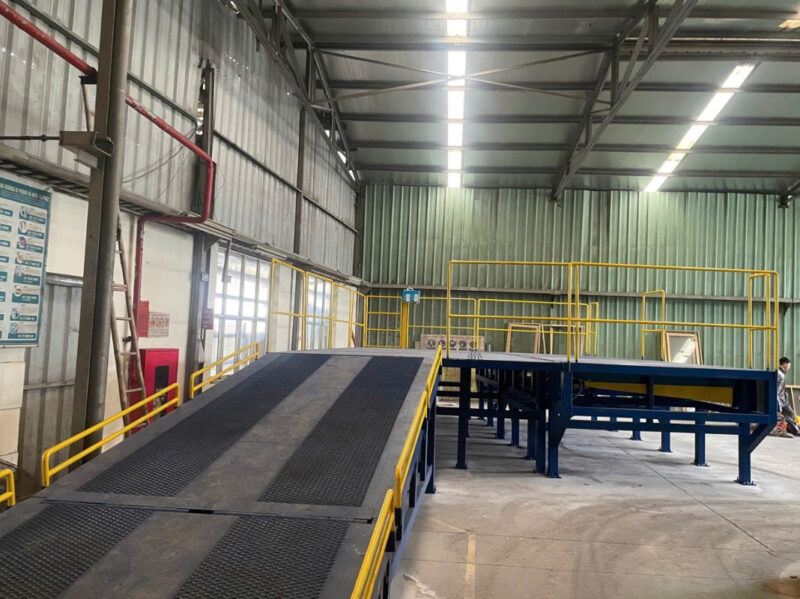
Hydraulic lifting equipment standards are a collection of regulations. They include technical and safety requirements. These regulations apply to design, manufacturing, installation, and operation. The purpose is to ensure the equipment operates safely and durably. These standards are established by international and national organizations, such as ISO (International Organization for Standardization), EN (European Standards), and TCVN (Vietnam Standards).
These standards typically cover the following aspects:
- Design and structure: Requirements for materials, thickness, welds, and load-bearing parts. The equipment must be strong enough to withstand maximum loads. A high safety factor is required to prevent incidents.
- Hydraulic system: Standards for hydraulic oil quality, valves, cylinders, and hoses. The system must ensure smooth, precise, and leak-free operation. Safety valves must operate effectively.
- Control system: Requirements for control components. They must be easy to use and highly sensitive. Emergency stop buttons must be clearly arranged. They need to be easily accessible to handle dangerous situations.
- Safety and protection: Standards for safety systems, such as overload protection, safety locks, and protective devices. They aim to protect operators and goods.
- Testing and certification: Requirements for testing procedures. All equipment must undergo rigorous tests. Afterward, they need to be certified as meeting standards.
Adherence to hydraulic lifting equipment standards is not just about complying with legal regulations. It is also a commitment to quality and safety.
Some current hydraulic lifting equipment standards
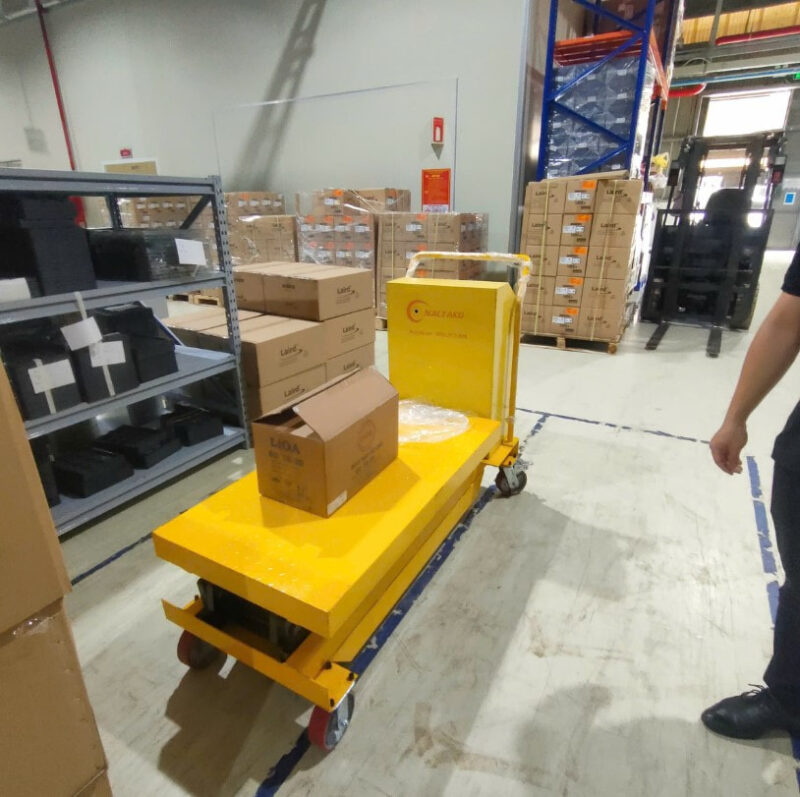
National Standards (TCVN)
- TCVN 4244:2005 – Lifting appliances: Design, construction, and technical survey. This is the most important national standard, specifying general safety requirements for the design, manufacture, and technical inspection of various types of lifting equipment, including those using hydraulic systems. This standard serves as the basis for assessing product quality and safety.
- TCVN 5179:1990 – Lifting machines: Hydraulic test requirements for safety. This standard focuses on requirements for inspecting and testing the hydraulic systems of lifting machines after manufacture and assembly to ensure operational safety.
- TCVN 5206:1990 – Lifting machines: Safety requirements for counterweights and loads. This standard addresses safety requirements regarding the use of counterweights and loads, ensuring the equipment operates stably and does not overturn.
- TCVN 4755:1989 – Cranes: Safety requirements for hydraulic equipment. This standard applies specifically to cranes, providing specific safety requirements for hydraulic systems.
National Technical Regulations (QCVN)
- QCVN 7:2012/BLĐTBXH – National technical regulation on occupational safety for lifting appliances. This regulation sets minimum technical requirements and rules for occupational safety management in the manufacture, import, installation, and use of lifting equipment. This is a mandatory regulation that businesses must comply with.
- QCVN 20:2015/BLĐTBXH – National technical regulation on occupational safety for hydraulic lift platforms used for lifting people. This regulation is dedicated to personnel lifting platforms, ensuring safety in specific environments such as construction and manufacturing.
International Standards
Imported equipment often must comply with international standards such as ISO (International Organization for Standardization) and EN (European Standards). For example, some documents refer to ISO 18893:2004 regarding safety principles, inspection, maintenance, and operation of mobile elevating work platforms.
>>> Safety regulations for operating hydraulic lifting equipment
Are hydraulic lifting equipment standards important?
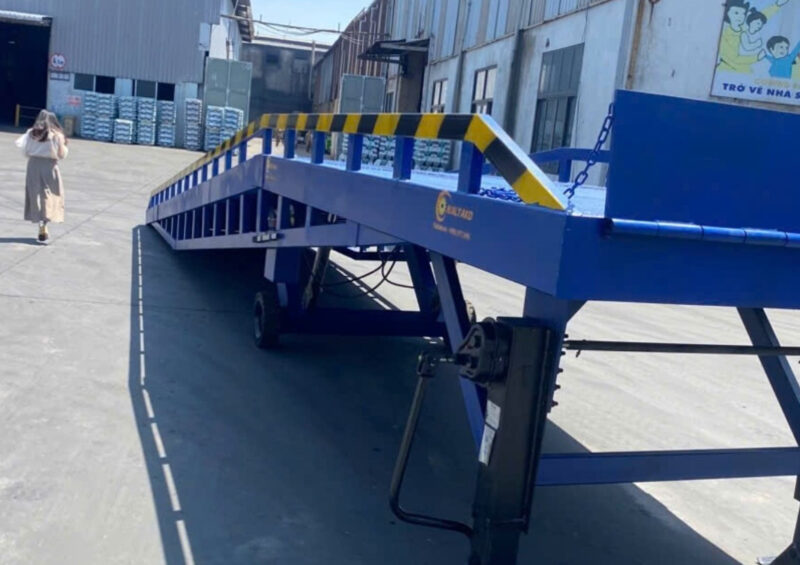
The answer is YES, and very important. Complying with these standards brings immense benefits. It directly impacts your safety and business efficiency.
Ensuring occupational safety
Safety is the most important benefit. Hydraulic lifting equipment standards are established to minimize risks. Regulations on overload protection systems, safety valves, and emergency stop buttons help protect operators. They help prevent serious accidents. A compliant device will give you peace of mind. It creates a safer working environment.
Compliance with laws and regulations
Most countries have strict regulations. These regulations relate to occupational safety and industrial equipment. Using equipment like container loading ramps that do not meet standards can lead to legal consequences. Businesses may face heavy fines. They could even be banned from operating. Therefore, compliance with standards is mandatory.
Enhancing product quality and durability
These standards require the use of high-quality materials. Manufacturing processes must be strictly followed. Compliant equipment usually has a longer lifespan. They encounter fewer technical issues. This helps reduce maintenance and repair costs.
Optimizing work performance
A standard-compliant device will operate more efficiently. Precise control systems and smooth operation help save time. The working speed of employees is improved. Consequently, the overall productivity of the warehouse is enhanced. This is a key factor helping businesses stay competitive.
Increasing reputation and brand value
Using international standard equipment demonstrates professionalism. It shows the business’s concern for quality. This helps enhance reputation in the eyes of customers and partners.
Conclusion
Hydraulic lifting equipment standards are not just a set of regulations. They are a compass for the sustainable development of a business. Investing in compliant equipment is a wise decision. It is the foundation for a safe and efficient working environment. At Naltako, we are proud to be your trusted partner. We are committed to bringing the highest quality hydraulic lifting equipment. All our products comply with rigorous standards. We are always ready to advise and support you. Let’s build a safe and efficient future with Naltako.
Nội dung có liên quan:
-
 Should You Use a Mini Hydraulic Lift Table?
A lift table is a very useful device for warehouses and workshops. They are used to transport goods as quickly as possible. Among the many types of lift ta...
Should You Use a Mini Hydraulic Lift Table?
A lift table is a very useful device for warehouses and workshops. They are used to transport goods as quickly as possible. Among the many types of lift ta...
-
 Choosing Between Hydraulic Dock Levelers or Forklift Ramps for Cargo Handling?
Currently in Vietnam, businesses are applying many different methods to carry out import and export operations. Some businesses continue to follow traditio...
Choosing Between Hydraulic Dock Levelers or Forklift Ramps for Cargo Handling?
Currently in Vietnam, businesses are applying many different methods to carry out import and export operations. Some businesses continue to follow traditio...
-
 What is a Loading Dock? What does a Loading Dock system include?
Is your business facing difficulties in transporting goods? Is loading and unloading taking too much time and increasing costs? Have you researched solutio...
What is a Loading Dock? What does a Loading Dock system include?
Is your business facing difficulties in transporting goods? Is loading and unloading taking too much time and increasing costs? Have you researched solutio...
-
 Hydraulic Cylinder Structure, Specifications, and Operating Principles
Hydraulic cylinders, also known as hydraulic rams, are one of the most critical components in a hydraulic system. They have the ability to convert hydrauli...
Hydraulic Cylinder Structure, Specifications, and Operating Principles
Hydraulic cylinders, also known as hydraulic rams, are one of the most critical components in a hydraulic system. They have the ability to convert hydrauli...
-
 Differences Between Freight Elevators and Goods Hoists
Choosing between a freight elevator and a goods hoist is always a difficult puzzle for many businesses. Understanding this, Naltako will help you solve the...
Differences Between Freight Elevators and Goods Hoists
Choosing between a freight elevator and a goods hoist is always a difficult puzzle for many businesses. Understanding this, Naltako will help you solve the...
-
 Hydraulics: Concept, Structure, and Basic Operating Principles
Hydraulics is a vital technology, widely used in modern life. From industrial machinery like dock levelers to vehicles, this system plays an indispensable ...
Hydraulics: Concept, Structure, and Basic Operating Principles
Hydraulics is a vital technology, widely used in modern life. From industrial machinery like dock levelers to vehicles, this system plays an indispensable ...
-
 Dock Shelter and Dock Leveler: The Perfect Combination for Your Warehouse
Is your warehouse operating inefficiently, with high risks of cargo damage and low productivity? Don't worry, the optimal solution is here! The combination...
Dock Shelter and Dock Leveler: The Perfect Combination for Your Warehouse
Is your warehouse operating inefficiently, with high risks of cargo damage and low productivity? Don't worry, the optimal solution is here! The combination...
-
 What is a Raised Floor? What are the components of its structure?
Raised floors, hydraulic dock levelers, and access floors are popular types of flooring widely used in modern construction engineering today. To learn deta...
What is a Raised Floor? What are the components of its structure?
Raised floors, hydraulic dock levelers, and access floors are popular types of flooring widely used in modern construction engineering today. To learn deta...