

 Tiếng Việt
Guide to Selecting the Right Goods Lifting Equipment
Goods lifting equipment is an indispensable tool in warehouse equipment, helping to lift, lower, and transport goods efficiently in factories, seaports, and construction sites. With the ability to optimize logistics equipment processes, various types of forklifts suit all operational needs. Naltako, specializing in providing forklift ramps, offers high-quality goods lifting solutions. The article below will provide detailed information about goods lifting equipment and how to choose the right device.
What Is Goods Lifting Equipment, and Which Types Are Popular?
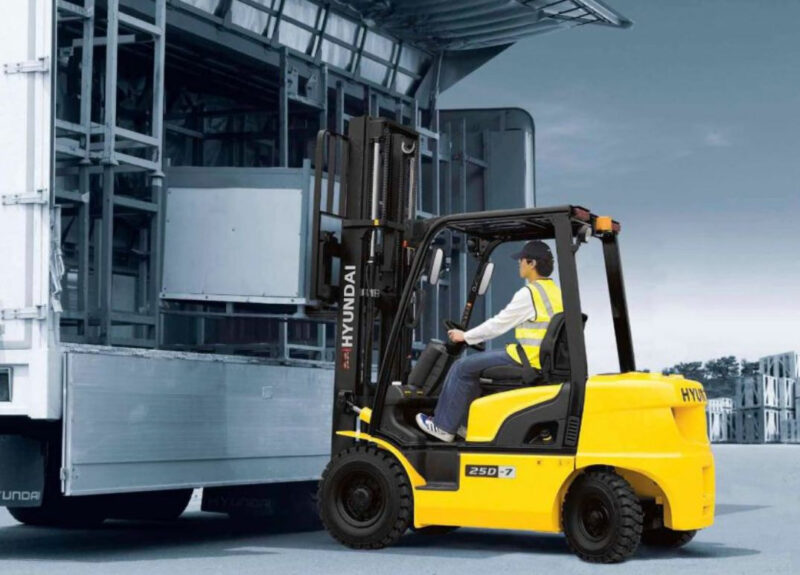
Goods lifting equipment refers to industrial lifting devices used to lift, lower, and move heavy goods within freight transport operations. They help save manual labor, increase productivity, and optimize warehouse space. Popular types include:
- Hand pallet trucks: Including low-profile hand pallet trucks and high hand stackers, with load capacities from 400kg to 3 tons, lifting heights up to 3.5m, suitable for small warehouses.
- Electric forklifts: Environmentally friendly, load capacity of 1-5 tons, used in enclosed warehouses.
- Diesel forklifts: Large capacity, load capacity of 1-30 tons, ideal for construction sites and seaports.
- Counterbalance forklifts: Balance the load, ensuring stability when lifting heavy goods.
- Heavy-duty forklifts: Lift 10-46 tons, used in heavy industry.
How to Choose the Right Forklift for Your Needs?
To choose suitable goods lifting equipment, you need to consider:
- Lifting capacity: Electric forklifts are suitable for 1-5 tons, diesel forklifts for 1-30 tons.
- Lifting height: High hand stackers reach 3.5m, suitable for small warehouses; electric forklifts reach 6-8m.
- Working environment: Electric forklifts are used in enclosed warehouses, diesel forklifts for outdoors.
- Warehouse space: Hydraulic hand pallet trucks are flexible in narrow spaces.
- Maintenance cost: Electric forklifts are more fuel-efficient than diesel ones.
Choosing the right forklift helps increase warehouse efficiency by 25%. For example, cold storages should choose electric forklifts to reduce emissions. Naltako provides forklift ramps to support container transportation.
How Do Electric and Diesel Forklifts Differ?
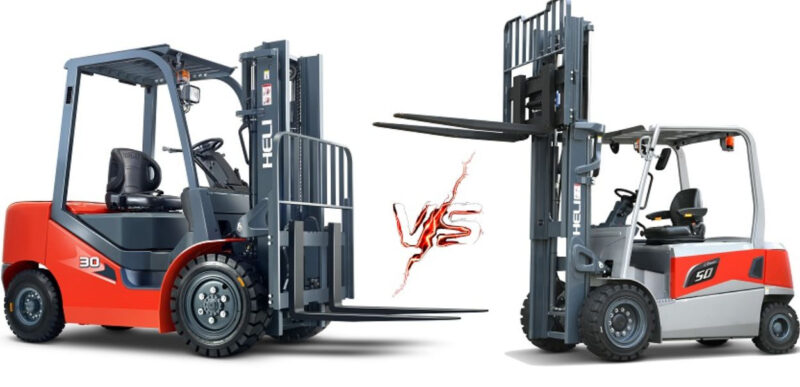
Electric and diesel forklifts have distinct differences:
- Electric forklifts:
- Advantages: Environmentally friendly, quiet operation, use fast-charging lithium-ion batteries with a long lifespan. Suitable for enclosed warehouses, load capacity of 1-5 tons.
- Disadvantages: High initial investment cost, dependent on charging stations.
- Diesel forklifts:
- Advantages: Large capacity, load capacity of 1-30 tons, operate well outdoors thanks to internal combustion engines.
- Disadvantages: Emit exhaust gases, noisy, higher fuel costs.
For example, electric forklifts are ideal for food warehouses, while diesel forklifts are suitable for seaports. Naltako provides scissor lifts, supporting goods lifting at heights in enclosed warehouses.
How Many Kilograms Can a High Hand Stacker Lift?
The high hand stacker, belonging to the manual pallet truck line, is a device that uses a hydraulic system to lift goods onto shelves or containers. Characteristics:
- Load capacity: From 400kg to 3 tons, suitable for small and medium enterprises.
- Lifting height: Up to 3.5m, ideal for small warehouses or container stacking.
- Applications: Used in warehouses, retail stores, and pallet transportation.
This equipment is easy to use, has low maintenance costs, and helps save 20% of loading and unloading time.
Do You Need a License to Operate a Forklift?

Operating goods lifting equipment requires operational safety compliance:
- Operation certificate: According to Circular 05/2020/TT-BLDTBXH, forklift drivers must hold a safety training certificate.
- Equipment inspection: Check the lifting forks, brakes, and forklift sensor systems before use.
- Technical compliance: Do not overload, move slowly (under 10km/h), and keep goods low while moving.
- Periodic maintenance: Detect damages early to prevent accidents.
Safety helps reduce warehouse accident risks by 30%. Naltako provides mini cranes and tilting lift tables integrated with modern safety features. Contact Naltako at 0981.977.898 for consultations on safe and high-quality lifting equipment!
Nội dung có liên quan:
-
 Should You Use a Mini Hydraulic Lift Table?
A lift table is a very useful device for warehouses and workshops. They are used to transport goods as quickly as possible. Among the many types of lift ta...
Should You Use a Mini Hydraulic Lift Table?
A lift table is a very useful device for warehouses and workshops. They are used to transport goods as quickly as possible. Among the many types of lift ta...
-
 Choosing Between Hydraulic Dock Levelers or Forklift Ramps for Cargo Handling?
Currently in Vietnam, businesses are applying many different methods to carry out import and export operations. Some businesses continue to follow traditio...
Choosing Between Hydraulic Dock Levelers or Forklift Ramps for Cargo Handling?
Currently in Vietnam, businesses are applying many different methods to carry out import and export operations. Some businesses continue to follow traditio...
-
 What is a Loading Dock? What does a Loading Dock system include?
Is your business facing difficulties in transporting goods? Is loading and unloading taking too much time and increasing costs? Have you researched solutio...
What is a Loading Dock? What does a Loading Dock system include?
Is your business facing difficulties in transporting goods? Is loading and unloading taking too much time and increasing costs? Have you researched solutio...
-
 Hydraulic Cylinder Structure, Specifications, and Operating Principles
Hydraulic cylinders, also known as hydraulic rams, are one of the most critical components in a hydraulic system. They have the ability to convert hydrauli...
Hydraulic Cylinder Structure, Specifications, and Operating Principles
Hydraulic cylinders, also known as hydraulic rams, are one of the most critical components in a hydraulic system. They have the ability to convert hydrauli...
-
 Differences Between Freight Elevators and Goods Hoists
Choosing between a freight elevator and a goods hoist is always a difficult puzzle for many businesses. Understanding this, Naltako will help you solve the...
Differences Between Freight Elevators and Goods Hoists
Choosing between a freight elevator and a goods hoist is always a difficult puzzle for many businesses. Understanding this, Naltako will help you solve the...
-
 Hydraulics: Concept, Structure, and Basic Operating Principles
Hydraulics is a vital technology, widely used in modern life. From industrial machinery like dock levelers to vehicles, this system plays an indispensable ...
Hydraulics: Concept, Structure, and Basic Operating Principles
Hydraulics is a vital technology, widely used in modern life. From industrial machinery like dock levelers to vehicles, this system plays an indispensable ...
-
 Dock Shelter and Dock Leveler: The Perfect Combination for Your Warehouse
Is your warehouse operating inefficiently, with high risks of cargo damage and low productivity? Don't worry, the optimal solution is here! The combination...
Dock Shelter and Dock Leveler: The Perfect Combination for Your Warehouse
Is your warehouse operating inefficiently, with high risks of cargo damage and low productivity? Don't worry, the optimal solution is here! The combination...
-
 What is a Raised Floor? What are the components of its structure?
Raised floors, hydraulic dock levelers, and access floors are popular types of flooring widely used in modern construction engineering today. To learn deta...
What is a Raised Floor? What are the components of its structure?
Raised floors, hydraulic dock levelers, and access floors are popular types of flooring widely used in modern construction engineering today. To learn deta...