

 Tiếng Việt
Essential Forklift Safety Regulations During Operation
Forklift safety is a key factor in occupational safety management, ensuring the protection of operators, goods, and equipment in industrial work environments. Compliance with regulations and standards helps minimize risks and enhances production line efficiency. Naltako, specializing in providing hydraulic hand pallet trucks, offers optimal solutions for safe operation. The article below will provide detailed information on safety and effective implementation measures.
What is Forklift Safety?
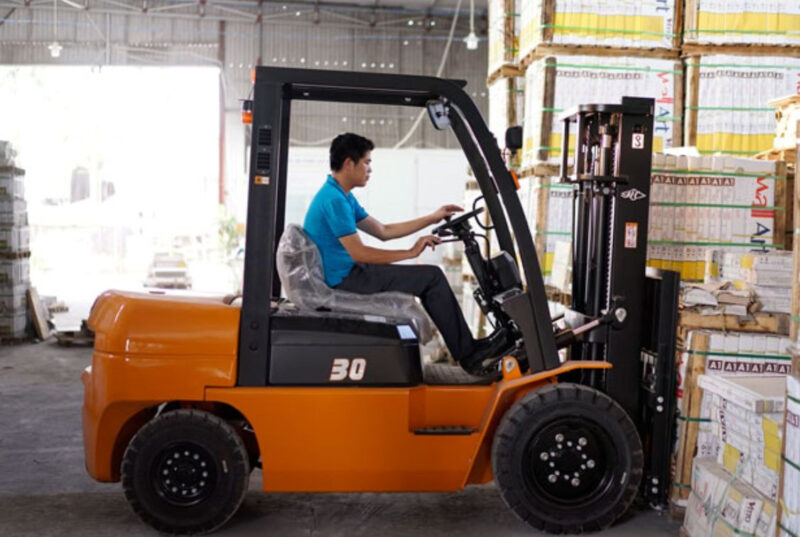
Forklift safety encompasses measures, regulations, and standards aimed at protecting operators, goods, equipment, and the industrial work environment when using forklifts. From pre-operation equipment inspections to skills training, safety helps minimize accidents and damage. According to statistics, over 70% of forklift accidents occur due to a lack of safety compliance. Naltako provides freight elevators, supporting safe transportation in warehouse management.
>>> What are the occupational safety measures in the warehouse?
Forklift Operation Safety Regulations?
According to the regulations of the Ministry of Labor, Invalids and Social Affairs, forklift safety regulations in Vietnam require:
- Operators must be over 18 years old and hold an operation certificate after training.
- Forklifts must undergo periodic inspections and meet technical standards according to Circular 36/2019/TT-BLDTBXH.
- Equipping safety warning lights, forklift emergency brakes, and forklift safety belts.
- Do not operate in low-light conditions or hazardous areas.
Safety training must include theory and practice, ensuring operators clearly understand risk control procedures. Naltako provides hydraulic lift tables, supporting safe operation in warehouses.
How to Perform Pre-Use Forklift Safety Inspections?
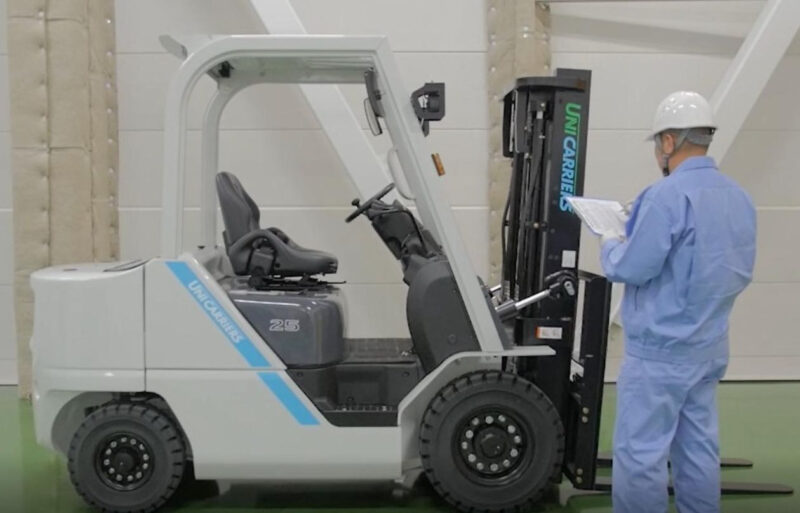
Before operation, the forklift safety inspection process includes:
- Braking system: Ensure the forklift emergency brake is functioning correctly.
- Tires: Check for wear and pressure to ensure they are not slippery.
- Hydraulic system: Check for oil leaks and the operation of the forklift overload sensor.
- Warning lights and horns: Safety warning lights and horns must operate normally.
- Lifting forks: Not bent or broken, ensuring they can bear the designed load.
Safety Notes During Forklift Operation?
When operating a forklift, the following principles must be observed:
- Comply with load capacity: Do not exceed the rated load capacity of the vehicle.
- Maintain steady speed: Travel under 10 km/h in warehouse areas.
- Use seatbelts: Forklift safety belts are mandatory during operation.
- Lower the forks: Keep them close to the ground when moving to prevent tipping.
- Do not carry passengers: Except for specialized scissor lifts.
Consequences of Non-Compliance with Forklift Safety?
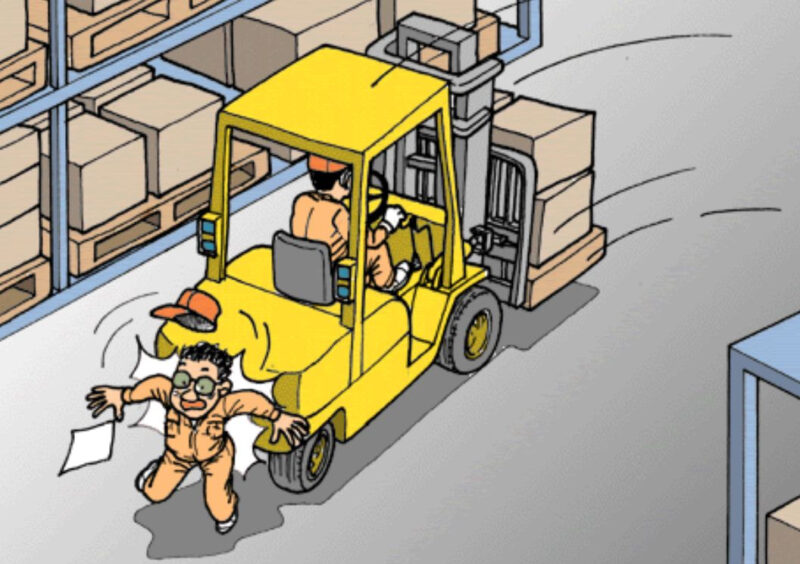
Failure to comply with forklift safety can lead to:
- Tipping: Due to overloading or unstable terrain, endangering lives.
- Falling goods: Causing property damage and equipment failure.
- Collisions: Affecting bystanders and infrastructure.
According to reports, 20% of forklift accidents cause serious injury due to lack of training. Technologies such as forklift backup cameras and anti-tip systems help reduce risk. Naltako provides forklift ramps, supporting safe operation.
>>> How to ensure safety during goods loading and unloading?
Industrial Forklift Safety Training?
Safety training is a mandatory factor, including:
- Theory: Legal regulations, operating principles, risk identification.
- Practice: Using 3D training simulations and practicing on actual vehicles.
- Certification: Meeting requirements according to Circular 05/2020/TT-BLDTBXH.
Proper training helps reduce operational incidents by 40%, according to ISO 45001 standards. IoT technology also supports operational logging and remote incident alerts. Naltako provides scissor lifts, meeting safe operational needs.
Explore equipment like scissor lifts at Naltako to meet diverse needs!
Nội dung có liên quan:
-
 What is a Mechanical Dock Leveler? How does it differ from a Hydraulic Dock Leveler?
Are you looking for a device to support loading and unloading goods from containers to the warehouse floor that is low-cost, highly durable, and easy to in...
What is a Mechanical Dock Leveler? How does it differ from a Hydraulic Dock Leveler?
Are you looking for a device to support loading and unloading goods from containers to the warehouse floor that is low-cost, highly durable, and easy to in...
-
 Popular Types of Hydraulic Freight Elevators Today
The role of hydraulic freight elevators in warehouses, production workshops, or construction sites is indisputable. However, the types of hydraulic freight...
Popular Types of Hydraulic Freight Elevators Today
The role of hydraulic freight elevators in warehouses, production workshops, or construction sites is indisputable. However, the types of hydraulic freight...
-
 Safe Working Load in Industrial Lifting and Cargo Handling
In the modern industrial and logistics environment, lifting and cargo handling activities take place continuously with large volumes and high frequencies. ...
Safe Working Load in Industrial Lifting and Cargo Handling
In the modern industrial and logistics environment, lifting and cargo handling activities take place continuously with large volumes and high frequencies. ...
-
 The Differences Between Mechanical Dock Levelers and Hydraulic Dock Levelers
The difference between hydraulic dock levelers and mechanical dock levelers is very clear – Hydraulic dock levelers operate automatically with a push of a ...
The Differences Between Mechanical Dock Levelers and Hydraulic Dock Levelers
The difference between hydraulic dock levelers and mechanical dock levelers is very clear – Hydraulic dock levelers operate automatically with a push of a ...
-
 What Should You Consider When Buying a 700kg Hydraulic Lift Table?
The 700kg hydraulic lift table is a popular tool widely used in production workshops and warehouses. With a lifting capacity of 700kg, this hydraulic lift ...
What Should You Consider When Buying a 700kg Hydraulic Lift Table?
The 700kg hydraulic lift table is a popular tool widely used in production workshops and warehouses. With a lifting capacity of 700kg, this hydraulic lift ...
-
 When Should You Use a 1000kg Hydraulic Lift Table?
Are you running a business in a warehouse or workshop that isn't too large and feeling that work efficiency hasn't reached your expectations? Are you looki...
When Should You Use a 1000kg Hydraulic Lift Table?
Are you running a business in a warehouse or workshop that isn't too large and feeling that work efficiency hasn't reached your expectations? Are you looki...
-
 Advantages of 500kg Manual Lift Tables You Should Know
Are you looking to buy a medium-duty manual hydraulic lift table for home use? Is your work frequency intermittent, and are you looking for a product with ...
Advantages of 500kg Manual Lift Tables You Should Know
Are you looking to buy a medium-duty manual hydraulic lift table for home use? Is your work frequency intermittent, and are you looking for a product with ...
-
 A Guide to Choosing High-Quality Hydraulic Dock Levelers Today
Hydraulic Dock Levelers are among the essential support devices for many fields and industries. Thanks to this product, the transport and storage of goods ...
A Guide to Choosing High-Quality Hydraulic Dock Levelers Today
Hydraulic Dock Levelers are among the essential support devices for many fields and industries. Thanks to this product, the transport and storage of goods ...