

 Tiếng Việt
Applications of Hydraulic Dock Levelers
Hydraulic Dock Leveler is a connecting device between the container floor and the warehouse floor, widely used in warehouses with high import and export frequencies. Loading docks help adjust height flexibly and easily thanks to mechanical joints or hydraulic cylinders.
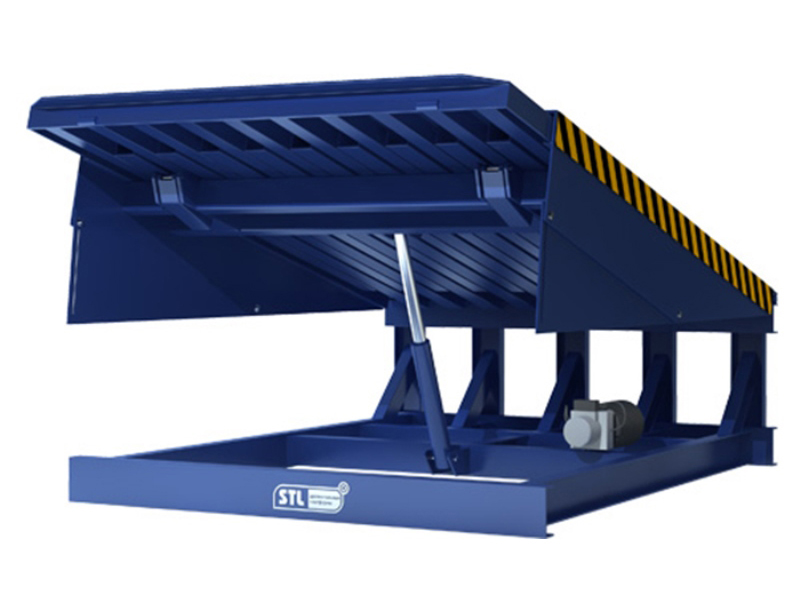
Standard Structure of a Hydraulic Dock Leveler
- Electric motor and hydraulic pump.
- Hydraulic pump used for the dock platform.
- Hydraulic pump used for the lip.
- Elastic rubber bumpers.
- Safety maintenance strut.
- Anti-collision protection devices.
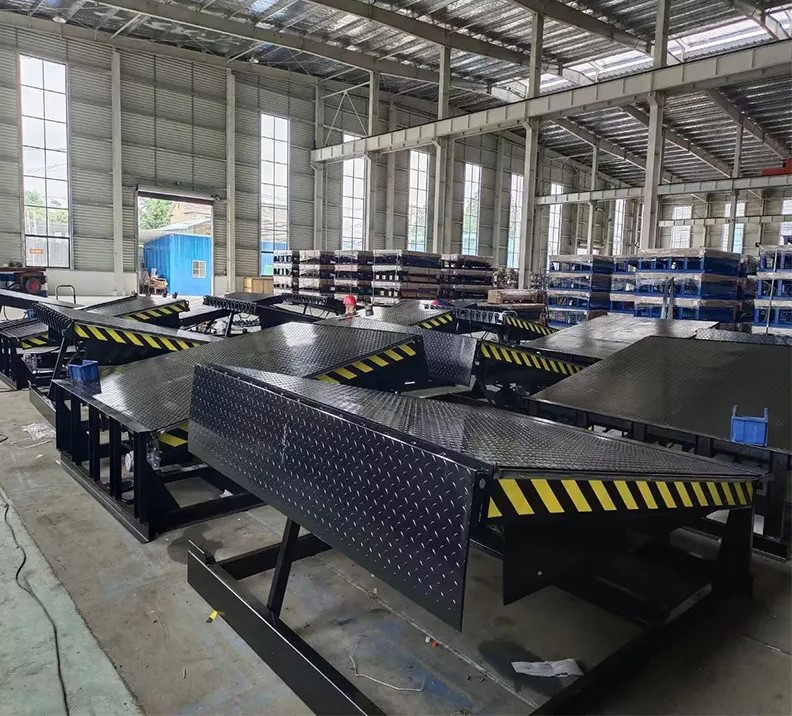
Operating Principle of Hydraulic Dock Leveler
The dock leveler operates based on hydraulic principles, ensuring smooth, durable, flexible, and professional operation.
The platform is raised and lowered, and the dock lip automatically extends upon receiving a signal. Then, it is lowered to be level with the truck or container bed; from there, electric forklifts or pallet jacks can easily complete the loading and unloading of goods from the container. Upon completion of the task, the dock leveler follows the command to lower and return to its original position.
Advantages of Semi-Automatic Dock Levelers
- Dock lip length is 500 – 1000mm.
- Platform thickness when operating with vehicles is 100mm.
- The dock leveler transports goods vertically to ensure safety during use.
- In cases where the vehicle and dock leveler become separated during operation, the system will stop functioning.
- Easy to repair, replace, and maintain equipment.
- The hydraulic lift table applies advanced technology, making lifting operations very easy.
- The dock leveler is equipped with 2 hydraulic cylinders, helping protect goods from deformation and limiting incidents during operation.
- Using a Dock Leveler helps businesses reduce labor, increase productivity, and ensure safety during cargo transportation.
Applications of Hydraulic Dock Leveler
Hydraulic dock levelers are commonly used in transportation, storage, and cargo handling activities such as docks, warehouses, and manufacturing plants.
Installing a dock leveler in front of the warehouse door facilitates the loading, unloading, or transportation of goods from vehicles to the warehouse and vice versa.
The device is an effective and optimal solution for fast and easy cargo transport, saving time. It is widely used in seafood processing plants, garment factories, and for handling heavy cargo.
See more at Applications of Hydraulic Dock Leveler
Guide to Choosing the Right Hydraulic Dock Leveler
Dock Leveler Length
- When choosing the length of a Dock Leveler, users should consider traffic flow and activities in the warehouse or workshop. Additionally, pay attention to safety and the path for forklifts when moving between the cargo vehicle and the warehouse.
- Common, safe, and effective standard lengths for dock levelers are 8′ and 10′; previously, the standard was 6′. This difference is due to the wide use of low-profile tires. Old wheel standards were 24″, now replaced by 22.5″, and potentially 19.5″ in the future. This trend means container bed heights will be lower.
- Standard dock leveler lengths ensure transport time and safety for forklift drivers and goods.
Dock Leveler Width
- The average width of a dock leveler is 6′. Due to increased demand for engine capacity, today’s trailers average 8′ 6″ in width. Wider Dock Levelers provide higher adaptability during import and export, making forklift operations easier than ever. Wide dock levelers offer flexibility to serve diverse operational needs. Standard dock leveler widths are 6′ 0″, 6′ 6″, and 7′ 0″. Wider dock levelers will have higher costs.
- Choose a dock leveler with suitable capacity to optimize weight, speed, and frequency of goods, materials, and equipment. Selecting the right capacity increases cargo productivity and reduces costs.
We hope the information provided by Naltako helps you gain more insight into Hydraulic Dock Levelers. Furthermore, when transporting goods and using dock levelers, users should prioritize safety to minimize danger to people and risks to cargo.
CONTACT INFORMATION
Naltako Industrial Joint Stock Company
Workshop Address: Dong De, Phu Yen, Chuong My, Hanoi
Hotline: 0981.977.898
Mail: nhat.mtk53@gmail.com
Nội dung có liên quan:
-
 The Uses of Dock Levelers in Today’s Cold Storage Facilities
To ensure the operational efficiency of cold storage, selecting and using the correct support equipment is extremely important. One of the indispensable so...
The Uses of Dock Levelers in Today’s Cold Storage Facilities
To ensure the operational efficiency of cold storage, selecting and using the correct support equipment is extremely important. One of the indispensable so...
-
 Why Are Forklift Ramps the Preferred Choice for Import and Export Operations?
Container loading ramps bring many important benefits to transport and cargo handling operations. Specially designed, container forklift ramps not only hel...
Why Are Forklift Ramps the Preferred Choice for Import and Export Operations?
Container loading ramps bring many important benefits to transport and cargo handling operations. Specially designed, container forklift ramps not only hel...
-
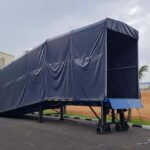 Popular Forklift Ramp Models with Roofs in Use Today
Currently, forklift ramps with roofs have quickly attracted the attention of small and medium-sized enterprises. Not only are they a convenient means of tr...
Popular Forklift Ramp Models with Roofs in Use Today
Currently, forklift ramps with roofs have quickly attracted the attention of small and medium-sized enterprises. Not only are they a convenient means of tr...
-
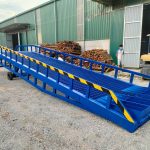 The Most Widely Used Cargo Handling Support Tools Today
There are many different tools available to support cargo loading and unloading, each with its own advantages and disadvantages. Users need to research and...
The Most Widely Used Cargo Handling Support Tools Today
There are many different tools available to support cargo loading and unloading, each with its own advantages and disadvantages. Users need to research and...
-
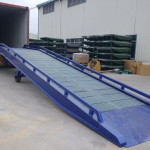 What is a Loading Ramp? Applications of Ramps in Goods Transportation
What is a Loading Ramp?
A loading ramp, also known as a yard ramp or forklift ramp, is a powerful support device in the transportation of goods.
Essentia...
What is a Loading Ramp? Applications of Ramps in Goods Transportation
What is a Loading Ramp?
A loading ramp, also known as a yard ramp or forklift ramp, is a powerful support device in the transportation of goods.
Essentia...
-
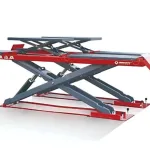 What is a scissor mechanism? Applications of scissor mechanisms in hydraulic lifting equipment
Today, scissor mechanisms are widely applied in hydraulic lifting equipment. These applications are extensively used in construction projects and bring hig...
What is a scissor mechanism? Applications of scissor mechanisms in hydraulic lifting equipment
Today, scissor mechanisms are widely applied in hydraulic lifting equipment. These applications are extensively used in construction projects and bring hig...
-
 Applications of dock levelers in production
A Dock Leveler is not just a bridge between the warehouse and the transport vehicle, but also a powerful assistant that helps you operate your production p...
Applications of dock levelers in production
A Dock Leveler is not just a bridge between the warehouse and the transport vehicle, but also a powerful assistant that helps you operate your production p...
-
 When should a Dock Leveler be repaired or replaced?
Dock Levelers are essential equipment in the process of importing and exporting goods at warehouses. Continuous operation and heavy loads make Dock Leveler...
When should a Dock Leveler be repaired or replaced?
Dock Levelers are essential equipment in the process of importing and exporting goods at warehouses. Continuous operation and heavy loads make Dock Leveler...