

 Tiếng Việt
What is a chain? Some popular types of chains today.
Chains are flexible and durable solutions for various industrial and residential applications. While Naltako does not provide chains directly, we are proud to offer lifting equipment such as hydraulic lift tables, freight elevators, and scissor lifts, providing optimal support for chain-related tasks. This article provides detailed information about chains and how to use them effectively with Naltako equipment. Explore now to find the right solution!
What is a Chain?
A chain is a series of links connected by welding or casting methods, forming a strong rope-like structure that belongs to the industrial accessory group. Common materials include alloy steel, 304 stainless steel, 316 stainless steel, and galvanized steel, with links in round, oval, or non-circular shapes. Chains are used in lifting (overhead cranes, elevators), transmission (bicycles, machinery), and decoration (railings, pet accessories). Notable types include lifting chains, drive chains, and anchor chains.
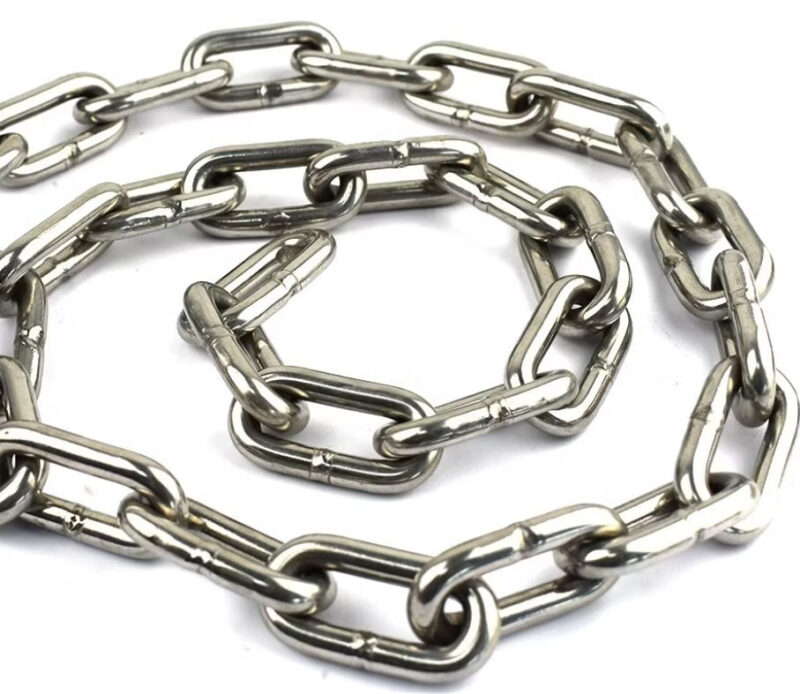
Link diameters range from 2-20mm, withstanding heavy loads up to dozens of tons and meeting ANSI, DIN, and ISO standards. Naltako provides mini cranes and tilting lift tables, which integrate well with chains for efficient lifting. The equipment ensures safety and increases work productivity.
Need advice on lifting equipment? Contact us at 0986868003 or 0981.977.898 for detailed support from Naltako!
Common Classification of Chains
Chains are classified into various types to meet many needs in lifting equipment and industry:
- Cast chain: Seamless, high durability, used for lifting chains.
- Welded chain: Affordable, suitable for light applications.
- Galvanized chain: Corrosion resistant, ideal for outdoor environments.
- 304/316 Stainless steel chain: Absolute rust resistance, used in marine environments.
- Drive chain: Used for conveyors and bicycles, meeting JIS standards.
- Lifting chain: Heat-treated, high load capacity, integrated with lifting hooks.
Cast chains are more durable than welded chains, and 304 stainless steel chains resist corrosion better than galvanized ones. Link diameters from 2-20mm are suitable for everything from decoration to heavy industry.
Advantages of High-Strength Chains
High-strength chains stand out compared to steel wire ropes or industrial ropes:
- High durability: Withstands loads of dozens of tons, long service life.
- Flexibility: Easy to bend, suitable for lifting chains and anchor chains.
- Corrosion resistance: 304/316 stainless steel chains are ideal for humid environments.
- Easy processing: Manufactured according to desired sizes.
Applications of Industrial Chains
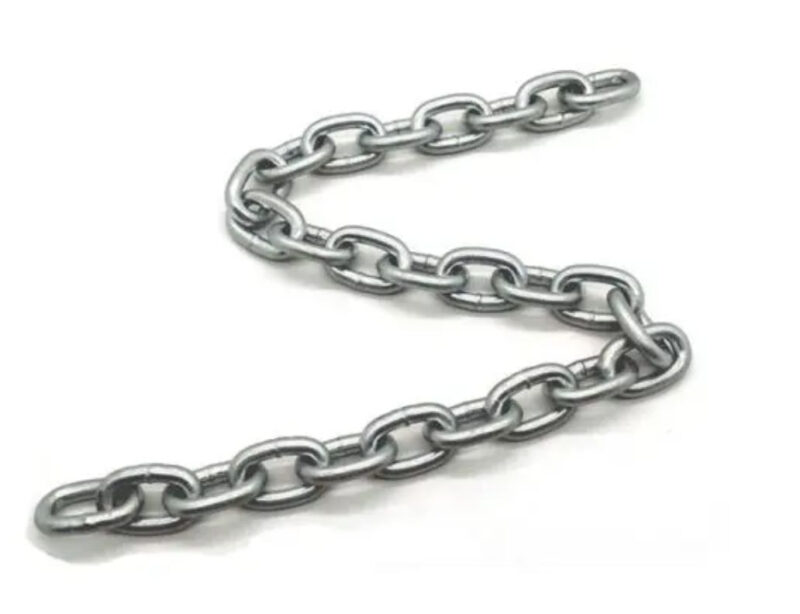
Chains are used in a variety of fields:
- Lifting: Lifting chains used in overhead cranes, elevators, integrated with lifting hooks and connecting links.
- Transmission: Drive chains in conveyors, bicycles, and machinery.
- Marine: Anchor chains with high load capacity and corrosion resistance.
- Decoration: Used for railings, hanging lamps, and pet accessories.
Link diameters of 6-16mm are common for lifting goods, meeting JIS standards. Naltako provides hydraulic lift tables and freight elevators, supporting effective operation when using chains, ensuring safety and saving time.
How to Choose the Right Chain
To choose the appropriate chain, consider:
- Load capacity: An 8mm chain supports 1-2 tons; choose a lifting chain for heavy loads.
- Material: 304/316 stainless steel for marine environments, galvanized for outdoors.
- Environment: 316 stainless steel chain is suitable for chemical environments.
- Application: Drive chains for machinery, decorative chains for railings.
- Accessories: Compatible with lifting hooks and connecting links.
Frequently Asked Questions About Chains
- What is a chain? What types are there?
A chain is a series of connected links, including cast, welded, galvanized, 304 stainless steel, lifting, and drive chains. - What is a high-strength chain? How to distinguish them?
A high-strength chain (such as a lifting chain) bears heavy loads; cast chains are more durable than welded ones due to seamless links. - How much does a 304 stainless steel chain cost? What are its advantages?
Prices range from 100,000-300,000 VND/m; 304 stainless steel chains are corrosion-resistant, ideal for humid environments. - What are iron chains used for? How to choose one?
Iron chains are used for lifting and transmission; choose based on load, environment, and ISO standards. - What is the structure of a lifting chain? How to maintain it?
Lifting chains consist of heat-treated alloy steel links; maintain every 3-6 months, check for rust, and lubricate.
Need a lifting solution with chains? Contact us at 0986868003 or 0981.977.898 for detailed support from Naltako!
Nội dung có liên quan:
-
 What is a Piston? Structure and Operating Principle
If you work in the repair and installation of industrial equipment, you have surely heard terms such as: steam engines, internal combustion engines, etc. A...
What is a Piston? Structure and Operating Principle
If you work in the repair and installation of industrial equipment, you have surely heard terms such as: steam engines, internal combustion engines, etc. A...
-
 Hydraulic Oil Radiators – Oil Coolers for Hydraulic Systems
What solution will support you in the process of cooling and cleaning hydraulic oil? That is using a hydraulic oil cooler immediately. However, each system...
Hydraulic Oil Radiators – Oil Coolers for Hydraulic Systems
What solution will support you in the process of cooling and cleaning hydraulic oil? That is using a hydraulic oil cooler immediately. However, each system...
-
 Compressed Air Filters: Construction, Working Principle, and Classification
Compressed air filters are a common and essential device, designed to effectively remove impurities and dirt that may exist in compressed air, helping you ...
Compressed Air Filters: Construction, Working Principle, and Classification
Compressed air filters are a common and essential device, designed to effectively remove impurities and dirt that may exist in compressed air, helping you ...
-
 Piston Pumps: Definition, Classification, Applications, and Pricing
If vane pumps or hydraulic gear pumps are selected for low-pressure systems, the hydraulic piston pump line is designed for high-pressure machinery requiri...
Piston Pumps: Definition, Classification, Applications, and Pricing
If vane pumps or hydraulic gear pumps are selected for low-pressure systems, the hydraulic piston pump line is designed for high-pressure machinery requiri...
-
 What is a Gear Hydraulic Pump? Structure and Classification
With a simple structure, convenient assembly and operation, and the ability to withstand heavy loads for a specific duration, gear hydraulic pumps are wide...
What is a Gear Hydraulic Pump? Structure and Classification
With a simple structure, convenient assembly and operation, and the ability to withstand heavy loads for a specific duration, gear hydraulic pumps are wide...
-
 Hydraulic Pumps
In today's industries, from high-rise buildings to manufacturing plants, hydraulic pumps play a crucial role. This component helps devices such as yard ram...
Hydraulic Pumps
In today's industries, from high-rise buildings to manufacturing plants, hydraulic pumps play a crucial role. This component helps devices such as yard ram...
-
 Hydraulic Seals: Classification, Installation & Replacement
Hydraulic seals are vital components in a hydraulic system, yet not everyone fully understands them. If you are looking for information on seal types, inst...
Hydraulic Seals: Classification, Installation & Replacement
Hydraulic seals are vital components in a hydraulic system, yet not everyone fully understands them. If you are looking for information on seal types, inst...
-
 Grating Flooring (Galvanized Steel Grating): Features, Applications, and Quotes
What is Grating Flooring?
Grating flooring (also known as galvanized steel grating or grating panels) is a type of floor formed from load-bearing steel ba...
Grating Flooring (Galvanized Steel Grating): Features, Applications, and Quotes
What is Grating Flooring?
Grating flooring (also known as galvanized steel grating or grating panels) is a type of floor formed from load-bearing steel ba...