
 Tiếng Việt
Smart Factory Support Technology
Smart factory support technology is revolutionizing the industry, helping businesses increase productivity and reduce costs. Naltako, with over 7 years of experience, provides solutions such as forklifts and mini cranes delivering superior efficiency. This article will introduce advanced technologies and their benefits in building a smart factory.
Which Technologies Support Smart Factories Most Effectively?
Industry 4.0 factories apply technologies such as Artificial Intelligence (AI), Industrial Internet of Things (IIoT), Big Data, robotics, automation, cloud computing, blockchain, and 5G to optimize production. AI analyzes data, predicts incidents, and increases productivity by 20%. IIoT connects sensors, monitors equipment in real-time, and improves production performance by 15%. Robots automate repetitive tasks, reducing manual labor by 30%.

Naltako provides forklifts and hydraulic lift tables integrated with IIoT, supporting safe transportation and loading. 5G accelerates data transmission, reducing latency by 50%, combined with cloud computing for remote management. Blockchain ensures product traceability and reduces fraud by 25%. These technologies help factories optimize energy and operate flexibly.
Contact Naltako via hotline 0981 977 898 for consultation on smart factory support technologies.
What Are the Benefits of IoT and AI in Factories?
IIoT and AI bring superior benefits to smart factories. IIoT with factory IoT sensors monitors temperature, pressure, and machine speed in real-time, reducing breakdown risks by 30%. AI analyzes Big Data to predict incidents, reducing maintenance costs by 25%. Predictive maintenance helps reduce downtime by 40% and enhances product quality.
Naltako integrates IIoT into forklifts to continuously track production activities. AI optimizes processes and improves supply chain management by 20%. These technologies increase precision, reduce material waste, and quickly respond to market demands, especially in the automotive and electronics industries.
Discover IoT and AI solutions for factories at Naltako to increase production performance.
What Roles Do Robots and AGVs Play in Factories?
Industrial robots and AGVs (Automated Guided Vehicles) play a crucial role in production automation. Robots perform welding, assembly, and quality inspection tasks with 99% precision, reducing errors by 50%. Naltako’s AGVs transport raw materials and finished products, reducing travel time by 40% and saving labor costs by 30%.
Robot AGVs operate 24/7, combined with hydraulic lift tables for safe loading and unloading. Naltako provides robots integrated with IIoT for real-time performance monitoring. These solutions increase production efficiency, reduce manual labor, and are suitable for mass production factories such as electronics and food.
Call 0986 868 003 for consultation on robots and AGVs from Naltako.
How Much Does It Cost to Deploy Smart Factory Solutions?
The cost of deploying smart factory solutions depends on scale, features, and the level of automation. Naltako’s forklifts and hydraulic lift tables range from 50 million to several billion VND. MES or ERP systems range from 100-500 million VND, AGV robots from 500 million to several billion VND. IIoT and 5G require an investment of 200 million VND or more.

This investment helps reduce operating costs by 20% with a payback period of 1-3 years. Naltako provides customized solutions, from IoT sensors to cloud computing, optimizing resources. Long-term benefits include increased productivity, reduced waste, and enhanced competitiveness.
Contact Naltako to receive a quote for smart factory solutions tailored to your business.
How to Integrate MES and ERP into a Smart Factory?
Manufacturing Execution Systems (MES) and ERP software are the foundations of a connected factory. MES tracks production processes in real-time, optimizing schedules and increasing efficiency by 15%. ERP integrates data from production and inventory to finance, improving decision-making by 30%. Naltako offers consulting on MES and ERP implementation, connecting them with IIoT and AI.
Integrating MES and ERP with cloud computing allows for remote management and reduces IT costs by 20%. Blockchain ensures data security and transparency. These systems help factories operate synchronously, optimize processes, and increase production flexibility.
Visit Naltako at 4th Floor, SME Hoang Gia Building, Ha Dong, Hanoi for support with MES and ERP integration.
Nội dung có liên quan:
-
 What is a Mechanical Dock Leveler? How does it differ from a Hydraulic Dock Leveler?
Are you looking for a device to support loading and unloading goods from containers to the warehouse floor that is low-cost, highly durable, and easy to in...
What is a Mechanical Dock Leveler? How does it differ from a Hydraulic Dock Leveler?
Are you looking for a device to support loading and unloading goods from containers to the warehouse floor that is low-cost, highly durable, and easy to in...
-
 Popular Types of Hydraulic Freight Elevators Today
The role of hydraulic freight elevators in warehouses, production workshops, or construction sites is indisputable. However, the types of hydraulic freight...
Popular Types of Hydraulic Freight Elevators Today
The role of hydraulic freight elevators in warehouses, production workshops, or construction sites is indisputable. However, the types of hydraulic freight...
-
 Safe Working Load in Industrial Lifting and Cargo Handling
In the modern industrial and logistics environment, lifting and cargo handling activities take place continuously with large volumes and high frequencies. ...
Safe Working Load in Industrial Lifting and Cargo Handling
In the modern industrial and logistics environment, lifting and cargo handling activities take place continuously with large volumes and high frequencies. ...
-
 The Differences Between Mechanical Dock Levelers and Hydraulic Dock Levelers
The difference between hydraulic dock levelers and mechanical dock levelers is very clear – Hydraulic dock levelers operate automatically with a push of a ...
The Differences Between Mechanical Dock Levelers and Hydraulic Dock Levelers
The difference between hydraulic dock levelers and mechanical dock levelers is very clear – Hydraulic dock levelers operate automatically with a push of a ...
-
 What Should You Consider When Buying a 700kg Hydraulic Lift Table?
The 700kg hydraulic lift table is a popular tool widely used in production workshops and warehouses. With a lifting capacity of 700kg, this hydraulic lift ...
What Should You Consider When Buying a 700kg Hydraulic Lift Table?
The 700kg hydraulic lift table is a popular tool widely used in production workshops and warehouses. With a lifting capacity of 700kg, this hydraulic lift ...
-
 When Should You Use a 1000kg Hydraulic Lift Table?
Are you running a business in a warehouse or workshop that isn't too large and feeling that work efficiency hasn't reached your expectations? Are you looki...
When Should You Use a 1000kg Hydraulic Lift Table?
Are you running a business in a warehouse or workshop that isn't too large and feeling that work efficiency hasn't reached your expectations? Are you looki...
-
 Advantages of 500kg Manual Lift Tables You Should Know
Are you looking to buy a medium-duty manual hydraulic lift table for home use? Is your work frequency intermittent, and are you looking for a product with ...
Advantages of 500kg Manual Lift Tables You Should Know
Are you looking to buy a medium-duty manual hydraulic lift table for home use? Is your work frequency intermittent, and are you looking for a product with ...
-
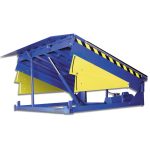 A Guide to Choosing High-Quality Hydraulic Dock Levelers Today
Hydraulic Dock Levelers are among the essential support devices for many fields and industries. Thanks to this product, the transport and storage of goods ...
A Guide to Choosing High-Quality Hydraulic Dock Levelers Today
Hydraulic Dock Levelers are among the essential support devices for many fields and industries. Thanks to this product, the transport and storage of goods ...