

 Tiếng Việt
Detailed guide on how to design warehouse traffic flow
Designing warehouse traffic flow helps businesses determine the entire supply chain and save costs. It also speeds up order processing, thereby improving customer satisfaction. However, to achieve that, designing a scientific warehouse traffic flow is extremely important. In this article, Naltako will guide you on how to design warehouse traffic flow in detail and effectively.
Why is warehouse traffic flow design necessary?
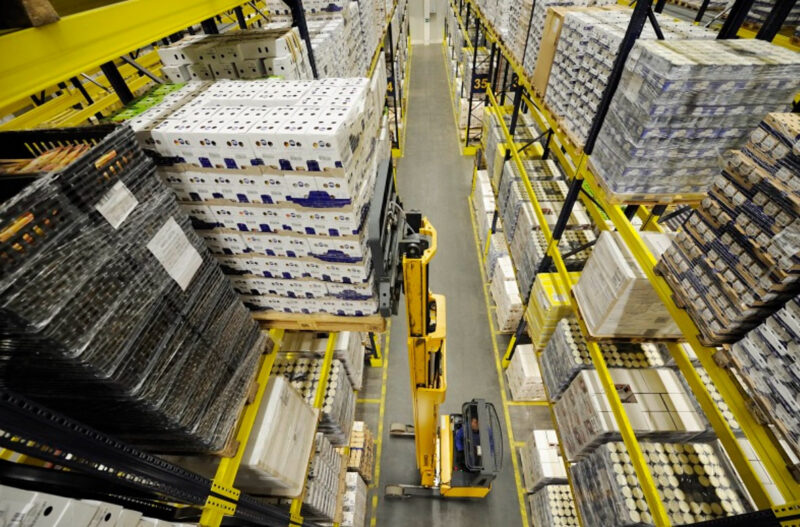
Designing traffic flow is not just a simple task. It is a strategic investment that brings many benefits.
- Optimizing work productivity: Optimized traffic flow helps minimize travel time. Employees can search and retrieve goods faster. This helps speed up order processing. The productivity of the entire warehouse will be improved. Every operation takes place quickly and smoothly.
- Maximizing storage space: An efficient traffic flow helps you use all the space. When goods are arranged logically, empty spaces will be utilized. You can store more products. This is a huge benefit for warehouses with limited area.
- Ensuring labor safety: Clear, open traffic flow helps reduce the risk of collisions. People and forklifts move more safely. Occupational accidents related to internal traffic will be limited. This creates a safer working environment for employees.
- Minimizing operating costs: When traffic flow is efficient, working time is shortened. Energy is saved for equipment such as container loading ramps. Goods are preserved better, reducing damage rates. Thereby helping to reduce overall operating costs.
- Improving customer service: Rapid order processing helps deliver on time. Customers will be more satisfied and trust the business more. Your reputation and brand will be enhanced.
How to design warehouse traffic flow in detail
To design an effective traffic flow, you need to follow the steps below. Naltako will guide you on how to design warehouse traffic flow from A to Z.
Step 1: Analyze and assess current warehouse status
This is the first and most important step. You need to collect full information about the warehouse.
- Warehouse layout and area: Accurately measure warehouse area, entrance and exit positions.
- Goods types and characteristics: Classify goods by size, weight, quantity.
- Import/Export data: Analyze movement frequency of each type of goods. Which goods are taken out a lot, which ones less.
- Equipment used: List types of forklifts, trolleys, conveyors…
- Human resources: Evaluate quantity and capacity of warehouse staff.
Step 2: Choose suitable traffic flow model
Based on analyzed data, you can choose one of the following models:
- Straight-line flow: Goods enter at one end and exit at the other. Simple, easy to manage, suitable for small warehouses.
- U-shaped flow: Goods enter and exit on the same side. Helps utilize space more effectively. Very popular in many types of warehouses.
- L-shaped flow: Goods enter at one corner, exit at another. Suitable for warehouses with special shapes.
- Combined flow: Combine the above models to optimize for large warehouses. Helps rotate goods flexibly.
Step 3: Arrange functional areas
A scientific traffic flow needs reasonably arranged functional areas.
- Receiving Area: Needs enough space for unloading and checking goods.
- Storage Area: Classify goods by picking frequency. Frequently picked goods should be placed near aisles. Less picked goods can be placed deep inside.
- Picking Area: Arrange near storage area, helping staff pick goods fastest.
- Packing Area: Needs enough space for packing.
- Shipping Area: Place near the exit so goods are shipped out fastest.
Step 4: Layout racks and aisles
Aisle layout needs to adhere to these principles:
- Aisle width: Ensure aisles are wide enough for forklifts to move safely.
- Main and side aisles: Main aisles should be wider to connect areas. Side aisles can be slightly narrower.
- Mark aisles: Use clear paint lines. This helps reduce confusion and increase safety.
Step 5: Test and adjust
After designing, you need to test the traffic flow.
- Observe reality: Observe how staff and equipment move.
- Listen to feedback: Get opinions from employees working directly.
- Adjust: Improve unreasonable points to optimize the warehouse traffic flow design method.
>>> Manufacturing, installation and handover process of container loading ramps
Notes when designing warehouse traffic flow
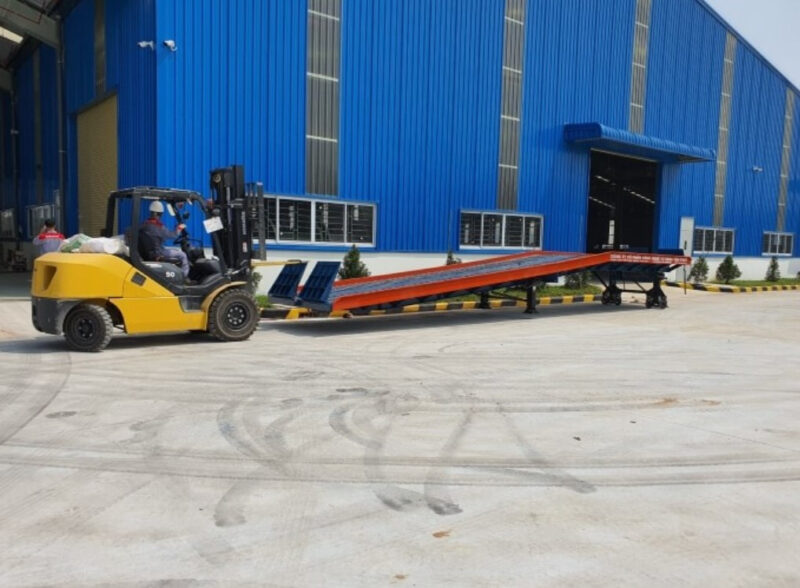
- Safety is top priority: Always ensure clear aisles. Use clear warning signs. Install convex mirrors at corners.
- Flexibility: Design should be easy to change when business needs change. You can expand or narrow areas.
- Lighting and ventilation: Ensure warehouse has enough light, good ventilation.
- Fire protection system: Aisles must be clear for fire trucks to access easily.
- Compatible with technology: Integrate WMS warehouse management systems. Makes tracking and management easy.
- Train employees: Train employees on how to move safely, obey rules.
- Use suitable equipment: Choose suitable forklifts, racks. This helps increase efficiency and safety.
- Regularly evaluate: Periodically evaluate traffic flow to improve.
- Consult experts: If inexperienced, seek experts. They will help you have an optimal design.
- Consider growth: Traffic flow design should have a long-term vision. Need to account for future growth of the business.
Conclusion
Designing warehouse traffic flow is a complex task. But it brings huge benefits. A good traffic flow will be a solid foundation. It helps businesses develop sustainably and effectively. Naltako hopes the above shares have helped you. We believe you will succeed with your warehouse traffic flow design method. If you need further advice, do not hesitate to contact Naltako. We are always ready to support you.
Nội dung có liên quan:
-
 Should You Use a Mini Hydraulic Lift Table?
A lift table is a very useful device for warehouses and workshops. They are used to transport goods as quickly as possible. Among the many types of lift ta...
Should You Use a Mini Hydraulic Lift Table?
A lift table is a very useful device for warehouses and workshops. They are used to transport goods as quickly as possible. Among the many types of lift ta...
-
 Choosing Between Hydraulic Dock Levelers or Forklift Ramps for Cargo Handling?
Currently in Vietnam, businesses are applying many different methods to carry out import and export operations. Some businesses continue to follow traditio...
Choosing Between Hydraulic Dock Levelers or Forklift Ramps for Cargo Handling?
Currently in Vietnam, businesses are applying many different methods to carry out import and export operations. Some businesses continue to follow traditio...
-
 What is a Loading Dock? What does a Loading Dock system include?
Is your business facing difficulties in transporting goods? Is loading and unloading taking too much time and increasing costs? Have you researched solutio...
What is a Loading Dock? What does a Loading Dock system include?
Is your business facing difficulties in transporting goods? Is loading and unloading taking too much time and increasing costs? Have you researched solutio...
-
 Hydraulic Cylinder Structure, Specifications, and Operating Principles
Hydraulic cylinders, also known as hydraulic rams, are one of the most critical components in a hydraulic system. They have the ability to convert hydrauli...
Hydraulic Cylinder Structure, Specifications, and Operating Principles
Hydraulic cylinders, also known as hydraulic rams, are one of the most critical components in a hydraulic system. They have the ability to convert hydrauli...
-
 Differences Between Freight Elevators and Goods Hoists
Choosing between a freight elevator and a goods hoist is always a difficult puzzle for many businesses. Understanding this, Naltako will help you solve the...
Differences Between Freight Elevators and Goods Hoists
Choosing between a freight elevator and a goods hoist is always a difficult puzzle for many businesses. Understanding this, Naltako will help you solve the...
-
 Hydraulics: Concept, Structure, and Basic Operating Principles
Hydraulics is a vital technology, widely used in modern life. From industrial machinery like dock levelers to vehicles, this system plays an indispensable ...
Hydraulics: Concept, Structure, and Basic Operating Principles
Hydraulics is a vital technology, widely used in modern life. From industrial machinery like dock levelers to vehicles, this system plays an indispensable ...
-
 Dock Shelter and Dock Leveler: The Perfect Combination for Your Warehouse
Is your warehouse operating inefficiently, with high risks of cargo damage and low productivity? Don't worry, the optimal solution is here! The combination...
Dock Shelter and Dock Leveler: The Perfect Combination for Your Warehouse
Is your warehouse operating inefficiently, with high risks of cargo damage and low productivity? Don't worry, the optimal solution is here! The combination...
-
 What is a Raised Floor? What are the components of its structure?
Raised floors, hydraulic dock levelers, and access floors are popular types of flooring widely used in modern construction engineering today. To learn deta...
What is a Raised Floor? What are the components of its structure?
Raised floors, hydraulic dock levelers, and access floors are popular types of flooring widely used in modern construction engineering today. To learn deta...