

 Tiếng Việt
What is a Chevron Conveyor Belt? Some Advantages of Chevron Conveyor Belts.
In the manufacturing industry, transporting materials on an incline is always a major challenge. Standard conveyor belts or mini cranes often struggle with slipping and retaining materials. To solve this problem, chevron conveyor belts were created as a breakthrough solution. With a unique design, this product not only helps transport materials safely and efficiently on steep terrains but also brings many superior advantages. Join Naltako to explore details about chevron conveyor belts and the benefits they bring.
What is a Chevron Conveyor Belt?
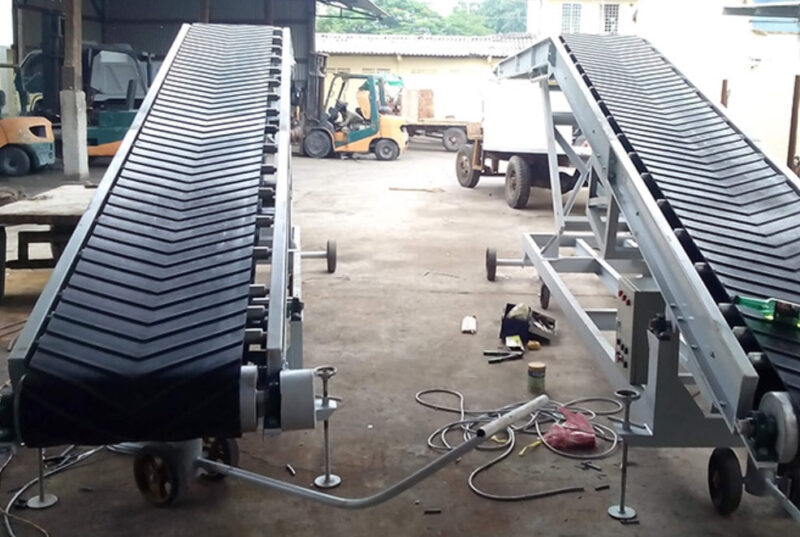
Chevron conveyor belts are a special type of rubber conveyor belt, designed with raised ridges (ribs) on the surface. These ribs can have various shapes, such as V-shape, T-shape, or spikes, molded integrally with the belt body. The main purpose of these ribs is to create friction and “grip” the material tightly, preventing slipping or spillage when the conveyor operates on high-incline terrains.
Structure of Chevron Conveyor Belts
The structure of chevron conveyor belts is basically similar to other types of rubber conveyor belts, but the difference lies in the surface:
Belt Body
Made from synthetic or natural rubber, it has high durability, abrasion resistance, and good load-bearing capacity. The inner core is usually reinforced with layers of fabric canvas (polyester, nylon) or steel cords to enhance tensile strength.
Raised Rib Layer
This is the most important part, molded directly onto the conveyor belt surface. This rib layer can be designed in many shapes and heights to suit each type of material and the slope of the conveyor.
>>> What is a Slat Chain Conveyor? Some applications of slat chain conveyors
Outstanding Advantages of Chevron Conveyor Belts
Chevron conveyor belts are widely used thanks to the following superior advantages:
- Effective Inclined Transport: This is the biggest advantage. The raised ribs help hold the material tightly, preventing it from sliding down, allowing the conveyor to operate effectively on terrains with slopes from 15° to 45° or even higher.
- Minimizing Material Loss: Thanks to the ability to “hug” the material, chevron conveyor belts significantly reduce material spillage during transport, especially for loose, granular materials.
- High Durability: Made from load-bearing rubber, chevron conveyor belts have good abrasion resistance, withstand impact and harsh weather conditions, ensuring a long lifespan.
- Variety of Types: There are many different types of chevron conveyor belts, with diverse rib shapes and sizes, suitable for many types of materials, from coal, ore, cement to agricultural products.
Disadvantages of Chevron Conveyor Belts
Although they have many advantages, chevron conveyor belts also have some disadvantages to note:
- Higher Cost: Due to the more complex structure and special manufacturing technology, chevron conveyor belts usually have a higher price compared to standard flat rubber conveyor belts.
- Difficult to Clean: The grooves and ribs on the surface can make cleaning more difficult.
>>> Rough Top Conveyor Belt – An effective and versatile anti-slip solution
Some Common Types of Chevron Conveyor Belts Today
V-Shape Rubber Chevron Conveyor Belt
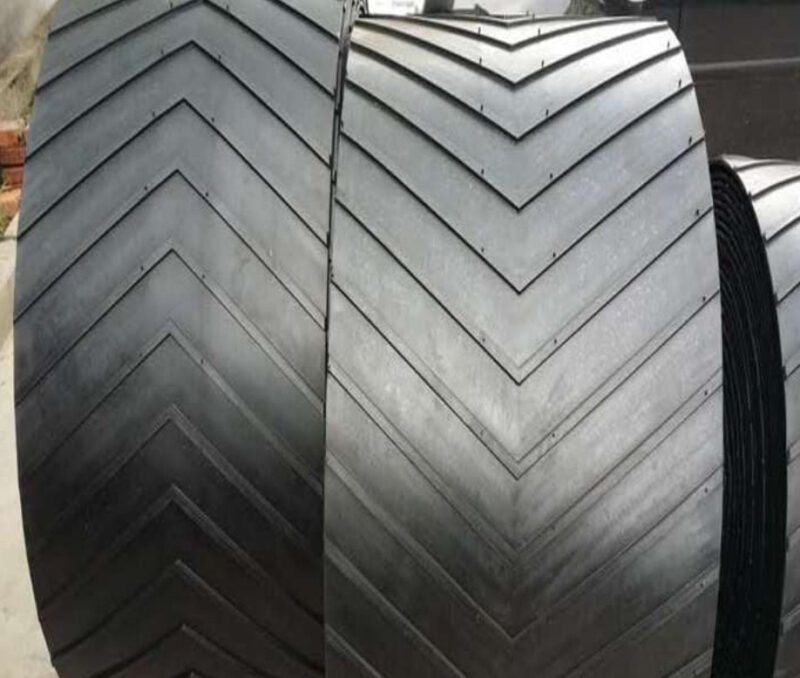
This type has V-shaped raised ribs, often used to transport loose materials such as coal, sand, stone, ore… with moderate slopes.
T-Shape Chevron Conveyor Belt
With T-shaped ribs, this type of conveyor belt has better material retention capabilities, suitable for transporting packaging, carton boxes… on inclines.
Spiked Chevron Conveyor Belt
This conveyor belt has small spikes on the surface, often used to transport agricultural products such as paddy, rice, corn… gently without damaging the product.
>>> Trough Rubber Conveyor Belt: Detailed Structure & Applications
Conclusion
Chevron conveyor belts are an efficient, safe, and economical transport solution for businesses needing to move materials on sloped terrain. With outstanding advantages regarding slip resistance, loss reduction, and high durability, this product has become an optimal choice, contributing to the development and growth of the industry. Naltako is proud to be a supplier of high-quality industrial solutions, accompanying you on the path to conquering new successes.
Nội dung có liên quan:
-
 Should You Use a Mini Hydraulic Lift Table?
A lift table is a very useful device for warehouses and workshops. They are used to transport goods as quickly as possible. Among the many types of lift ta...
Should You Use a Mini Hydraulic Lift Table?
A lift table is a very useful device for warehouses and workshops. They are used to transport goods as quickly as possible. Among the many types of lift ta...
-
 Choosing Between Hydraulic Dock Levelers or Forklift Ramps for Cargo Handling?
Currently in Vietnam, businesses are applying many different methods to carry out import and export operations. Some businesses continue to follow traditio...
Choosing Between Hydraulic Dock Levelers or Forklift Ramps for Cargo Handling?
Currently in Vietnam, businesses are applying many different methods to carry out import and export operations. Some businesses continue to follow traditio...
-
 What is a Loading Dock? What does a Loading Dock system include?
Is your business facing difficulties in transporting goods? Is loading and unloading taking too much time and increasing costs? Have you researched solutio...
What is a Loading Dock? What does a Loading Dock system include?
Is your business facing difficulties in transporting goods? Is loading and unloading taking too much time and increasing costs? Have you researched solutio...
-
 Hydraulic Cylinder Structure, Specifications, and Operating Principles
Hydraulic cylinders, also known as hydraulic rams, are one of the most critical components in a hydraulic system. They have the ability to convert hydrauli...
Hydraulic Cylinder Structure, Specifications, and Operating Principles
Hydraulic cylinders, also known as hydraulic rams, are one of the most critical components in a hydraulic system. They have the ability to convert hydrauli...
-
 Differences Between Freight Elevators and Goods Hoists
Choosing between a freight elevator and a goods hoist is always a difficult puzzle for many businesses. Understanding this, Naltako will help you solve the...
Differences Between Freight Elevators and Goods Hoists
Choosing between a freight elevator and a goods hoist is always a difficult puzzle for many businesses. Understanding this, Naltako will help you solve the...
-
 Hydraulics: Concept, Structure, and Basic Operating Principles
Hydraulics is a vital technology, widely used in modern life. From industrial machinery like dock levelers to vehicles, this system plays an indispensable ...
Hydraulics: Concept, Structure, and Basic Operating Principles
Hydraulics is a vital technology, widely used in modern life. From industrial machinery like dock levelers to vehicles, this system plays an indispensable ...
-
 Dock Shelter and Dock Leveler: The Perfect Combination for Your Warehouse
Is your warehouse operating inefficiently, with high risks of cargo damage and low productivity? Don't worry, the optimal solution is here! The combination...
Dock Shelter and Dock Leveler: The Perfect Combination for Your Warehouse
Is your warehouse operating inefficiently, with high risks of cargo damage and low productivity? Don't worry, the optimal solution is here! The combination...
-
 What is a Raised Floor? What are the components of its structure?
Raised floors, hydraulic dock levelers, and access floors are popular types of flooring widely used in modern construction engineering today. To learn deta...
What is a Raised Floor? What are the components of its structure?
Raised floors, hydraulic dock levelers, and access floors are popular types of flooring widely used in modern construction engineering today. To learn deta...